WeChat コードをスキャンしてご連絡ください
WeChat コードをスキャンしてご連絡ください
お気軽にメールをお送りください。できるだけ早くご返信させていただきます.
心と魂で未来を創る


At the beginning of the 19th century, the power core of steam locomotives relied on boilers and cylinders. その時, の motor housing was actually a cast-iron bracket, whose main function was to fix the motor and resist mechanical damage. 鋳鉄 (with a density of 7.2g/cm³) has become the preferred choice due to its easy formability and wear resistance. The rough surface design of the heat dissipation fins (with a height of 15mm and a spacing of 30mm) effectively addresses the temperature rise of motors in the steam age by increasing the heat dissipation area.
The Shaoshan Type 1 electric locomotive, which rolled off the production line in 1969, features a motor housing made of gray cast iron (HT200), with each housing weighing 120 kilograms and its surface densely covered with V-shaped heat dissipation fins. Although this design seems cumbersome, it has successfully solved the problems of dust prevention and basic heat dissipation in a coal dust environment, ensuring the stable operation of the locomotive on the Beijing-Guangzhou Line. 統計によると, the cast iron casing has reduced the motor failure rate by 40%, and no shutdown accidents caused by casing damage occurred during its service period.
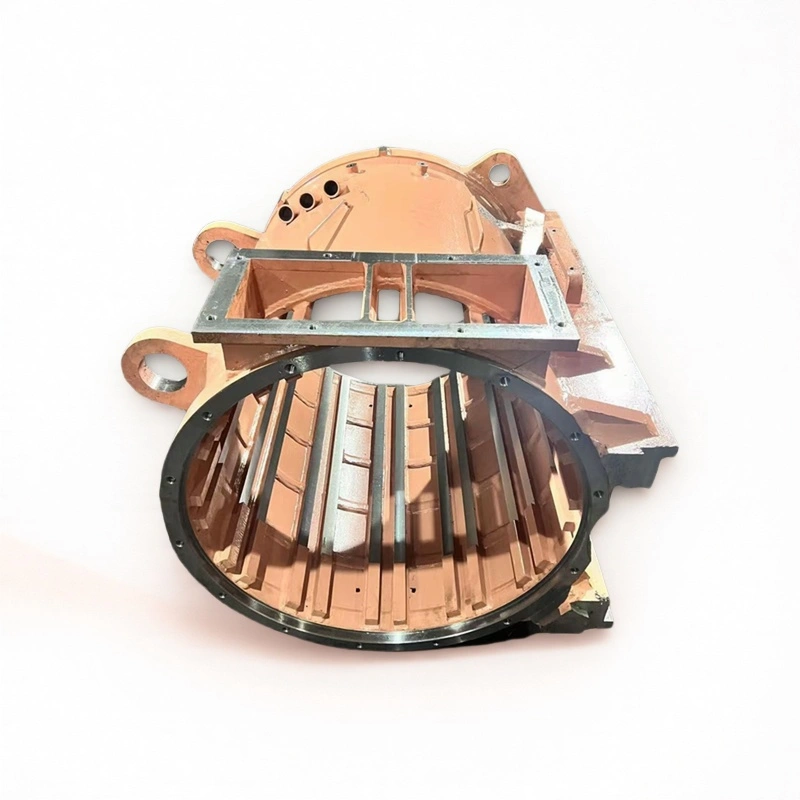
With the motor power density increasing to 3kW/kg (in the 1950s), the cast iron casing achieved a performance breakthrough by optimizing the layout of the heat dissipation fins:
The cast iron shell adopts a composite structure of end cover (HT250) – shell (HT200) :
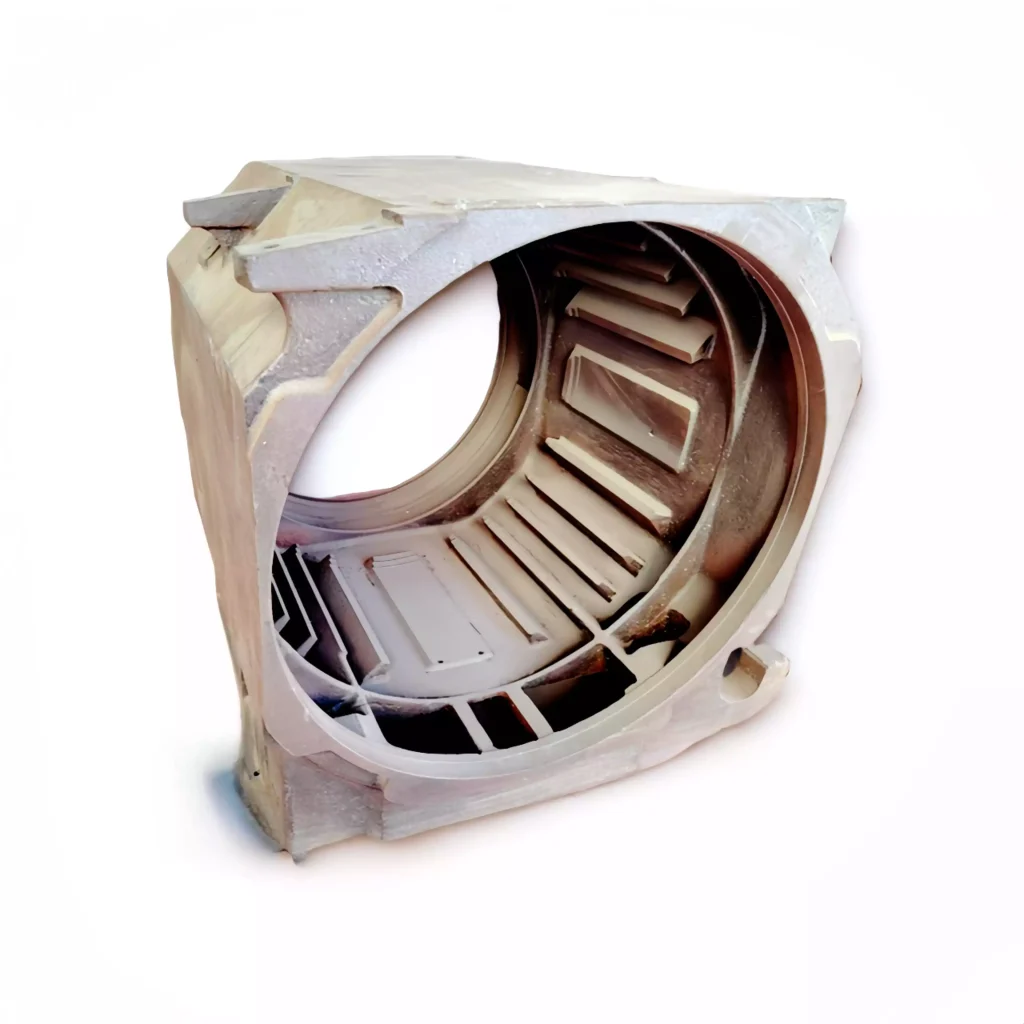
By adding magnesium (0.03-0.05wt%), the tensile strength of ductile iron (QT400-18) is increased to 400MPa, and the elongation reaches 18%, combining the strength of cast steel with the casting performance of cast iron. The motor housing of the harmonious type electric locomotive is made of ductile iron. The weight of a single housing has been reduced from 110kg of gray cast iron to 85kg, and the temperature resistance has been improved to 220℃.
Under the same working conditions (power 500kW, rotational speed 1500rpm), the temperature rise of the optimized cast iron casing reached 38℃, which was 15.6% lower than the initial 45℃, and the heat dissipation efficiency was significantly improved.
After 10^6 cycles of load tests (load range 0-2000N), the cast iron casing only undergoes 0.3mm plastic deformation, and its fatigue resistance meets the strict requirements of heavy-duty freight transportation (axle load of 25 トン).
By combining ductile iron with composite materials, such as embedding a carbon fiber reinforcing layer (2厚さ mm) in the cast iron matrix, the weight can be reduced by 20% while ensuring strength (the weight of a single shell drops from 85kg to 68kg), and the carbon emissions throughout the entire life cycle are reduced by 15% compared to traditional cast iron.
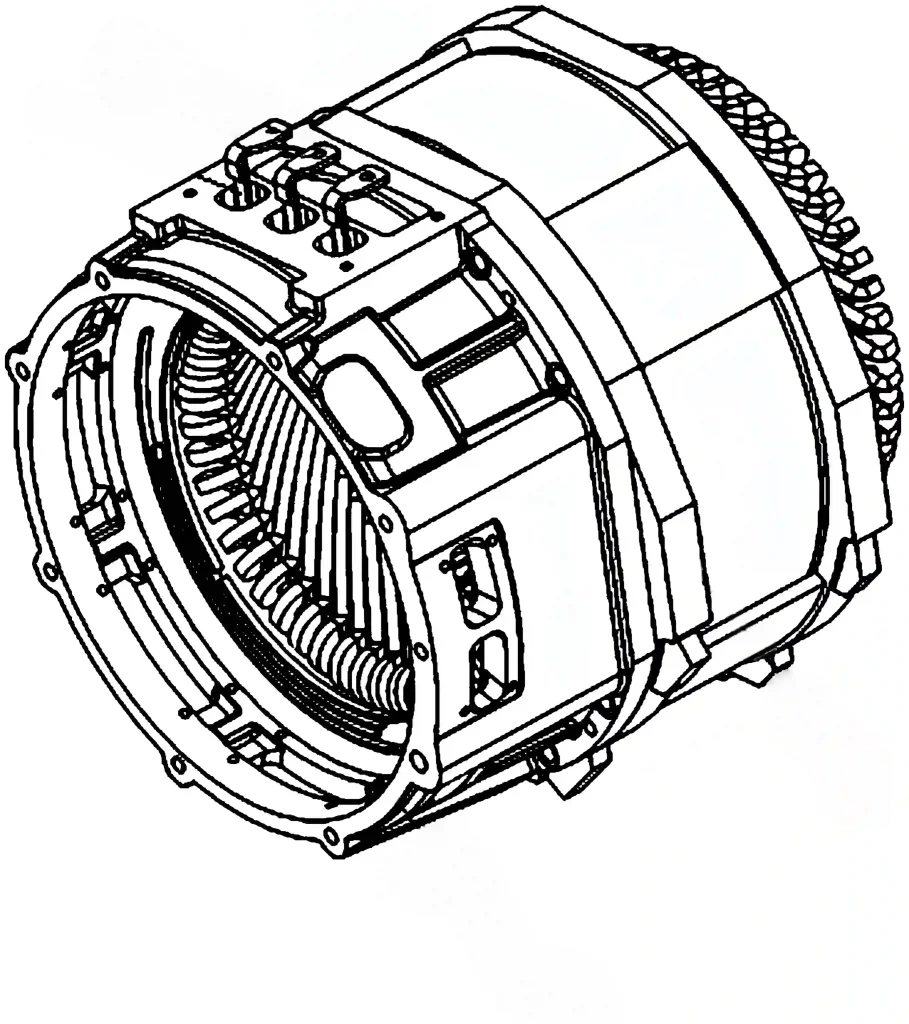
The cast iron housing surface is integrated with a fiber Bragg grating sensor (diameter 0.2mm), which can monitor temperature (accuracy ±0.1℃) と振動 (frequency range 0-2000Hz) in real time. The data is wirelessly transmitted to the operation and maintenance platform to achieve predictive maintenance.
From the cast iron brackets of the steam age to the precision shells of the electric age, cast iron has always been the core material for railway motor housings through material optimization and process innovation. This inheritance not only reflects the in-depth development of classic materials by industrial civilization, but also highlights that in the eternal pursuit of efficiency and reliability, traditional materials still radiate new vitality.
洛陽豊洋重工業株式会社, 株式会社, 1998年に設立された鉄道鋳造部品のメーカーです. 当社の工場面積は72,600㎡です。, 以上の 300 従業員, 32 技術者, 含む 5 シニアエンジニア, 11 アシスタントエンジニア, そして 16 技術者. 弊社の生産能力は 30,000 年間トン. 現在, 私たちは主に鋳物を生産しています, 機械加工, 機関車の組立て, 鉄道車両, 高速鉄道, 鉱山機械, 風力, 等. 当社の製品はロシアに輸出されています, 米国, ドイツ, アルゼンチン, 日本, フランス, 南アフリカ, イタリアとその他の国.
接触: ステラ・リュー
電子メール: [email protected]
ワッツアップ: +86-155-1535-1287