WeChat 코드를 스캔하여 문의하세요
WeChat 코드를 스캔하여 문의하세요
이메일을 보내주시면 최대한 빨리 답변해 드리겠습니다..
마음과 영혼을 다해 미래를 창조하다


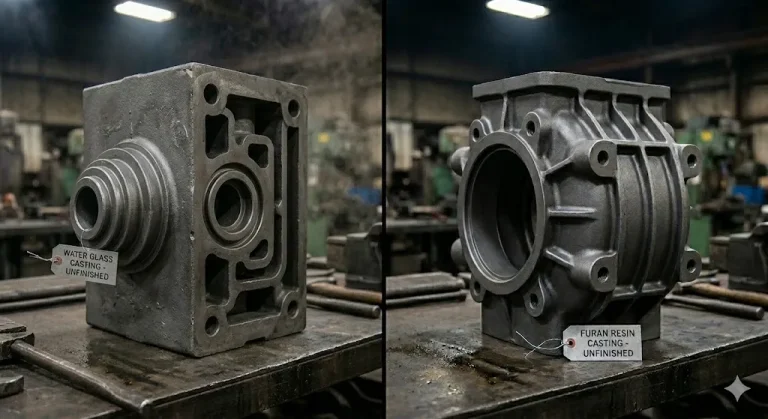
At the beginning of the 19th century, the power core of steam locomotives relied on boilers and cylinders. At that time, 그만큼 motor housing was actually a cast-iron bracket, whose main function was to fix the motor and resist mechanical damage. Cast iron (with a density of 7.2g/cm³) has become the preferred choice due to its easy formability and wear resistance. The rough surface design of the heat dissipation fins (with a height of 15mm and a spacing of 30mm) effectively addresses the temperature rise of motors in the steam age by increasing the heat dissipation area.
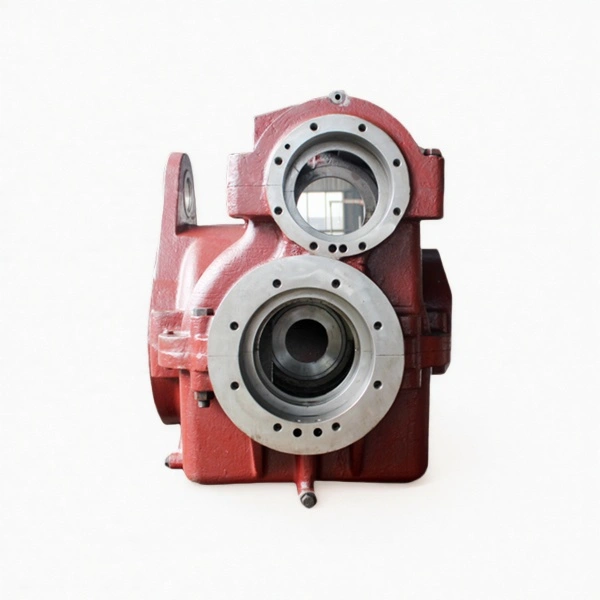
The Shaoshan Type 1 electric locomotive, which rolled off the production line in 1969, features a motor housing made of gray cast iron (HT200), with each housing weighing 120 kilograms and its surface densely covered with V-shaped heat dissipation fins. Although this design seems cumbersome, it has successfully solved the problems of dust prevention and basic heat dissipation in a coal dust environment, ensuring the stable operation of the locomotive on the Beijing-Guangzhou Line. 통계에 따르면, the cast iron casing has reduced the motor failure rate by 40%, and no shutdown accidents caused by casing damage occurred during its service period.
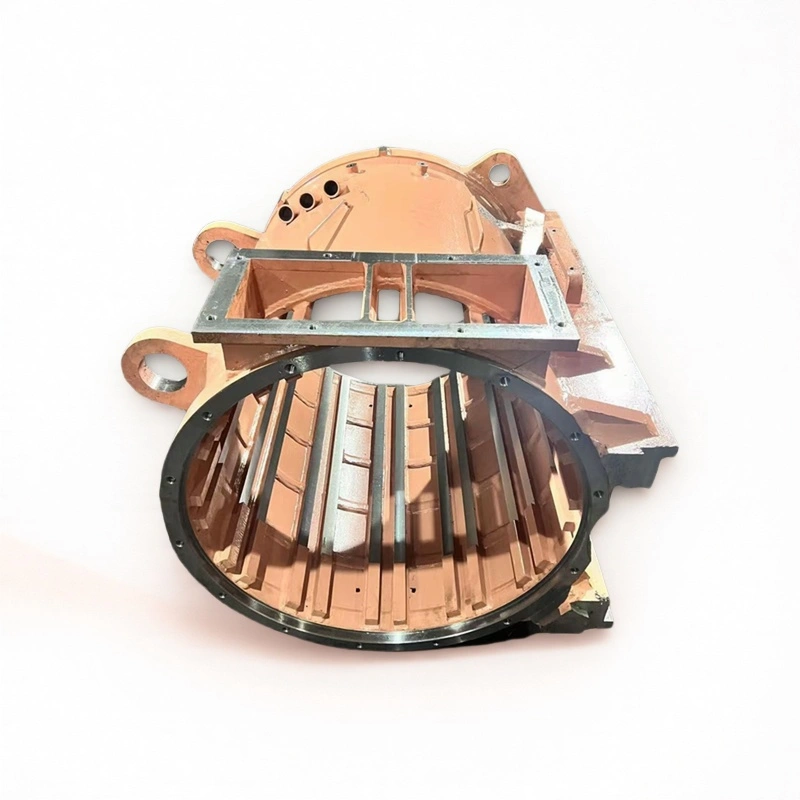
With the motor power density increasing to 3kW/kg (in the 1950s), the cast iron casing achieved a performance breakthrough by optimizing the layout of the heat dissipation fins:
The cast iron shell adopts a composite structure of end cover (HT250) – shell (HT200) :
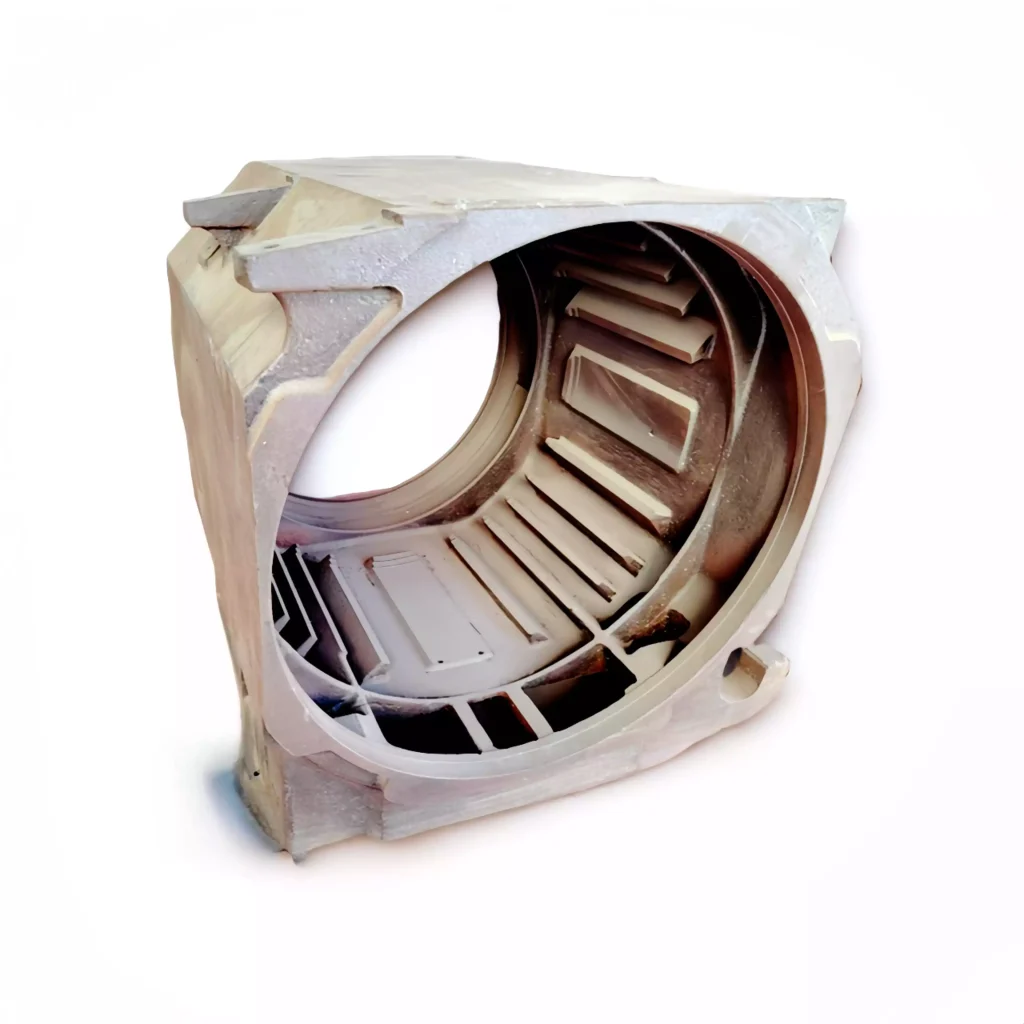
By adding magnesium (0.03-0.05wt%), the tensile strength of ductile iron (QT400-18) is increased to 400MPa, and the elongation reaches 18%, combining the strength of cast steel with the casting performance of cast iron. The motor housing of the harmonious type electric locomotive is made of ductile iron. The weight of a single housing has been reduced from 110kg of gray cast iron to 85kg, and the temperature resistance has been improved to 220℃.
Under the same working conditions (power 500kW, rotational speed 1500rpm), the temperature rise of the optimized cast iron casing reached 38℃, which was 15.6% lower than the initial 45℃, and the heat dissipation efficiency was significantly improved.
After 10^6 cycles of load tests (load range 0-2000N), the cast iron casing only undergoes 0.3mm plastic deformation, and its fatigue resistance meets the strict requirements of heavy-duty freight transportation (axle load of 25 톤).
By combining ductile iron with composite materials, such as embedding a carbon fiber reinforcing layer (2mm 두께) in the cast iron matrix, the weight can be reduced by 20% while ensuring strength (the weight of a single shell drops from 85kg to 68kg), and the carbon emissions throughout the entire life cycle are reduced by 15% compared to traditional cast iron.
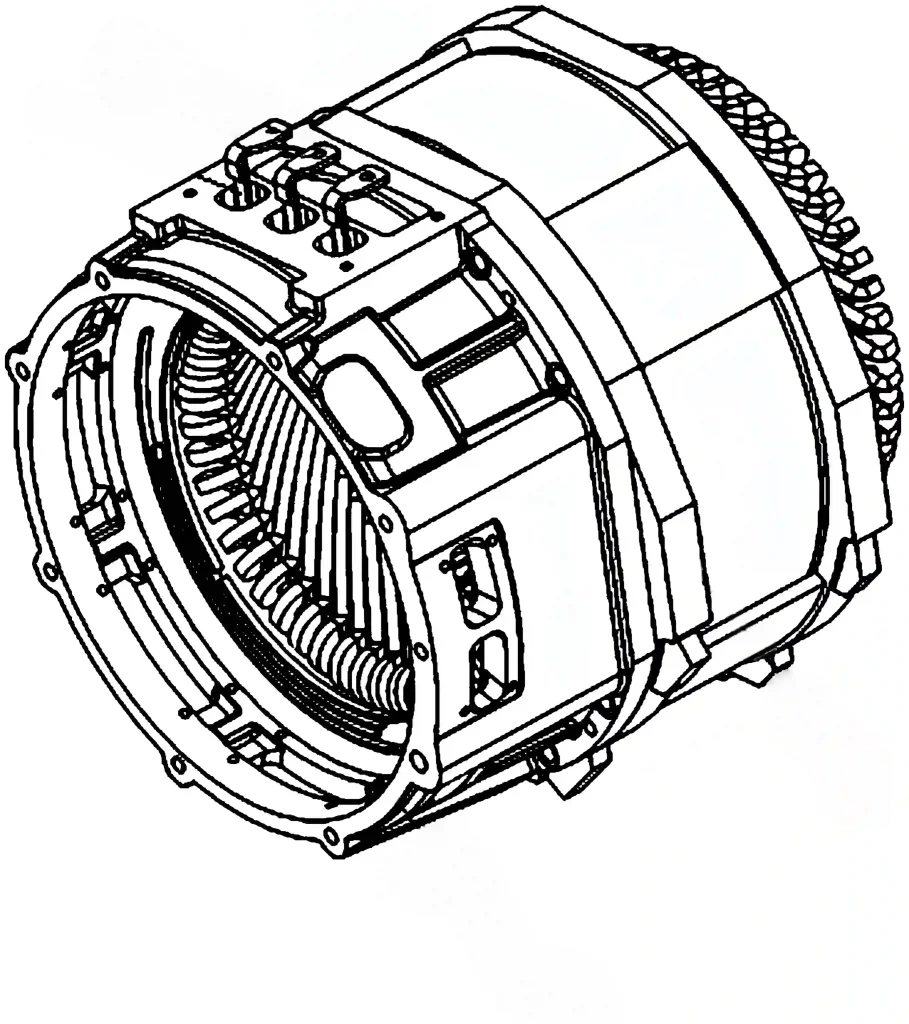
The cast iron housing surface is integrated with a fiber Bragg grating sensor (diameter 0.2mm), which can monitor temperature (accuracy ±0.1℃) and vibration (frequency range 0-2000Hz) in real time. The data is wirelessly transmitted to the operation and maintenance platform to achieve predictive maintenance.
From the cast iron brackets of the steam age to the precision shells of the electric age, cast iron has always been the core material for railway motor housings through material optimization and process innovation. This inheritance not only reflects the in-depth development of classic materials by industrial civilization, but also highlights that in the eternal pursuit of efficiency and reliability, traditional materials still radiate new vitality.
뤄양포뇨중공업(Luoyang Fonyo Heavy Industries), 주식회사, 1998년에 설립된 캐스트 철도 부품 제조업체입니다.. 우리 공장의 면적은 72,600㎡입니다., 이상으로 300 직원, 32 기술자, 포함 5 수석 엔지니어, 11 보조 엔지니어, 그리고 16 기술자. 우리의 생산 능력은 30,000 연간 톤. 현재, 우리는 주로 주조물을 생산하고 있습니다, 가공, 기관차 조립 및 조립, 철도 차량, 고속 열차, 광산 장비, 풍력, 등. 우리의 제품은 러시아로 수출되었습니다, 미국, 독일, 아르헨티나, 일본, 프랑스, 남아프리카, 이탈리아 및 기타 국가.
연락하다: 스텔라 리우
이메일: [email protected]
왓츠앱: +86-155-1535-1287