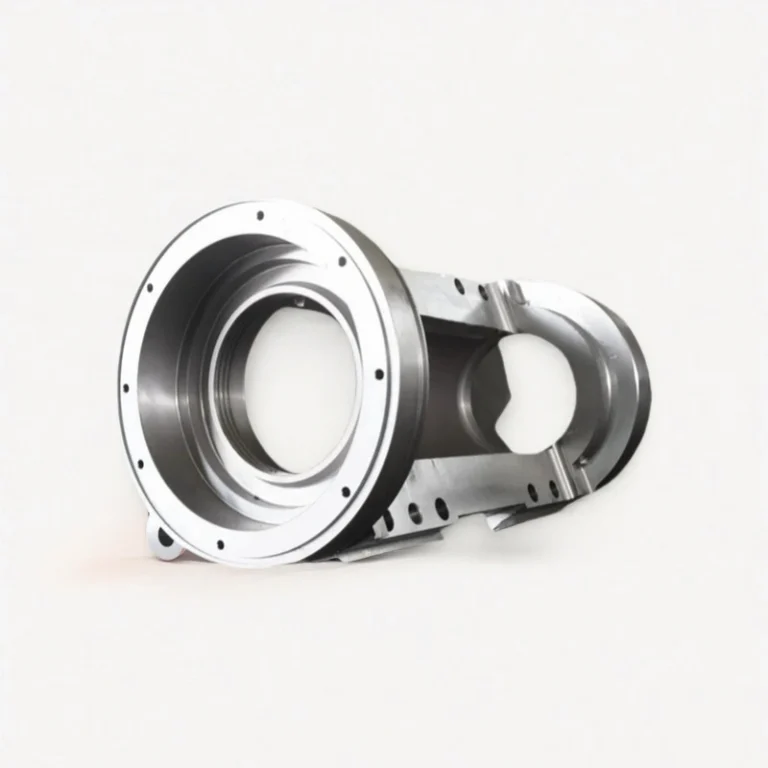
Scannez le code WeChat pour nous contacter
Scannez le code WeChat pour nous contacter
N'hésitez pas à nous envoyer un email et nous vous répondrons dans les plus brefs délais.
Créer l'avenir avec cœur et âme


Railway transportation is a land-based mode of transportation in which locomotives pull trains along two parallel rails. Cependant, in a broader sense, chemin de fer transportation also includes non-wheel-on-rail methods such as maglev trains, cable cars, and ropeways, or what is called track transportation. Railway vehicles are those pulled by locomotives on railways.
1.Espèces:
Railway vehicles can be classified into three major categories based on their purposes: railway passenger cars, railway freight cars, and railway special-purpose vehicles. Passenger cars are used to transport passengers and provide services for them, such as seating cars, sleeping cars, dining cars, and luggage cars; freight cars are used to transport goods, such as open-top cars, boxcars, flatcars, tank cars, and insulated cars; railway enterprises use special-purpose vehicles for their business purposes, such as weighing cars, snow removal cars, and test cars.
1.1 Freight cars can be further classified into general-purpose cars and specialized cars based on the variety of goods they can carry. Open-top cars, boxcars, flatcars, tank cars, and insulated cars that can meet the transportation requirements of various goods are called general-purpose cars; while those that are only suitable for carrying one or a few types of similar goods, such as hopper cars, cement cars, long and large goods cars, container flatcars, and high-pressure tank cars, are called specialized cars.
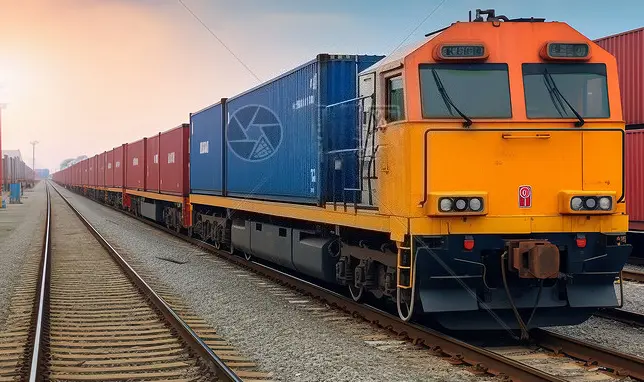
1.2 General-purpose cars have less empty running loss, but the utilization rate of their effective load capacity varies with the goods and is sometimes low. They also have different adaptability to different loading and unloading equipment. Specialized cars have a higher empty car rate, but their parameters can be selected based on the characteristics of specific goods, thus achieving higher utilization rates of load capacity and volume. Their structures can be matched with selected loading and unloading equipment, thereby shortening loading and unloading operation time and accelerating vehicle turnover.
Railway vehicles can also be classified by gauge into standard gauge cars, broad gauge cars, and narrow gauge cars; and by ownership into railway-owned cars and factory and mine-owned cars, etc..
2. Development overview: Early railway vehicles were all two-axle, with simple equipment.
Passenger cars first developed into multi-axle ones, with three-axle, four-axle, and six-axle passenger cars appearing. Parmi eux, four-axle bogie-type passenger cars have better running quality and curve passing performance, thus becoming the basic form of passenger cars.
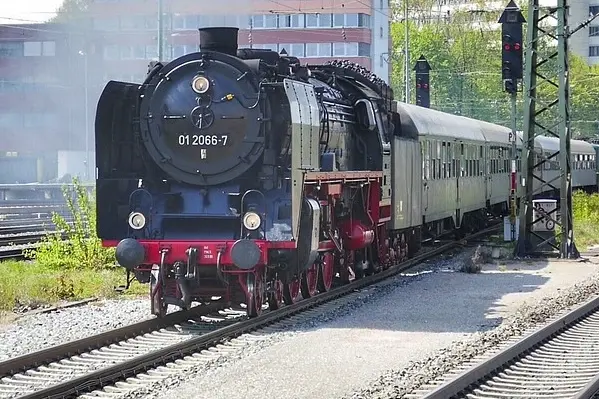
With the development of lightweight materials, the weight of car bodies has been greatly reduced, and some articulated vehicles have emerged. The adjacent ends of two adjacent car sections are placed on a two-axle bogie, while the non-articulated ends use two-axle or single-axle bogies. Such vehicles are often used in multiple units.
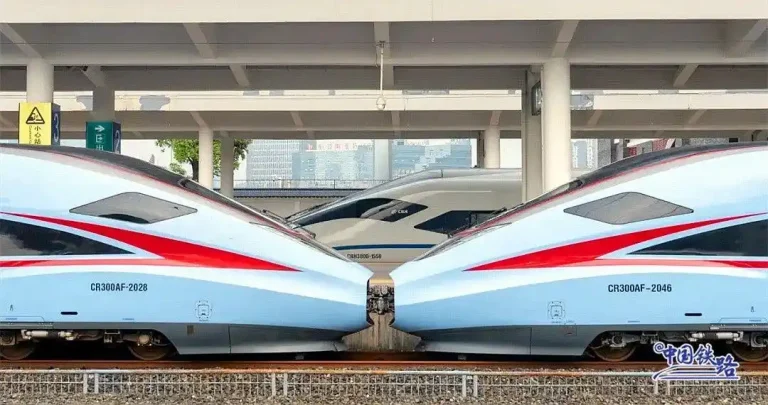
Modern passenger cars, in order to improve passenger safety and comfort, mostly adopt all-metal integral load-bearing car bodies, as well as independent hot water or electric heating, forced ventilation, electric lighting, air conditioning, hot water, and chilled drinking water equipment. Certains pays’ railways are now focusing on increasing train speeds. Par exemple, the maximum operating speed of Japan’s Shinkansen express passenger trains has reached 300 kilomètres par heure, and that of France’s express passenger trains between Paris and Lyon has reached 260 kilomètres par heure. Such high speeds have put forward higher requirements for the strength, dynamic performance, and operational reliability of passenger cars.
3.The development of bulk cargo transportation requires a continuous increase in freight car load capacity. To this end, two measures have been taken.
3.1 One is to increase the maximum allowable essieu load of freight cars in conjunction with the adoption of heavy-duty rails, thereby increasing the load capacity of freight cars while maintaining the original number of axles. Par exemple, the load capacity of four-axle freight cars on American railways has gradually increased from about 30 tonnes à 45 tonnes, 63 tonnes, et 90.7 tonnes (corresponding to axle loads of 11.7, 16.1, 25.0, et 29.8 tonnes), and a few vehicles have reached 113 tonnes (axle load of 35.7 tonnes).
3.2 The other is to increase the number of axles, thereby increasing the load capacity of freight cars while basically maintaining the original allowable axle load. Par exemple, the load capacity of eight-axle tank cars and open-top cars on Soviet railways has reached 120 des tonnes et 125 tonnes (maximum allowable axle load of 23.25 tonnes), respectivement.
3.3 Long and large goods cars used for transporting special goods can have up to 32 axles and a load capacity of up to 500 tonnes. À l'heure actuelle, except for a considerable number of two-axle freight cars with a load capacity of 18 à 40 tons still in use in European countries, the freight cars in other countries’ railways are mainly four-axle ones, with a load capacity of around 60 à 70 tonnes. Many countries have completely phased out two-axle cars.
The continuous increase in train weight not only requires vehicles to have sufficient strength but also demands the use of high-strength couplers, large-capacity buffers, and highly sensitive and reliable train braking systems. Many unit trains transporting coal or ore adopt rotary couplers in their coupler and buffer systems to enhance the unloading efficiency of the tipplers.
Before the founding of the People’s Republic of China, China’s passenger and freight vehicles were mainly imported, with complex types, simple equipment, and small load capacity. After the founding of the People’s Republic of China, China began to design and manufacture its vehicles.
Depuis 1949 à 1983, the number of passenger cars in the country increased from about 4,000 à environ 18,700, and the number of freight cars increased from about 46,000 à environ 285,000, growing by 3.7 times and 5.1 fois, respectivement. New passenger cars adopted all-steel welded structures, with improved construction speeds and enhanced ride smoothness and comfort.
Two-axle freight cars were phased out. The average rated load capacity of freight cars increased from 26.6 tons in 1949 à 52.7 tons in 1983.
4. Structure: Vehicles are generally composed of five parts: the body, running gear, coupler and buffer device, système de freinage, and vehicle equipment. The body is the part of the vehicle that accommodates passengers or goods, usually a closed space, and sometimes with an open top.
The structure of the body varies depending on the type of vehicle. Many loads on the vehicle act directly on the body, so the body must have sufficient strength and rigidity.
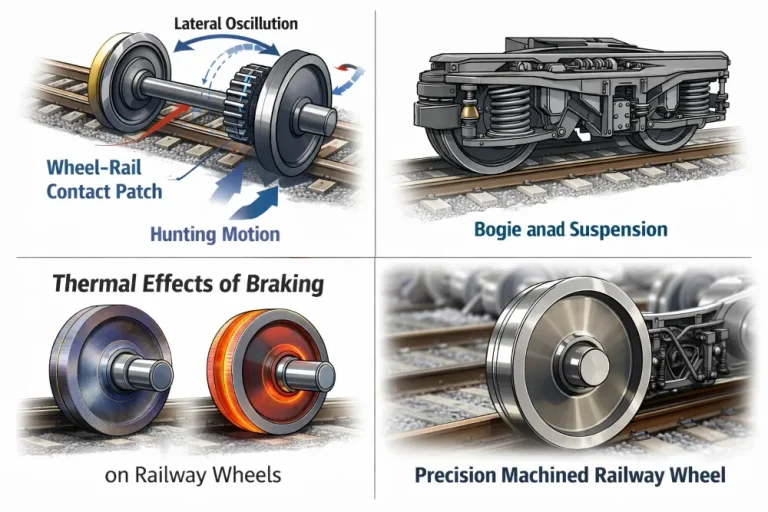
The body is supported by the running gear at the bottom and equipped with coupler and buffer devices at both ends. À l'intérieur, various equipment is arranged as needed. The running gear is the part of the vehicle that runs on the rails, consisting of wheel sets, axle box devices, springs and shock absorbers, the frame or side frame of the bogie, and other beams and rods.
In four-axle and above vehicles, these components are assembled into two bogies at the front and rear. Donc, for these vehicles, the running gear is the bogie. The running gear should ensure the safety and balance of the vehicle’s operation.
The coupler and buffer device is the component on the vehicle that connects with other vehicles or locomotives and transmits and mitigates tensile and compressive forces during train operation and formation. It consists of couplers, buffers, et d'autres composants, installed in the traction beams at both ends of the vehicle underframe.
The braking system is the equipment on the vehicle that reduces the speed or stops the train during operation to ensure the safe operation of the train. It consists of components such as the brake main pipe, air distribution valve, and brake cylinder installed under the vehicle, and the basic braking device (brake beam, mâchoires de frein, etc.) installed in the running gear.
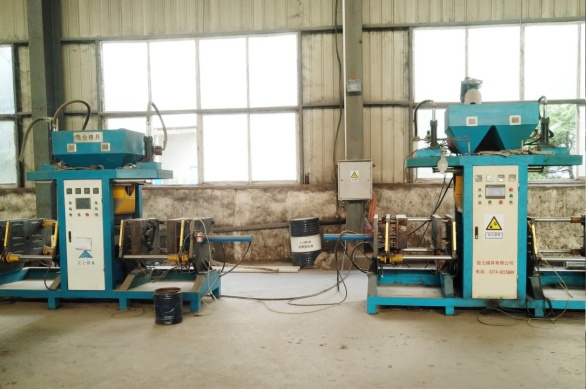
Luoyang Fonyo Heavy Industries Co., Ltée, fondée en 1998, est un fabricant de pièces moulées ferroviaires. Notre usine couvre une superficie de 72 600㎡, avec plus de 300 employés, 32 techniciens, y compris 5 ingénieurs supérieurs, 11 ingénieurs adjoints, et 16 techniciens. Notre capacité de production est 30,000 tonnes par an. Actuellement, nous produisons principalement du moulage, usinage, et montage pour locomotive, wagon, trains à grande vitesse, équipement minier, énergie éolienne, etc..
Nous sommes la fourniture de pièces ferroviaires au CRRC(dont plus de 20 succursales et filiales de CRRC), Machines d'ingénierie Gemac, Groupe Sany, Industries lourdes Citic, etc.. Nos produits ont été exportés vers la Russie, les États-Unis, Allemagne, Argentine, Japon, France, Afrique du Sud, Italie et autres pays du monde.
Coordonnées: