Scan the WeChat code to contact us
Scan the WeChat code to contact us
Feel free to send us a email and we will reply to you as soon as possible.
Creating the future with heart and soul


One question comes up in almost every railway project we discuss with customers about fish plate:
Should we use a 4-hole fish plate or a 6-hole one?
At first glance, the answer seems straightforward. A 6-hole fishplate has more bolts, so it must be stronger. While there is some truth to that assumption, selecting the right railway fish plate is rarely that simple.
Over the years, we’ve worked with customers involved in freight railways, industrial tracks, mining railways, port rail systems, and metro projects. One thing we’ve learned is that the best fish plate is not necessarily the largest one or the one with the most bolt holes. The right choice depends on how the railway operates, what rail profile is being used, which standard the project follows, and how the track will be maintained throughout its service life.
In some applications, a 4-hole fishplate performs perfectly well for many years. In others, a 6-hole one becomes the preferred solution because the operating conditions place greater demands on the rail joint. Understanding the difference between the two designs can help avoid installation issues, reduce maintenance requirements, and improve long-term track reliability.
In this guide, I’d like to explain the practical differences between a 4 Hole Fish Plate and a 6 Hole Fish Plate from an engineering perspective. Rather than focusing on complicated theory, we’ll look at how these products are actually selected in real railway projects and what factors should be considered before making a decision.
Before comparing different designs, it’s worth taking a moment to understand what a railway fish plate actually does.
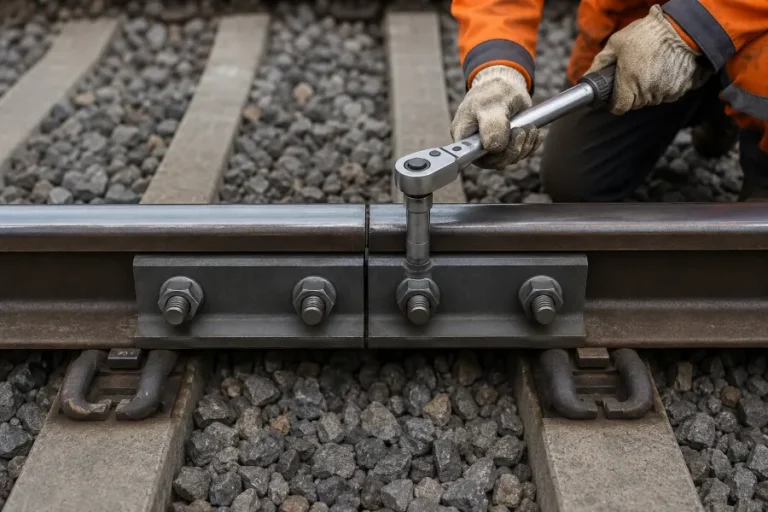
A Railway Fish Plate, sometimes referred to as a Rail Joint Bar, is a steel component used to connect two sections of rail at a joint. Installed on both sides of the rail web and secured with fish bolts, the fish plate helps maintain alignment between adjacent rails while allowing loads to pass through the joint safely.
Although continuous welded rail has become common on many modern railway networks, rail joints still exist in numerous applications around the world. Turnouts, switches, industrial rail systems, maintenance tracks, mining railways, and temporary railway lines all continue to rely on fish plates as part of their track structure.
Many people assume that a fishplate simply holds two rails together. In reality, its role is much more important. Every time a train passes over a rail joint, the fishplate helps the joint resist movement, maintain alignment, and distribute loads between the connected rail sections. If the wrong fishplate is selected, the joint may require more frequent maintenance, experience accelerated wear, or become a source of ongoing operational issues. you may learn more about selection of fishplate by reading this article: Fish Bolt Guide: How to Choose the Right Grade, Size and Standard for Railway Projects
This is why railway engineers pay close attention not only to the rail itself, but also to the design of the fish plate and the associated fastening system.
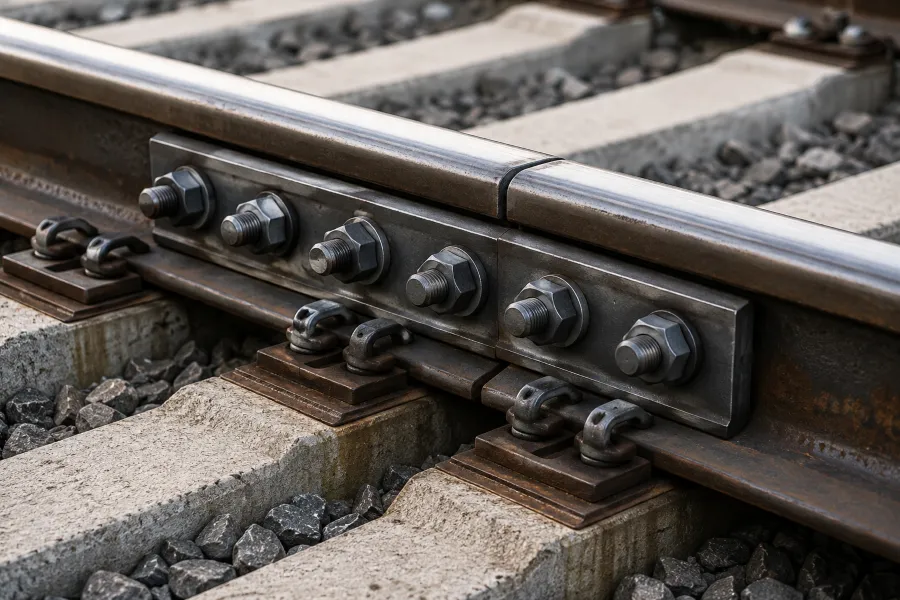
The most visible difference between a 4 Hole Fish Plate and a 6 Hole Fish Plate is the number of bolt holes used to secure the connection.
A 4-hole fishplate uses two fastening positions on each side of the rail joint, while a 6-hole fish plate uses three fastening positions on each side. That difference may appear minor, but it affects how the joint behaves under repeated train loading.
The table below provides a general comparison.
| Feature | 4-Hole | 6-Hole |
| Bolt Configuration | Two bolts on each side of the joint | Three bolts on each side of the joint |
| Overall Length | Generally shorter | Generally longer |
| Joint Rigidity | Moderate | Higher |
| Load Distribution | Suitable for standard applications | Improved load sharing |
| Maintenance Demand | Depends on operating conditions | Often preferred for demanding service |
| Typical Applications | Industrial railways, branch lines, mining tracks | Main lines, heavy freight, higher traffic routes |
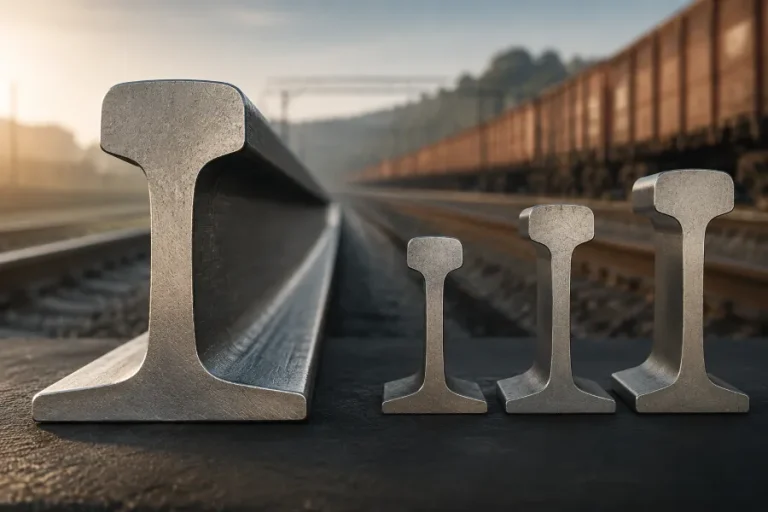
It’s important to note that there is no universal dimension for either design. Fish plate dimensions vary according to the rail profile and railway standard being used. A 4-hole fishplate designed for one rail section may look completely different from a 4-hole fishplate manufactured for another standard.
This is one of the reasons we always ask customers for the rail drawing or rail designation before recommending a fish plate. The number of holes alone does not determine compatibility.
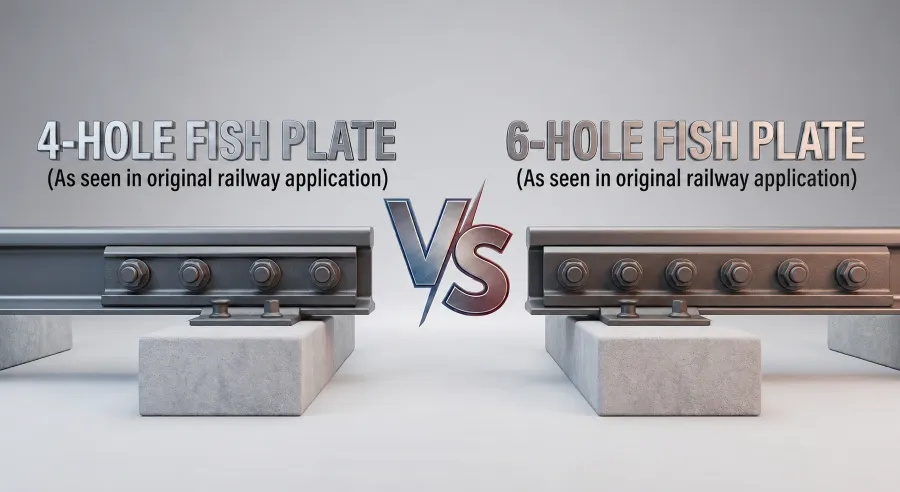
When customers compare a 4-hole fishplate with a 6-hole fishplate, they often focus entirely on strength.
However, from an engineering standpoint, the discussion is usually more about how loads are managed throughout the joint rather than simply how much force the fish plate can withstand.
Think of a rail joint as a location where multiple components must work together. The rails, fish plate, fish bolts, and fastening system all contribute to maintaining alignment and stability as trains repeatedly pass over the track.
When additional fastening points are introduced, the connection generally becomes more effective at sharing loads throughout the assembly. Instead of concentrating stresses on fewer fastening locations, the forces are distributed across a larger area. This helps the joint remain stable under demanding operating conditions and can contribute to longer service life.
That doesn’t mean every railway should automatically use a 6-hole fish plate.
In many industrial and low-speed railway applications, a properly designed 4-hole fish plate performs exceptionally well. Installing a larger fishplate simply because it appears stronger may add cost without delivering meaningful benefits.
A good example comes from industrial rail systems inside steel plants and manufacturing facilities. In these environments, train speeds are often relatively low, maintenance access is readily available, and rail joints can be inspected regularly. Under these conditions, a 4-hole fish plate frequently provides an excellent balance between performance, simplicity, and cost.
The situation changes when the railway experiences heavier traffic, more demanding loading conditions, or longer maintenance intervals. In those cases, engineers may favor a 6-hole fish plate because the additional fastening positions can improve joint stability over time.
This is why we rarely recommend a fishplate based solely on the number of bolt holes. Instead, we look at the complete operating environment. The railway itself should determine the fish plate—not the other way around.
Another important point is that fish plates are always part of a larger system. Even the best fish plate cannot compensate for an incorrect rail profile, improper bolt installation, poor track condition, or an unsuitable fastening arrangement. Successful railway joint design comes from selecting components that work together rather than focusing on a single part in isolation.
When discussing projects with customers, we often find that the most effective solution is not necessarily the heaviest fish plate available. It is the fish plate that matches the rail section, operating requirements, and maintenance strategy of the railway.
When customers ask whether a 4 Hole Fishplate is still a good option today, my answer is usually yes—provided it matches the railway’s operating conditions.
One misconception is that a 4-hole design is outdated simply because many modern railways use larger joint assemblies. In reality, plenty of rail systems continue to operate reliably with 4-hole fish plates because their service conditions don’t demand anything more.
We often recommend a 4 Hole for industrial railways, factory tracks, mining operations, port rail systems, and branch lines where train speeds are relatively low and maintenance crews can inspect the track on a regular basis. In these environments, the rail joint is subjected to less demanding operating conditions, so a well-designed 4-hole connection can provide stable, dependable performance throughout its service life.
Another advantage is installation efficiency. A shorter fish plate is generally easier to handle during track installation or replacement work, particularly where maintenance windows are limited or lifting equipment is restricted. Fewer bolts also mean fewer fastening points to install and inspect, helping reduce labor during routine maintenance.
However, choosing a 4-hole fishplate should never be based solely on its lower cost. Every railway has its own operating requirements, and those requirements should always come before budget considerations.
One example comes from a customer who initially requested a quotation for a standard 4-hole fish plate because it appeared to be the more economical option. After reviewing the rail drawings, we found that the railway would carry heavy freight traffic with long maintenance intervals. Although the rail profile looked similar to several lighter-duty systems, the operating conditions were very different. In that case, we recommended upgrading the joint design rather than simply supplying the product requested.
That experience reinforced something we often tell customers:
As operating conditions become more demanding, the advantages of a 6 Hole Fish Plate become easier to appreciate.
Railways carrying frequent freight traffic, higher axle loads, or trains operating at higher speeds place much greater demands on every rail joint. Under these conditions, engineers generally look for ways to improve joint stability and reduce long-term maintenance rather than simply minimizing the initial purchase cost.
A 6-hole fish plate helps achieve that goal by providing additional fastening positions along the joint. Instead of relying on fewer bolts to maintain alignment, the connection distributes loads across more fastening points, allowing the entire joint assembly to work together more effectively.
From our experience, 6-hole fish plates are commonly selected for mainline freight railways, heavy-haul corridors, passenger railways, and other routes where traffic volume is high and maintenance opportunities may be limited. These projects often prioritize long-term reliability because even minor maintenance work can disrupt railway operations.
Another situation where we frequently discuss 6-hole fish plates is when customers are upgrading an existing railway. Increasing train frequency or introducing heavier rolling stock changes the demands placed on the track, and the original joint configuration may no longer be the most suitable solution.
Of course, installing a larger fishplate doesn’t automatically improve every railway. If the rail section, drilling pattern, or applicable standard is designed for a 4-hole connection, simply changing to a 6-hole fish plate without engineering verification can create installation problems rather than solve them.
That’s why our recommendation process always begins with the rail specification rather than the fish plate itself.
This is probably one of the most common questions we receive from purchasing managers.
The short answer is:
Usually, no.
Although both products serve the same purpose, they are not designed to be interchangeable simply because they share a similar appearance.
Before considering any replacement, several factors need to be verified. The rail profile, drilling pattern, hole spacing, bolt diameter, and applicable railway standard must all match the intended fish plate. Even a small difference in these details can prevent proper installation or affect the performance of the rail joint.
We’ve occasionally received inquiries from customers who wanted to replace an existing 6-hole fish plate with a 4-hole version to reduce procurement costs. After checking the drawings, it became clear that the original rail had been manufactured specifically for a 6-hole connection. In that situation, changing the fish plate would also require changes to the rail itself, making the proposed cost saving unrealistic.
The opposite situation can also occur. Some customers ask whether they can install a 6-hole fish plate on a railway originally designed for four bolts, assuming that “more bolts must be better.” In practice, unless the rail has been designed accordingly, the additional holes simply cannot be used.
Whenever replacement is being considered, the safest approach is to begin with the rail drawing rather than the existing fish plate. A qualified Fishplate Manufacturer or engineering team can then confirm whether an equivalent product is available or whether a custom solution is required.
One detail that is often overlooked is that a fish plate is designed not only for a particular rail size but also for a specific railway standard.
Customers sometimes tell us they need a fishplate for a “60 kg rail” or a “UIC rail.” While that information is helpful, it is usually not enough to identify the correct product.
Different standards define different rail profiles, drilling patterns, and dimensional requirements. As a result, two fish plates may appear almost identical while having completely different bolt spacing or contact surfaces.
For that reason, our engineering team always asks for the rail designation or technical drawing before preparing a quotation. Confirming the applicable standard at the beginning helps avoid manufacturing errors and ensures that the fish plate will fit correctly during installation.
In our projects, we regularly manufacture Railway Fish Plates for international standards including UIC, AREMA, BS, DIN, and GB. We also produce customized Rail Joint Bars based on customer drawings when standard products are not suitable.
From an engineering perspective, selecting the correct standard is just as important as selecting between a 4-hole and a 6-hole design. Once the rail profile and standard are confirmed, choosing the appropriate fish plate becomes much more straightforward.
After discussing fish plate requirements with customers from different countries, I’ve noticed that the same questions—and the same mistakes—tend to appear again and again.
Most of these mistakes don’t happen because the customer lacks technical knowledge. They happen because fish plates look deceptively simple. Two products may appear almost identical, yet perform very differently once installed on the track.
One of the most common mistakes is choosing a fish plate based only on the rail weight. A customer might ask for a fish plate for a “60 kg rail,” assuming that rail weight alone is enough to identify the correct product. In reality, several rail profiles can have similar weights while using different dimensions, drilling patterns, and standards. Without confirming the exact rail designation, there’s always a risk of supplying a fish plate that doesn’t fit correctly.
Another misunderstanding is assuming that a 6 Hole Fish Plate is always a better choice than a 4 Hole Fish Plate. While the additional fastening points can improve joint performance under demanding operating conditions, they are not a universal solution. If the rail has been designed for a 4-hole connection, installing a different configuration without engineering verification may create unnecessary complications rather than improving reliability.
We’ve also seen projects where the fish plate was selected before the rest of the fastening system had been confirmed. In practice, a rail joint is a complete assembly. The fish plate, fish bolts, nuts, washers, and rail profile all need to work together. Focusing on one component while overlooking the others often leads to installation problems that could have been avoided during the design stage.
Finally, many buyers concentrate on the purchase price while overlooking the long-term cost of maintenance. A fish plate is expected to remain in service for many years, often in challenging outdoor environments. Selecting the right product from the beginning usually saves much more than the small difference in initial procurement cost.
From our experience, the best purchasing decision is rarely based on a catalogue alone. It’s based on understanding how the railway will actually operate.
Choosing the right fish plate isn’t simply about ordering a standard product from a catalogue. Every railway project has its own combination of rail profile, operating conditions, maintenance strategy, and technical standards.
This is why we spend time reviewing customer drawings before recommending a solution.
At Fonyo, we’ve supplied Railway Fish Plates for freight railways, metro systems, mining railways, industrial tracks, ports, and infrastructure projects in different countries. Some customers require standard products manufactured to UIC, AREMA, BS, or GB specifications. Others need completely customized Rail Joint Bars because their rail sections are unique or have been designed for a specific project.
Instead of recommending the same product for every inquiry, our engineering team starts by understanding the application. We review the rail profile, drilling pattern, operating environment, and project requirements before confirming the most suitable fish plate design.
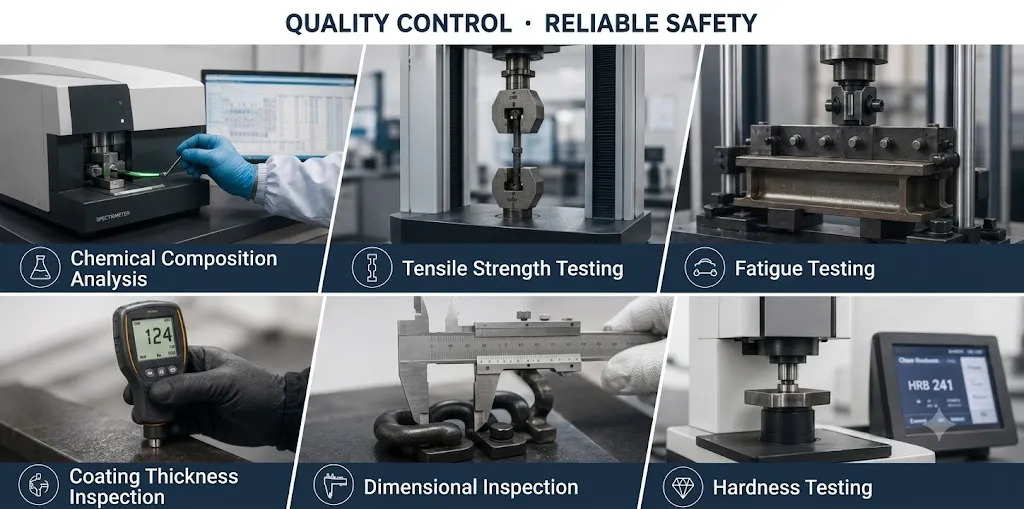
Our manufacturing capabilities cover the complete production process, from raw material selection and precision machining to heat treatment, dimensional inspection, and final quality control. Whether the project requires a standard 4 Hole Fish Plate, a 6 Hole Fish Plate, or a custom-machined railway joint bar, every product is manufactured according to the approved technical drawings and inspected before shipment.
For us, manufacturing is only part of the job. Helping customers choose the right solution before production begins is equally important.
Neither is universally better. The right choice depends on the rail profile, railway standard, operating conditions, and maintenance requirements. A 4-hole design performs very well in many industrial and branch railway applications, while a 6-hole design is often preferred for more demanding operating environments.
Not without verification. Before making any replacement, the rail profile, drilling pattern, bolt spacing, and applicable standard should all be checked to ensure compatibility.
Yes, many fish plates are manufactured according to standards such as UIC, AREMA, BS, DIN, and GB. However, dimensions and drilling patterns vary between standards, so it’s important to identify the correct rail specification before ordering.
The material depends on the railway standard and application. Carbon steel and alloy steel are commonly used, and heat treatment may be applied where higher strength and wear resistance are required.
Yes. Like every component in a railway fastening system, fish plates should be inspected as part of routine track maintenance. Regular inspections help identify bolt loosening, wear, or damage before they affect railway operations.
Yes. Many railway projects require customized fishplates to match special rail profiles or project specifications. An experienced Fishplate Manufacturer can produce custom designs based on engineering drawings.
Providing the rail designation, applicable standard, drawings (if available), required quantity, and application details allows the manufacturer to recommend the most suitable product and prepare a more accurate quotation.
A complete rail joint typically includes fish bolts, nuts, spring washers, and other fastening components. These parts are designed to work together as a complete railway fastening system.
When comparing a 4 Hole with a 6 Hole, it’s easy to focus on the number of bolt holes. In practice, experienced railway engineers look much deeper than that.
The most suitable Railway Fish Plate is the one that matches the rail profile, operating conditions, maintenance strategy, and railway standard of the project. A well-matched joint not only improves reliability but also helps reduce maintenance throughout the life of the railway.
At Luoyang Fonyo Heavy Industries Co., Ltd., we manufacture both standard and customized Railway Fish Plates for railway projects worldwide. Whether you need a 4 Hole Fish Plate, a 6 Hole Fish Plate, or a custom Rail Joint Bar manufactured to your drawings, our engineering team can help you identify the right solution before production begins.
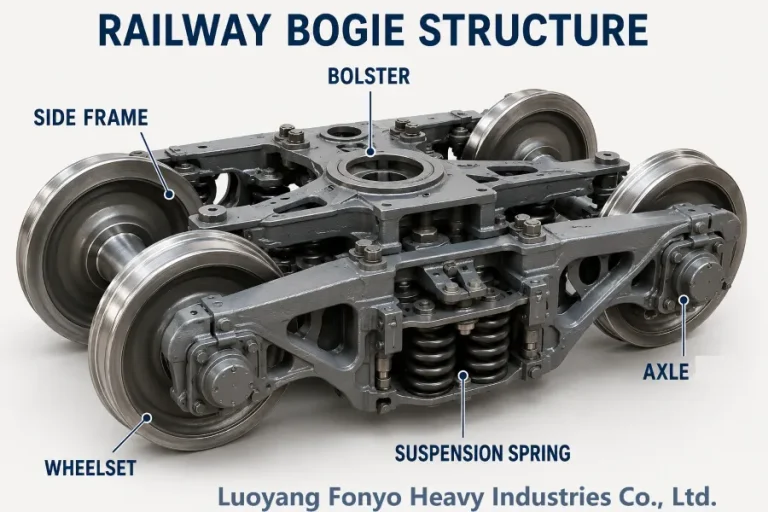
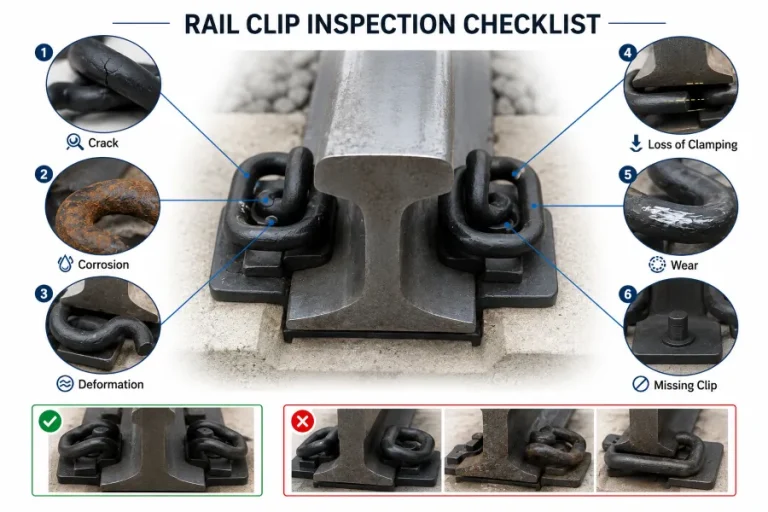
Beyond railway fish plates, Fonyo manufactures a broad range of railway components, including railway wheels, bogie bolsters and side frames, rail clips, fish bolts, rail pads, and other custom cast and forged parts. By combining casting, forging, precision machining, heat treatment, and inspection under one roof, we help customers simplify sourcing while ensuring consistent quality across critical railway components.
If you’re planning a new railway project or replacing existing rail joints, simply send us your drawings or technical specifications. Our engineering team will review your requirements and recommend the most suitable solution for your project.