Scan the WeChat code to contact us
Scan the WeChat code to contact us
Feel free to send us a email and we will reply to you as soon as possible.
Creating the future with heart and soul


If you look at a train, the railway wheels may seem like one of the simplest components on the vehicle.
In reality, they are among the most important.
Every train movement depends on a very small contact area between the wheel and the rail. Through that contact point, the wheel carries the weight of the vehicle, transfers traction and braking forces, absorbs impacts from the track, and withstands millions of loading cycles over its service life.
Whether the wheel is used on a freight wagon , a metro vehicle, a locomotive, or a high-speed train, the basic challenge remains the same: it must be strong enough to carry heavy loads, durable enough to resist wear, and reliable enough to operate safely for years.
That is why railway wheels involve much more than steel and machining. Their performance is influenced by material selection, forging technology, heat treatment, wheel profile design, maintenance practices, and operating conditions.
Over the years, we have found that many questions about railway wheels are actually connected. Why are train wheels conical? How are railway wheels manufactured? What causes wheel cracks? Why do some wheels last longer than others?
This guide brings those topics together and follows the complete life cycle of a railway wheel, from manufacturing and design to inspection, maintenance, and real-world applications.
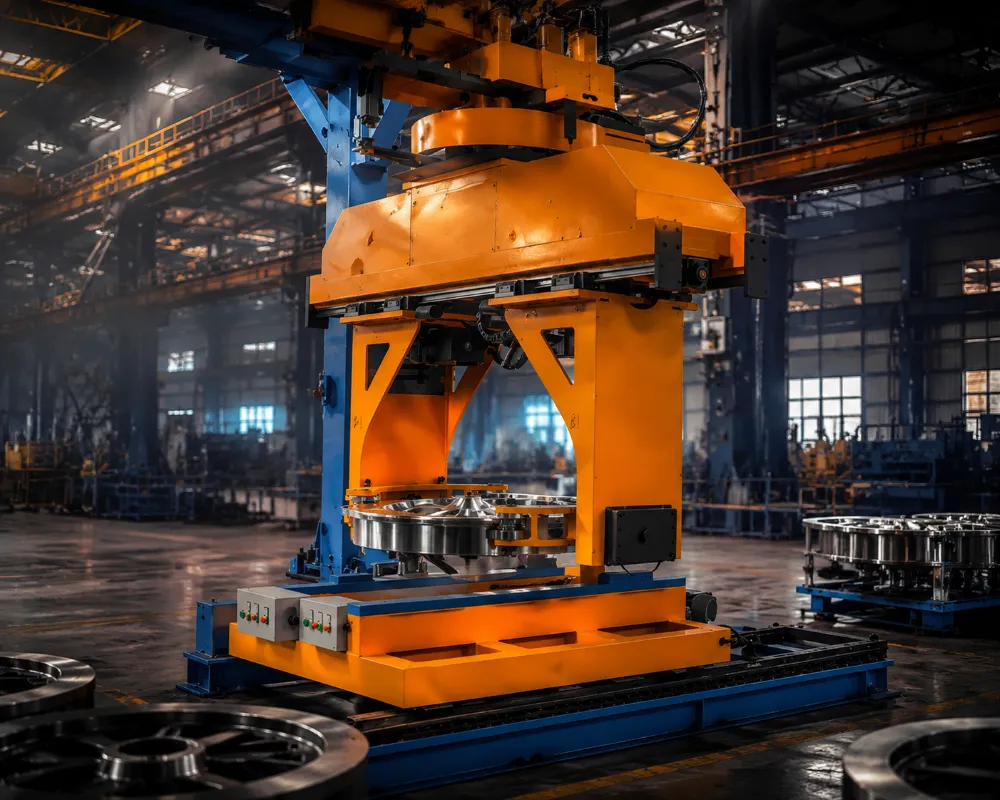
Most people only see the finished wheel.
What they do not see is the amount of work that happens before that wheel ever reaches the railway.
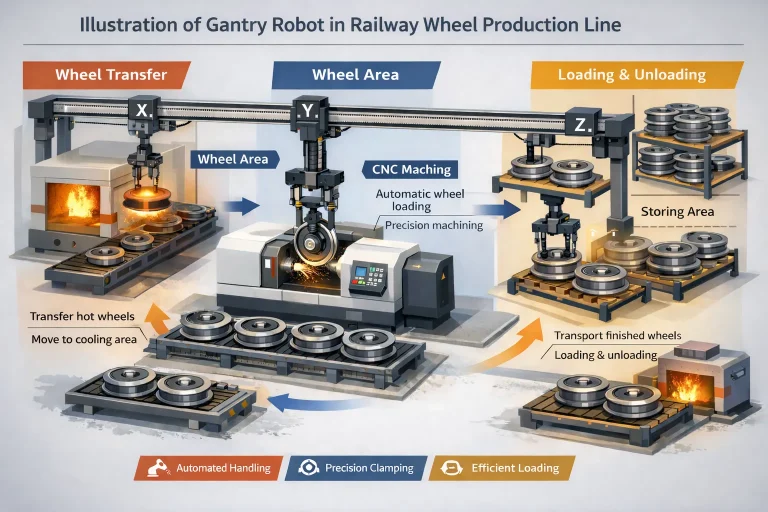
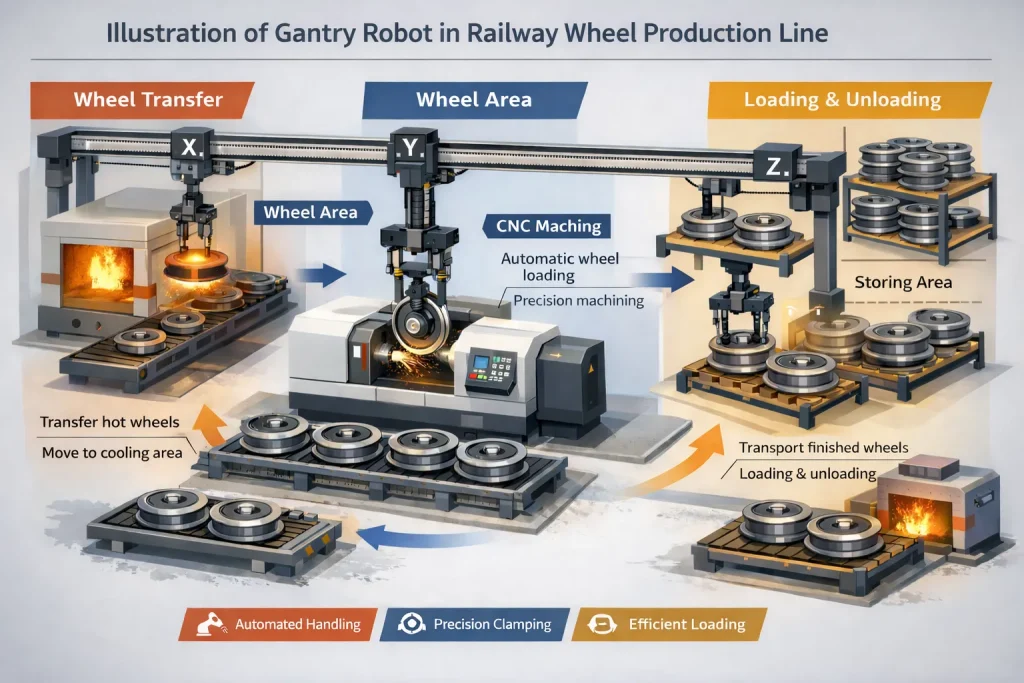
A railway wheel typically starts as a steel billet. The billet is heated, forged, heat treated, machined, inspected, and tested before it is approved for service. Every stage matters because mistakes made during manufacturing often do not appear immediately. They may show up years later as excessive wear, reduced fatigue life, or unexpected failures in operation.
One of the first decisions is the selection of the wheel steel itself. Different steel grades offer different combinations of hardness, toughness, wear resistance, and crack resistance. Choosing the right material depends on the intended application and the standard that the wheel must meet.
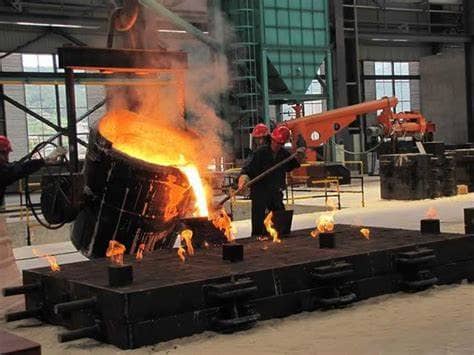
The next step is forging. This is where the wheel begins to take shape. Compared with casting, the forging process creates a stronger internal grain structure and improves the wheel’s ability to withstand repeated loading. This is one of the main reasons forged railway wheels are widely used throughout the industry.
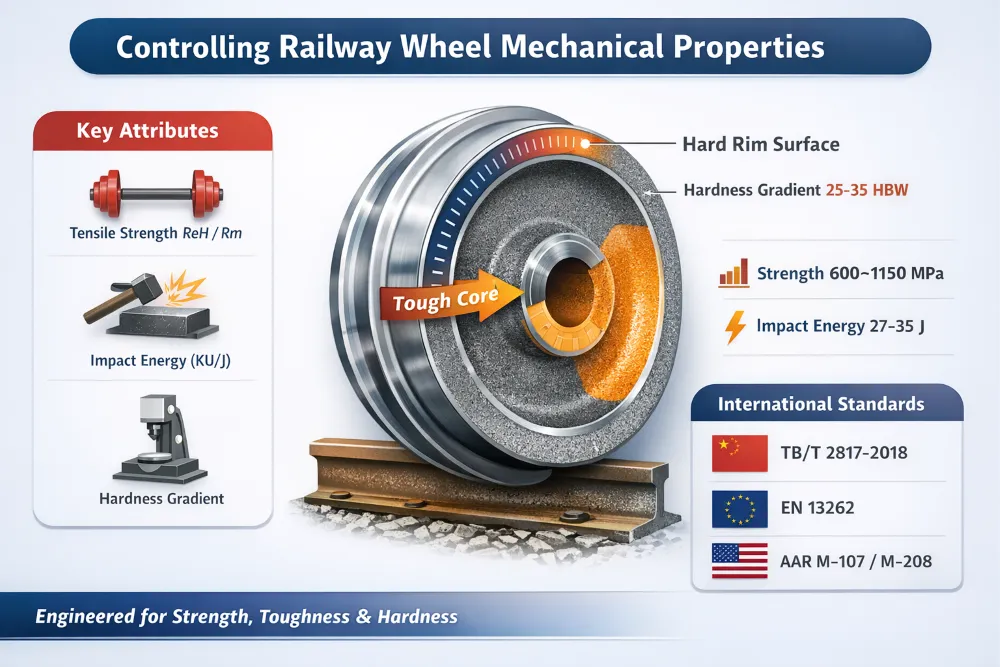
After forging comes heat treatment. In simple terms, this is where engineers adjust the mechanical properties of the wheel. Too much hardness can increase the risk of cracking. Too little hardness can lead to rapid wear. Finding the right balance is critical, especially for wheels operating under heavy loads or high speeds.
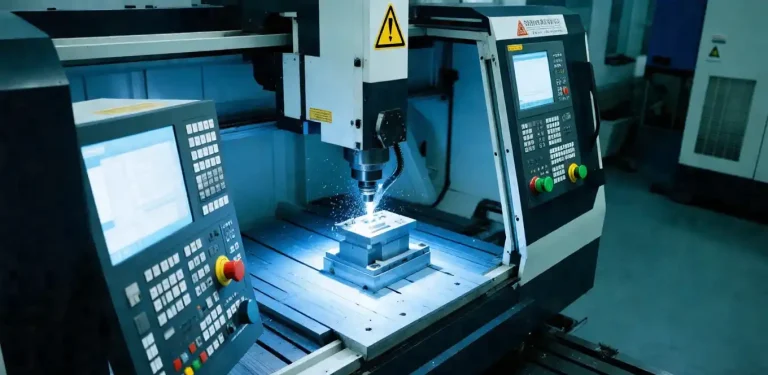
The wheel then moves to machining, where the final dimensions and wheel profile are created. Small dimensional differences can affect wheel-rail contact, ride quality, and long-term wear behavior, so precision is extremely important at this stage.
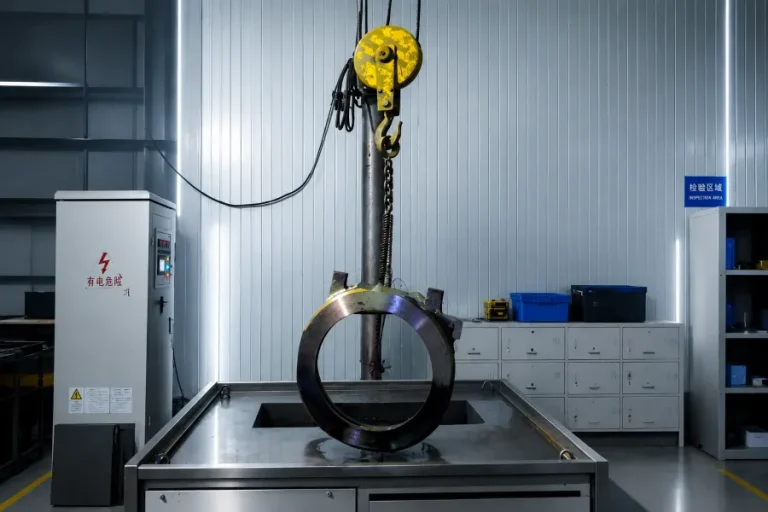
Before a wheel leaves the factory, it must pass a series of inspections. Depending on customer requirements, this may include dimensional checks, hardness testing, ultrasonic testing, magnetic particle inspection, and other non-destructive testing methods.
If you would like to explore any of these stages in more detail, we have prepared dedicated articles covering railway wheel manufacturing, wheel forging and rolling processes, heat treatment methods, machining operations, steel grades, quality control procedures, and NDT inspection techniques.
When people talk about railway wheel quality, they often focus on visible factors such as dimensions, hardness, or manufacturing processes.
What is less visible, but equally important, is the microstructure inside the steel.
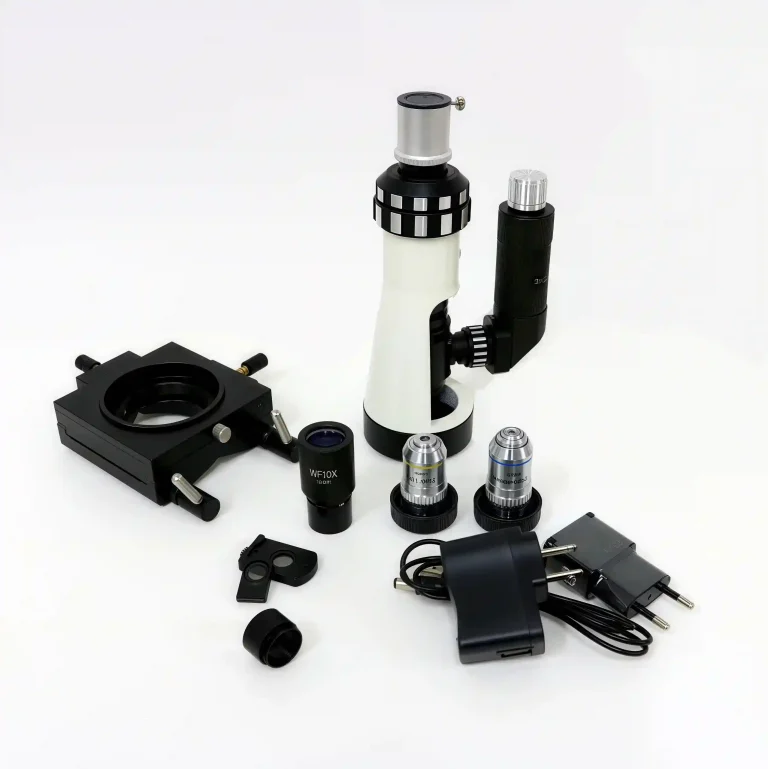
The internal structure of a railway wheel has a major influence on wear resistance, fatigue life, crack resistance, and overall service performance. Two wheels may have the same dimensions and even similar hardness values, yet behave very differently in service because of differences in microstructure.
This is one reason why heat treatment and process control are so important during manufacturing. The goal is not simply to achieve a target hardness. It is to produce a stable and uniform microstructure throughout the wheel.
In railway wheel production, ferrite-pearlite microstructures are commonly used because they provide a good balance between strength, toughness, and wear resistance. However, if non-pearlitic structures develop during manufacturing, wheel performance can be negatively affected.
Engineers also pay close attention to material flow during rolling and forging, as well as the results of mechanical simulations such as finite element analysis (FEA). These tools help predict stress distribution, deformation behavior, and long-term durability before the wheel enters service.
For readers interested in the science behind railway wheel performance, we have published detailed articles covering ferrite-pearlite microstructures, non-pearlitic defects, railway wheel rolling processes, microstructure control during manufacturing, and the role of FEA in railway wheel design and safety.

One question customers often ask is: Why are there so many railway wheel standards?
The answer is actually quite simple.
Railway wheels may look similar, but they often work under very different operating conditions. A wheel used on a North American heavy-haul freight train faces different challenges from a wheel running on a European passenger train or a metro vehicle operating in an urban network.
Because of these differences, railway organizations around the world have developed standards to define how wheels should be designed, manufactured, tested, and inspected.
If you work with European railway projects, you will often encounter EN 13262. In North America, AAR M107 and M208 are commonly specified. International projects may also reference UIC requirements, while some markets use regional standards such as IRS specifications.
Although the details vary, the purpose is always the same. Standards help ensure that railway wheels meet minimum requirements for safety, performance, durability, and quality.
In our experience, understanding standards is not only important for manufacturers. It is also important for buyers and engineers. A wheel that meets one standard may not automatically meet another. Material requirements, hardness limits, dimensional tolerances, testing procedures, and wheel marking systems can all differ.
For that reason, we often recommend understanding the applicable standard before comparing suppliers or requesting quotations.
Readers interested in specific requirements can continue with our detailed guides on EN 13262 railway wheels, AAR wheel standards, wheel hardness requirements, dimensional tolerances, and railway wheel marking systems.
At first glance, railway wheel design looks straightforward.
The reality is very different.
Many people are surprised when they learn that train wheels are not perfectly cylindrical. Instead, they are designed with a slight conical shape.
This small design feature plays a major role in how trains operate. It helps wheelsets stay centered on straight track and allows trains to move through curves more smoothly. Without it, railway vehicles would experience much higher wear and stability problems.
Of course, wheel design is about much more than the conical tread.
Engineers must also consider wheel profiles, wheel-rail contact conditions, dynamic loads, vibration behavior, noise generation, and long-term wear patterns. All of these factors influence how the wheel performs throughout its service life.
A wheel designed for a high-speed train may prioritize stability and running performance at very high speeds. A wheel designed for a heavy-haul freight wagon may place greater emphasis on load capacity, wear resistance, and fatigue life.
There is no single wheel design that works perfectly for every application. Instead, engineers must balance different requirements depending on the operating environment.
This is why wheel design remains an active area of railway engineering. As axle loads increase and train speeds continue to rise, manufacturers and operators are constantly looking for ways to improve performance while reducing maintenance costs.
If you would like to learn more, we have published detailed articles covering conical wheel design, wheel profile development, wheel-rail contact mechanics, dynamic load analysis, curve negotiation behavior, vibration control, and high-speed railway wheel engineering.
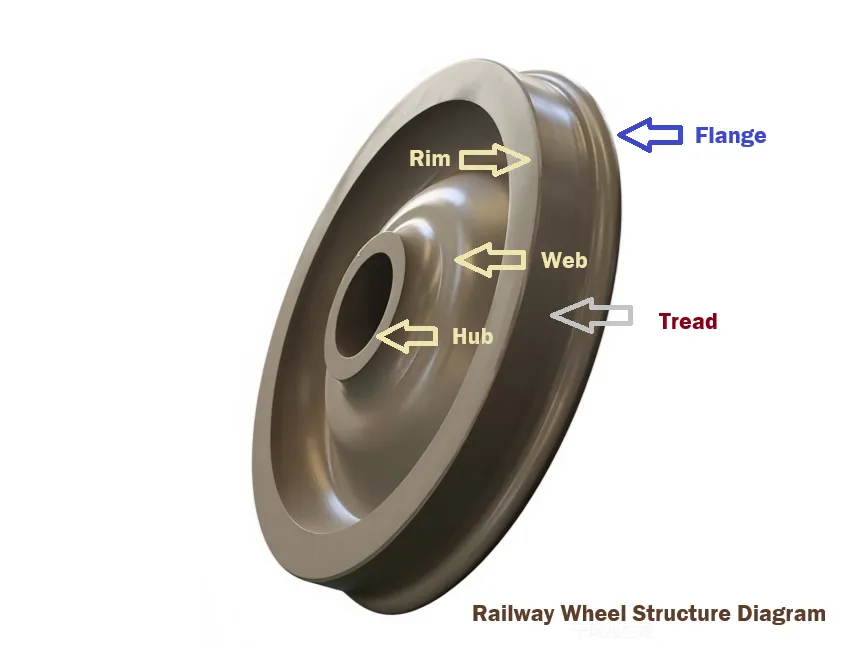
Many people assume that railway wheels are designed to last forever.
In reality, every wheel wears.
The question is not whether wear will occur, but how quickly it develops and whether it remains within acceptable limits.
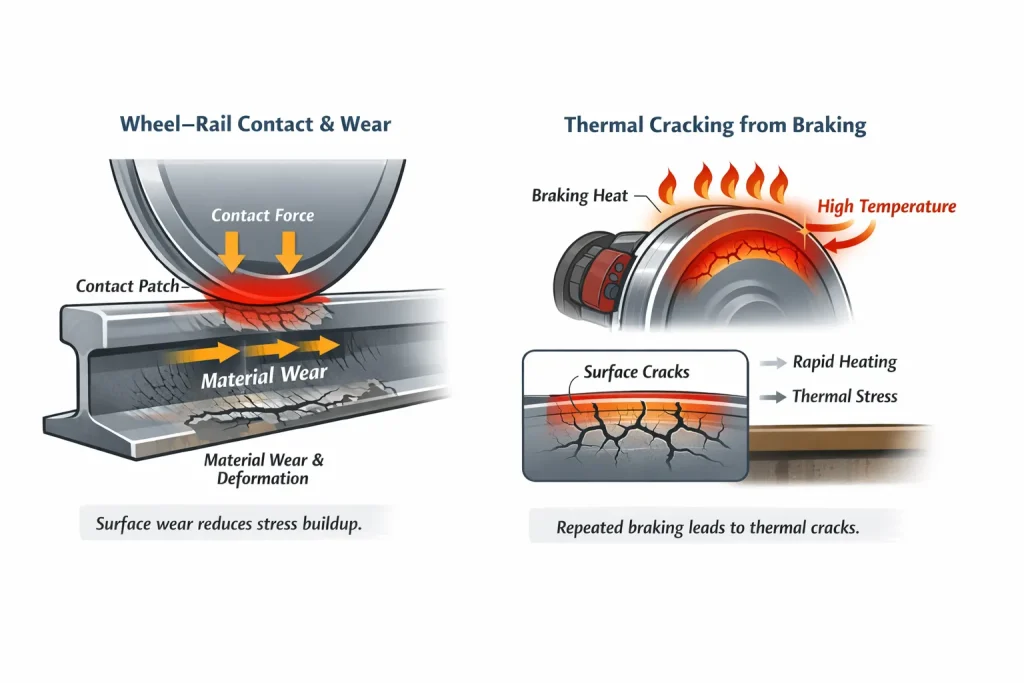
In daily railway operation, the wheel is constantly interacting with the rail. Every acceleration, braking cycle, curve negotiation, and track irregularity creates stress at the wheel-rail contact area. Over time, these repeated forces gradually change the wheel surface.
Some forms of wear are expected and can be managed through routine maintenance. Others may develop into defects that require immediate attention.
One of the most common issues engineers encounter is rolling contact fatigue, often referred to as RCF. Unlike ordinary wear, RCF develops beneath the wheel surface as repeated contact stresses accumulate over millions of wheel revolutions. Small cracks may eventually grow and lead to shelling, spalling, or other surface damage.
Thermal damage is another concern. Excessive braking or wheel slip can generate significant heat at the wheel tread. In severe cases, this may result in wheel burns, thermal cracks, or the formation of martensite layers that increase hardness but reduce toughness.
We also frequently see wheel flats, flange wear, uneven wear patterns, and other service-related defects. In many cases, these problems are not caused by a single factor. Track condition, axle load, wheel material, vehicle dynamics, maintenance quality, and operating practices can all play a role.
Understanding how these defects develop is often the first step toward extending wheel life and reducing maintenance costs.
For readers interested in specific failure mechanisms, we have prepared detailed guides covering railway wheel wear types, rolling contact fatigue, wheel flats, thermal cracks, wheel burns, martensite formation, shelling, spalling, and wheel failure case studies.
Even the best wheel will eventually require maintenance.
In fact, many wheel-related problems can be prevented long before they become serious if they are detected early enough.
This is why regular inspection remains one of the most important parts of railway wheel management.
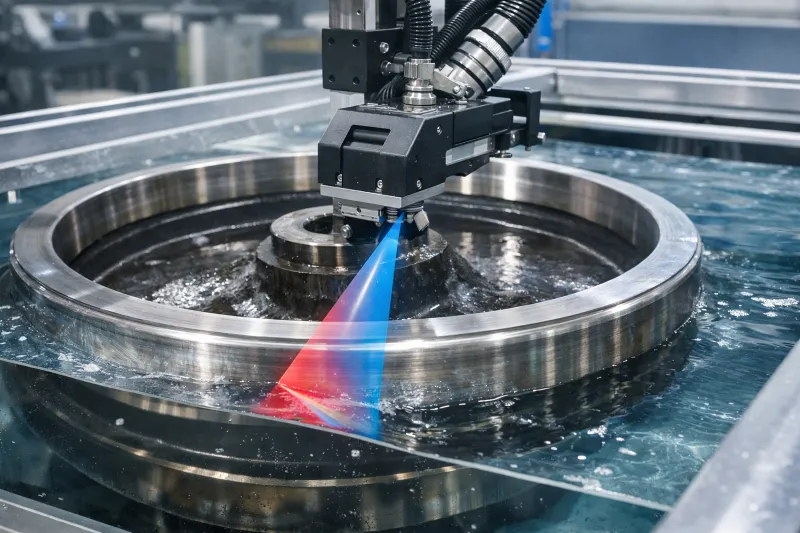
A typical inspection program may include visual checks, dimensional measurements, profile monitoring, hardness verification, and non-destructive testing. The goal is not simply to find defects. The goal is to understand how the wheel condition is changing over time.
When wear reaches a certain limit, operators often perform wheel reprofiling. This process removes damaged material and restores the correct wheel geometry. A properly managed reprofiling program can significantly extend wheel service life and improve vehicle performance.
Modern railway operators are also increasingly relying on condition monitoring technologies. Automated measurement systems can track wheel dimensions, detect impact loads, and identify abnormal wear patterns before they become major maintenance issues.
From our experience, successful maintenance programs are rarely based on a single inspection method. They combine regular monitoring, accurate data collection, predictive maintenance strategies, and timely corrective actions.
The result is usually lower lifecycle cost, improved safety, and better fleet availability.
Readers who would like to explore these topics further can continue with our articles on railway wheel inspection methods, ultrasonic testing, magnetic particle testing, wheel reprofiling, predictive maintenance, and wheel condition monitoring systems.
Although the basic function of a railway wheel remains the same, not all wheels operate under the same conditions.
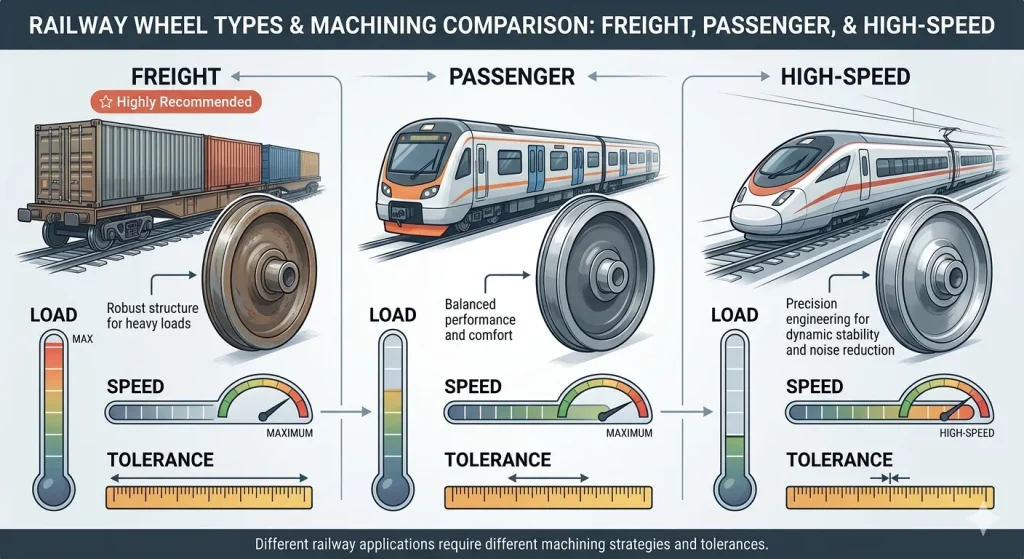
A wheel used beneath a metro vehicle experiences a very different service environment from a wheel running on a heavy-haul freight wagon.
Metro systems typically involve frequent acceleration and braking. Passenger vehicles often place greater emphasis on ride quality and noise reduction. High-speed trains must maintain stability under demanding dynamic conditions, while freight wagons are expected to carry heavy loads over long distances.
Mining railways present another challenge altogether. Harsh environments, heavy axle loads, and abrasive operating conditions often require wheel designs that prioritize durability and wear resistance.
Because of these differences, wheel manufacturers do not simply produce one wheel for every application. Material selection, profile design, hardness requirements, and maintenance strategies are often tailored to the intended service environment.
When evaluating a wheel specification, it is therefore important to consider not only the wheel itself, but also how and where it will be used.
For more application-specific information, readers can explore our guides on freight wagon wheels, passenger train wheels, metro wheels, locomotive wheels, high-speed railway wheels, and mining railway wheel applications.
One mistake people sometimes make is looking at the wheel in isolation.
A railway wheel never works alone.
Its performance is closely connected to the axle, wheelset assembly, suspension components, bogie structure, track condition, and overall vehicle dynamics.
For example, excessive wheel wear may not actually be caused by the wheel itself. The root cause could be wheelset misalignment, poor track geometry, suspension issues, or abnormal vehicle loading.
Similarly, some wheel defects only make sense when engineers examine the complete wheel-rail interaction system rather than focusing on a single component.
This is why railway engineers often investigate wheels, axles, wheelsets, bogies, and track conditions together when analyzing service problems.
Understanding the broader system provides a more complete picture of railway vehicle performance and often leads to more effective solutions.
Readers interested in the wider railway system can continue with our technical resources covering railway axles, wheelsets, wheel-rail interaction, bogie design, turnout systems, and track geometry.
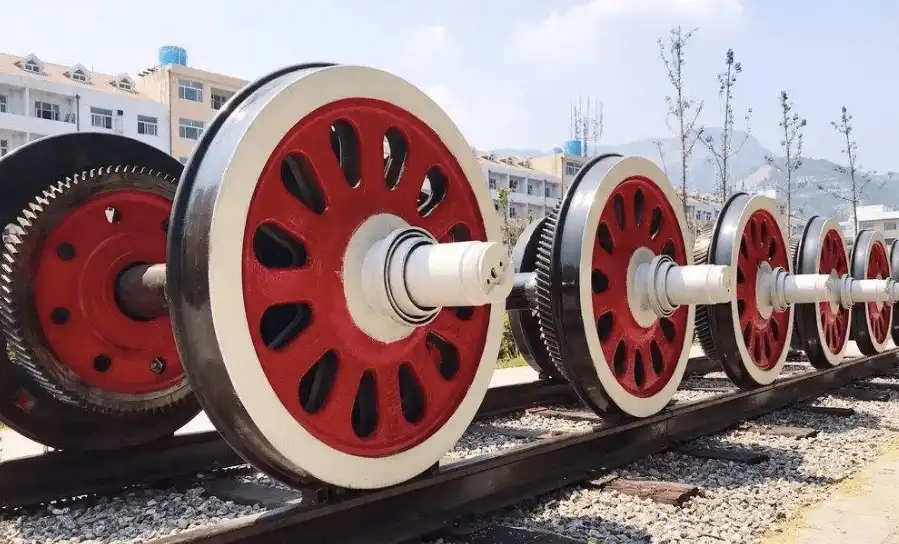
Choosing a railway wheel supplier is about much more than finding the lowest price.
A wheel may look acceptable on paper, but long-term performance depends on many factors that are not immediately visible.
Manufacturing capability is one of them. The quality of the forging process, heat treatment control, machining accuracy, and inspection procedures all influence how the wheel performs in service.
Traceability is equally important. Reliable manufacturers maintain complete production records and provide documentation that allows each wheel to be traced throughout the manufacturing process.
Technical support also matters. In many projects, customers need assistance with wheel specifications, applicable standards, testing requirements, export documentation, and application-specific recommendations.
Over the years, we have found that the most successful railway projects are usually based on long-term cooperation between operators, vehicle manufacturers, and wheel suppliers rather than purely price-driven purchasing decisions.
Our railway wheels are manufactured under strict quality control procedures and supplied to customers across freight, passenger, metro, locomotive, and industrial railway sectors. We support international standards, customized requirements, and project-specific technical consultation.
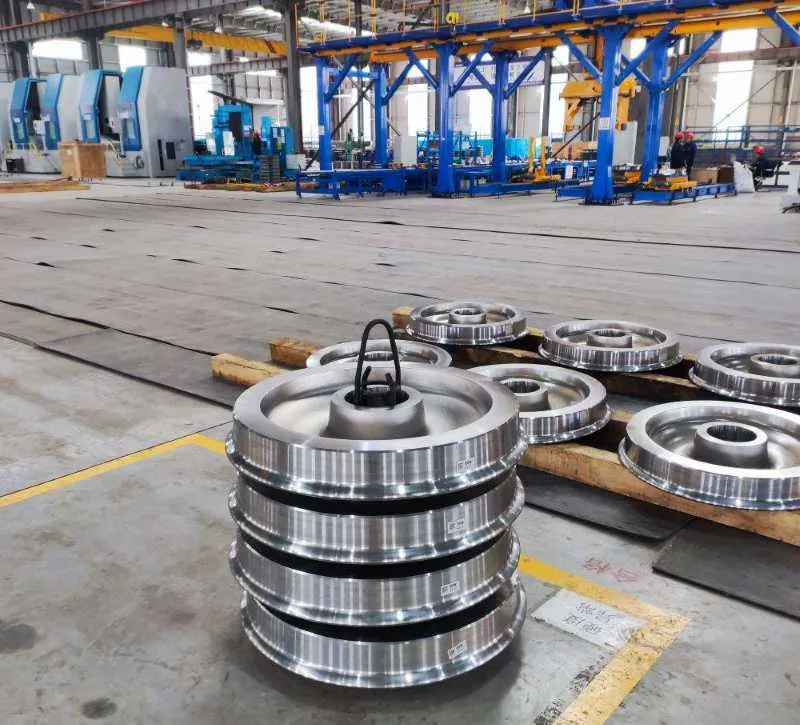
There is no single answer. Wheel life depends on operating conditions, axle load, maintenance practices, wheel material, and vehicle type. Some wheels remain in service for many years and undergo multiple reprofiling cycles before replacement.
The conical wheel tread helps wheelsets stay centered on straight track and negotiate curves more smoothly. It is one of the key principles behind railway vehicle stability.
Wheel flats usually occur when a wheel slides instead of rolling. This often happens during severe braking events or low-adhesion conditions.
Rolling contact fatigue, or RCF, is a common railway wheel defect caused by repeated contact stresses between the wheel and rail. Over time, these stresses can lead to crack formation and surface damage.
Inspection methods may include visual examination, dimensional measurement, ultrasonic testing, magnetic particle testing, hardness testing, and automated monitoring systems.
The answer depends on the target market and railway system. Common standards include EN 13262, AAR M107/M208, UIC requirements, IRS specifications, and customer-specific standards.