Scan the WeChat code to contact us
Scan the WeChat code to contact us
Feel free to send us a email and we will reply to you as soon as possible.
Creating the future with heart and soul


Railway wheels may look like simple steel components, but they are actually highly engineered parts that operate under extremely demanding conditions. During service, every wheel is exposed to repeated wheel-rail contact stress, heavy axle loads, braking heat, and millions of loading cycles. From a manufacturing engineer’s perspective, railway wheel failure rarely happens suddenly. In most cases, defects develop gradually. A small surface damage, uneven wear pattern, or internal fatigue area may continue growing if it is not detected and addressed in time. Understanding common railway wheel defects, why they occur, and how they can be prevented is essential for railway operators, maintenance teams, and buyers who need reliable wheel solutions.
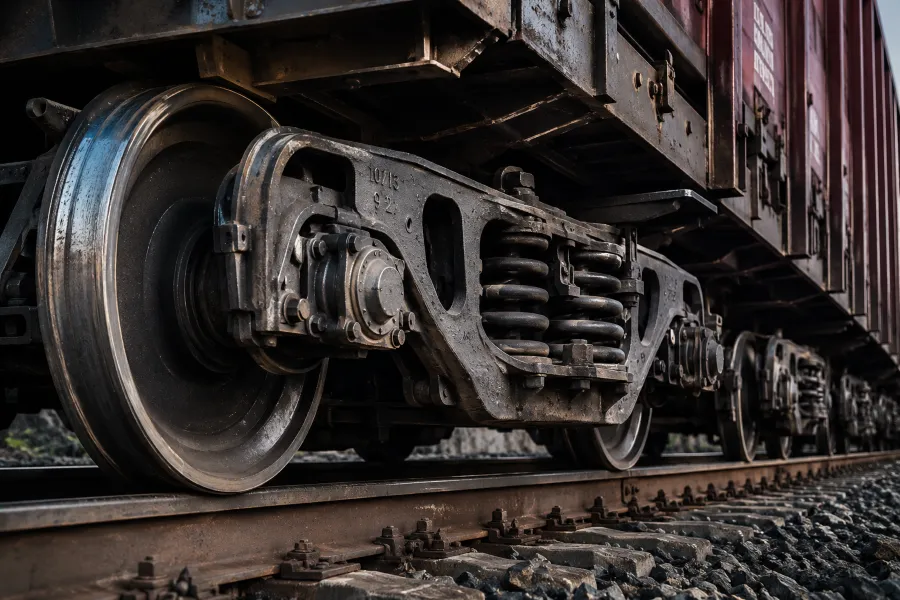
A railway wheel has to perform several functions at the same time. It supports the vehicle load, maintains contact with the rail, guides the vehicle through curves, and transfers braking forces during operation.
Because of this, the wheel is constantly exposed to mechanical and thermal stress. When a defect develops, the problem is not limited to the wheel itself. Excessive vibration can affect bearings, axles, bogie components, and even track condition.
The good news is that most railway wheel defects provide warning signs before becoming critical failures. With proper inspection and maintenance, operators can identify problems early and take corrective action.
Different operating conditions create different types of wheel damage. The following are some of the most common defects found in railway service.
| Defect Type | Main Cause | Possible Impact |
| Wheel Flat | Wheel sliding during braking | Vibration and impact loads |
| Shelling | Rolling contact fatigue | Surface damage and material loss |
| Spalling | Fatigue crack development | Reduced wheel service life |
| Thermal Crack | Excessive braking heat | Crack propagation |
| Flange Wear | Curve operation and contact stress | Poor wheel guidance |
A wheel flat is one of the most recognizable railway wheel defects. It occurs when the wheel stops rotating while the train continues moving, causing the wheel tread to slide against the rail.
This usually happens during emergency braking, brake system problems, or situations where wheel-rail adhesion is insufficient.
The damaged area creates an uneven section on the tread. During every rotation, this flat area produces impact forces between the wheel and rail. Even a relatively small wheel flat can increase vibration and accelerate wear on both the vehicle and track.
Minor flats can sometimes be corrected through wheel reprofiling, but severe damage may require wheel replacement.
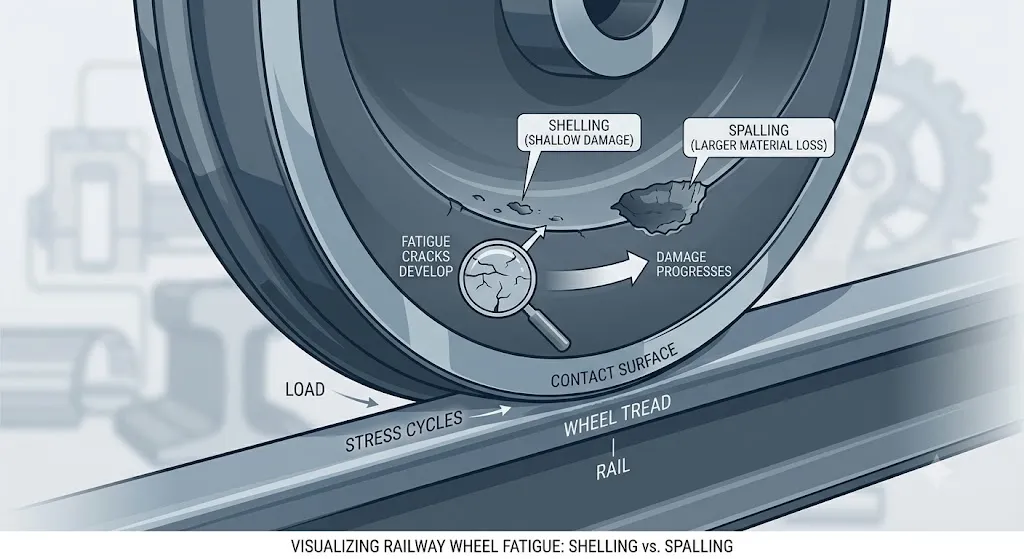
Shelling and spalling are both related to rolling contact fatigue, which is one of the most common long-term damage mechanisms for railway wheels.
During operation, the wheel tread experiences repeated compression and stress cycles. Over time, microscopic fatigue cracks may develop below the surface. As these cracks grow, small pieces of material can separate from the tread.
Shelling usually appears as shallow surface fatigue damage, while spalling normally involves larger areas of material loss after cracks have progressed further.
These defects are especially important for heavy-duty applications such as freight wagons and locomotives, where wheels experience higher axle loads and longer operating cycles.
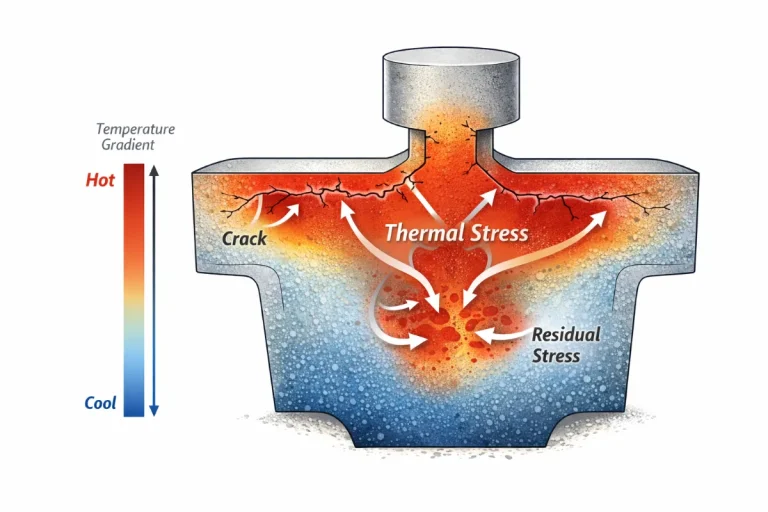
Railway braking generates a significant amount of heat. Under normal conditions, the wheel is designed to withstand these thermal loads. However, repeated heavy braking, long downhill operation, or uneven heat distribution can create excessive thermal stress.
When the surface temperature changes rapidly, small cracks may appear on the wheel tread. If these cracks continue developing under repeated loading, they can eventually affect wheel safety.
This is why wheel material selection, heat treatment quality, and braking conditions all play an important role in preventing thermal damage.
The wheel flange plays an important role in guiding railway vehicles, especially when passing curves and switches.
During operation, the flange continuously interacts with the rail. Over time, this contact causes material loss and changes the original wheel profile.
Moderate flange wear is a normal part of railway operation, but excessive wear can reduce vehicle stability and increase safety risks. Regular wheel profile measurement helps maintenance teams determine whether a wheel can continue service or requires machining.
Railway wheel defects are usually caused by a combination of factors rather than a single problem.
The first factor is the operating environment. Heavy axle loads, high running speeds, frequent braking, and poor track conditions all increase the stress experienced by the wheel.
For example, a freight wagon operating under high axle loads may accumulate rolling contact fatigue faster than a lightly loaded vehicle. Similarly, damaged track geometry can create additional impact forces that accelerate wheel damage.
Material quality is another critical factor. The internal structure of wheel steel directly affects fatigue resistance. Steel cleanliness, chemical composition, and heat treatment quality all influence how well a wheel performs over millions of loading cycles.
From a manufacturing perspective, the forging process is also extremely important. Proper forging improves material density and grain flow, helping the wheel resist crack initiation and fatigue damage.
In railway maintenance, engineers normally use a combination of inspection methods rather than relying on a single technique.
Visual inspection is usually the first step. Experienced inspectors can identify obvious problems such as wheel flats, abnormal wear, surface damage, or visible cracks.
However, many serious defects begin below the surface. For this reason, non-destructive testing (NDT)methods are essential.
Ultrasonic Testing (UT) is widely used to detect internal defects that cannot be identified visually. It helps locate internal cracks and material discontinuities before they become dangerous.
Magnetic Particle Testing (MT) is effective for detecting surface and near-surface cracks, especially during manufacturing inspection or maintenance checks.
Wheel profile measurement is also important because it monitors flange wear, tread wear, and dimensional changes throughout the wheel’s service life.
Preventing railway wheel defects starts during the manufacturing process, long before the wheel enters operation.
A high-quality forged railway wheel benefits from improved material density, continuous grain flow, and better mechanical properties compared with less controlled manufacturing methods. These characteristics provide higher fatigue resistance and better performance under repeated loading conditions.
However, forging alone is not enough. Wheel quality depends on the complete manufacturing process, including steel selection, forging control, heat treatment, machining accuracy, and final inspection.
At Fonyo, forged railway wheels are produced through controlled manufacturing processes including forging, heat treatment, CNC machining, and comprehensive inspection. Each wheel is evaluated through dimensional inspection, mechanical testing, and non-destructive testing methods such as ultrasonic testing and magnetic particle testing.
By combining manufacturing experience with strict quality control, reliable railway wheels can achieve longer service life and improved operational performance in demanding applications.
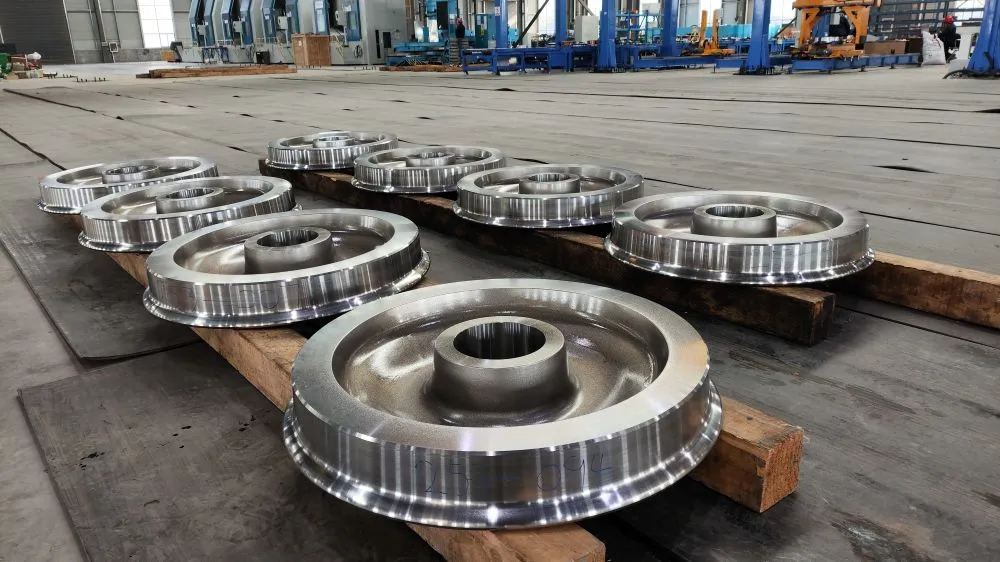
Although wheel wear cannot be completely eliminated, many serious defects can be reduced through proper engineering practices.
Regular inspection allows maintenance teams to identify early signs of damage before they develop into major failures. Correct wheel reprofiling can restore wheel geometry and extend service life.
At the same time, selecting wheels manufactured with appropriate materials, controlled heat treatment, and reliable inspection procedures provides a stronger foundation for long-term operation.
For railway operators, prevention is always more economical than unexpected wheel failure.
Wheel flats are among the most commonly observed defects because they can occur whenever a wheel slides during braking. In heavy-duty railway applications, rolling contact fatigue defects such as shelling and spalling are also major concerns.
Railway wheel cracks can develop due to fatigue stress, excessive thermal loading, material problems, or unfavorable operating conditions. Regular inspection helps detect cracks before they become serious.
Railway wheel defects are inspected using several methods, including visual inspection, ultrasonic testing, magnetic particle testing, and wheel profile measurement.
Forged railway wheels typically have better structural integrity, improved grain flow, and higher fatigue resistance, making them suitable for demanding railway applications.
Defects cannot be completely eliminated, but high-quality manufacturing, proper maintenance, and regular inspection can significantly reduce failure risks.
Preventing railway wheel defects requires more than selecting the right wheel design. Material quality, manufacturing processes, heat treatment, machining accuracy, and inspection standards all play an important role in achieving long-term reliability.
Luoyang Fonyo Heavy Industries Co., Ltd. has been manufacturing railway components since 1998, specializing in forged railway wheels, railway castings, and precision-machined railway parts for global customers. Our products include railway wheels for freight wagons, locomotives, industrial rail systems, as well as customized railway components manufactured according to customer drawings and technical requirements.
With integrated capabilities covering forging, casting, CNC machining, heat treatment, and non-destructive testing, Fonyo provides reliable solutions for customers seeking high-quality railway wheels, cast steel components, and railway spare parts.
If you are looking for a trusted railway wheel manufacturer or need customized railway components for your project, please contact Luoyang Fonyo Heavy Industries for professional engineering support and manufacturing solutions.
Learn more at: Railwaypart.com