Scan the WeChat code to contact us
Scan the WeChat code to contact us
Feel free to send us a email and we will reply to you as soon as possible.
Creating the future with heart and soul


Safety is always the top priority in railway systems. Railway wheels are the only component connecting the locomotive to the tracks. Therefore, their performance directly determines the safety, smoothness, and efficiency of operation. A tiny defect, whether on the surface or inside, can lead to serious failure under high speed and heavy load. So, strict and comprehensive quality inspection is absolutely necessary.
Here, NDT (Non-Destructive Testing) and non-destructive quality inspection play a core role. They can accurately find any problems inside or outside the material without damaging the product. Our company uses industry-leading NDT technology and a strict quality system. Our goal is to ensure every railway wheel is absolutely reliable. We are committed to protecting the safety and reliability of every journey.

We firmly believe that excellent quality comes from strict control of every production step. Therefore, we have established a thorough multi-stage inspection system. From raw materials to the finished product, each wheel must go through a series of precise and coherent checks. This systematic method ensures problems are found and solved as early as possible. As a result, it builds multiple layers of protection for final railway wheel safety. Next, we will detail our five core testing methods. Together, these methods form a solid foundation for our quality assurance.
The wheel tread needs to withstand huge friction and impact. Therefore, its wear resistance is very important. We use a standard Brinell hardness tester with a force of 3000kgf to test the wheel surface. This non-destructive quality test accurately measures the material’s hardness value. It not only ensures the wheel has sufficient hardness to resist wear but, more importantly, verifies if the hardness is uniform. Uniform hardness is key. It prevents premature local wear on the railway wheels, ensures smooth operation, and extends service life.
Internal impurities or cracks are “hidden threats” to wheels. We use advanced water-immersion phased array ultrasonic testing technology. The probe sends focused ultrasonic waves to “scan” the wheel’s interior. This technology offers the advantages of high precision, no blind spots, and fast speed. It clearly shows the location, size, and shape of internal defects. Therefore, it can effectively eliminate operational hazards and ensure the internal structure of the railway wheels is sound.
For tiny defects near the surface, we use fluorescent wet magnetic particle testing. After the wheel is magnetized, defects attract fluorescent magnetic particles, which glow under ultraviolet light. This method is very intuitive. It efficiently finds defects invisible to the naked eye. So, it is a very sensitive and reliable method for detecting surface cracks. This provides an additional guarantee for wheel quality.
Any small weight imbalance can cause vibration during high-speed rotation. This affects safety, comfort, and part lifespan. We use high-precision centrifugal method to measure the wheel’s residual static unbalance. This test directly reflects the machining level of the wheel. By strictly controlling the unbalance amount, we ensure the railway wheels are very stable at high speeds. Consequently, passengers enjoy a smooth ride.
This is the final comprehensive check before leaving the factory. We use a dual-station visual inspection table with professional lighting. Inspectors can view the surface quality of the railway wheels from multiple angles, checking for scratches or rust. Meanwhile, they also measure critical dimensions like rim thickness. This careful visual inspection is the final confirmation of the wheel’s overall integrity.
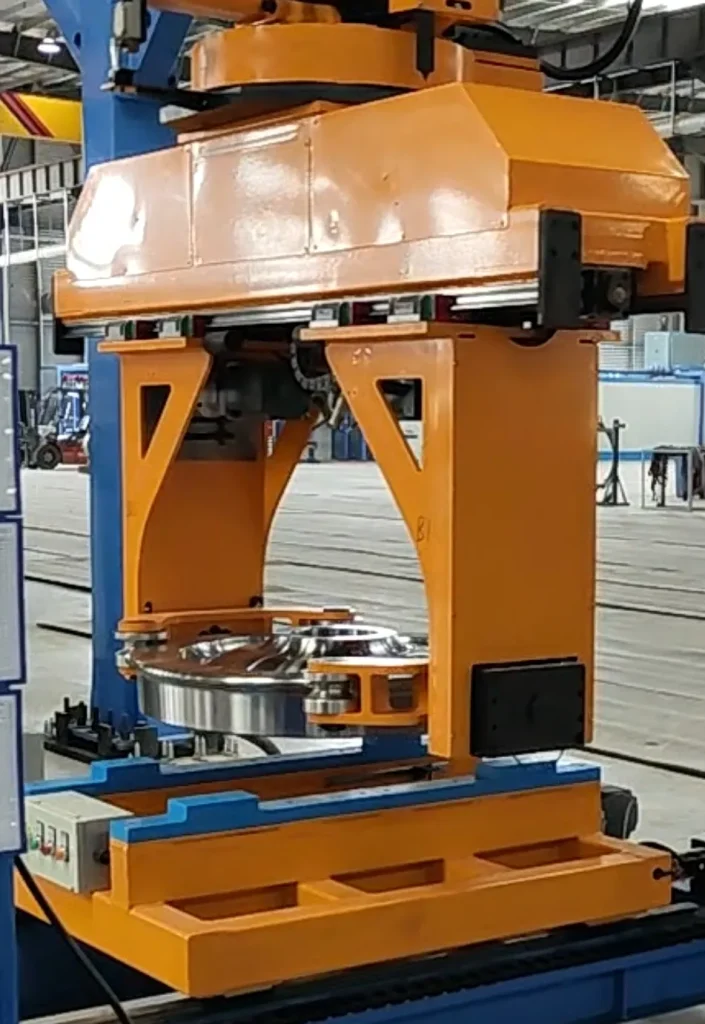
The five tests mentioned above are an integrated whole. They complement each other, forming a powerful NDT system. Hardness testing ensures material performance. Ultrasonic testing checks internal health. Magnetic particle testing finds surface issues. Static balance testing ensures smooth operation. And the final visual inspection provides overall confirmation. This combined non-destructive quality inspection strategy covers all aspects.
Through this system, we can not only find problems but also continuously improve the manufacturing process. For railway operators, this means higher reliability and longer product life. Fundamentally, it safeguards railway wheel safety and the smooth operation of the entire rail network.
In the railway field, quality can never be compromised. Through advanced multi-stage NDT and non-destructive quality inspection technologies, Luoyang Fonyo Heavy Industries Co., Ltd. integrates the promise of safety into the inspection of every single wheel. Our commitment to the quality of railway wheels is not only a manufacturing standard, but also our responsibility to passenger safety and long-term customer trust.
If you are looking for a reliable railway wheel supplier, or would like to learn more about our NDT inspection capabilities and quality assurance system, please feel free to contact Luoyang Fonyo Heavy Industries Co., Ltd.at www.railwaypart.com. Let us work together for a safer and more efficient railway future.
Q1: What is Non-Destructive Testing for railway wheels?
A1: Non-Destructive Testing for railway wheels refers to a series of techniques that evaluate wheel quality and integrity without causing damage, such as Ultrasonic Testing and Magnetic Particle Testing. It helps detect internal and surface defects to ensure safety and durability.
Q2: How often should railway wheels be inspected?
A2: Inspection frequency depends on usage, mileage, and manufacturer or regulatory guidelines. Typically, wheels undergo strict inspection during production (as described above). Afterwards, they are inspected periodically during operation according to railway maintenance schedules to monitor wear and find potential issues.
Q3: What defects can Ultrasonic Testing detect in railway wheels?
A3: Ultrasonic Testing, especially the phased array method we use, is very effective in detecting internal defects in railway wheels, such as cracks, voids, inclusions, and porosity. This is crucial for finding hidden flaws that might affect structural integrity under stress.