Scan the WeChat code to contact us
Scan the WeChat code to contact us
Feel free to send us a email and we will reply to you as soon as possible.
Creating the future with heart and soul


This article looks at how different international rules really change the way railway wheels are made, not just what is written in the rule books.
On paper, the rules for railway wheels often seem very much alike. Most of them talk about what metals are in the steel, how strong and tough it needs to be, how it should be heated and cooled, and how to check the quality.
But when you go from paper to the factory floor, the differences are very real.
They change how the steel is made, how the heat treatment is done, how the wheel is shaped, and how it is tested. This is why buyers might get confused when railway wheels that meet the same standard, but in real use, act so differently.
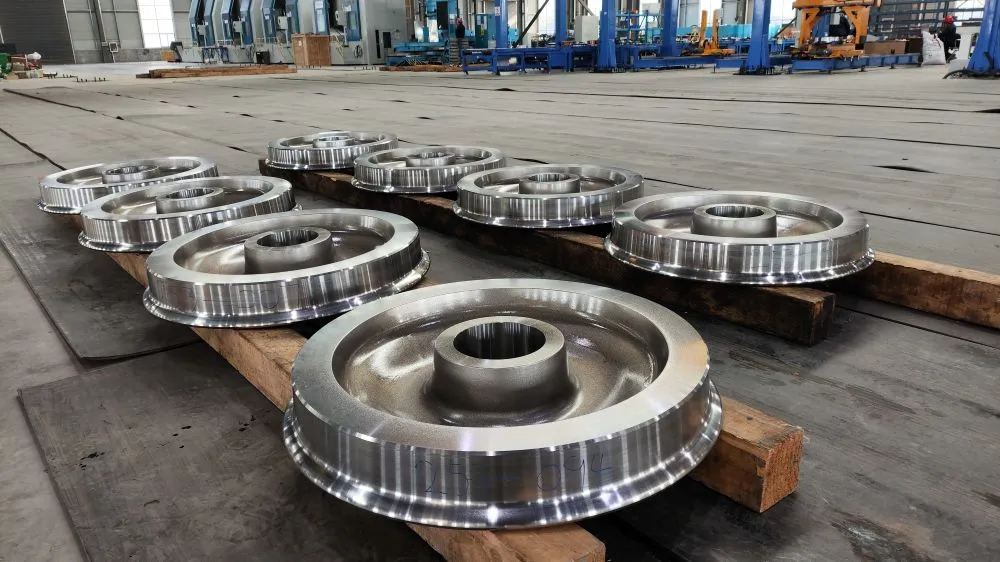
Railway wheels are not normal steel parts. They face lots of challenges such as carrying heavy loads, facing constant knocking, handling braking heat, and wearing down over many years. Because of this, the rules guiding their making are very important.
Each rulebook finds a different balance between strength, toughness, resistance to wear, and how long the wheel lasts. This balance directly decides how well the wheel performs over time. For the factory, these rules are not just papers. They are step-by-step guides for making the wheel.
UIC and EN rules are common in Europe and many global rail projects. Their biggest goal is to make every wheel very consistent and predictable.
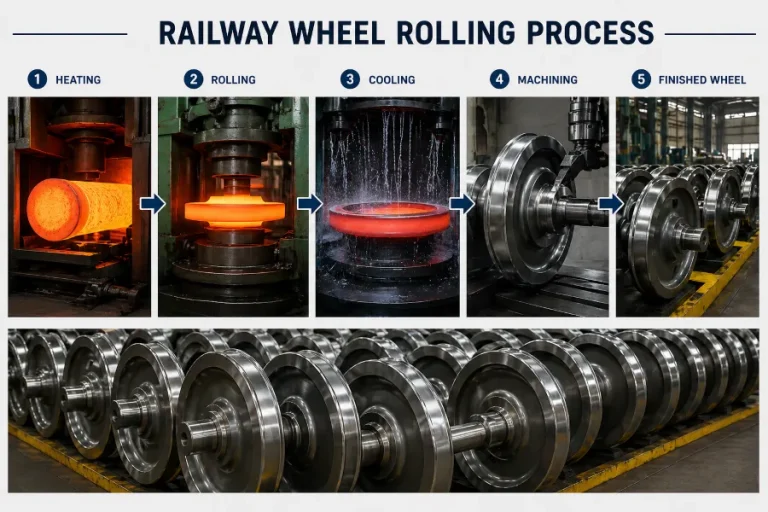
For wheels under these rules, factories must carefully control how hard the steel is at different points, how the metal’s inner structure looks, and the stress locked inside after making. The heating and cooling process is defined very tightly. Even a small change can mean the wheel fails the check.
In practice, production has to be extremely stable. Ovens must control temperature perfectly, cooling must happen the same way each time, and every step must be recorded. These wheels are challenging not because the steps are complex, but because there is almost no room for error.
AAR rules are used mostly in North America and are designed for heavy freight trains.
Compared to European rules, AAR focuses more on lasting a long time under very hard conditions. Wheels made to AAR rules must handle heavier train cars, stronger shocks, and much longer distances between maintenance.
For the maker, this means paying more attention to how pure the steel is, how tough it is after heat treatment, and how the wheel’s running surface holds up in real life. The goal is not just to pass a test, but to survive years of punishing work.
JIS rules show a strong focus on strict processes and long-term quality.
For railway wheels, JIS often means tight control at every single stage of production. What goes into the steel, how it’s treated with heat, and how it’s checked are all tightly connected. Straying from the plan is usually not allowed.
Factories making JIS wheels depend a lot on skilled workers and well-organised quality systems. Trying to take a shortcut usually shows up fast in the test results. This is why knowing the process totally inside-out is so important under these rules.
IRS and GOST rules are often linked to newer or specific regional rail systems. On paper, they might seem easier, but the real challenge is in doing it right.
These rules are closely tied to local weather, how trains are maintained, and what people there expect. So, making wheels to IRS or GOST standards isn’t just a technical job. You also need to understand how the wheels will actually be used on the local tracks.
Many arguments about quality don’t come from the wheel being “wrong,” but from a gap between what the drawing said and what the real-world railway needed.
People often think a factory can easily switch from making wheels for one standard to another. In truth, changing the rulebook affects the steel recipe, the heating/cooling steps, how much metal to cut off, and the checking methods, and these factors should be considered all at once. Even two railway wheels that look the same on the outside might need completely different journeys inside the factory.
So this is why having real experience with a standard is as important as having the official certificate for it.
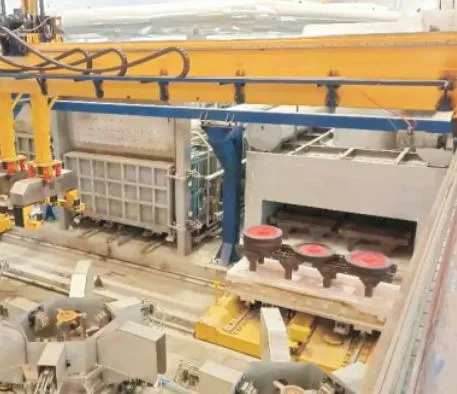
Some needs are clearly written in the rules. Others you only learn by making wheels for years.
For example, heating the wheel rim evenly, managing hidden stress after machining, and the link between hardness and wear, these small differences here can create a big gap in performance. Testing methods can also vary, especially in how many wheels you check from a batch.
You won’t see these details on a drawing, but they have a huge impact on how long and how safely a wheel runs.
If you are buying railway wheels from around the world, just checking the standard name (like “AAR M-107”) is not enough.
It’s much more important to ask: How often does this supplier make wheels to this standard? How steady is their heat treatment process? How do they actually do their quality checks? A factory with true experience can clearly explain its process, not just hand you a stack of test reports.
This kind of openness is often a good sign that they are reliable for the long term.
A strong railway wheel manufacturer is not defined by how many standards appear on a brochure.
What really matters is whether the factory understands the differences between standards at a process level, and whether it can maintain consistent quality across different projects.
At Luoyang Fonyo Heavy Industries Co., Ltd., we specialize in the manufacturing of railway wheels for locomotives and rolling stock, supplying products to meet UIC, EN, AAR, JIS, IRS, and GOST standards. Our railway wheels are produced with stable material control, precise heat treatment, and strict inspection, ensuring reliable performance in real service conditions.
With long-term experience serving customers in different markets, we understand that railway wheel standards may look similar on paper, but require very different execution in production. That understanding allows us to support customers not only with compliant products, but also with practical manufacturing insight.
If you are sourcing railway wheels for international projects and want a supplier who truly understands both standards and real-world operation, you are welcome to learn more about us at www.railwaypart.com
You might also be interested in our other articles:
Railway Wheel Heat Treatment Explained for performance improvements
Ultrasonic Testing of Railway Wheels to understand internal inspections
Railway Wheel Structure and Composition for a complete guide
Visual Inspection Methods for Railway Wheels to spot surface defects
How NDT and Non-Destructive Quality Inspection Guarantee Railway Wheels to ensure wheel reliability and detect hidden defects
3D Laser Measurement for Railway Wheels to know how precise dimensional inspection during the wheel production process