WeChat 코드를 스캔하여 문의하세요
WeChat 코드를 스캔하여 문의하세요
이메일을 보내주시면 최대한 빨리 답변해 드리겠습니다..
마음과 영혼을 다해 미래를 창조하다


부러진 고무줄 레일 클립 작은 문제처럼 보일 수도 있습니다, 하지만 철도 선로에서는 훨씬 더 큰 문제가 빠르게 발생할 수 있습니다.. 클립이 조임력을 잃으면, 레일이 더 이상 의도한 대로 안전하게 고정되지 않습니다.. 시간이 지남에 따라, 이는 약간의 레일 이동을 허용할 수 있습니다., 진동을 증가시키다, 다른 고정 부품의 마모를 가속화합니다., 궁극적으로 전체 선로 구조의 안정성에 영향을 미칩니다..
고객들이 자주 묻는 질문 중 하나는, “열차 하중이 설계 한계 내에 있을 때 레일 클립이 파손된 이유는 무엇입니까??” 많은 경우, 답은 단일 과부하나 제조 결함이 아닙니다. 레일 클립 파손은 일반적으로 반복되는 바퀴 하중의 결과로 점진적으로 발생합니다., 환경 조건, 설치 품질, 그리고 체결 시스템의 전반적인 상태.
탄성 레일 클립은 사용 수명 동안 수백만 번의 로딩 주기에도 작동하도록 설계되었기 때문입니다., 실패하는 방식을 이해하는 것은 작동 방식을 이해하는 것만큼 중요합니다.. 고장의 조기 징후를 식별하면 유지보수 팀이 클립이 트랙 성능에 영향을 미치기 전에 교체할 수 있으며 프로젝트 엔지니어가 더 긴 서비스 수명을 제공하는 고정 시스템을 선택하는 데 도움이 됩니다..
이 기사에서는, 탄성 레일 클립이 실패하는 가장 일반적인 이유를 살펴보겠습니다., 이러한 실패가 어떻게 발생하는지 설명, 철도 체결 시스템의 수명을 연장하기 위한 실질적인 방법을 논의합니다..
단순한 강철 부품처럼 보이지만, 탄성 레일 클립은 철도 고정 시스템에서 가장 까다로운 작업 중 하나를 수행합니다.. 이들의 목적은 단순히 레일을 제자리에 고정하는 것이 아닙니다., 그러나 트랙이 지속적으로 진동을 받는 동안 일관된 클램핑 력을 유지하려면, 영향, 온도 변화, 그리고 무거운 차축 하중.
기차가 지나갈 때마다, 하중이 가해지면 레일이 약간 휘어집니다.. 탄성 레일 클립이 함께 구부러집니다., 무브먼트의 일부를 흡수한 후 원래의 형태로 되돌아가는 기능. 이러한 연속적인 탄성 작용은 레일을 레일 패드에 단단히 고정시키는 동시에 고정 시스템 내의 응력을 줄이기에 충분한 움직임을 허용합니다..
오래된 철도 노선에 사용된 견고한 고정 방법과 달리, 최신 탄성 클립은 동적 힘을 더욱 고르게 분산시키는 데 도움이 됩니다.. 이는 침목의 마모를 줄여줍니다., 레일 이동을 최소화합니다., 보다 부드러운 승차감과 긴 트랙 수명에 기여합니다..
하지만, 이러한 반복되는 탄성 변형은 레일 클립이 결국 마모되는 이유도 설명합니다.. 고품질 스프링강이라도 피로 수명은 유한합니다.. 수백만 번의 로딩 주기 이후, 물질 내에서 미세한 변화가 일어나기 시작합니다., 제대로 된 디자인을 하다, 조작, 유지 보수가 필수적입니다.
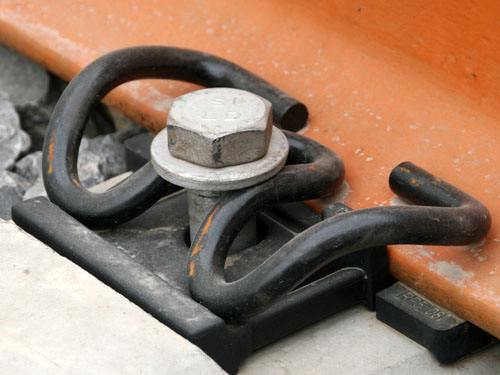
많은 사람들은 고장난 레일 클립을 두 조각으로 쪼개진 것으로 상상합니다.. 실제로는, 완전 골절은 종종 훨씬 더 긴 과정의 마지막 단계입니다..
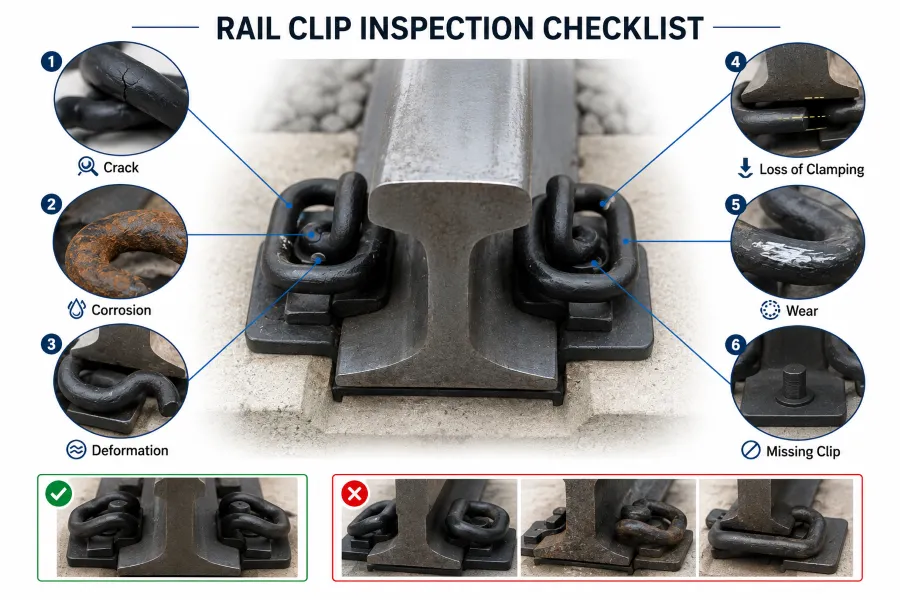
정기점검 중, 유지보수 엔지니어는 클립 곡선 부분 근처의 작은 균열과 같은 조기 경고 신호를 접할 가능성이 더 높습니다., 눈에 보이는 부식, 약간의 영구 변형, 또는 클램핑력이 눈에 띄게 감소함. 이러한 변화는 개별적으로는 사소해 보일 수 있습니다., 하지만 함께 표시되면 클립이 더 이상 설계된 대로 작동하지 않음을 나타냅니다..
유지관리 관점에서, 가장 심각한 결과는 부러진 클립 자체가 아니라 점진적인 구속력 상실입니다.. 클램핑력이 감소함에 따라, 철도는 교통하중 하에서 움직임에 더욱 취약해집니다.. 이러한 움직임은 체결 시스템 전반에 걸쳐 진동을 증가시킵니다., 레일 패드에 추가적인 응력을 가함, 절연체, 침목, 및 인접 클립.
이러한 이유로, 숙련된 철도 유지보수 팀은 클립이 완전히 파손될 때까지 기다리는 경우가 거의 없습니다.. 피로나 변형의 첫 번째 징후가 나타날 때 클립을 교체하는 것이 일반적으로 장기간 작동으로 인한 2차 손상을 처리하는 것보다 훨씬 경제적입니다..
숙련된 선로 엔지니어에게 탄성 레일 클립이 가장 많이 파손되는 원인이 무엇인지 묻는 경우, 대답은 거의 항상 같다: 금속 피로.
레일 클립은 극도로 높은 하중을 견딜 수 있는 고강도 스프링 강철로 제작되었기 때문에 많은 사람들이 이를 놀라게 했습니다.. 문제는 기차 한 대가 너무 무겁다는 것이 아니다. 대신에, 이는 서비스 수명 전반에 걸쳐 클립이 경험하는 엄청난 로딩 주기입니다..
바퀴가 지나갈 때마다 클립이 약간 휘어집니다.. 그 움직임은 육안으로 볼 수 없을 정도로 매우 작습니다. 그러나 기차가 지나갈 때마다 발생합니다.. 몇 년에 걸쳐, 이러한 반복된 응력 주기는 응력이 자연적으로 집중되는 위치에서 점차적으로 미세한 균열을 시작합니다., 특히 굽은 부분과 접촉 부분 주변.
처음에는, 균열이 너무 작아 성능에 영향을 미치지 않습니다.. 교통이 계속되면서, 하지만, 물질을 통해 천천히 전파됩니다.. 결국, 나머지 단면이 너무 작아서 필요한 하중을 지탱할 수 없게 됩니다., 그리고 클립이 부러졌네요, 종종 상당한 사전 변형 없이.
피로 장애가 실제로 수개월 또는 수년 동안 발생했음에도 불구하고 갑자기 나타날 수 있는 이유가 바로 여기에 있습니다.. 중거리 철도의 경우, 차축 하중과 교통 빈도가 훨씬 높은 곳, 피로 과정은 일반적으로 더 빠르게 진행됩니다., 정기점검이 특히 중요하기 때문에.
레일 클립이 결국 파손되는 가장 일반적인 원인은 피로입니다., 피로가 발생하는 속도는 클립의 사용 수명 전반에 걸쳐 클립이 경험하는 하중에 따라 크게 달라집니다..
정상적인 작동 조건에서, 탄성 레일 클립은 설계된 탄성 범위 내에서 구부러집니다.. 짐을 제거하고 나면, 원래 모양으로 돌아가서 필요한 클램핑력을 계속 제공합니다.. 이 반복되는 움직임은 바로 클립이 수행하도록 설계된 것입니다..
Problems begin when the fastening system is exposed to loads that exceed its original design assumptions.
중거리 화물 철도, 광산 라인, port railways, and crane rail systems often operate with significantly higher axle loads than conventional passenger railways. 이러한 환경에서는, every wheel passage produces greater stress within the fastening system. Although a single overload may not immediately damage the clip, repeated overloading shortens its fatigue life considerably.
Impact loading can be even more damaging than static loads. Instead of applying force gradually, impact loads create sudden stress spikes that place far greater demands on the spring steel.
실제로, impact loading is commonly associated with:
When these conditions persist, rail clips are forced to absorb loads well beyond those expected during normal operation. Engineers often find that broken clips are concentrated in localized sections of track where impact loading occurs repeatedly, rather than being evenly distributed along the railway.
This is why replacing broken clips alone rarely solves the problem. Unless the underlying track condition is corrected, newly installed clips may fail in exactly the same location after only a relatively short period.
One of the more frustrating causes of rail clip failure is that it can occur before the railway even enters service.
We’ve seen situations where clips manufactured from high-quality spring steel failed much earlier than expected, not because of poor materials, but because they were installed incorrectly.
Elastic rail clips are designed to operate within a specific elastic deformation range. During installation, the clip is temporarily deflected to generate the required toe load that holds the rail firmly against the rail pad. If that deformation exceeds the design limit, permanent stresses may remain locked inside the steel.
Those stresses are invisible during installation. The clip may appear perfectly normal, yet its fatigue resistance has already been reduced.
Incorrect installation can result from several factors, including using unsuitable installation tools, forcing the clip into position at an incorrect angle, or applying excessive installation force. Selecting the wrong clip for the rail section or fastening system can produce similar problems, as the clip may never achieve the designed clamping force.
이러한 이유로, proper installation should be viewed as part of the engineering design rather than simply the final step of construction. Following the manufacturer’s installation procedure and verifying the correct toe load can significantly extend the service life of the fastening system.
Corrosion is sometimes treated as a separate issue from fatigue, but in reality the two are closely connected.
A rail clip does not have to lose a large amount of material before its fatigue performance begins to decline. Even a small corrosion pit can create a localized stress concentration where microscopic cracks are more likely to initiate.
This is particularly important on railway lines operating in aggressive environments. Coastal railways are exposed to salt-laden air, industrial railways may encounter chemical contamination, and regions with high humidity often experience prolonged moisture exposure. In colder climates, de-icing salts can further accelerate corrosion on exposed steel components.
Once the protective coating has been damaged, corrosion gradually reduces the effective cross-section of the clip while making stress distribution less uniform. The combination of corrosion and repeated wheel loading often leads to what engineers refer to as corrosion fatigue, a failure mechanism that progresses much faster than ordinary fatigue alone.
Routine inspections should therefore look beyond obvious fractures. Rust around highly stressed areas, 클립 표면에 움푹 패인 부분, 또는 보호 코팅이 손상되면 클립이 피로 균열이 발생할 가능성이 높은 단계로 진입하고 있음을 나타낼 수 있습니다..
열악한 환경에서 운행되는 철도용, 적절한 표면 보호 기능을 갖춘 클립을 선택하고 정기적인 유지 관리 프로그램을 구현하면 조기 고장 위험을 크게 줄일 수 있습니다..
두 개의 탄성 레일 클립은 공장에서 출고될 때 거의 동일하게 보일 수 있습니다., 하지만 몇 년 동안 서비스를 제공한 후에는 매우 다른 성능을 발휘합니다..
The difference often lies in the manufacturing process rather than the appearance of the finished product.
Spring steel used for railway clips must achieve a careful balance between strength, 탄력, 그리고 인성. Achieving that balance depends on accurate control of heat treatment, particularly the quenching and tempering process.
If the steel is too hard, the clip may become brittle and crack more easily under repeated loading. If it is too soft, it may gradually lose its clamping force through permanent deformation. Neither condition is acceptable for long-term railway service.
Material quality is equally important. 비금속 개재물, 내부 결함, surface decarburization, or inconsistent chemical composition can all become weak points where fatigue cracks initiate much earlier than expected.
이러한 이유로, reputable manufacturers invest heavily in process control rather than relying solely on final product inspection. Consistent raw materials, 통제된 열처리, 치수 정확도, and comprehensive mechanical testing all contribute to producing clips capable of surviving millions of load cycles in demanding railway environments.
~에 낙양 포뇨 중공업, quality control begins long before the finished clip reaches inspection. From raw material selection to heat treatment, 경도 테스트, 치수 확인, and fatigue performance evaluation, every production stage is carefully monitored to ensure consistent product reliability for railway applications worldwide.
It’s common to hear people blame extreme weather when rail clips begin breaking during winter or summer. While temperature certainly affects railway infrastructure, it is rarely the sole reason an elastic rail clip fails.
대부분의 경우, temperature acts as a contributing factor rather than the root cause.
Steel rails expand in hot weather and contract in cold weather. These movements generate additional forces within the fastening system, particularly on continuously welded rail (CWR). Elastic rail clips are designed to accommodate a certain amount of rail movement while maintaining the required clamping force, but they must do so repeatedly throughout their service life.
When thermal stresses are combined with heavy axle loads, 부식, or existing fatigue cracks, the remaining fatigue life of the clip can decrease more rapidly.
Low temperatures introduce another challenge. Although modern spring steels generally maintain good toughness over a wide temperature range, inferior materials or poorly controlled heat treatment can make clips more susceptible to brittle fracture in cold environments. 반면에, prolonged exposure to high temperatures may gradually affect the mechanical properties of improperly heat-treated steel.
For railway operators working in regions with significant seasonal temperature variations, thermal effects should be considered as part of the overall maintenance strategy rather than an isolated problem.
One mistake sometimes made during maintenance is to focus only on replacing the broken clip.
실제로는, a failed rail clip is often telling you that something else on the track deserves attention.
예를 들어, if several clips fail repeatedly in exactly the same location, replacing them without investigating the surrounding track conditions is unlikely to solve the problem. There may be excessive impact loading caused by uneven track geometry, insufficient sleeper support, worn rail pads, or abnormal wheel-rail interaction.
비슷하게, if corrosion is consistently found on fastening components within a particular section of railway, improving drainage or selecting better corrosion protection may deliver far greater long-term benefits than simply increasing inspection frequency.
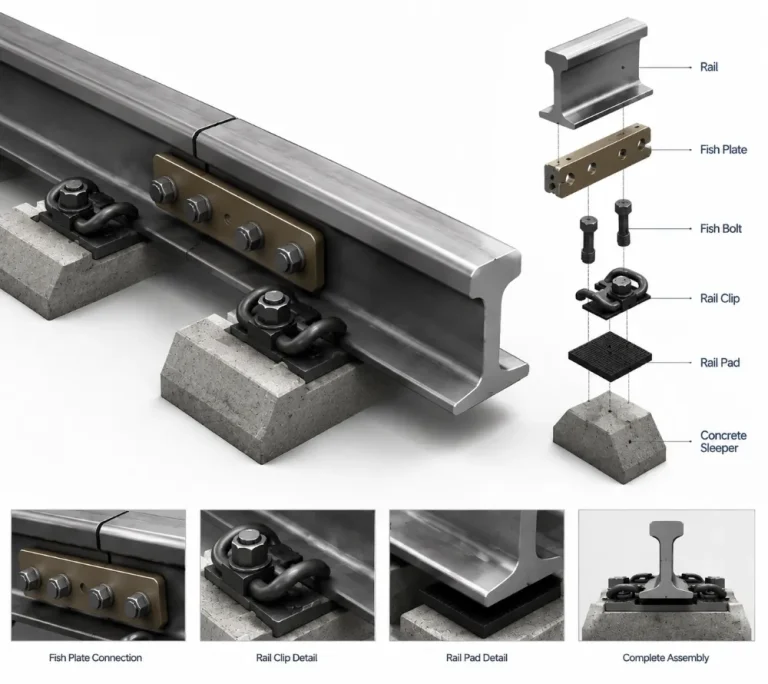
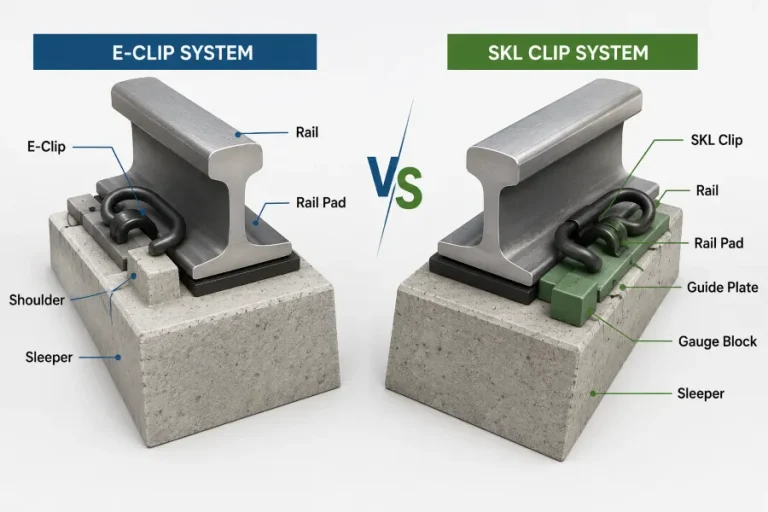
Experienced maintenance engineers therefore look at the fastening system as a whole rather than treating each component independently. The rail, 인주, 절연체, 자는 사람, 어깨, and clip all work together. A problem affecting one component often increases the stress experienced by the others.
이 관계를 이해하면 유지 관리 팀이 반복되는 오류의 실제 원인을 식별하고 불필요한 교체 비용을 방지하는 데 도움이 됩니다..
대부분의 레일 클립 오류는 경고 없이 발생하지 않습니다.. 많은 경우, 가장 초기의 징후는 클립이 실제로 파손되기 오래 전에 나타납니다., 이것이 바로 정기 검사가 가장 비용 효율적인 유지 관리 방식 중 하나로 남아 있는 이유입니다..
정기 검사는 일반적으로 주의 깊은 육안 검사로 시작됩니다.. 엔지니어들은 클립의 곡선 부분 주위에 작은 균열이 있는지 찾습니다., 노출된 표면의 부식, 영구변형, 클램핑 성능의 명백한 감소. 누락된 클립이나 더 이상 올바르게 장착되지 않은 클립도 즉시 해결해야 합니다., 체결 시스템 내의 하중 분포를 변경할 수 있기 때문입니다..
On high-traffic lines or heavy-haul railways, visual inspection alone may not always be sufficient. Non-destructive testing methods, such as magnetic particle inspection, can help detect fatigue cracks before they become visible to the naked eye, allowing components to be replaced during planned maintenance rather than after an unexpected failure.
Inspection intervals should always reflect actual operating conditions. A metro line carrying relatively light passenger traffic requires a different maintenance strategy from a freight railway transporting heavy mineral loads. Environmental conditions, 차축 하중, 교통밀도, and track geometry all influence how quickly fastening components deteriorate.
Rather than replacing clips solely based on age, many railway operators now combine scheduled inspections with condition-based maintenance, ensuring that components are replaced when their condition justifies it.
By the time a rail clip breaks, the conditions leading to that failure have often been developing for years.
The most effective way to improve service life is therefore to consider the entire life cycle of the fastening system—from product selection and manufacturing through installation, 점검, and routine maintenance.
Choosing a rail clip that matches the rail profile, 슬리퍼 유형, and expected axle loads provides the foundation for reliable performance. Equally important is ensuring that the clips are manufactured from certified spring steel and produced under well-controlled heat-treatment conditions. These factors determine how well the clip will resist fatigue over millions of loading cycles.
Correct installation is the next critical step. Even the highest-quality clip cannot perform as intended if it is overstressed during installation or paired with incompatible fastening components. Following recommended installation procedures and using suitable tools helps ensure that the clip operates within its designed elastic range.
Once the track enters service, regular inspection becomes the final layer of protection. Detecting corrosion, fatigue cracks, or deformation early allows maintenance teams to replace individual components before more serious damage develops elsewhere in the fastening system.
엔지니어링 관점에서, preventing failure is rarely about one single improvement. It is the combination of good product quality, 올바른 설치, and consistent maintenance that delivers the longest service life.
When comparing elastic rail clips, it is easy to focus on dimensions or price alone. 하지만, clips that appear almost identical can perform very differently once they are installed on the track.
Long-term reliability depends on factors that are not always visible, including steel quality, heat-treatment consistency, 피로 성능, 치수 정확도, and manufacturing process control. These characteristics determine whether a clip will continue providing stable clamping force after millions of loading cycles.
~에 낙양 포뇨 중공업, we manufacture elastic rail clips for a wide range of railway applications, including heavy-haul railways, 지하철 시스템, 산업용 트랙, and crane rail projects. Every production stage—from raw material selection and heat treatment to dimensional inspection and mechanical testing—is carefully controlled to ensure consistent product quality.
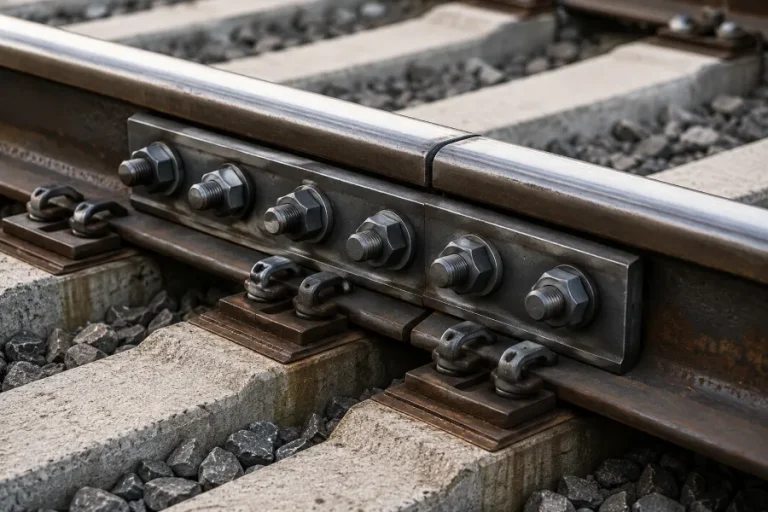
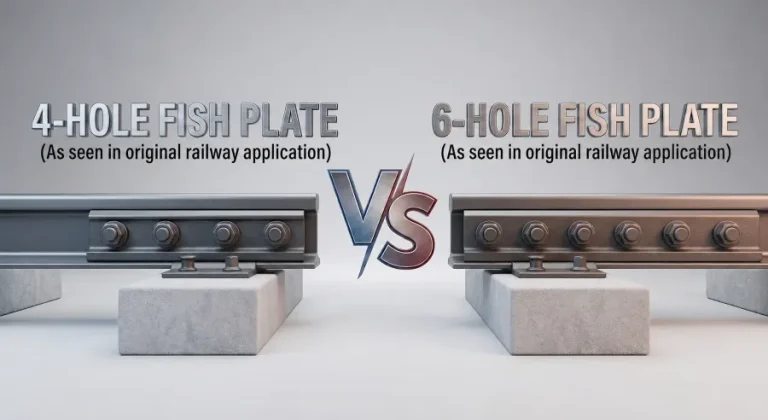
Beyond railway 레일 클립, Fonyo manufactures a broad range of railway components, including railway fish plate, 철도 바퀴, bogie bolsters and side frames, 레일 클립, 물고기 볼트, 레일 패드, and other custom cast and forged parts. By combining casting, 단조, 정밀 가공, 열처리, and inspection under one roof, we help customers simplify sourcing while ensuring consistent quality across critical railway components.
If you’re planning a new railway project or replacing existing rail joints, simply send us your drawings or technical specifications. Our engineering team will review your requirements and recommend the most suitable solution for your project.