WeChat 코드를 스캔하여 문의하세요
WeChat 코드를 스캔하여 문의하세요
이메일을 보내주시면 최대한 빨리 답변해 드리겠습니다..
마음과 영혼을 다해 미래를 창조하다


언뜻보기에, 최대 탄성 레일 클립 눈에 띄게 비슷해 보여. 화물철도에 설치 여부, 지하철 노선, 아니면 고속철도, 기본 목적은 동일합니다: 동적 하중 하에서 트랙이 안전하게 작동할 수 있도록 충분한 탄성을 허용하면서 침목에 대해 레일을 안전하게 고정합니다..
이런 유사성 때문에, 많은 구매자는 레일 클립을 선택하는 것이 단순히 카탈로그에서 올바른 모델을 선택하는 문제라고 생각합니다.. 실제로는, 선택 과정이 훨씬 더 복잡해졌습니다.. 한 철도에서 안정적으로 작동하는 레일 클립이 다른 철도에는 적합하지 않을 수 있습니다., 레일 섹션이 동일하게 보이더라도.
수년에 걸쳐, 우리는 화물 철도와 관련된 고객과 협력해 왔습니다, 여객철도, 지하철 시스템, 광산 철도, 및 산업용 철도 프로젝트. 이들 프로젝트의 공통점 중 하나는 레일 클립 자체에 대한 논의가 거의 시작되지 않는다는 것입니다..
대신에, 숙련된 엔지니어는 대개 다른 질문으로 시작합니다.:
어떤 종류의 철도를 건설하고 있나요??
대답은 이후의 거의 모든 결정을 결정합니다. 열차 속도, 축중, 슬리퍼 유형, 레일 프로필, 환경 조건, 적용 가능한 철도 표준은 모두 체결 시스템이 최고의 장기 성능을 제공하는 데 영향을 미칩니다..
이 가이드에서는, 엔지니어가 탄성 레일 클립 선택에 접근하는 방법과 구매 결정을 내리기 전에 고려해야 할 요소에 대해 설명하겠습니다..
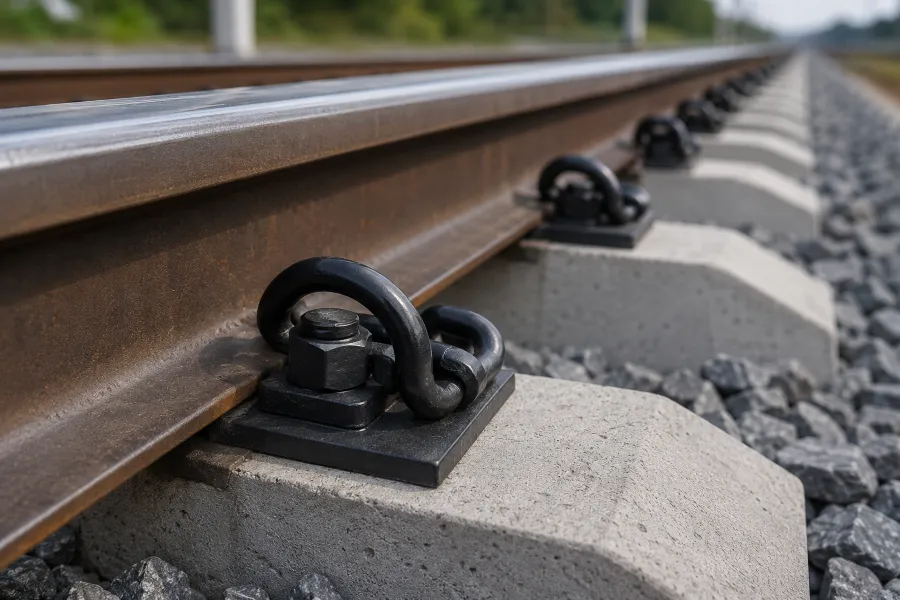
비록 탄성 레일 클립 철도 고정 시스템 내의 단 하나의 구성 요소입니다., 전체 트랙의 안정성에 큰 영향을 미칩니다..
기차가 지나갈 때마다, 고정 시스템은 수직 휠 하중의 조합을 경험합니다., 측면 힘, 진동, 영향, 그리고 열운동. 이러한 세력에 완전히 저항하기보다는, 고정 시스템은 이를 관리하도록 설계되었습니다.. 레일 클립은 레일과 지지 구조물을 모두 보호하는 제어된 탄성 움직임을 허용하면서 레일을 안전하게 위치시키는 데 필요한 조임력을 제공합니다..
체결 시스템이 적절하게 설계된 경우, 이러한 하중은 레일 패드 전체에 더 균등하게 분산됩니다., 자는 사람, 어깨, 그리고 고정 부품. 결과적으로, 철도 이동이 감소합니다, 진동이 제어됩니다, 유지보수 간격도 길어지고.
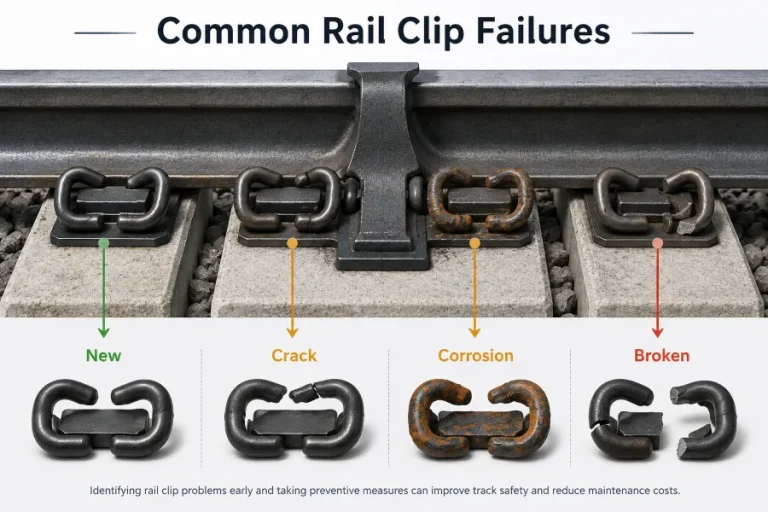
비교하여, 부적합한 레일 클립이 처음에는 정상적으로 작동하는 것처럼 보일 수 있습니다., 그러나 시간이 지남에 따라 과도한 레일 크리프에 기여할 수 있습니다., 고르지 않은 부품 마모, 체결력 감소, 또는 조기 피로 실패. 이러한 문제는 점진적으로 발생하며 수년간 서비스를 받은 후에야 눈에 띄게 나타납니다., 많은 사람들이 생각하는 것보다 설계 단계에서 적절한 선택을 하는 것이 훨씬 더 중요합니다..
이러한 이유로, 엔지니어들은 외관이나 가격만을 보고 레일 클립을 선택하는 경우가 거의 없습니다.. 대신에, 그들은 철도의 예상 서비스 수명 동안 클립이 전체 고정 시스템의 일부로 어떻게 작동하는지 평가합니다..
고객과 새로운 철도 프로젝트를 논의할 때, 첫 번째 기술적 질문 중 하나는 놀라울 정도로 간단합니다.:
어떤 철도 구간을 사용하고 계시나요??
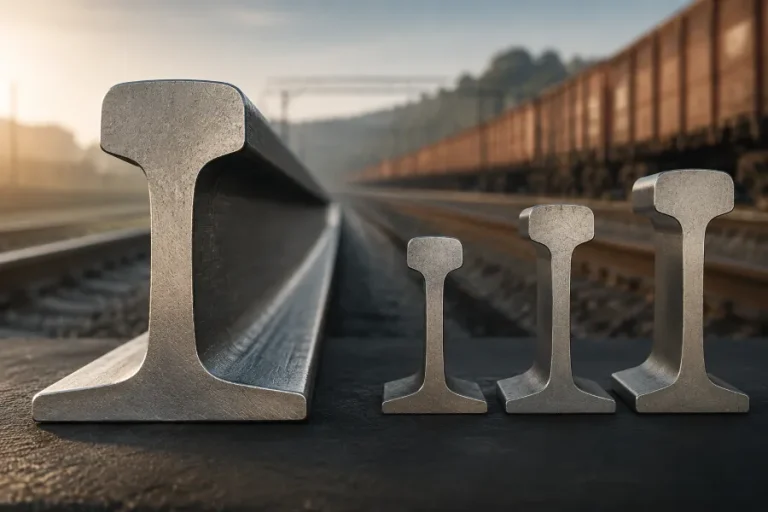
이유는 간단하다. 다양한 레일 프로파일은 발 너비가 다릅니다., 치수, 및 접촉 표면, 이 모든 것이 체결 시스템이 조임력을 적용하는 방식에 영향을 미칩니다..
프로젝트가 UIC54를 사용하는지 여부, UIC60, 60E1, 136답장, 115답장, 또는 다른 철도 섹션, 탄성 레일 클립은 독립적인 구성 요소로 간주되지 않고 전체 고정 어셈블리와 호환되어야 합니다..
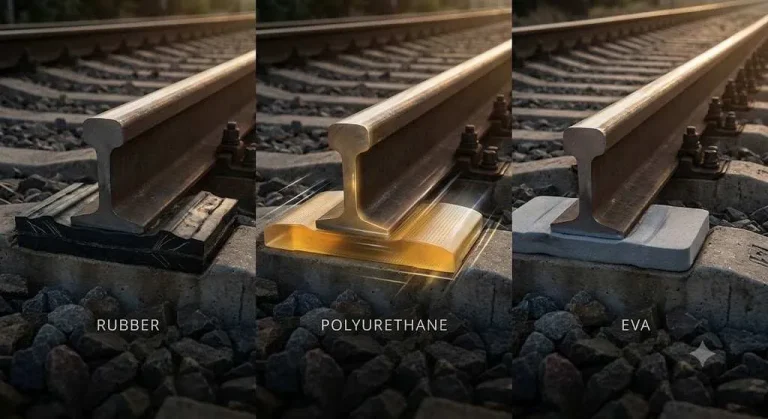
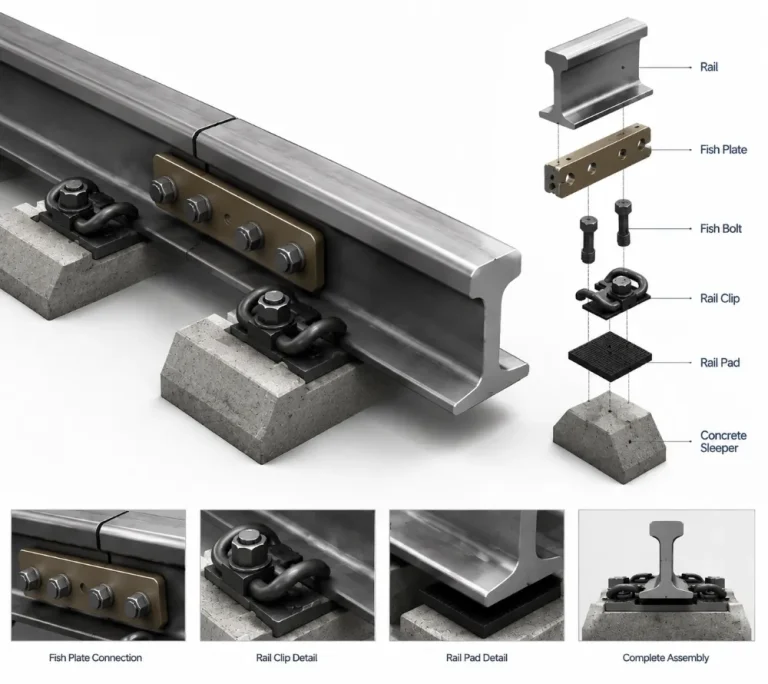
많은 사람들은 두 클립이 비슷해 보인다면, 그냥 교환할 수 있어. 실제로, 작은 치수 차이라도 설치 정확도에 영향을 미칠 수 있습니다., 클램핑 력, 그리고 장기적인 성과. 체결 시스템은 완전한 어셈블리로 설계되었습니다., 레일 클립으로, 절연체, 레일 패드, 어깨, 그리고 자는 사람이 함께 일해요.
이것이 바로 숙련된 엔지니어가 일반적으로 레일 프로파일을 먼저 식별한 다음 해당 레일 섹션을 위해 특별히 설계된 고정 구성 요소를 선택하는 이유입니다..
또 다른 중요한 요소는 유형입니다. 자는 사람 프로젝트에 사용된.
언뜻보기에, 침목은 레일 클립과 거의 관계가 없는 것 같습니다.. 실제로는, 침목은 고정 시스템의 기초를 형성합니다, 하중이 레일에서 선로 구조로 전달되는 방식에 직접적인 영향을 미칩니다..
콘크리트 침목은 뛰어난 안정성을 제공하기 때문에 이제 현대 간선 철도에서 가장 일반적인 선택입니다., 내구성, 및 치수 일관성. 목재 침목은 특정 재래식 철도에서 널리 사용됩니다., 교량 접근, 및 투표율 섹션, 강철 침목은 다양한 작동 조건이 적용되는 중장비 산업 및 광산 철도에 계속 사용됩니다.. 슬래브 트랙 시스템은 또 다른 고정 장치를 도입합니다., 특히 고속 여객 노선에서.
각 유형의 침목은 하중이 가해지면 다르게 동작하기 때문에, 이에 따라 고정 시스템을 설계해야 합니다.. 따라서 레일 클립은 레일 패드와 함께 선택됩니다., 어깨, 닻, 보편적인 부품으로 취급되기보다는 절연체와.
엔지니어가 체결 시스템에 대해 논의할 때, 일반적으로 하나의 개별 레일 클립이 다른 프로젝트에 적합한지 여부를 묻는 대신 전체 어셈블리의 호환성을 평가합니다..
철도 속도는 체결 시스템 설계에 큰 영향을 미치는 또 다른 요소입니다..
완전히 다른 두 가지 철도 프로젝트를 고려해보세요.. 하나는 상대적으로 낮은 속도로 유지보수 차량을 운반하는 산업용 철도입니다.. 다른 하나는 이상의 속도로 운행되는 여객철도입니다. 300 km/h. 둘 다 탄성 레일 클립이 필요하지만, 성과 기대치가 완전히 다릅니다.
느린 철도에서는, 내구성, 설치의 용이성, 비용 효율적인 유지 관리가 주요 관심사인 경우가 많습니다.. 중거리 화물 철도는 수백만 번의 적재 주기에 걸쳐 반복되는 높은 차축 하중에 저항하는 데 더 중점을 두고 있습니다.. Passenger railways require a balance between strength and ride comfort, while high-speed railways demand exceptionally stable rail support to minimize vibration and maintain accurate track geometry.
This explains why rail clips that appear almost identical may be manufactured with different mechanical properties, 공차, and fatigue performance depending on their intended application.
Higher operating speeds generally require more consistent clamping force and tighter manufacturing control because even small variations in fastening performance can influence long-term track stability.

열차 속도가 안정성에 영향을 미치는 경우, 축 하중은 서비스 수명 동안 레일 클립이 수행해야 하는 작업량을 크게 결정합니다..
가끔 하중이 가해지는 많은 구조적 구성 요소와는 달리, 레일 클립은 바퀴가 트랙을 지나갈 때마다 반복적인 응력을 받습니다.. 작동 중, 클립이 약간 휘어짐, 원래 위치로 돌아갑니다, 이 과정을 중단 없이 수백만 번 반복합니다..
이 반복되는 탄성 운동은 바로 클립이 수행하도록 설계된 것입니다.. 하지만, 이는 또한 피로 저항이 가장 중요한 성능 지표 중 하나가 된다는 것을 의미합니다..
중량물 화물철도용, 광산 철도, 및 산업 운송 시스템, 수년에 걸쳐 일관된 탄성을 유지하는 것이 가장 높은 초기 조임력을 달성하는 것보다 더 중요한 경우가 많습니다.. 점차 스프링 특성을 잃거나 피로 균열이 발생하는 클립은 결국 전체 체결 시스템의 안정성에 영향을 미치게 됩니다..
이러한 이유로, 엔지니어들은 레일 클립의 디자인뿐만 아니라 스프링 강철의 품질에도 세심한 주의를 기울입니다., 열처리 과정, 제조 정확도, 배송 전 피로 테스트 실시.
많은 철도 프로젝트에서, 탄성 레일 클립의 사용 수명은 외관보다는 제조 공정의 품질에 따라 결정됩니다..
작동 조건이 정의되면, 엔지니어들은 대개 때때로 과소평가되는 또 다른 질문에 주의를 돌립니다.: 철도는 어디에서 운행될 것인가??
Environmental conditions can have a significant influence on the long-term performance of an elastic rail clip. A fastening system designed for a dry inland railway may perform very differently when exposed to coastal salt spray, heavy rainfall, desert sand, or freezing winter temperatures.
Corrosion is one of the most common concerns. In coastal regions, airborne salt continuously attacks exposed steel components. Without adequate surface protection, corrosion can gradually reduce the service life of rail clips and other fastening parts. For these projects, engineers often specify protective finishes such as hot-dip galvanizing, 데이크로메트, or Geomet coatings, depending on the project’s technical requirements.
Cold climates present a different challenge. As temperatures drop, materials become less ductile, making the quality of the spring steel and heat treatment even more important. A properly manufactured elastic rail clip should maintain its mechanical properties throughout seasonal temperature changes without becoming brittle.
Mining railways and industrial lines introduce another set of operating conditions. 먼지, 수분, abrasive particles, and heavy traffic increase wear throughout the fastening system. 이러한 환경에서는, durability and long-term reliability usually take priority over appearance.
이러한 이유로, experienced engineers rarely specify a rail clip without first understanding the environment in which it will operate.
Another question we often receive from customers is whether a rail clip complies with a particular railway standard.
This is an important discussion because railway standards are intended to ensure that every component within the fastening system works together correctly.
프로젝트에 따라, customers may require compliance with European, American, 중국인, Australian, or other national railway standards. In addition to these published specifications, many railway authorities also provide project-specific drawings and technical requirements that must be followed during manufacturing.
Rather than viewing standards as a purchasing requirement alone, engineers treat them as the foundation of system compatibility. A fastening assembly that performs well in one railway network may require different dimensions, 재료, or testing procedures before it can be used in another.
Confirming the applicable standard at the beginning of the project helps avoid unnecessary design changes later and ensures that every fastening component functions as intended after installation.
One of the most common questions from new buyers is:
“Which rail clip is the best?”
실제로는, there is no single answer because every rail clip has been developed to solve a particular engineering problem.
예를 들어, E Clips are widely used on conventional railway lines because of their simple structure, reliable clamping force, and proven service history. SKL Clips are commonly selected for modern passenger and high-speed railways where stable fastening performance and vibration control are especially important. PR Clips and Nabla Clips are also widely used in different railway systems, each offering characteristics that suit particular track designs and maintenance practices.
Instead of comparing these products as competitors, engineers evaluate how well each design matches the operating conditions of the railway.
The goal is never to choose the most complicated clip or the strongest clip. It is to select the fastening system that provides the right balance of safety, 내구성, maintainability, and cost throughout the life of the railway.
Two elastic rail clips can look almost identical when placed side by side, yet their performance after years of service may be completely different.
The difference usually lies inside the material rather than on the surface.
High-quality rail clips are typically manufactured from spring steels such as 60Si2MnA or SUP9 because these materials provide the strength and elasticity needed to withstand repeated loading. 하지만, selecting the correct steel is only the beginning.
형성 후, the clips must undergo carefully controlled heat treatment to achieve the required combination of hardness, 인성, and elastic recovery. If the heat treatment process is not properly controlled, the clip may become too brittle or fail to maintain sufficient clamping force over time.
Additional manufacturing processes such as shot blasting and surface coating further improve fatigue performance and corrosion resistance. Although these steps are not immediately visible after installation, they have a major influence on how the rail clip performs throughout millions of loading cycles.
엔지니어용, the appearance of the finished product is important, but the manufacturing process behind it is even more critical.
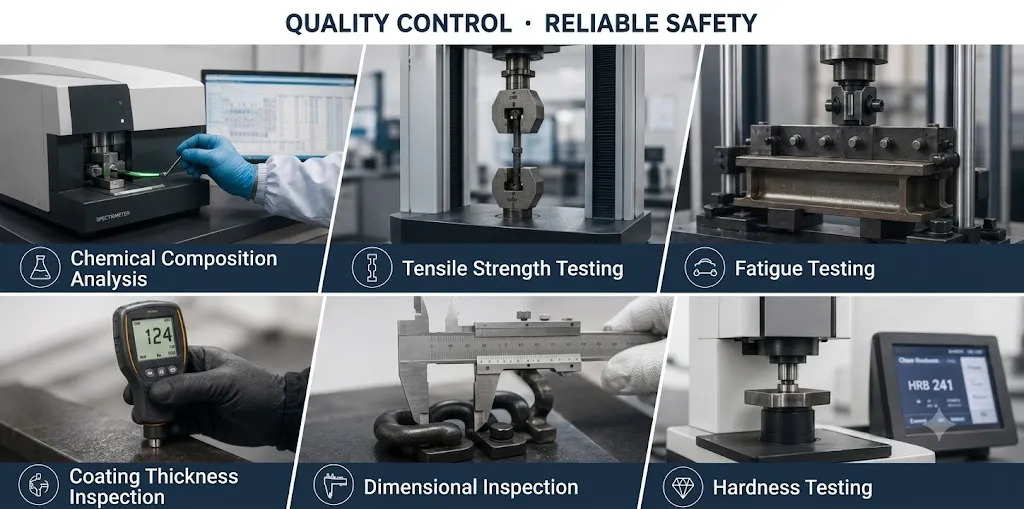
Before an elastic rail clip leaves the factory, it should undergo a series of inspections designed to verify that every batch meets the specified technical requirements.
Dimensional accuracy is checked to ensure proper fit within the fastening assembly. Mechanical properties are verified to confirm that the spring steel has achieved the required performance after heat treatment. Manufacturers also carry out hardness testing, 피로 테스트, and coating inspection where applicable.
These inspections are not simply part of a quality control procedure. They provide confidence that every rail clip delivered to the project will perform consistently under real operating conditions.
For railway owners, replacing a defective rail clip after installation is far more expensive than identifying a manufacturing problem before shipment. This is why comprehensive inspection remains an essential part of modern railway manufacturing.
After supporting railway projects in different countries, we have noticed that a few selection mistakes appear repeatedly.
One of the most common is choosing a rail clip based only on its appearance. Two clips may have almost the same shape while differing significantly in material quality, 열처리, 피로 생활, and long-term clamping performance.
Another mistake is considering the rail clip as an independent product rather than part of the complete fastening system. The clip must work together with the rail section, 레일 패드, 절연체, 어깨, and sleeper. Ignoring the compatibility of these components can reduce the overall performance of the track.
Environmental conditions are also sometimes overlooked. A fastening system that performs well in a dry inland environment may require additional corrosion protection when installed in coastal regions or heavy industrial areas.
마지막으로, some buyers focus primarily on the purchase price without considering maintenance costs over the railway’s service life. Selecting a higher-quality fastening system at the beginning of a project often reduces inspection frequency, 교체 비용, and track maintenance in the years that follow.
올바른 탄성 레일 클립을 선택하는 것은 단순히 카탈로그에서 제품을 선택하는 문제가 아닙니다.. 이는 안전에 영향을 미치는 엔지니어링 결정입니다., 신뢰할 수 있음, 전체 철도의 유지 보수 요구 사항.
숙련된 엔지니어가 체결 시스템을 추천하기 전에 전체 작동 환경을 평가합니다.. 그들은 철도 구간을 고려합니다., 슬리퍼 유형, 열차 속도, 축중, 환경 조건, 철도 표준, 재료의 품질, 별도의 결정이 아닌 동일한 엔지니어링 솔루션의 일부로 제조 프로세스를 결정합니다..
탄성 레일 클립은 철도 고정 시스템 내에서 단 하나의 구성 요소만을 나타내지만, 수백만 번의 적재 주기 동안 안정적인 철도 지지를 유지하는 데 중요한 역할을 합니다.. 프로젝트 초기에 올바른 고정 솔루션을 선택하면 철도 운영 수명 전반에 걸쳐 유지 관리 비용을 절감하는 동시에 장기적인 선로 성능을 향상하는 데 도움이 됩니다..
새로운 철도 프로젝트를 계획하거나 기존 선로를 업그레이드하는 경우, 이러한 요소를 평가하는 데 시간을 투자하면 앞으로 수년 동안 안정적인 성능을 제공하는 체결 시스템을 선택하는 데 도움이 됩니다..
~에 뤄양포뇨중공업(Luoyang Fonyo Heavy Industries), 주식회사., 우리는 다양한 철도 고정 부품을 제조합니다., 탄성 레일 클립 포함, 레일 패드, 생선 접시, 물고기 볼트, 및 기타 철도 트랙 부품. 새로운 철도 노선을 개발하든 기존 고정 시스템을 교체하든, 당사 엔지니어링 팀은 귀하의 레일 섹션에 맞는 고정 솔루션을 선택하도록 도와드릴 수 있습니다., 작동 조건, 및 프로젝트 요구 사항.
The best way to choose an elastic rail clip is to evaluate the entire fastening system rather than the clip alone. Engineers normally begin by confirming the rail section, 슬리퍼 유형, 작동 속도, 축중, 환경 조건, and applicable railway standard. These factors determine the required clamping force, 피로 성능, 부식 방지, and compatibility with other fastening components. Selecting a rail clip without considering these conditions may result in premature wear or increased maintenance costs.
Both E Clips and SKL Clips are widely used elastic fastening systems, but they are designed for different railway applications. E Clips are commonly used on conventional railways because of their simple structure and reliable performance. SKL Clips are frequently selected for passenger and high-speed railways where stable clamping force and vibration control are particularly important. The most suitable option depends on the project requirements rather than one design being universally better than the other.
항상 그런 것은 아니다. Rail clips are designed to work with specific rail profiles and fastening assemblies. Even if two rail sections appear similar, differences in the rail foot dimensions can affect installation accuracy and clamping performance. Engineers usually select the rail section first and then choose a compatible fastening system designed for that profile.
고품질 탄성 레일 클립은 일반적으로 60Si2MnA 또는 SUP9와 같은 스프링강으로 제조됩니다.. 이 재료는 우수한 강도를 제공합니다., 탄력, 적절한 열처리 후 피로 저항성. 재료만큼이나 중요한 것은 제조 과정이다., 잘못된 열처리로 인해 클립의 수명이 단축될 수 있기 때문입니다..
서비스 수명은 여러 요인에 따라 달라집니다., 축중 포함, 열차 빈도, 환경 조건, 유지 관리 관행, 그리고 제조 품질. 정상적인 작동 조건에서, 적절하게 제조된 레일 클립은 조임력을 유지하면서 수년 동안 작동 상태를 유지할 수 있습니다.. 일상적인 선로 유지보수의 일환으로 정기 검사를 실시하면 운행 수명을 극대화하는 데 도움이 됩니다..
많은 구조적 구성요소와는 달리, 탄성 레일 클립은 기차가 지나갈 때마다 반복적인 하중을 받습니다.. Over their service life, they may undergo millions of loading cycles. Fatigue testing verifies that the clip can maintain its elasticity and mechanical performance without developing cracks or losing clamping force under repeated stress.
Galvanized rail clips offer improved corrosion resistance, making them suitable for coastal regions, humid climates, and industrial environments. 하지만, galvanizing is not always the only solution. Depending on the operating conditions, protective coatings such as Dacromet or Geomet may also provide excellent long-term corrosion protection. The appropriate coating should be selected according to the project environment.
예. Many manufacturers can produce customized rail clips to suit different rail sections, 고정 시스템, 철도 표준, and surface protection requirements. Before manufacturing begins, engineers usually review the project drawings and technical specifications to ensure the clip is fully compatible with the complete fastening assembly.