Scan WeChat-koden for at kontakte os
Scan WeChat-koden for at kontakte os
Du er velkommen til at sende os en e-mail, og vi vil svare dig hurtigst muligt.
At skabe fremtiden med hjerte og sjæl


En knækket elastik skinne klip kan ligne et lille problem, men på et jernbanespor kan det hurtigt føre til meget større problemer. Når en klips mister sin klemkraft, skinnen holdes ikke længere så sikkert som beregnet. Over tid, dette kan tillade let skinnebevægelse, øge vibrationerne, fremskynde slid på andre fastgørelseskomponenter, og i sidste ende påvirke stabiliteten af hele sporstrukturen.
Et spørgsmål vi ofte bliver stillet af kunder er, “Hvorfor gik skinneklemmen i stykker, når toglasterne var inden for designgrænserne?” I mange tilfælde, svaret er ikke en enkelt overbelastning eller fabrikationsfejl. Skinneklipfejl udvikler sig normalt gradvist som følge af gentagne hjulbelastninger, miljøforhold, installationskvalitet, og den overordnede tilstand af fastgørelsessystemet.
Fordi elastiske skinneclips er designet til at fungere under millioner af læssecyklusser i løbet af deres levetid, at forstå, hvordan de fejler, er lige så vigtigt som at forstå, hvordan de fungerer. Identifikation af de tidlige tegn på fejl giver vedligeholdelsesteams mulighed for at udskifte clips, før de påvirker sporets ydeevne, og hjælper projektingeniører med at vælge fastgørelsessystemer, der giver længere levetid.
I denne artikel, vi vil se på de mest almindelige årsager til, at elastiske skinneclips fejler, forklare, hvordan disse fejl udvikler sig, og diskutere praktiske måder at forlænge levetiden af jernbanefastgørelsessystemer.
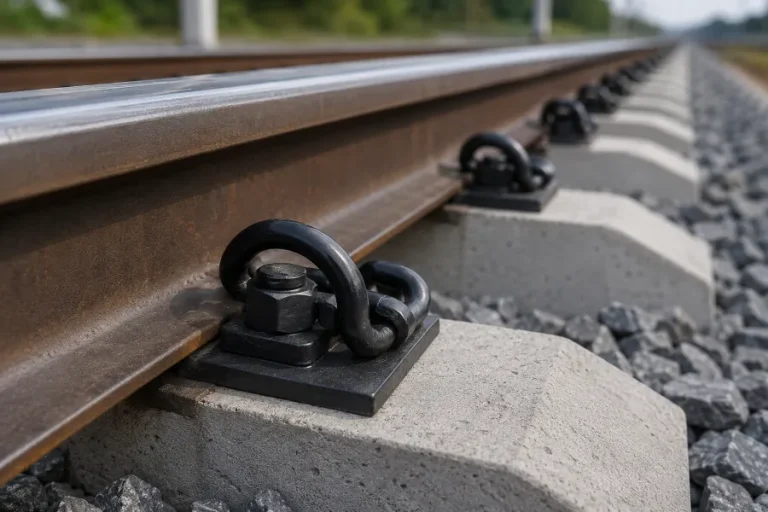
Selvom de ser ud til at være simple stålkomponenter, elastiske skinneclips udfører et af de mest krævende opgaver i et jernbanefastgørelsessystem. Deres formål er ikke blot at holde skinnen på plads, men for at opretholde en ensartet spændekraft, mens sporet konstant udsættes for vibrationer, indvirkning, temperaturændringer, og tunge akseltryk.
Hver gang et tog passerer, skinnen bøjer lidt under belastning. Den elastiske skinneclips bøjer med, absorbere en del af bevægelsen og derefter vende tilbage til sin oprindelige form. Denne kontinuerlige elastiske handling holder skinnen fast mod skinnepuden, mens den tillader lige nok bevægelse til at reducere stress i fastgørelsessystemet.
I modsætning til stive fastgørelsesmetoder brugt på ældre jernbanestrækninger, moderne elastiske clips hjælper med at fordele dynamiske kræfter mere jævnt. Dette reducerer slid på sveller, minimerer skinnebevægelser, og bidrager til en mere jævn kørsel og længere banelevetid.
Imidlertid, denne gentagne elastiske deformation forklarer også, hvorfor skinneclips til sidst bliver slidt. Selv højkvalitets fjederstål har en begrænset udmattelseslevetid. Efter millioner af læssecyklusser, mikroskopiske ændringer begynder at forekomme i materialet, lave et ordentligt design, fremstilling, og vedligeholdelse er afgørende.
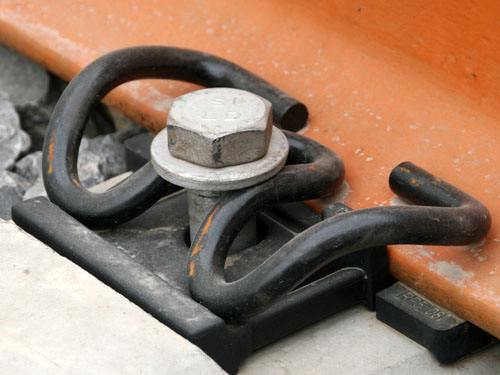
Mange mennesker forestiller sig en mislykket skinneklip som en, der er gået i to stykker. I virkeligheden, fuldstændig fraktur er ofte det sidste trin i en meget længere proces.
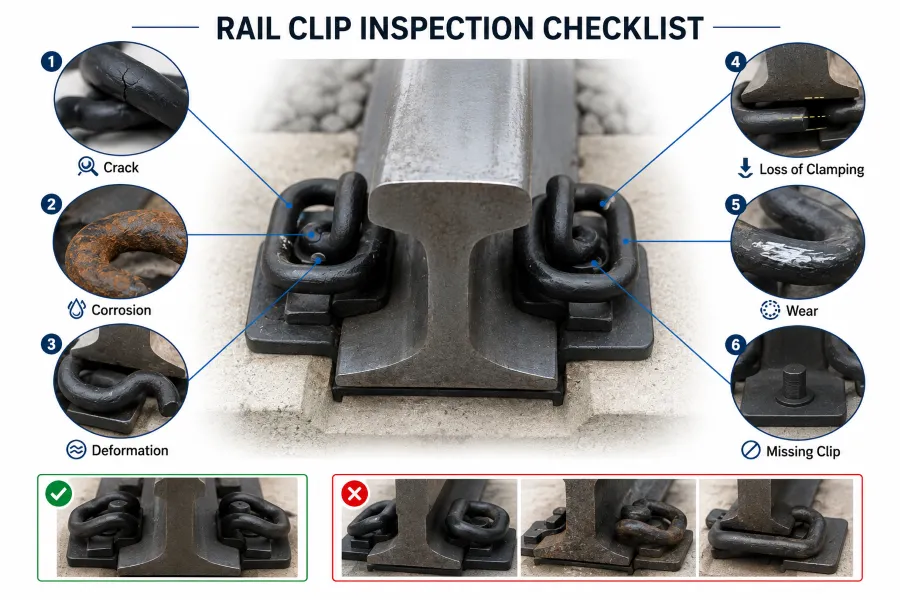
Ved rutineinspektioner, vedligeholdelsesingeniører er mere tilbøjelige til at støde på tidlige advarselstegn såsom små revner nær den buede del af klippet, synlig korrosion, let permanent deformation, eller en mærkbar reduktion i spændekraften. Disse ændringer kan virke mindre individuelt, men sammen indikerer de, at klippet ikke længere fungerer som designet.
Fra et vedligeholdelsesperspektiv, den alvorligste konsekvens er ikke selve det ødelagte klip – det er det gradvise tab af tilbageholdenhed. Efterhånden som spændekraften aftager, skinnen bliver mere modtagelig for bevægelse under trafikbelastning. That movement increases vibration throughout the fastening system, placing additional stress on rail pads, isolatorer, sveller, and neighboring clips.
Af denne grund, experienced railway maintenance teams rarely wait until clips break completely. Replacing clips when the first signs of fatigue or deformation appear is usually far more economical than dealing with the secondary damage caused by prolonged operation.
If you ask experienced track engineers what causes most broken elastic rail clips, the answer is almost always the same: metal fatigue.
This surprises many people because rail clips are manufactured from high-strength spring steel capable of withstanding extremely high loads. The problem is not that a single train is too heavy. I stedet, it is the enormous number of loading cycles the clip experiences throughout its service life.
Every passing wheel causes the clip to flex slightly. The movement is extremely small—often impossible to see with the naked eye—but it happens every time a train passes. Over several years, these repeated stress cycles gradually initiate microscopic cracks at locations where stress is naturally concentrated, particularly around bends and contact areas.
Først, the cracks are too small to affect performance. As traffic continues, imidlertid, they slowly propagate through the material. Til sidst, the remaining cross-section becomes too small to carry the required load, and the clip fractures, often without significant prior deformation.
Dette er grunden til, at træthedsfejl kan opstå pludseligt, selvom de faktisk har udviklet sig i måneder eller endda år. På tunge jernbaner, hvor akseltryk og trafikfrekvens er meget højere, træthedsprocessen skrider generelt hurtigere frem, gør regelmæssig inspektion særlig vigtig.
Mens træthed er den mest almindelige årsag til, at en skinneklip til sidst går i stykker, hastigheden, hvormed træthed udvikler sig, afhænger i høj grad af de belastninger, klippet oplever i hele dets levetid.
Under normale driftsforhold, en elastisk skinneclips bøjer sig inden for dets designede elastiske rækkevidde. Når belastningen er fjernet, den vender tilbage til sin oprindelige form og fortsætter med at levere den nødvendige spændekraft. Denne gentagne bevægelse er præcis, hvad klippet er designet til at gøre.
Problemer begynder, når fastgørelsessystemet udsættes for belastninger, der overstiger dets oprindelige designantagelser.
Tunge godsbaner, minedriftslinjer, havnebaner, og kranskinnesystemer fungerer ofte med væsentligt højere akseltryk end konventionelle passagerjernbaner. I disse miljøer, hver hjulpassage giver større belastning i fastgørelsessystemet. Selvom en enkelt overbelastning muligvis ikke umiddelbart beskadiger klippet, gentagen overbelastning forkorter dens udmattelseslevetid betydeligt.
Slagbelastning kan være endnu mere skadelig end statiske belastninger. I stedet for at anvende kraft gradvist, stødbelastninger skaber pludselige spændingsspidser, der stiller langt større krav til fjederstålet.
I praksis, stødbelastning er almindeligvis forbundet med:
Når disse forhold fortsætter, skinneclips er tvunget til at absorbere belastninger langt ud over de forventede under normal drift. Ingeniører oplever ofte, at ødelagte klip er koncentreret i lokaliserede sektioner af sporet, hvor stødbelastning forekommer gentagne gange, frem for at være jævnt fordelt langs jernbanen.
Det er derfor, at udskiftning af ødelagte clips alene sjældent løser problemet. Medmindre den underliggende sportilstand er rettet, nyinstallerede klip kan fejle på nøjagtig samme sted efter kun en relativt kort periode.
En af de mere frustrerende årsager til skinneklipsfejl er, at det kan opstå, før jernbanen overhovedet går i drift.
Vi har set situationer, hvor clips fremstillet af højkvalitets fjederstål fejlede meget tidligere end forventet, not because of poor materials, but because they were installed incorrectly.
Elastic rail clips are designed to operate within a specific elastic deformation range. Under installationen, the clip is temporarily deflected to generate the required toe load that holds the rail firmly against the rail pad. If that deformation exceeds the design limit, permanent stresses may remain locked inside the steel.
Those stresses are invisible during installation. The clip may appear perfectly normal, yet its fatigue resistance has already been reduced.
Incorrect installation can result from several factors, including using unsuitable installation tools, forcing the clip into position at an incorrect angle, or applying excessive installation force. Selecting the wrong clip for the rail section or fastening system can produce similar problems, as the clip may never achieve the designed clamping force.
Af denne grund, proper installation should be viewed as part of the engineering design rather than simply the final step of construction. Following the manufacturer’s installation procedure and verifying the correct toe load can significantly extend the service life of the fastening system.
Corrosion is sometimes treated as a separate issue from fatigue, but in reality the two are closely connected.
A rail clip does not have to lose a large amount of material before its fatigue performance begins to decline. Even a small corrosion pit can create a localized stress concentration where microscopic cracks are more likely to initiate.
This is particularly important on railway lines operating in aggressive environments. Coastal railways are exposed to salt-laden air, industrial railways may encounter chemical contamination, and regions with high humidity often experience prolonged moisture exposure. In colder climates, de-icing salts can further accelerate corrosion on exposed steel components.
Once the protective coating has been damaged, corrosion gradually reduces the effective cross-section of the clip while making stress distribution less uniform. The combination of corrosion and repeated wheel loading often leads to what engineers refer to as corrosion fatigue, a failure mechanism that progresses much faster than ordinary fatigue alone.
Routine inspections should therefore look beyond obvious fractures. Rust around highly stressed areas, pitting on the clip surface, or damage to protective coatings may all indicate that the clip is entering a stage where fatigue cracks are more likely to develop.
For railways operating in harsh environments, selecting clips with appropriate surface protection and implementing regular maintenance programmes can significantly reduce the risk of premature failure.
Two elastic rail clips can look almost identical when they leave the factory, yet perform very differently after several years of service.
The difference often lies in the manufacturing process rather than the appearance of the finished product.
Spring steel used for railway clips must achieve a careful balance between strength, elasticitet, og sejhed. Achieving that balance depends on accurate control of heat treatment, particularly the quenching and tempering process.
If the steel is too hard, the clip may become brittle and crack more easily under repeated loading. If it is too soft, it may gradually lose its clamping force through permanent deformation. Neither condition is acceptable for long-term railway service.
Material quality is equally important. Non-metallic inclusions, indre defekter, surface decarburization, or inconsistent chemical composition can all become weak points where fatigue cracks initiate much earlier than expected.
Af denne grund, velrenommerede producenter investerer kraftigt i proceskontrol i stedet for udelukkende at stole på den endelige produktinspektion. Ensartede råvarer, kontrolleret varmebehandling, dimensionel nøjagtighed, og omfattende mekanisk testning bidrager alle til at producere clips, der er i stand til at overleve millioner af belastningscyklusser i krævende jernbanemiljøer.
På Luoyang Fonyo Heavy Industries, kvalitetskontrol begynder længe før det færdige klip når inspektion. Fra råvarevalg til varmebehandling, hårdhedstestning, dimensionsbekræftelse, og evaluering af træthedspræstation, hvert produktionstrin overvåges nøje for at sikre ensartet produktpålidelighed til jernbaneapplikationer verden over.
Det er almindeligt at høre folk give ekstremt vejr skylden, når skinneklip begynder at gå i stykker om vinteren eller sommeren. Mens temperaturen bestemt påvirker jernbaneinfrastrukturen, it is rarely the sole reason an elastic rail clip fails.
I de fleste tilfælde, temperature acts as a contributing factor rather than the root cause.
Steel rails expand in hot weather and contract in cold weather. These movements generate additional forces within the fastening system, particularly on continuously welded rail (CWR). Elastic rail clips are designed to accommodate a certain amount of rail movement while maintaining the required clamping force, but they must do so repeatedly throughout their service life.
When thermal stresses are combined with heavy axle loads, korrosion, or existing fatigue cracks, the remaining fatigue life of the clip can decrease more rapidly.
Low temperatures introduce another challenge. Although modern spring steels generally maintain good toughness over a wide temperature range, inferior materials or poorly controlled heat treatment can make clips more susceptible to brittle fracture in cold environments. På den anden side, prolonged exposure to high temperatures may gradually affect the mechanical properties of improperly heat-treated steel.
For railway operators working in regions with significant seasonal temperature variations, thermal effects should be considered as part of the overall maintenance strategy rather than an isolated problem.
One mistake sometimes made during maintenance is to focus only on replacing the broken clip.
I virkeligheden, a failed rail clip is often telling you that something else on the track deserves attention.
F.eks, if several clips fail repeatedly in exactly the same location, replacing them without investigating the surrounding track conditions is unlikely to solve the problem. There may be excessive impact loading caused by uneven track geometry, insufficient sleeper support, worn rail pads, or abnormal wheel-rail interaction.
Tilsvarende, if corrosion is consistently found on fastening components within a particular section of railway, improving drainage or selecting better corrosion protection may deliver far greater long-term benefits than simply increasing inspection frequency.
Experienced maintenance engineers therefore look at the fastening system as a whole rather than treating each component independently. Skinnen, pad, isolator, sovende, skulder, and clip all work together. A problem affecting one component often increases the stress experienced by the others.
Understanding this relationship helps maintenance teams identify the real source of repeated failures and avoid unnecessary replacement costs.
Most rail clip failures do not occur without warning. I mange tilfælde, the earliest signs appear long before the clip actually fractures, which is why regular inspection remains one of the most cost-effective maintenance practices.
Routine inspections usually begin with a careful visual examination. Engineers look for small cracks around the curved sections of the clip, corrosion on exposed surfaces, permanent deformation, and any obvious reduction in clamping performance. Missing clips or clips that are no longer seated correctly should also be addressed immediately, as they can alter load distribution within the fastening system.
On high-traffic lines or heavy-haul railways, visual inspection alone may not always be sufficient. Non-destructive testing methods, such as magnetic particle inspection, can help detect fatigue cracks before they become visible to the naked eye, allowing components to be replaced during planned maintenance rather than after an unexpected failure.
Inspection intervals should always reflect actual operating conditions. A metro line carrying relatively light passenger traffic requires a different maintenance strategy from a freight railway transporting heavy mineral loads. Miljøforhold, akseltryk, trafiktæthed, and track geometry all influence how quickly fastening components deteriorate.
Rather than replacing clips solely based on age, many railway operators now combine scheduled inspections with condition-based maintenance, ensuring that components are replaced when their condition justifies it.
By the time a rail clip breaks, the conditions leading to that failure have often been developing for years.
The most effective way to improve service life is therefore to consider the entire life cycle of the fastening system—from product selection and manufacturing through installation, inspektion, and routine maintenance.
Choosing a rail clip that matches the rail profile, sovende type, and expected axle loads provides the foundation for reliable performance. Equally important is ensuring that the clips are manufactured from certified spring steel and produced under well-controlled heat-treatment conditions. These factors determine how well the clip will resist fatigue over millions of loading cycles.
Correct installation is the next critical step. Even the highest-quality clip cannot perform as intended if it is overstressed during installation or paired with incompatible fastening components. Following recommended installation procedures and using suitable tools helps ensure that the clip operates within its designed elastic range.
Once the track enters service, regular inspection becomes the final layer of protection. Detecting corrosion, fatigue cracks, or deformation early allows maintenance teams to replace individual components before more serious damage develops elsewhere in the fastening system.
Fra et ingeniørmæssigt perspektiv, preventing failure is rarely about one single improvement. It is the combination of good product quality, korrekt installation, and consistent maintenance that delivers the longest service life.
When comparing elastic rail clips, it is easy to focus on dimensions or price alone. Imidlertid, clips that appear almost identical can perform very differently once they are installed on the track.
Long-term reliability depends on factors that are not always visible, including steel quality, heat-treatment consistency, træthedspræstation, dimensionel nøjagtighed, and manufacturing process control. These characteristics determine whether a clip will continue providing stable clamping force after millions of loading cycles.
På Luoyang Fonyo Heavy Industries, we manufacture elastic rail clips for a wide range of railway applications, including heavy-haul railways, metrosystemer, industrielle spor, and crane rail projects. Every production stage—from raw material selection and heat treatment to dimensional inspection and mechanical testing—is carefully controlled to ensure consistent product quality.
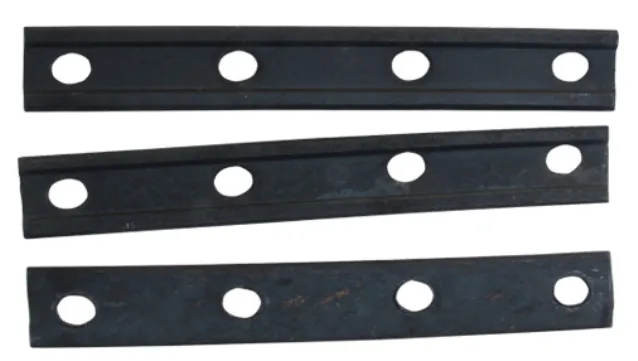
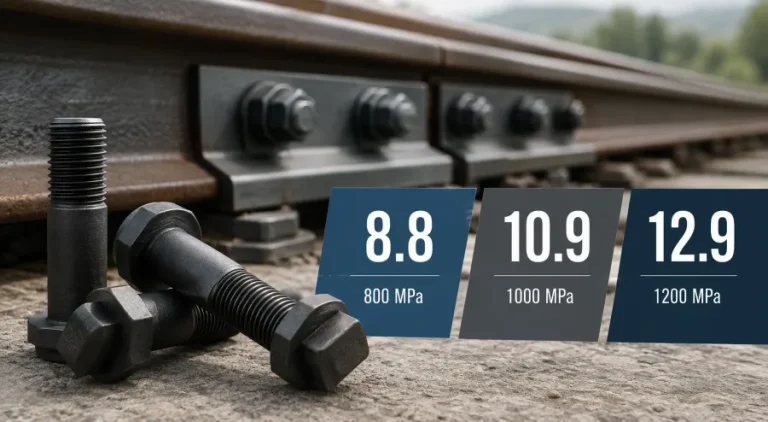
Beyond railway skinne clips, Fonyo fremstiller en bred vifte af jernbanekomponenter, including railway fish plate, jernbanehjul, bogie bolsters and side frames, skinne clips, fiskebolte, skinnepuder, og andre specialfremstillede støbte og smedede dele. Ved at kombinere støbning, smedning, præcisionsbearbejdning, varmebehandling, og eftersyn under ét tag, vi hjælper kunder med at forenkle indkøb og samtidig sikre ensartet kvalitet på tværs af kritiske jernbanekomponenter.
Hvis du planlægger et nyt jernbaneprojekt eller udskifter eksisterende skinnesamlinger, send os blot dine tegninger eller tekniske specifikationer. Vores ingeniørteam vil gennemgå dine krav og anbefale den bedst egnede løsning til dit projekt.