WeChat 코드를 스캔하여 문의하세요
WeChat 코드를 스캔하여 문의하세요
이메일을 보내주시면 최대한 빨리 답변해 드리겠습니다..
마음과 영혼을 다해 미래를 창조하다


Overview of V-process Casting Production Line
Driven by the wave of Industry 4.0, V-프로세스 캐스팅 (진공 밀봉 성형 공정) production line is becoming a new benchmark in the modern casting field with its environmental protection characteristics and excellent quality. This technological innovation originated from Japan, has completely overturned the inherent model of traditional casting processes through a unique negative pressure forming principle.
I Process Principle and Core Advantages
The core of V-process casting lies in vacuum physical forming technology. Unlike traditional sand casting that relies on chemical binders, this process uses specially made plastic films to be laminated at a high temperature of 150-180℃, and the dry silica sand is tightly formed by vacuum negative pressure. This physical combination method brings about three breakthrough advantages:
(1)Environmental protection revolution:
No adhesives are added throughout the process, and volatile substance emissions are reduced by over 90%
(2)Quality leap:
The surface roughness of castings can reach Ra12.5-25μm, 그리고 2 grades improve the dimensional accuracy
(3)Cost optimization:
The reuse rate of molding sand exceeds 98%, and energy consumption is reduced by 30-40%
II. Intelligent Production Line Architecture
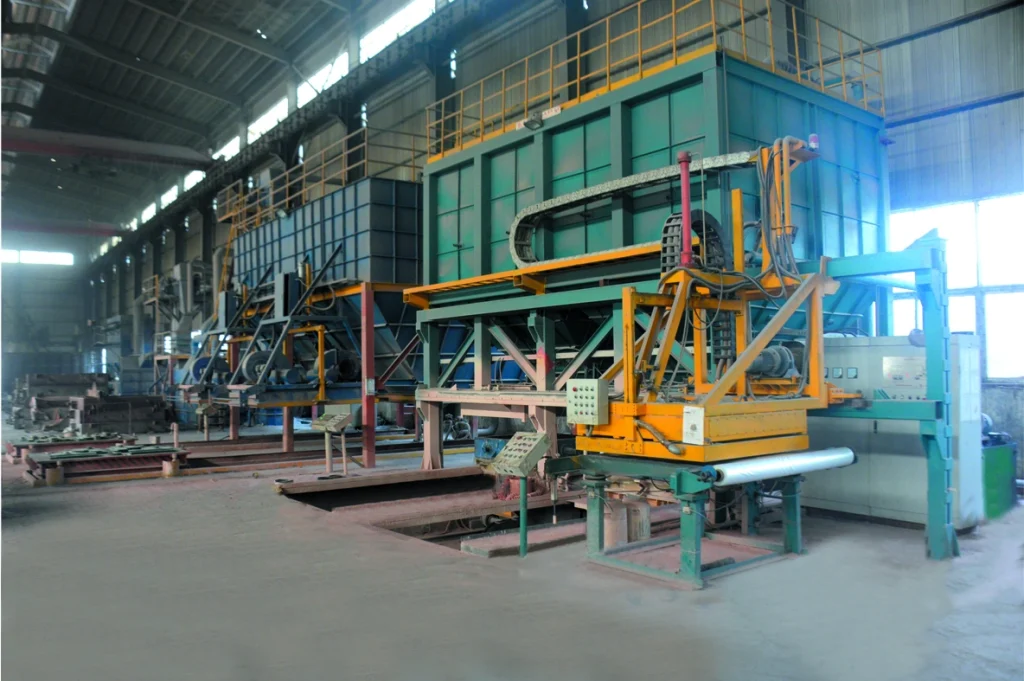
The modern V-process casting workshop adopts a modular design and mainly consists of six functional units:
The film processing system is equipped with an intelligent temperature-controlled film heating device, which precisely controls the film coating thickness through infrared sensors, with an error not exceeding ±0.05mm. The automatic cutting mechanism can be adaptively adjusted according to the size of the sandbox.
The three-dimensional vibration table is equipped with a multi-directional electromagnetic vibrator (with a frequency adjustable from 25 to 50Hz), and is combined with a vacuum negative pressure system (maintaining a vacuum degree of -0.045 에게 -0.06MPa) to ensure the uniform distribution of the sand mold’s compaction degree. The latest model has integrated AI vibration pattern recognition technology, which can automatically optimize vibration parameters.
The intelligent pouring unit adopts a tilting pouring machine driven by a servo motor, with the tilting Angle accuracy of the pouring ladle reaching 0.1°. Combined with a laser liquid level monitoring system, it achieves a pouring weight control of ±1%. Some production lines have introduced a visual recognition system, which can automatically identify the gate position.
The sand treatment circulation system consists of multi-layer vibrating screens (with a screening efficiency of ≥98%), pneumatic conveying pipelines and sand temperature regulation devices. The innovatively designed sand cooling tower can stably control the temperature of molding sand at 35±2℃, ensuring the stability of the process.
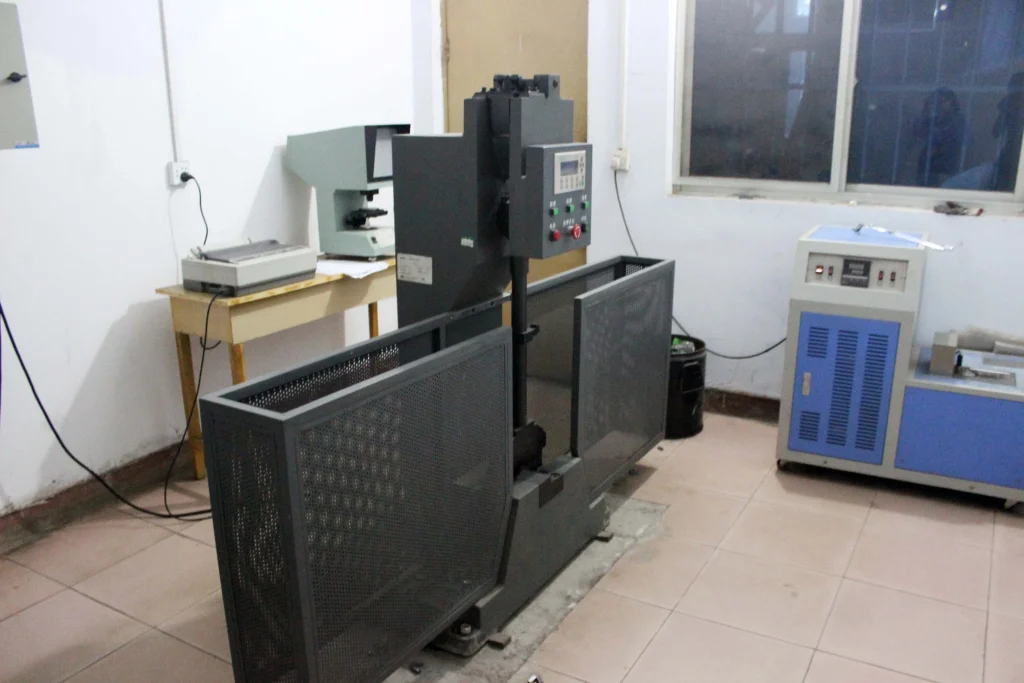
The quality inspection module integrates an X-ray real-time imaging system (with a resolution of ≤0.5mm), a spectrometer and a 3D scanner to form a closed-loop control of casting quality. The key parameter data is uploaded to the MES system in real time to achieve full-process traceability.
III. Detailed Analysis of the Process Flow
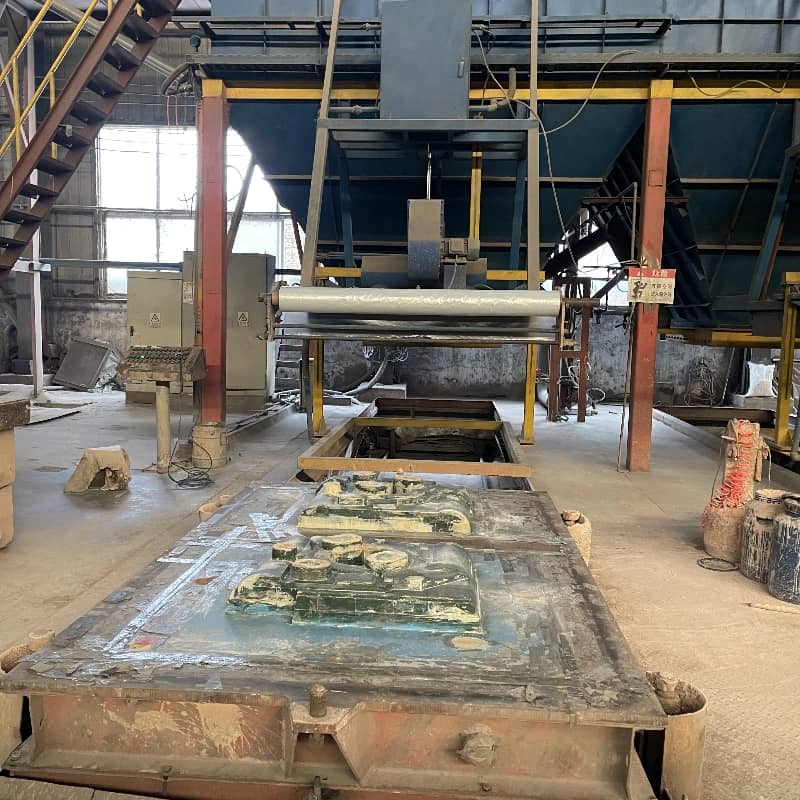
The intelligent laminated EVA film is precisely heated on the digital temperature control platform. The mechanical hand spreads at a constant speed of 0.02m/s, and the vacuum adsorption device ensures that the film adheres to the model with zero gap. The new type of ceramic coating spraying robot can achieve coating control at the 5μm level.
The sand mold construction adopts the stepped negative pressure loading technology. The contour formation is ensured in the initial stage of a gentle pressure of -0.03MPa, and the strength of the sand mold is enhanced in the later stage of a high pressure of -0.06MPa. The thickness of the sand layer was detected online by gamma rays, with a fluctuation range of ≤2mm.
The six-axis robot with intelligent box combination vision guidance completes the sand mold assembly, equipped with a laser alignment system, and the box combination accuracy reaches ±0.1mm. The new electromagnetic locking device provides adjustable preload (5-20kN) to ensure zero box expansion during the pouring process.
The low-carbon casting based on digital twin technology’s casting simulation system can optimize the casting plan in advance. During actual pouring, the thermocouple array monitors the changes in the temperature field in real time and dynamically adjusts the pouring speed (adjustable from 0.5 to 5kg/s).
Iv. Industry Applications and Trends
현재, V-process casting has been successfully applied in multiple fields:
Construction machinery: The counterweight blocks of 30-ton excavators are integrally formed
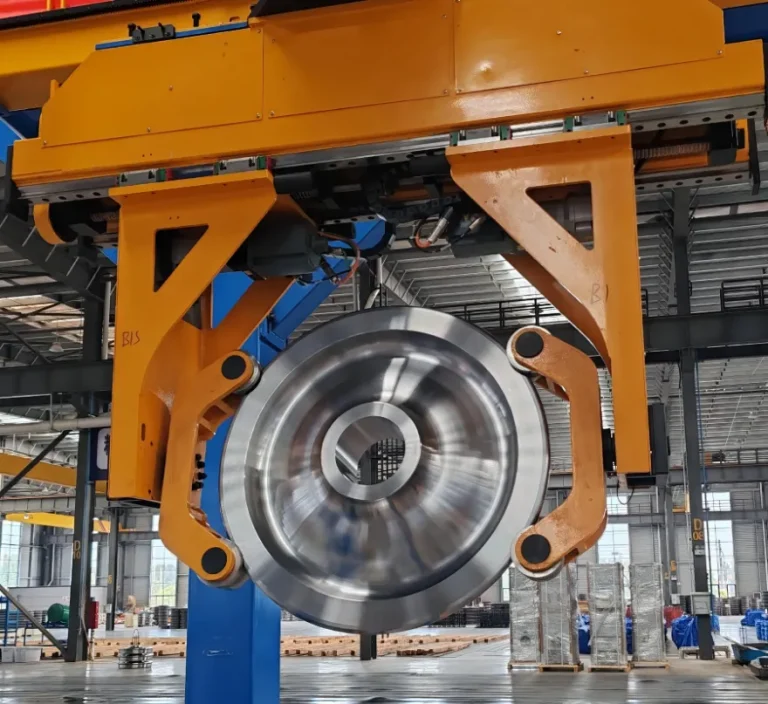
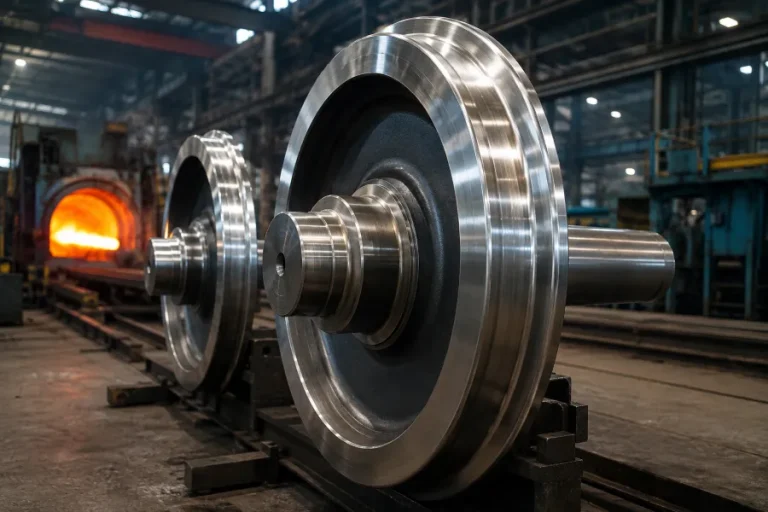
Rail transit: High-speed train brake disc casting (Surface quality Ra6.3μm)
Artistic casting: Large bronze sculpture, 벽이 얇은 부품 (minimum wall thickness 3mm)
The cutting-edge development focuses on three major directions:
Digital twin platform: Achieving self-optimization of process parameters
Nano-coating technology: The surface finish of castings is further improved by 50%
Carbon neutrality solution: The waste heat recovery system can reduce energy consumption by 15%
다섯. Economic Analysis:
Taking a casting production line with an annual output of 20,000 tons as an example
Payback period: 2.8 연령 (40% shorter than traditional techniques)
Comprehensive finished product rate: 93.5%
Cost per ton of castings: Reduced by 1,200 원 (based on the current market price)
The evolution of V-process casting technology not only represents an upgrade in casting techniques but also serves as a model for the green transformation of the manufacturing industry. With the deep integration of intelligent control systems and new material technologies, this process is reshaping the value chain of the modern casting industry. So it provides cleaner and more precise solutions for high-end equipment manufacturing. Its development trajectory confirms the innovation law of advanced manufacturing technology that “begins with substitution and ends with transcendence”, providing a transformation paradigm that can be referred to for the upgrading of traditional industries.
공급자
뤄양포뇨중공업(Luoyang Fonyo Heavy Industries), 주식회사,1998년에 설립된 캐스트 철도 부품 제조업체입니다. 저희 공장 부지는 72,600㎡입니다., 이상으로 300 직원, 32 기술자, 포함 5 수석 엔지니어, 11 보조 엔지니어, 그리고 16 기술자. 우리의 생산 능력은 30,000 연간 톤. 현재, 우리는 주로 주조물을 생산하고 있습니다, 가공, 기관차 조립 및 조립,철도 차량,고속 열차, 광산 장비,풍력,etc.Our 제품은 러시아에 수출되었습니다, 미국, 독일, 아르헨티나, 일본, 프랑스, 남아프리카,이탈리아 및 기타 국가.
연락하다:캐시
이메일:[email protected]
이동하는:008615515321683