WeChat コードをスキャンしてご連絡ください
WeChat コードをスキャンしてご連絡ください
お気軽にメールをお送りください。できるだけ早くご返信させていただきます.
心と魂で未来を創る


When the Liverpool-Manchester Railway opened in 1830, it used fish-belly レール, each section only 4.5 meters long. It took 20 workers three days to lay one kilometer of track. Made of wrought iron, これ track was prone to rusting in damp conditions, and the noise generated by trains often exceeded 100 デシベル. Railroad workers at the time invented a method of preserving railroad ties by soaking them in tallow, using nearly a ton of tallow per kilometer of track.
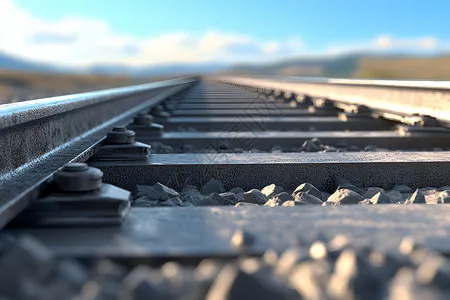
On May 10, 1869, when the first American transcontinental railroad was completed at Promontory Peak, construction crews on both ends engaged in an epic race. Chinese workers on the Central Pacific Railroad set a world record of laying 16.5 kilometers in a single day, a record that stood for nearly a century. This railway uses over 28 million rail spikes, the most famous of which, の “golden spike,” is actually an alloy containing 17.6 carats of gold.
で 1902, the American Carnegie Steel Company developed carbon steel rails that extended their service life to over 10 年. Modern U71Mn rails have a manganese content of 1.2%-1.5%. After in-line heat treatment, the rail head hardness is 30% higher than that of ordinary rails. The 60N profile rails used on the Beijing-Shanghai High-Speed Railway reduce wheel-rail contact stress by 18% through optimized rail head geometry.
で 1965, the French National Railway laid its first 5-kilometer-long seamless railway on the Paris-Lyon line. The welding of a 500-meter-long rail used in modern high-speed rails requires 17 steps, including rust removal, centering, preheating, welding, nodule removal, 正規化する, and grinding. The straightness error of welded joints must be controlled within 0.2 mm/m, equivalent to a deviation no greater than the thickness of a coin over a 1-kilometer length.
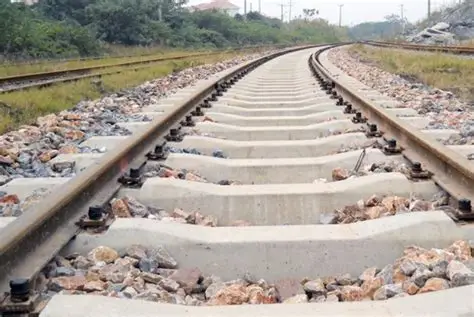
The granite ballast used in traditional ballasted track must meet the Los Angeles standard of a wear rate of ≤20%. On heavy-haul railways, the ballast layer reaches a thickness of 50 cm, with approximately 2,500 tons of ballast laid per kilometer. This crushed stone undergoes rigorous screening, with a particle size controlled between 25 そして 50 mm and a minimum of eight sharp corners to ensure sufficient interlocking strength.
The prefabrication accuracy of China’s CRTS III ballastless track slabs reaches 0.15 mm, and total stations are used for measurement and positioning during installation. Each slab has 36 height adjustment brackets, allowing for ±5 mm height adjustment. On the trial section of the Zhengzhou-Xi’an High-Speed Railway, the track height deviation within a 300-meter area is only 0.8 mm, equivalent to the thickness of three A4 sheets.
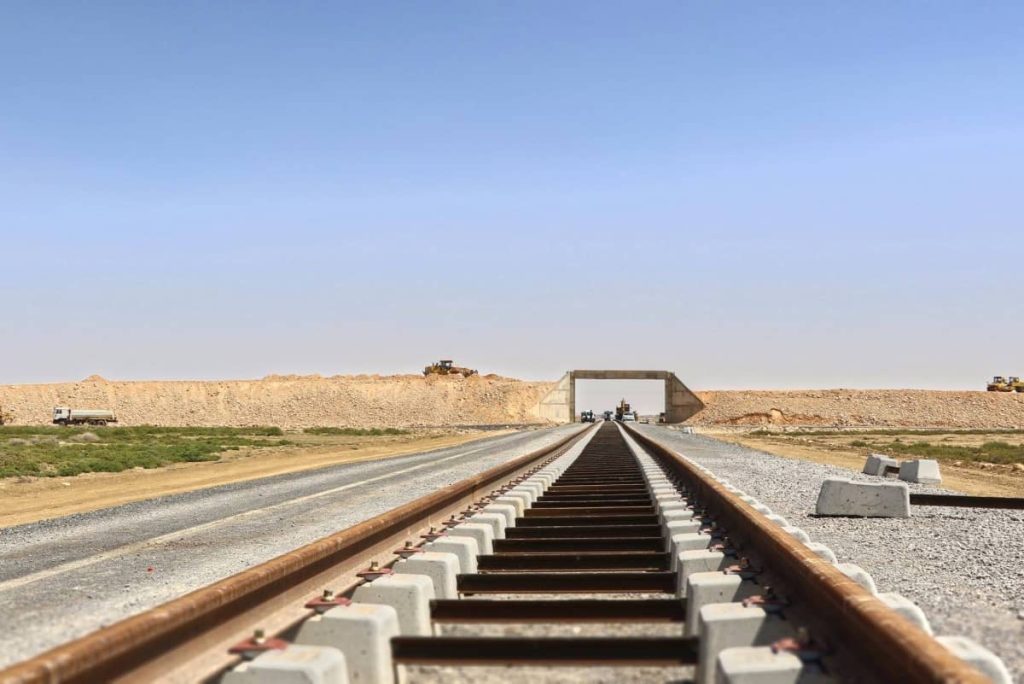
Winter temperatures on Russia’s Baikal-Amur Railway can reach -60°C, causing the rails to shrink and shorten. Engineers have developed a “thermodynamic regulator” that automatically adjusts the rail gap between -15°C and +35°C. On the coldest sections of the Trans-Siberian Railway, 12 sets of these devices are installed per kilometer of track to ensure the rails do not break due to low temperatures.
The Al-Haramain High-Speed Railway’s sand control system includes a 3-meter-high concrete sand retaining wall, a 50-meter-wide sand barrier, and an automatic monitoring system. The sand retaining wall’s inclination angle, determined through wind tunnel testing, is 60 degrees, effectively directing 90% of drifting sand across the track. In sections prone to sandstorms, an automatic sand removal device capable of removing 30 tons of accumulated sand per hour has been installed.
The latest rail flaw detection vehicle is equipped with a 128-channel ultrasonic inspection system, capable of simultaneously inspecting the rail head, rail web, and rail base. Inspection data is transmitted to a data center in real time via a 5G network, and AI algorithms can identify defects within 30 秒. On the Shanghai-Nanjing Intercity Railway, this system prevents over 200 potential failures annually.
の 96 grinding stones of modern rail grinding vehicles can be independently controlled, achieving a grinding accuracy of 0.05 mm. On the Beijing-Tianjin Intercity Railway, each grinding operation involves 12 steps, removing a 0.3 mm fatigue layer. Scientifically maintained rails can extend their service life from 8 years to 15 年.
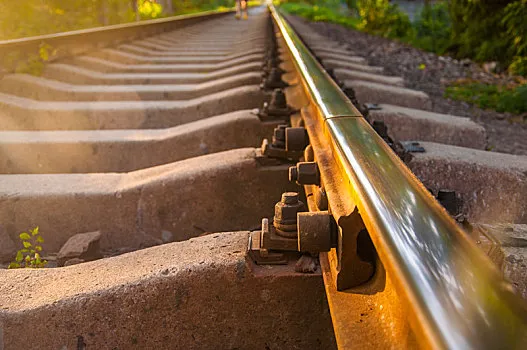
Japan-developed carbon fiber rails utilize a special resin-based composite material. While weighing only 42 kg/m, they achieve the same load-bearing capacity as UIC60 rails. In tests, this track demonstrated excellent fatigue resistance, remaining intact after 10 million load cycles, をはるかに超えています 3 million cycles required for conventional steel rails.
The smart track system currently being tested by Network Rail in the UK embeds micro-sensor nodes every 50 メートル. These nodes monitor 12 parameters, including temperature, stress, と振動, and transmit data via a LoRa wireless network. The system can predict track geometry deformation 72 hours in advance with over 92% accuracy.
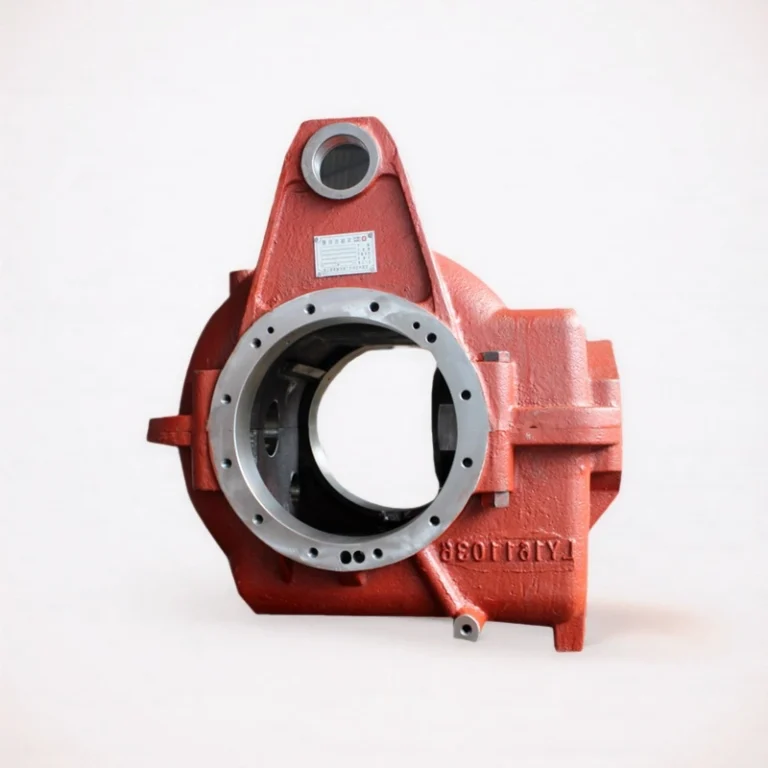
洛陽豊洋重工業株式会社, 株式会社, 1998年に設立された鉄道鋳造部品のメーカーです. 当社の工場面積は72,600㎡です。, 以上の 300 従業員, 32 技術者, 含む 5 シニアエンジニア, 11 アシスタントエンジニア, そして 16 技術者. 弊社の生産能力は 30,000 年間トン. 現在, 私たちは主に鋳物を生産しています, 機械加工, 機関車の組立て, 鉄道車両, 高速鉄道, 鉱山機械, 風力, 等. 当社の製品はロシアに輸出されています, 米国, ドイツ, アルゼンチン, 日本, フランス, 南アフリカ, イタリアとその他の国.
接触: ステラ・リュー
電子メール: [email protected]
ワッツアップ: +86-152-3615-7103