WeChat コードをスキャンしてご連絡ください
WeChat コードをスキャンしてご連絡ください
お気軽にメールをお送りください。できるだけ早くご返信させていただきます.
心と魂で未来を創る


鉄道側枠寸法 アライメントに直接影響を与える, 負荷分散, 3 ピース鉄道台車のサスペンションの挙動と全体的な性能. 鋳鋼サイドフレーム用, 寸法精度は、材料の品質や鋳造の完全性と同じくらい重要です.
最も重要なこと 鉄道側枠寸法 1 つの測定に限定されない. アクスルボックスウィンドウが含まれます, スプリングシートの形状, カラムガイドとウェアプレートのインターフェース, 該当する場合はウェッジポケットの形状, サイドフレーム全体の直角度と平行度.
これらの寸法が承認された図面および仕様の公差内にある場合, サイドフレームは意図したとおりに機能します. 鋳造歪みによりドリフトする場合, 着る, 衝撃による損傷または不適切な修理, 結果として生じる問題はトラックシステム全体に影響を及ぼす可能性があります.
このガイドでは、エンジニアと購買チームが検査時に注意すべき 5 つの主要な領域について説明します。, 鉄道側枠の交換または調達.
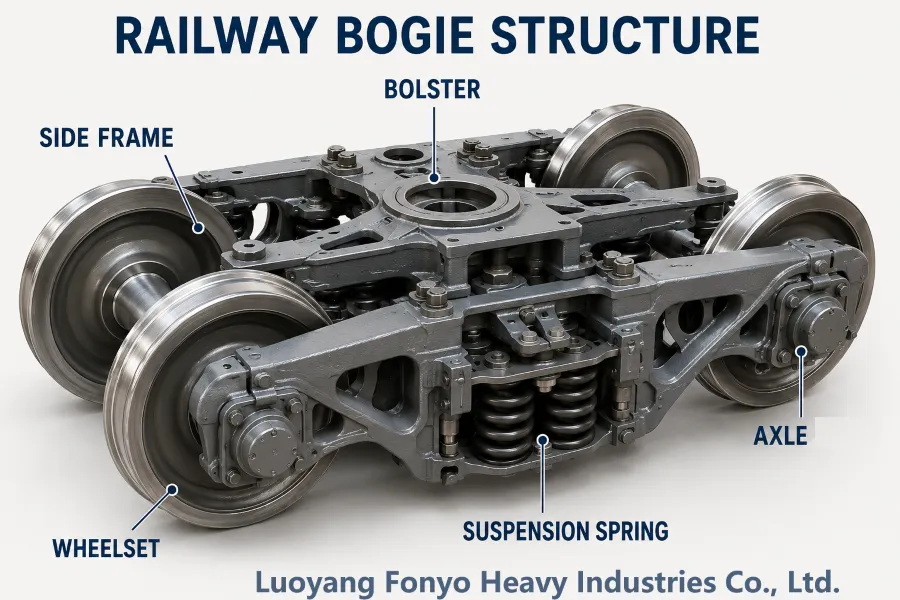
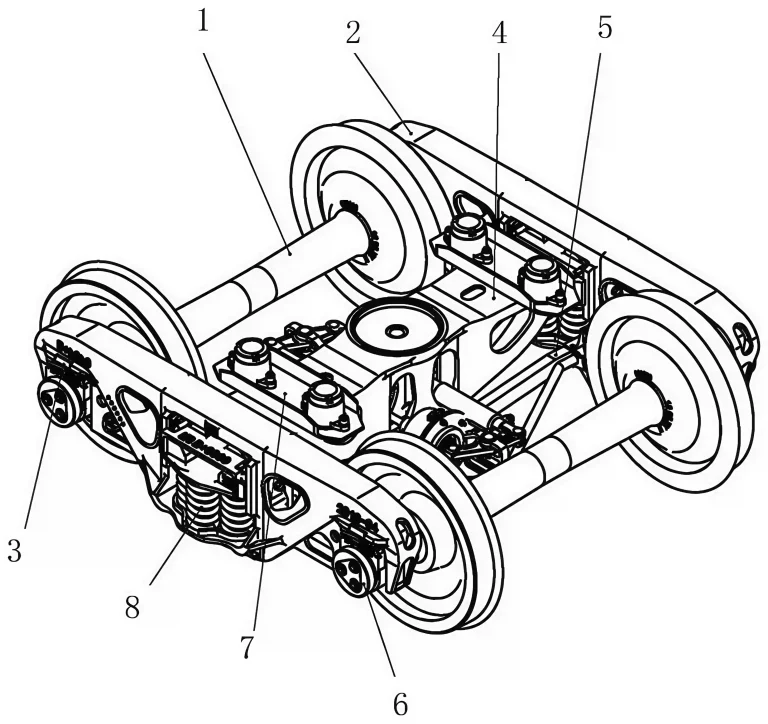
鋳鋼製鉄道の側枠は、比較的単純な構造の鋳物のように見えるかもしれません。, しかし、その形状にはいくつかの重要な機能があります.
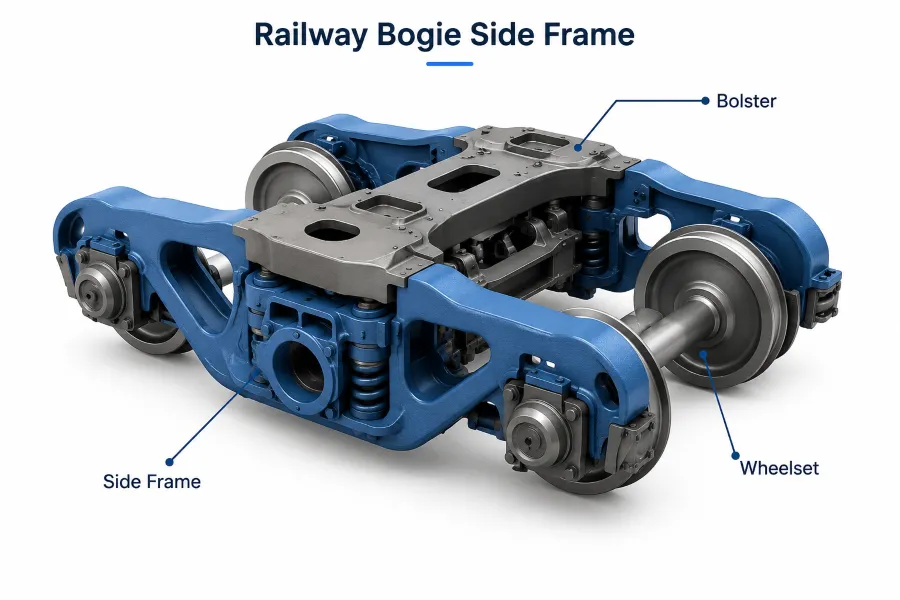
サイドフレームがサスペンションシステムをサポート, ボルスターと車軸ボックスのインターフェースを提供します, トラックの意図した形状を維持するのに役立ちます. したがって、その寸法は台車を介して力がどのように伝達されるかに影響します。.
例えば, 軸ボックス ウィンドウは、軸ボックスの位置と動きに影響します。. スプリングシートはサスペンションスプリングがフレームにどのように配置されるかを決定します. サイドフレームとボルスターの関係をコントロールするコラムガイド, 一方、フレームが正方形のままで適切に位置合わせされているかどうかは、全体のジオメトリによって決まります。.
このため、寸法検査を鋳造検査後の二次検査として扱うべきではありません。. サイドフレームは化学分析と非破壊検査に合格できますが、重要な寸法が承認された公差を超えている場合は不適切です。.
正確な寸法要件は、特定のサイドフレームの設計によって異なります。, 描画, 適用される鉄道規格と顧客の仕様. AAR 文書では鋼鋳物の規格を個別に特定しています, 鋳鋼製トラックサイドフレーム, サイドフレームと購入と受け入れを強化します.
アクスル ボックス ウィンドウは、評価する際に最も重要な領域の 1 つです。 鉄道側枠寸法.
サイドフレーム柱の下部の間に位置します。, ウィンドウは、特定のトラック設計で使用される車軸ボックスまたはアダプター配置に必要なインターフェイスを提供します。. その形状は、アクスル アセンブリとサイド フレーム間の意図された横方向および縦方向の関係を維持しながら、必要な動きを可能にする必要があります。.
通常、重要な特性には次のものが含まれます。:
実際の寸法は、一般的な値ではなく、常に承認されたサイドフレームの図面から取得する必要があります。.
長年使用されているサイドフレームの摩耗は特に重要です. 繰り返しの動き, 衝撃荷重や嵌合コンポーネントとの接触により、元の形状が徐々に変化する可能性があります.
過剰なクリアランスは、ホイールセットの意図した位置に影響を与え、ホイールとレールの接触が不均一になったり、トラックの他の場所で異常な摩耗が発生したりする可能性があります。.
交換用サイドフレーム用, したがって、新しい鋳造品は、単に元のコンポーネントと同じ一般的な外観を持つだけでなく、承認された寸法要件に一致する必要があります。.
スプリングシートもチェックする際の重要な領域です。 鉄道側枠寸法.
スプリング シートはサスペンション スプリングの支持面を提供します。. その場所, 平面度とフレーム上の他の基準点との関係により、サスペンション コンポーネントの位置が決まります。.
2 つの特徴は特に注目に値します: 位置と平面度.
スプリング シートの位置は、車軸ボックスの窓とトラックの嵌合コンポーネントの設計位置に対応している必要があります。. 2 つのサイド フレーム間の違いにより、組み立てられた台車に望ましくない幾何学的変化が生じる可能性があります。.
平坦性も同様に重要です. 破損した, スプリングシートが歪んでいたり過度に不均一であると、スプリングと鋳物の表面の間に不均一な接触が生じる可能性があります。. 意図したとおりに負荷を分散するのではなく, スプリングはより小さな領域に力を集中させる可能性があります.
このため、サイドフレームの寸法検査には適切なゲージが必要です。, 承認された検査手順で要求される直定規またはその他の校正された測定機器.
材料特性は良好でも、スプリング シートの形状が不十分なサイド フレームは、依然として満足のいくコンポーネントではありません。.
コラム ガイドは、サイド フレームがボルスターおよびその摩耗コンポーネントと相互作用する領域です。.
3ピースボギーで, ボルスターはサイドフレームに対して垂直に移動し、コラムガイドと合わせ面が横方向の位置を制御します。. したがって、この境界面の状態は、トラックのジオメトリとサスペンションの動作に大きな影響を与えます。.
重要 鉄道側枠寸法 この領域には以下が含まれます:
正確な寸法はトラックの設計と摩耗システムによって異なります。, したがって、該当する図面またはメンテナンス仕様書と照らし合わせてチェックする必要があります。.
ウェアプレートは繰り返し接触や移動を経験するため、意図的に交換可能なコンポーネントです。. しかし, replacing a worn plate does not automatically correct a distorted side frame.
If the underlying casting has been damaged, worn or improperly repaired, simply installing a new wear plate may not restore the intended geometry.
The column guide and bolster interface is one of the factors that contributes to the truck’s resistance to unwanted lateral movement and warping.
If excessive clearance develops, the bolster may have more freedom to move laterally than intended. When combined with other worn components or out-of-tolerance geometry, this can contribute to undesirable truck dynamics.
このため, inspection should consider the complete interface rather than checking wear plate thickness alone.
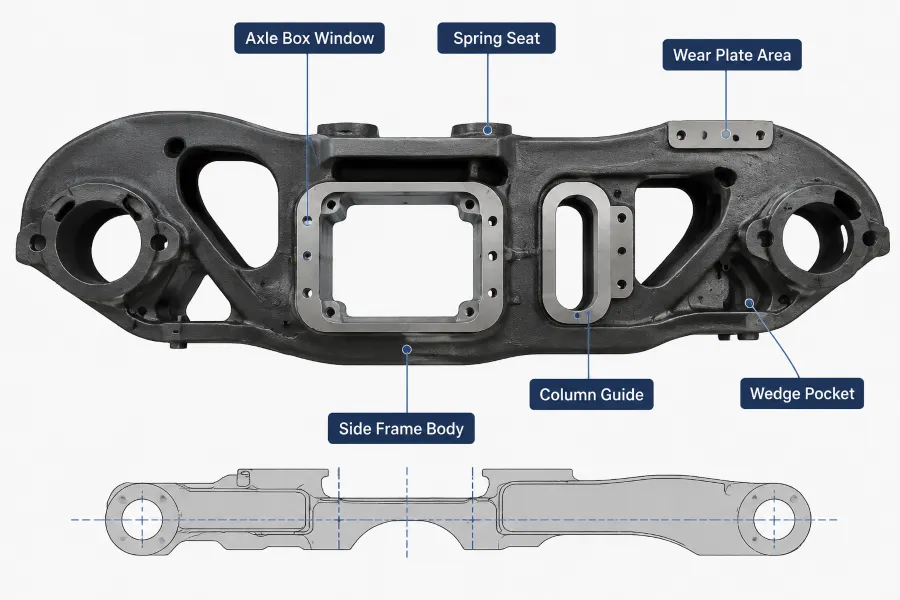
すべての鉄道側枠が同じ摩擦減衰構造を使用しているわけではありません, したがって、くさびポケットの形状は、特定の台車の設計に従って考慮する必要があります。.
摩擦減衰スリーピーストラックの場合, ウェッジとボルスターとサイドフレームの間のその合わせ面は、サスペンションダンピングシステムの重要な部分を形成します。. 相対的な垂直方向の動きにより、設計された接触面で摩擦が発生します。, サスペンションの動きを制御するのに役立ちます.
関連する 鉄道側枠寸法 含まれる場合があります:
ウェッジの形状はトラックの設計によって異なるため、これらの寸法を普遍的な値として扱うべきではありません。.
Even relatively small deviations can change the contact conditions and friction characteristics of the system. Damage, 過度の摩耗, incorrect repair or contamination can also affect the way the friction interface behaves.
For procurement specifications, the wedge pocket should therefore be controlled by the approved drawing and inspection procedure rather than by a generic dimensional value.
The first four areas concern individual features. The fifth is about the geometry of the entire casting.
This is one of the most important groups of 鉄道側枠寸法 because a side frame can meet individual local measurements and still have an overall alignment problem.
Several checks are particularly useful.
Diagonal measurements can be used to evaluate whether the side frame has remained square.
測定方法は承認された検査図面と基準点に依存します, ただし、基本原則は、対応する対角寸法を比較することです。. 大きな違いは歪みを示している可能性があります, ねじれまたはその他の幾何学的偏差.
スプリング シートの基準点間の距離は、相手のボルスターとサスペンションの配置に対応している必要があります。.
中心距離が指定された公差外の場合, 組み立てが困難になったり、不要な予圧や位置ずれが発生したりする可能性があります.
軸ボックスの窓の相対位置も重要な基準寸法です。.
意図したトラックの形状と、関連する車軸およびホイールセットの配置に対応している必要があります。. この測定は、一般化されたホイールベース値ではなく、承認された設計に対して常に管理される必要があります。.
The axle box windows and other reference surfaces must maintain the required parallelism and squareness.
Poor parallelism can introduce unwanted alignment errors in the assembled truck and may contribute to uneven loading or wear.
This is why a complete dimensional inspection is more valuable than checking only one or two easily accessible measurements.
Dimensional inspection should be combined with material and non-destructive testing.
A typical inspection program may include:
AAR’s standards structure separates requirements for steel castings, cast-steel truck side-frame design and testing, purchase and acceptance, and used/reconditioned side frames. This distinction is important when preparing a manufacturing or inspection specification.
The inspection method should therefore be based on the actual component design and applicable specification rather than assuming that every railway side frame has the same dimensional requirements.
Incorrect 鉄道側枠寸法 do not always produce an immediate visible failure.
Some problems develop gradually as the truck operates under repeated loading.
Possible consequences include:
The important point is that dimensional errors should be considered together with wear, loading history, material condition and the geometry of the complete bogie.
A side frame should not be evaluated as an isolated casting when the final application is a complete railway truck.
Dimensional accuracy starts at the foundry.
鋳鋼サイドフレーム用, controlling geometry requires more than final machining or inspection. The casting process, 金型設計, steel quality, solidification behavior, heat treatment and subsequent straightening or finishing operations can all affect dimensional stability.
A reliable manufacturing process therefore needs control at several stages:
Casting → Heat Treatment → Dimensional Inspection → NDT → Final Inspection
The final inspection confirms whether the finished component meets the approved drawing, but process control is what helps make dimensional consistency repeatable from one casting to the next.
This is particularly important when replacing side frames in an existing fleet. The replacement component must not only satisfy the material and strength requirements; it must also interface correctly with the existing bolster, suspension and axle box arrangement.
For purchasing teams, asking for the material grade alone is not enough.
ご注文の前に, it is worth confirming:
1. What standard applies?
Clarify whether the project is based on AAR, GOST or another railway standard, together with the specific applicable specification.
2. Is an approved drawing available?
Critical 鉄道側枠寸法 should be controlled by an approved drawing or technical specification.
3. Which dimensional inspection method will be used?
Ask whether the supplier will use calibrated gauges, テンプレート, CMM or other approved equipment.
4. Which NDT methods are included?
Confirm the applicable magnetic particle, ultrasonic or other inspection requirements.
5. How are casting quality and heat treatment controlled?
材料のトレーサビリティ, heat-treatment records and mechanical test results should be available where required.
6. Can the supplier provide inspection documentation?
Dimensional inspection reports and NDT records provide useful evidence that the component was manufactured according to the agreed requirements.
A good side-frame supplier should be able to discuss these requirements before production begins rather than treating dimensional inspection as a final paperwork exercise.
で フォニョ, we manufacture cast steel railway side frames and bolsters according to applicable railway standards, approved drawings and project-specific requirements.
Our engineering and production process can cover casting, 熱処理, dimensional inspection and non-destructive testing according to the agreed technical specification.
For projects involving AAR requirements, it is important to distinguish the applicable standards. AAR’s current standards index separately lists M-201 for Castings, 鋼鉄; M-203 for Truck Side Frames, Cast Steel—Design and Testing; M-210 for Side Frame and Bolsters—Purchase and Acceptance; and M-214 for Used and Reconditioned Side Frames and Bolsters.
This allows the manufacturing and inspection plan to be established around the actual side-frame design instead of relying on generic dimensions.
If you are sourcing replacement railway side frames, new bogie castings or components for a specific freight-car project, send us your drawing, part number or technical specification. Our engineering team can review the required material, 鉄道側枠寸法, tolerances and inspection requirements before production.
最も重要なこと 鉄道側枠寸法 are not simply numbers on a drawing. They define how the casting interfaces with the axle box, スプリング, bolster and other bogie components.
The five major areas are:
A side frame can have excellent material properties and pass non-destructive testing while still being unsuitable because of dimensional errors.
そのため, dimensional control should be part of the manufacturing process from casting through final inspection. When the correct drawing, inspection method and applicable railway standard are established before production, dimensional consistency becomes much easier to control.
The most important areas include the axle box window, spring seat position and flatness, column guide geometry, 該当する場合はウェッジポケットの形状, and the overall squareness, parallelism and reference dimensions of the side frame.
They determine how the side frame interfaces with the axle box, サスペンションスプリング, bolster and other bogie components. Dimensional errors can lead to incorrect clearances, uneven loading, excessive wear and assembly problems.
Not all side frames have identical dimensions. The required dimensions depend on the truck design, approved drawing, applicable railway standard and project-specific requirements.
いいえ. AAR’s standards separate steel casting requirements from truck side-frame design and purchase/acceptance requirements. M-201 covers steel castings, while AAR separately identifies M-203 for cast-steel truck side-frame design and testing and M-210 for side-frame and bolster purchase and acceptance.
Depending on the design and inspection specification, dimensional inspection may use approved gauges, テンプレート, calibrated measuring equipment or CMM. Dimensional inspection is normally combined with visual inspection and applicable NDT methods.
Some side frames may be eligible for reconditioning depending on their condition, design and applicable maintenance requirements. AAR separately identifies M-214 for used and reconditioned side frames and bolsters.
The most useful information includes the original drawing or part number, truck type, 適用規格, material requirement, critical dimensions, NDT requirements and quantity. Providing the original technical documentation helps the supplier confirm compatibility before production.