WeChat コードをスキャンしてご連絡ください
WeChat コードをスキャンしてご連絡ください
お気軽にメールをお送りください。できるだけ早くご返信させていただきます.
心と魂で未来を創る


On September 27, 1825, a steam locomotive belched white smoke as it slowly pulled a coal-laden carriage along the Stockton to Darlington line in England. This 32-kilometer-long line was not only the world’s first public railway, but also went down in history as the first to use cast iron track. But no one could have imagined that these seemingly sturdy cast iron tracks would become the starting point for a revolution in track materials that would last nearly two centuries.
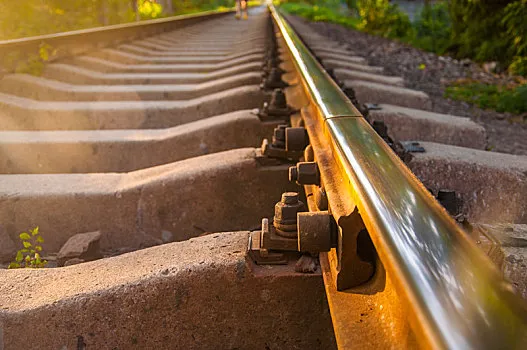
The Industrial Revolution led to an explosive growth in demand for coal transportation. しかし, traditional wooden rails were too fragile to withstand the crushing weight of steam locomotives weighing hundreds of tons. で 1820, British engineer John Birkinshaw had the idea to apply the technology used to manufacture cast iron water pipes to the manufacture of rails, thus designing the L-shaped cast iron track. This type of track was mass-produced using a casting method, costing only one-third of wooden rails. Installation required no specialized tools; it could be laid directly onto sleepers. Within a few years, cast iron rails became the “標準” for railway construction.
しかし, cast iron’s brittleness soon became apparent: its tensile strength was less than 200 MPa, only one-tenth that of modern steel rails. Trains often cracked the rails, with cracks growing by several millimeters per month. After the Liverpool-Manchester railway opened in 1830, cast iron track breakage became commonplace, with some sections requiring 30% of the track replacement daily. To make do, engineers had to make the track heavier (から 18 kg to 36 kg per meter) and reduce the track gauge from the standard 4 足 8.5 inches to 4 足. These compromises exacerbated the potential for subsequent accidents.
The most groundbreaking innovations in the development of railway materials were initiated by continuous advancements in steelmaking technology. Back in 1856, Henry Bessemer pioneered the converter steelmaking process. This process involves forcefully blowing air into molten pig iron. This process significantly reduces the carbon content from 4% に 0.2%-0.5%. The result is a low-carbon steel with a tensile strength of 400 MPa and exceptional toughness, three times that of cast iron. After the London Underground first introduced steel rails in 1863, their lifespan increased four times over that of cast iron.
By the late 19th century, open-hearth steelmaking had become increasingly common. By controlling the furnace temperature and adding manganese (at a concentration of 0.6%-0.9%), the carbon content of steel rails was stabilized at 0.6%-0.8%, increasing their tensile strength to 600-800 MPa. で 1895, after the entire Pennsylvania Railroad line was converted to steel rails, train speeds soared from 40 km/h to 80 km/h, and the rails could last for over 10 年. During this period, the cross-section of the rails evolved from a simple T-shape to an I-shape, achieving a more rational structure and more evenly distributed loads.
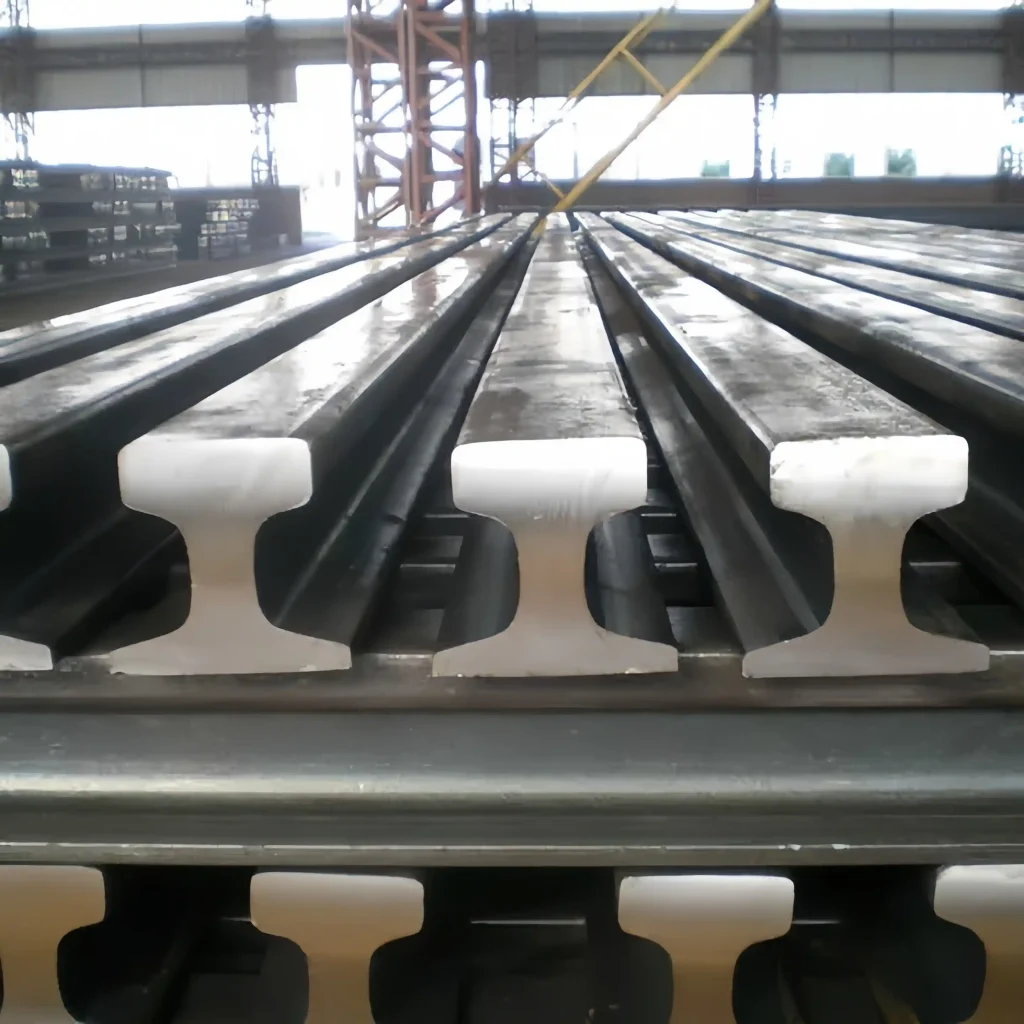
In the mid-20th century, as railroads began pursuing ever-higher speeds, rails encountered new challenges. When Japan’s Shinkansen opened in 1964, the U71Mn steel rails (containing 0.7% carbon and 1.2% マンガン) used at the time wore away 0.3 mm per month at 300 km/h, three times the rate of conventional rails. This prompted countries to consider the possibility of adding “additives” to the rails.
The secret of modern alloy rails lies in the addition of just a few “special ingredients”:
Chromium (Cr): acts like a protective coating on the rails, extending their lifespan by 2-3 times in humid environments;
Vanadium (V): Strengthens the rails’ “筋肉,” achieving a tensile strength exceeding 1200 MPa;
Niobium (Nb): Enhances their durability, reducing the propagation of fatigue cracks.
The U75V rails used in China’s high-speed rails, containing 0.75% carbon and 0.6% vanadium, have achieved world-class performance. Germany’s R350HT rails (containing 0.82% carbon and 1.5% クロム) used in heavy-haul railways could withstand repeated crushing by 40-ton axle-load freight cars and have a lifespan exceeding 1 billion tons of traffic, equivalent to the equivalent of circling the Earth 25 回.
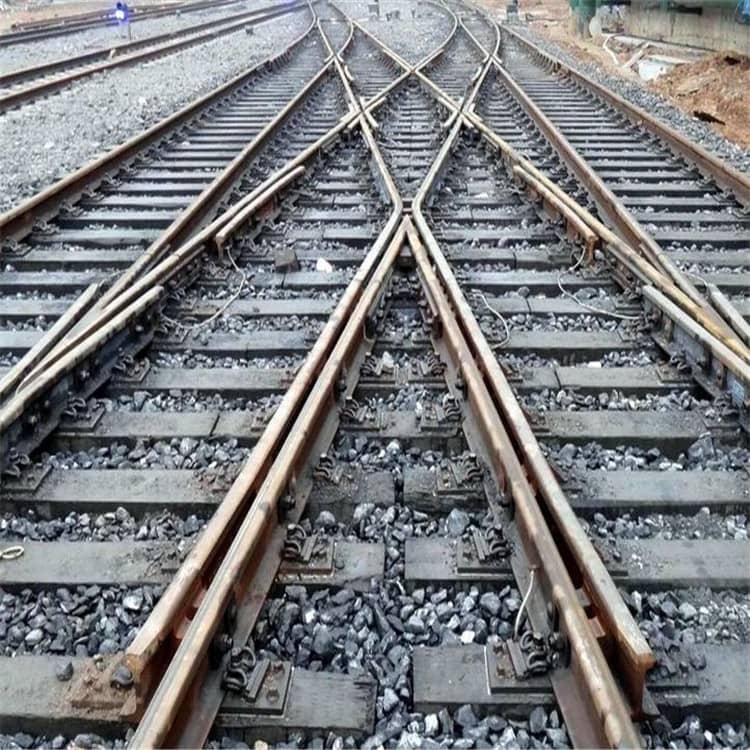
Engineers are now using smarter methods to extend rail life. 例えば, laser cladding could coat the rail head with a 0.5 mm thick layer of cobalt-based alloy, increasing wear resistance tenfold. Plasma spraying could repair worn rail surfaces like a “filling,” extending rail life by 30%. These technologies are already being used on lines such as the Beijing-Shanghai High-Speed Railway in China and Germany’s ICE High-Speed Railway.
3D printing technology is also quietly transforming rail manufacturing. 例えば, using gradient material printing allows rail heads to be made of high-carbon steel (耐摩耗性) and rail bottoms of low-carbon steel (靭性), creating a single piece. Hollow structural designs could reduce weight while maintaining strength, minimizing vibration during train travel.
New materials such as graphene-reinforced rails and shape memory alloy rail pads, while still in the laboratory, hold enormous potential. Graphene could increase rail strength by 20%, while also reducing electrical resistance and minimizing track circuit failures. Shape-memory alloy rail pads could automatically adjust track gauge based on temperature fluctuations, adapting to the needs of different vehicle types.
From the cast iron rails of 1825 to modern alloy steel rails, the evolution of rail materials is a story of how humans have “tamed” metal through ingenuity and perseverance. As Fuxing trains glide over the rails at 350 時速キロメートル, the metal buried deep beneath the railroad ties silently supports humanity’s eternal pursuit of speed and efficiency.
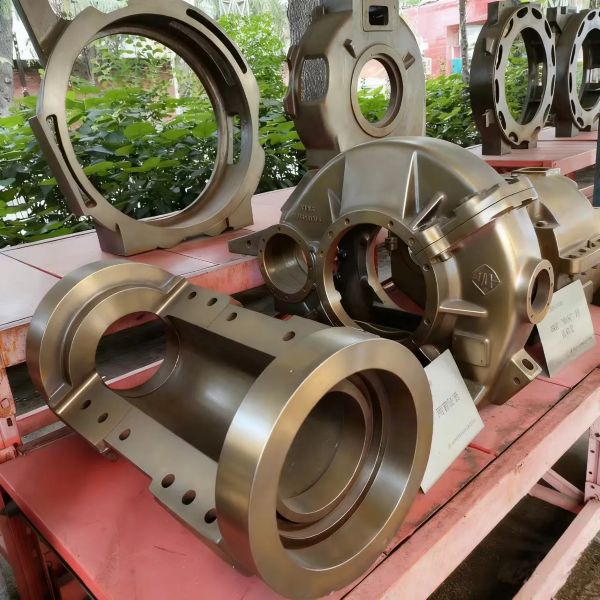
洛陽豊洋重工業株式会社, 株式会社, 1998年に設立された鉄道鋳造部品のメーカーです. 当社の工場面積は72,600㎡です。, 以上の 300 従業員, 32 技術者, 含む 5 シニアエンジニア, 11 アシスタントエンジニア, そして 16 技術者. 弊社の生産能力は 30,000 年間トン. 現在, 私たちは主に鋳物を生産しています, 機械加工, 機関車の組立て, 鉄道車両, 高速鉄道, 鉱山機械, 風力, 等. 当社の製品はロシアに輸出されています, 米国, ドイツ, アルゼンチン, 日本, フランス, 南アフリカ, イタリアとその他の国.
接触: ステラ・リュー
電子メール: [email protected]
ワッツアップ: +86-152-3615-7103