Scansiona il codice WeChat per contattarci
Scansiona il codice WeChat per contattarci
Sentiti libero di inviarci un'e-mail e ti risponderemo il prima possibile.
Creare il futuro con cuore e anima


Nella fusione industriale dei metalli, la gente spesso dice che il fosforo e lo zolfo sono dannosi. Di solito vengono chiamati “impurità nocive” nei libri di regole, e i loro importi sono strettamente limitati.
Ma in vere fonderie, especially when making cast iron, things are more interesting. We still see iron with high phosphorus. We still meet melts with high sulfur. And in some uses, cast iron with these elements has worked well for years. So we need to ask:
Are phosphorus and sulfur always bad? Or can they be useful, depending on how and where we use them?
Let’s not look at them from a textbook. Let’s look from a factory floor view, let’s think about the material’s structure, what the part needs to do, and how we control the procesS In industrial casting.
This thinking has reasons.
In cast iron and steel, phosphorus likes to gather in certain spots when the metal becomescool and hardens. When there’s too much, it can form hard, aree fragili tra i grani. Ciò rende il materiale più debole agli urti e ha maggiori probabilità di rompersi sotto sforzo.
Lo zolfo causa un problema diverso. Forma composti come FeS, e si scioglie facilmente. Durante il raffreddamento, questi possono rimanere morbidi ai bordi del grano, rendendo il materiale debole e fragile quando è caldo (chiamiamo questo “mancanza calda”). Ecco perché manteniamo basso il tenore di zolfo nella maggior parte degli acciai e dei ferri, a meno che non aggiungiamo abbastanza manganese per bilanciarlo.
Per parti soggette a urti o sollecitazioni ripetute, queste preoccupazioni sono molto reali. Non possiamo consentire aree fragili in tali parti.
Ma a volte, applichiamo queste regole ad ogni situazione, senza chiedere se la parte ne ha davvero bisogno.
Nel casting reale, gli elementi non agiscono da soli. Ciò che conta è:
Come sono distribuiti all'interno del materiale
What kind of structures do they make
Where those structures are
And, most of all, how the part is used when it’s working
Phosphorus and sulfur don’t always make things worse. They cause trouble only if they are in the wrong form, in the wrong place, or under the wrong kind of load.
A part made to handle impacts needs different things than a part made for wearing down slowly, creating friction, or keeping its shape. If we treat all parts the same, we miss important details.
In pratica, good engineers don’t just ask if an element is good or bad.”Chiedono: “Does the material’s structure fit the job this part has to do?”
Parts that work under friction and wear follow different rules.
They usually need to:
Resist being worn away or stuck to another surface
Have steady friction over time
Get rid of the heat well
Wear down in a slow, predictable way
Work well with the surface they touch
Being tough against sudden hits is often not the main point. In brakes and many friction systems, the part’s job is not to absorb shocks. Its job is to turn movement into heat in a steady, modo controllato.
Qui, having some hardness and a non-uniform structure inside can actually help. It’s not always a problem.
This idea is key when we think about phosphorus and sulfur.
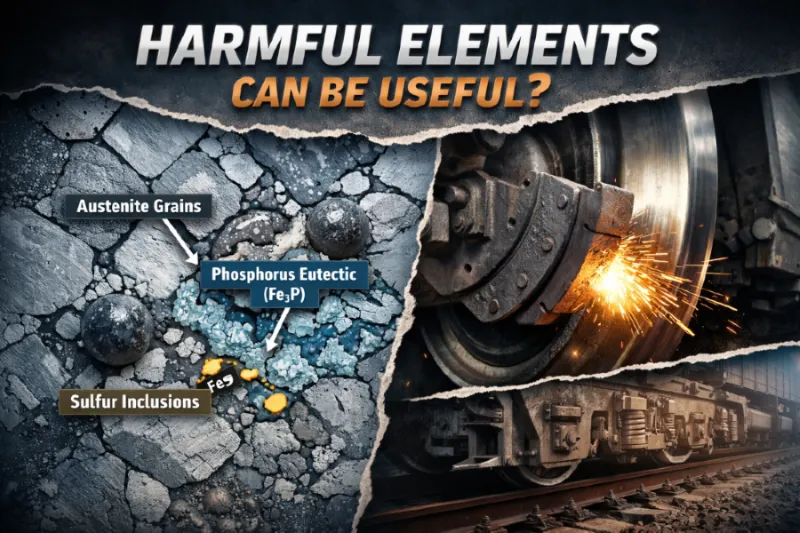
In cast iron, phosphorus makes very hard areas inside the metal. For toughness, these are bad. But for wear and friction, they can be very good.
In these uses, hard spots act like tiny, forti pilastri in superficie. Aiutano a trasportare il carico, resistere al cambiamento di forma, e impedire alle superfici di aderire tra loro. Invece di una grossa macchia di materiale, il contatto avviene su tanti piccoli punti duri.
Ciò porta a una migliore resistenza all'usura, Attrito più stabile, Meno possibilità di grippaggio delle superfici.
COSÌ, le aree ricche di fosforo possono aiutare una parte di attrito a funzionare allo stesso modo per lungo tempo.
Questa non è una novità. La ghisa ad alto contenuto di fosforo è stata utilizzata per molto tempo dove l'usura conta più della resistenza agli urti. Il segreto è sempre stato il controllo, non eliminarlo completamente.
Lo zolfo è spesso visto come un puro piantagrane. In molti casi, è vero. Ma il suo comportamento cambia in base a ciò che lo circonda.
Se lo zolfo si combina con il manganese per formare MnS (non FeS), diventa molto meno dannoso. In alcuni casi, piccoli frammenti di composti di zolfo possono persino aiutare a gestire il funzionamento dell'attrito.
In condizioni di sfregamento a secco, le fasi di zolfo potrebbero aiutare a ridurre l'attrito e migliorare l'usura. Ciò non significa che dovremmo usare molto zolfo. Ciò significa che con il giusto mix e processo, lo zolfo non sempre rende il materiale inutilizzabile.
Ancora, non si tratta della presenza o meno dello zolfo, ma che forma assume.
Niente qui significa che dovremmo usare il ferro ad alto contenuto di fosforo con noncuranza. Per usarlo bene, abbiamo bisogno di un attento controllo.
I punti importanti sono:
Controllare attentamente la miscela chimica
Bilanciamento dei livelli di carbonio e silicio
Avere abbastanza manganese per gestire lo zolfo
Controlling how it solidifies to avoid connected brittle networks
Making sure the inner structure fits the expected load
When we manage these, high-phosphorus cast iron becomes a reliable engineering choice, not a gamble.
That’s why such materials aren’t used in parts that take heavy impacts, but are common in friction and wear jobs. The same element can be a problem or a tool, depending on whether the engineer understands and controls it.
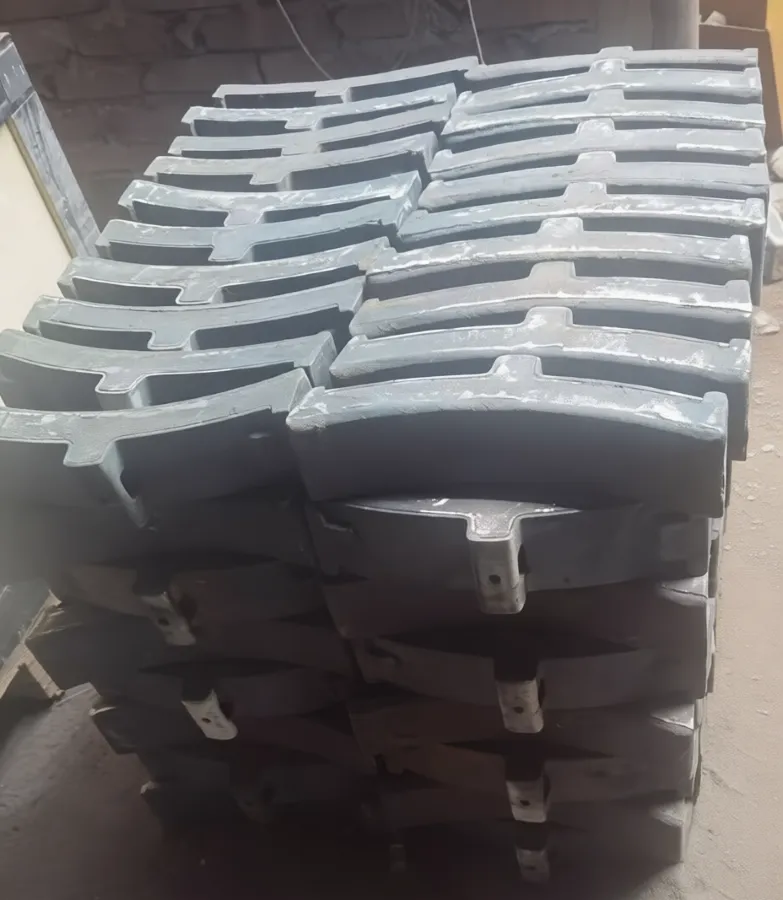
In industrial casting, phosphorus cast irons have a long history in parts that deal with friction. Their benefits are proven by decades of real use.
These materials offer:
Good wear resistance
Stable performance under dry friction
Predictable wear over time
Funzionano bene contro le superfici in acciaio
Fondamentalmente, queste parti sono progettate sapendo come si comporta il materiale. Non chiediamo loro di svolgere lavori che non possono gestire.
Abbinare il materiale al lavoro è ciò che significa una buona ingegneria.
Basato su questo modo di pensare pratico, Luoyang Fonyo Heavy Industries Co., Ltd. fa Ganasce freno in ghisa per le ferrovie. Ciò include soluzioni che utilizzano ghisa ad alto contenuto di fosforo, dove la resistenza all'usura e l'attrito costante sono più importanti. Puoi trovare ulteriori informazioni su questi prodotti su www.railwaypart.com
Il fosforo e lo zolfo sono spesso definiti nocivi, e spesso lo sono. Ma il casting non riguarda regole sempre vere. Si tratta di sapere dove un materiale fallisce e dove riesce.
Questa mentalità pratica è anche il modo in cui sviluppiamo i prodotti Luoyang Fonyo Heavy Industries Co., Ltd. In qualità di fornitore di getti ferroviari, ruote della locomotiva, E Ganasce freno in ghisa, we choose materials not by a fixed formula, but by what the real working conditions demand. In uses ruled by friction and wear, like railway brakes, this lets us use so-called “bad” elements on purpose, instead of just avoiding them. More details are at www.railwaypart.com