Scan WeChat-koden for at kontakte os
Scan WeChat-koden for at kontakte os
Du er velkommen til at sende os en e-mail, og vi vil svare dig hurtigst muligt.
At skabe fremtiden med hjerte og sjæl


I industriel metalstøbning, folk siger ofte, at fosfor og svovl er dårlige. De kaldes normalt “skadelige urenheder” i regelbøger, og deres mængder er strengt begrænset.
Men i rigtige støberier, især ved fremstilling af støbejern, ting er mere interessante. Vi ser stadig jern med højt fosforindhold. Vi møder stadig smelter med højt svovlindhold. Og i nogle anvendelser, støbejern med disse elementer har fungeret godt i årevis. Så vi er nødt til at spørge:
Er fosfor og svovl altid dårligt? Eller kan de være nyttige, afhængig af hvordan og hvor vi bruger dem?
Lad os ikke se på dem fra en lærebog. Lad os se fra fabriksgulvet, lad os tænke på materialets struktur, hvad delen skal gøre, og hvordan vi styrer processens i industriel støbning.
Denne tankegang har grunde.
I støbejern og stål, fosfor kan lide at samle sig visse steder, når metallet bliver koldt og hærder. Når der er for meget, det kan danne sig hårdt, skøre områder mellem korn. Dette gør materialet svagere mod stød og mere tilbøjelige til at revne under kraft.
Svovl forårsager et andet problem. Det danner forbindelser som FeS, og smelter let. Under afkøling, disse kan forblive bløde ved korngrænserne, gør materialet svagt og skørt, når det er varmt (vi kalder dette “varm korthed”). Derfor holder vi svovl lavt i de fleste stål og jern, medmindre vi tilføjer nok mangan til at balancere det.
Til dele, der udsættes for stød eller gentagen stress, disse bekymringer er meget reelle. Vi kan ikke tillade skrøbelige områder i sådanne dele.
Men nogle gange, vi anvender disse regler i enhver situation, uden at spørge, om delen virkelig har brug for det.
I rigtig casting, elementer virker ikke alene. Det der betyder noget er:
Hvordan spredes de inde i materialet
Hvilken slags strukturer laver de
Hvor de strukturer er
Og, mest af alt, hvordan delen bruges, når den virker
Fosfor og svovl gør ikke altid tingene værre. De forårsager kun problemer, hvis de er i den forkerte form, på det forkerte sted, eller under den forkerte type belastning.
En del lavet til at håndtere stød har brug for andre ting end en del lavet til at blive slidt langsomt, skabe friktion, eller holder sin form. Hvis vi behandler alle dele ens, vi savner vigtige detaljer.
I praksis, gode ingeniører spørger ikke bare, om et element er godt eller dårligt.”De spørger: “Passer materialets struktur til det arbejde, denne del skal udføre?”
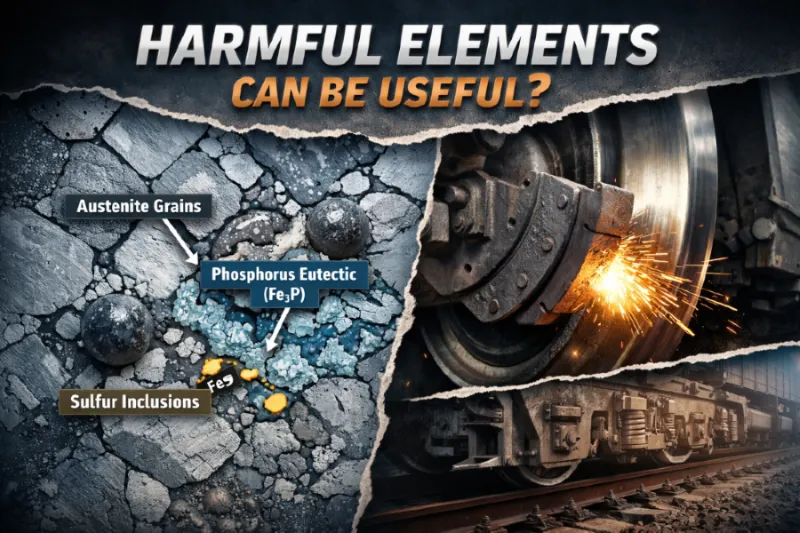
Dele, der fungerer under friktion og slid, følger forskellige regler.
Det skal de som regel:
Resist being worn away or stuck to another surface
Have steady friction over time
Get rid of the heat well
Wear down in a slow, predictable way
Work well with the surface they touch
Being tough against sudden hits is often not the main point. In brakes and many friction systems, the part’s job is not to absorb shocks. Its job is to turn movement into heat in a steady, controlled way.
Her, having some hardness and a non-uniform structure inside can actually help. It’s not always a problem.
This idea is key when we think about phosphorus and sulfur.
In cast iron, phosphorus makes very hard areas inside the metal. For toughness, these are bad. But for wear and friction, they can be very good.
In these uses, hard spots act like tiny, strong pillars on the surface. They help carry the load, resist changing shape, and stop surfaces from sticking together. Instead of a big patch of material smearing, the contact happens over many small hard points.
This leads to Better wear resistance, More stable friction, Less chance of surfaces seizing up.
Så, phosphorus-rich areas can help a friction part work the same way for a long time.
This isn’t new. High-phosphorus cast iron has been used for a long time where wear matters more than impact strength. The secret was always control — not getting rid of it completely.
Sulfur is often seen as a pure troublemaker. I mange tilfælde, that’s true. But its behaviour changes based on what’s around it.
If sulfur combines with manganese to form MnS (not FeS), it becomes much less harmful. I nogle tilfælde, small bits of sulfur compounds can even help manage how friction works.
In dry rubbing conditions, sulfur phases might help lower friction and improve wear. This doesn’t mean we should use a lot of sulfur. It means that with the right mix and process, sulfur doesn’t always make the material useless.
Again, it’s not about whether sulfur is there, but what form it takes.
Nothing here means we should use high-phosphorus iron carelessly. To use it well, we need careful control.
Important points are:
Controlling the chemical mix carefully
Balancing carbon and silicon levels
Having enough manganese to handle sulfur
Controlling how it solidifies to avoid connected brittle networks
Making sure the inner structure fits the expected load
When we manage these, high-phosphorus cast iron becomes a reliable engineering choice, not a gamble.
That’s why such materials aren’t used in parts that take heavy impacts, but are common in friction and wear jobs. The same element can be a problem or a tool, depending on whether the engineer understands and controls it.
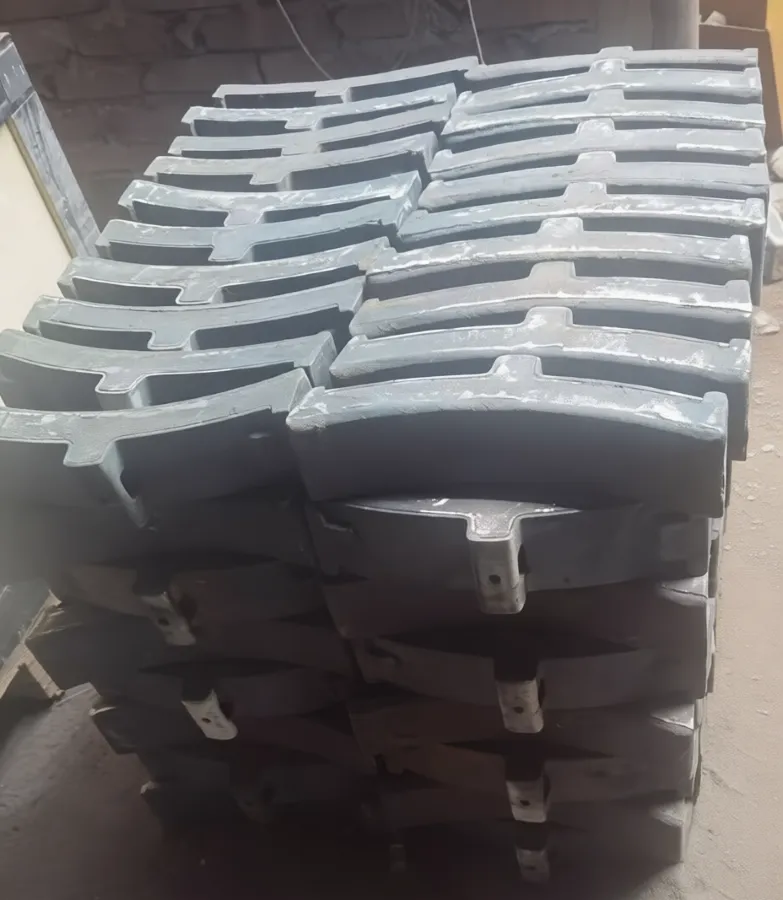
In industrial casting, phosphorus cast irons have a long history in parts that deal with friction. Their benefits are proven by decades of real use.
These materials offer:
Good wear resistance
Stable performance under dry friction
Predictable wear over time
They work well against steel surfaces
Crucially, these parts are designed knowing how the material behaves. We don’t ask them to do jobs they can’t handle.
Matching the material to the job is what good engineering is all about.
Based on this practical way of thinking, Luoyang Fonyo Heavy Industries Co., Ltd. makes støbejerns bremsesko for jernbaner. This includes solutions using high-phosphorus cast iron, where wear resistance and steady friction are most important. You can find more about these products at www.railwaypart.com
Phosphorus and sulfur are often called harmful, and often they are. But casting is not about rules that are always true. It’s about knowing where a material fails and where it succeeds.
This practical mindset is also how we develop products at Luoyang Fonyo Heavy Industries Co., Ltd. As a supplier of jernbanestøbninger, lokomotivhjul, og støbejerns bremsesko, we choose materials not by a fixed formula, but by what the real working conditions demand. In uses ruled by friction and wear, like railway brakes, this lets us use so-called “bad” elements on purpose, instead of just avoiding them. More details are at www.railwaypart.com