Scansiona il codice WeChat per contattarci
Scansiona il codice WeChat per contattarci
Sentiti libero di inviarci un'e-mail e ti risponderemo il prima possibile.
Creare il futuro con cuore e anima


Nella vasta rete di sistemi ferroviari, the junction of two binari in acciaio is not merely a simple “giunto” ma una posizione strategica che riguarda la sicurezza, stabilità, and efficiency of the entire line. The protagonist here is the fishplate – this seemingly unremarkable connecting piece is actually the “ancora di salvezza” maintaining the continuity of the steel rails. Especially with the increase in train axle loads and speeds, traditional fishplates have become inadequate, making high-strength fishplates an inevitable choice for modern railways.
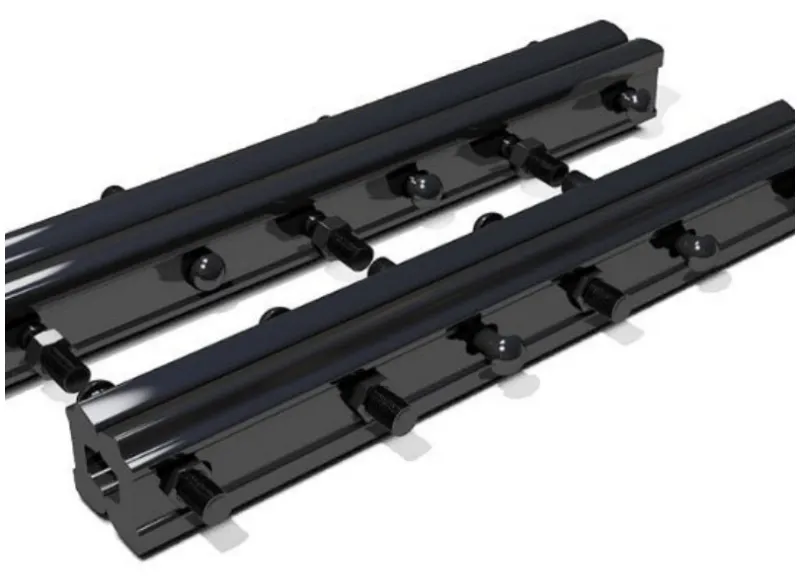
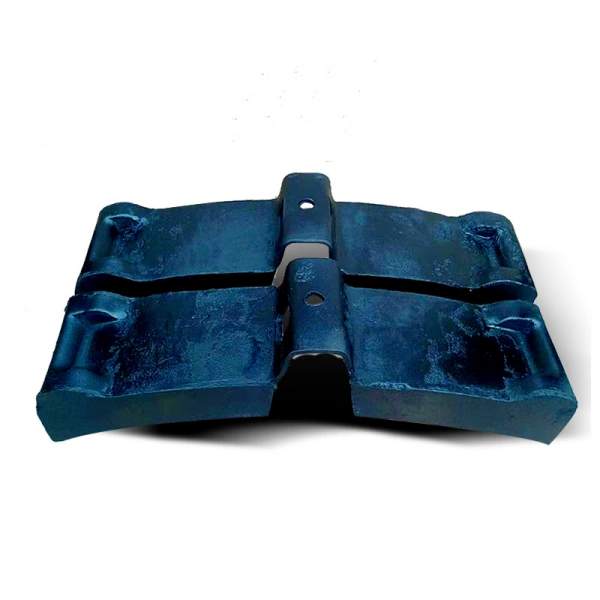
Steel rail connection plates, also known as railway fishplates or splice plates, are used to connect the ends of two steel rails. High-quality fishplates can effectively reduce the impact force when train wheels pass over the rail joints, making the train’s passage over the rail joints more stable.
Selection is not a simple “match and fit”, but a systematic process. When choosing high-strength fishplates, the following core dimensions must be considered:
1.1. Precise Matching of Steel Rail Technical Parameters: This is the foundation.
Steel rail model (kg/m): This is the first checkpoint. A 60kg/m steel rail must be paired with a 60kg/m fishplate, and a 75kg/m steel rail must be paired with a 75kg/m fishplate. Cross-model mixing is strictly prohibited, as it can lead to insufficient contact area, causing stress to concentrate sharply and result in fishplate or even rail breakage.
1.3 Steel rail material and strength grade:
Is the steel rail you use U75V, U68Av, or a higher-strength wear-resistant rail? The material of high-strength fishplates (such as high-quality medium carbon steel or alloy steel) should match it to ensure that both deform in a coordinated manner under force, avoiding excessive wear on one side due to hardness differences.
2. In-depth analysis of operational conditions: This is the key to determining the performance limit.
2.1 Total weight and axle load:
For heavy-haul lines (such as the Daqin Line), fishplates with higher ultimate strength and better fatigue performance must be selected. They usually adopt more complex structural designs and heat treatment processes to withstand millions or even billions of repeated impacts.
2.2 Maximum line speed:
High-speed passenger lines have extremely high requirements for ride smoothness. Fishplates that can effectively maintain joint smoothness should be preferred. Their own stiffness and elasticity need to be precisely calculated to suppress vibrations at high speeds and ensure passenger comfort.
2.3 Environmental corrosiveness:
In coastal, saline-alkali, or heavily industrial-polluted areas, “corrosione” is a hidden killer. In questo momento, anti-corrosion performance should be elevated to an important selection criterion. Ask the supplier if they provide enhanced anti-corrosion treatments such as galvanized layers, Dacromet coatings, or epoxy resin spraying, which can extend the service life of fishplates several times over.
Qualification certification:
A reliable manufacturer must have quality management system certifications such as IRIS (International Railway Industry Standard) or ISO 9001. This is the basic guarantee for the standardization of their production processes.
4.1 Processo di trattamento termico:
High strength does not come out of thin air. The key lies in quenching and tempering heat treatment (tempra + high-temperature tempering). This determines whether the fishplate can have both high strength and sufficient toughness, avoiding brittle fractures.
4.2 Prove non distruttive:
Every high-strength fishplate leaving the factory should undergo ultrasonic or magnetic particle testing to ensure there are no internal cracks, inclusioni di scorie, or other fatal defects. You can request a testing report.
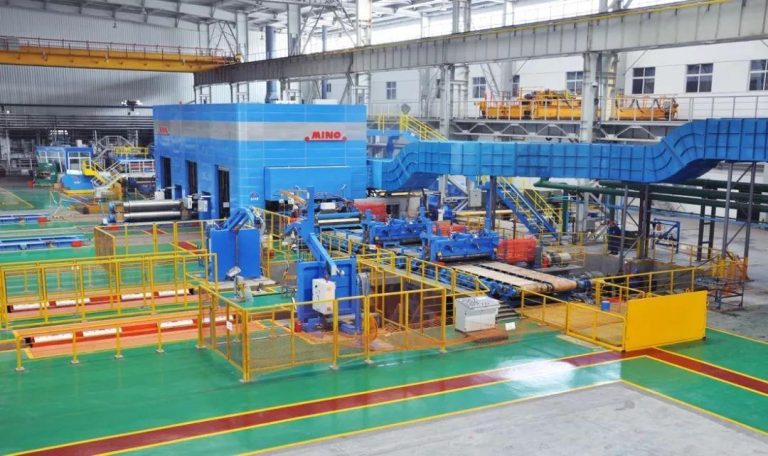
Luoyang Fonyo Heavy Industries Co., Ltd,fondata nel 1998, è un produttore di pezzi fusi per ferrovie. La nostra fabbrica copre un'area di 72.600㎡, con più di 300 dipendenti, 32 tecnici, compreso 5 ingegneri senior, 11 ingegneri assistenti, E 16 tecnici. La nostra capacità produttiva è 30,000 tonnellate all'anno. Attualmente, produciamo principalmente fusione, lavorazione, e assemblaggio per locomotiva, vagone ferroviario, treni ad alta velocità, attrezzature minerarie,energia eolica,ecc.
Siamo la fornitura di componenti ferroviari a CRRC(compreso più di 20 filiali e controllate di CRRC),Macchine per l'ingegneria Gemac,Sanygroup, Industrie pesanti Citic,ecc. I nostri prodotti sono stati esportati in Russia, gli Stati Uniti, Germania, Argentina, Giappone, Francia, Sudafrica,Italia e altri paesi in tutto il mondo.