Scannen Sie den WeChat-Code, um mit uns Kontakt aufzunehmen
Scannen Sie den WeChat-Code, um mit uns Kontakt aufzunehmen
Schicken Sie uns gerne eine E-Mail und wir werden Ihnen so schnell wie möglich antworten.
Mit Herz und Seele die Zukunft gestalten


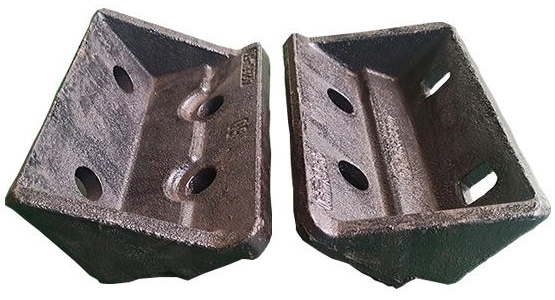
In the vast network of railway systems, the junction of two Stahlschienen is not merely a simple “gemeinsam” but a strategic location that concerns the safety, Stabilität, and efficiency of the entire line. The protagonist here is the fishplate – this seemingly unremarkable connecting piece is actually the “Lebenslinie” maintaining the continuity of the steel rails. Especially with the increase in train axle loads and speeds, traditional fishplates have become inadequate, making high-strength fishplates an inevitable choice for modern railways.
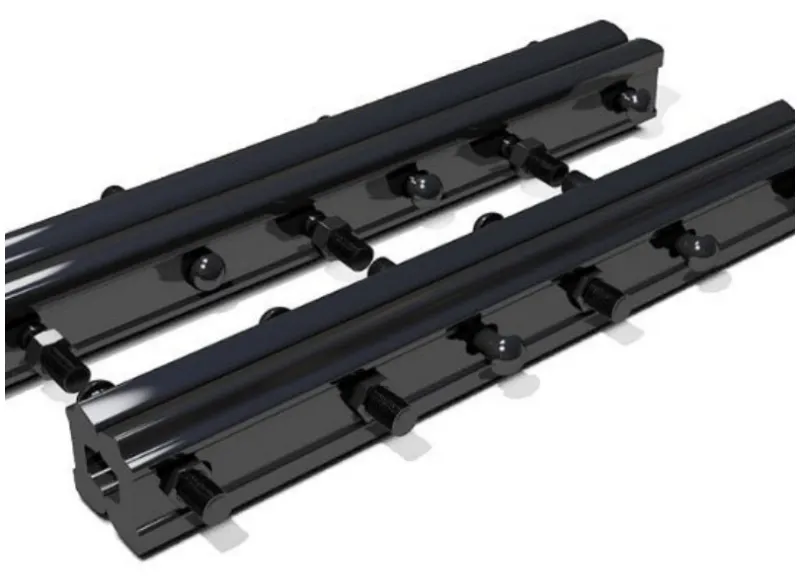
Steel rail connection plates, also known as railway fishplates or splice plates, are used to connect the ends of two steel rails. High-quality fishplates can effectively reduce the impact force when train wheels pass over the rail joints, making the train’s passage over the rail joints more stable.
Die Auswahl ist nicht einfach “passen und passen”, sondern ein systematischer Prozess. Bei der Auswahl hochfester Laschen, Folgende Kernabmessungen sind zu berücksichtigen:
1.1. Präzise Abstimmung der technischen Parameter von Stahlschienen: Das ist die Grundlage.
Modell mit Stahlschiene (kg/m): Dies ist der erste Kontrollpunkt. Eine 60-kg/m-Stahlschiene muss mit einer 60-kg/m-Lasche gepaart werden, und eine Stahlschiene mit 75 kg/m muss mit einer Lasche mit 75 kg/m gepaart werden. Eine modellübergreifende Vermischung ist strengstens untersagt, da dies zu einer unzureichenden Kontaktfläche führen kann, Dies führt zu einer starken Spannungskonzentration und kann zum Bruch der Lasche oder sogar der Schiene führen.
1.3 Material und Festigkeitsklasse der Stahlschienen:
Als Stahlschiene verwenden Sie U75V, U68Av, oder eine verschleißfeste Schiene mit höherer Festigkeit? Das Material hochfester Laschen (wie hochwertiger Stahl mit mittlerem Kohlenstoffgehalt oder legierter Stahl) should match it to ensure that both deform in a coordinated manner under force, avoiding excessive wear on one side due to hardness differences.
2. In-depth analysis of operational conditions: This is the key to determining the performance limit.
2.1 Total weight and axle load:
For heavy-haul lines (such as the Daqin Line), fishplates with higher ultimate strength and better fatigue performance must be selected. They usually adopt more complex structural designs and heat treatment processes to withstand millions or even billions of repeated impacts.
2.2 Maximum line speed:
High-speed passenger lines have extremely high requirements for ride smoothness. Fishplates that can effectively maintain joint smoothness should be preferred. Their own stiffness and elasticity need to be precisely calculated to suppress vibrations at high speeds and ensure passenger comfort.
2.3 Environmental corrosiveness:
In coastal, saline-alkali, or heavily industrial-polluted areas, “Korrosion” is a hidden killer. Zu diesem Zeitpunkt, anti-corrosion performance should be elevated to an important selection criterion. Ask the supplier if they provide enhanced anti-corrosion treatments such as galvanized layers, Dacromet coatings, or epoxy resin spraying, which can extend the service life of fishplates several times over.
Qualification certification:
A reliable manufacturer must have quality management system certifications such as IRIS (International Railway Industry Standard) or ISO 9001. This is the basic guarantee for the standardization of their production processes.
4.1 Wärmebehandlungsprozess:
High strength does not come out of thin air. The key lies in quenching and tempering heat treatment (Abschrecken + high-temperature tempering). This determines whether the fishplate can have both high strength and sufficient toughness, avoiding brittle fractures.
4.2 Zerstörungsfreie Prüfung:
Every high-strength fishplate leaving the factory should undergo ultrasonic or magnetic particle testing to ensure there are no internal cracks, Schlackeneinschlüsse, or other fatal defects. You can request a testing report.
Luoyang Fonyo Heavy Industries Co., Ltd,Das 1998 gegründete Unternehmen ist ein Hersteller von Gussteilen für die Eisenbahn. Unsere Fabrik erstreckt sich über eine Fläche von 72.600 qm, mit mehr als 300 Mitarbeiter, 32 Techniker, einschließlich 5 leitende Ingenieure, 11 Hilfsingenieure, Und 16 Techniker. Unsere Produktionskapazität beträgt 30,000 Tonnen pro Jahr. Momentan, Wir produzieren hauptsächlich Gussteile, Bearbeitung, und Montage für Lokomotive, Triebwagen, Hochgeschwindigkeitszüge, Bergbauausrüstung,Windkraft,usw.
Wir sind der Eisenbahnteilelieferant für CRRC(darunter mehr als 20 Zweigniederlassungen und Tochtergesellschaften von CRRC),Gemac Engineering Machinery,Sanygroup, Citic Heavy Industries,usw. Unsere Produkte wurden nach Russland exportiert, die Vereinigten Staaten, Deutschland, Argentinien, Japan, Frankreich, Südafrika,Italien und andere Länder auf der ganzen Welt.