हमसे संपर्क करने के लिए WeChat कोड को स्कैन करें
हमसे संपर्क करने के लिए WeChat कोड को स्कैन करें
बेझिझक हमें एक ईमेल भेजें और हम यथाशीघ्र आपको उत्तर देंगे.
दिल और आत्मा से भविष्य का निर्माण करें


मैंn रेलवे विनिर्माण, विभिन्न प्रकार के दोषों के लिए अलग-अलग निरीक्षण विधियों की आवश्यकता होती है. कास्टिंग के दौरान सामग्री के अंदर कुछ विसंगतियां विकसित हो जाती हैं, फोर्जिंग, या गर्मी उपचार, जबकि अन्य मशीनिंग के बाद या सेवा तनाव के तहत सतह पर दिखाई देते हैं. घटकों के परिचालन में आने से पहले इन दोषों का पता लगाना रेलवे घटक निरीक्षण का एक महत्वपूर्ण हिस्सा है. सबसे व्यापक रूप से उपयोग की जाने वाली गैर-विनाशकारी परीक्षण विधियों में से एक, केन्द्र शासित प्रदेशों (अल्ट्रासोनिक परीक्षण) और एम.टी (चुंबकीय कण परीक्षण) आमतौर पर रेलवे पहियों पर लगाए जाते हैं, स्टील कास्टिंग, और जाली घटक. हालाँकि दोनों विधियों का उपयोग सामग्री को नुकसान पहुँचाए बिना दोषों की पहचान करने के लिए किया जाता है, वे विभिन्न निरीक्षण उद्देश्यों के लिए डिज़ाइन किए गए हैं.
यूटी और एमटी के बीच अंतर को समझने से यह समझाने में मदद मिलती है कि रेलवे निर्माता मांग वाले रेलवे अनुप्रयोगों में आंतरिक अखंडता और सतह की स्थिति दोनों का मूल्यांकन कैसे करते हैं.
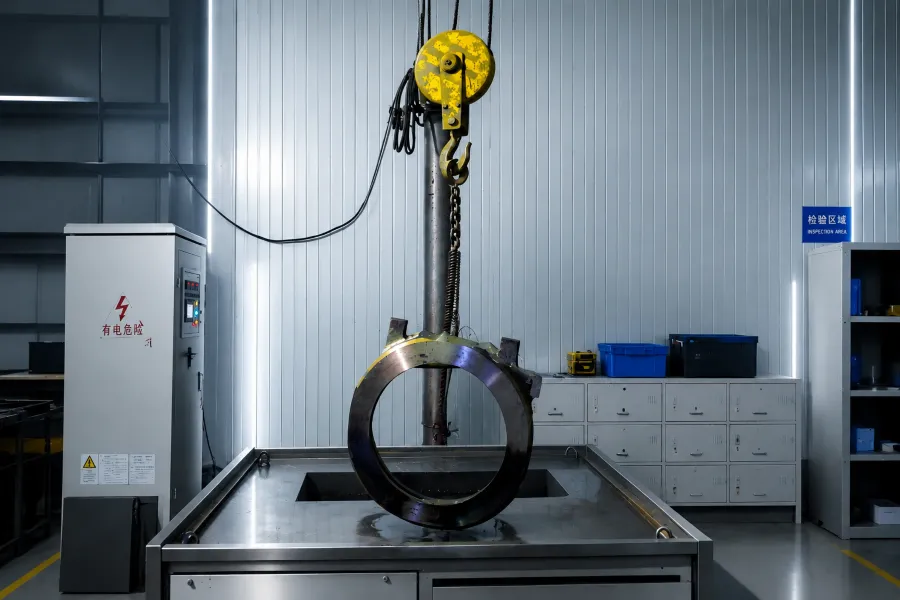
Railway components operate under continuous mechanical stress, repeated impact loading, कंपन, and changing thermal conditions throughout their service life. Components such as railway wheels, स्टील कास्टिंग, and forged parts are expected to maintain structural reliability under demanding operating environments for long periods of time.
कई मामलों में, small defects are not immediately visible during production. Internal discontinuities formed during casting or forging may gradually expand under cyclic loading, while surface cracks caused by machining, उष्मा उपचार, or service stress can eventually lead to fatigue-related failures.
इस कारण से, railway component inspection is not only about meeting dimensional or material requirements. It is also an important part of evaluating internal integrity, surface condition, और दीर्घकालिक परिचालन विश्वसनीयता.
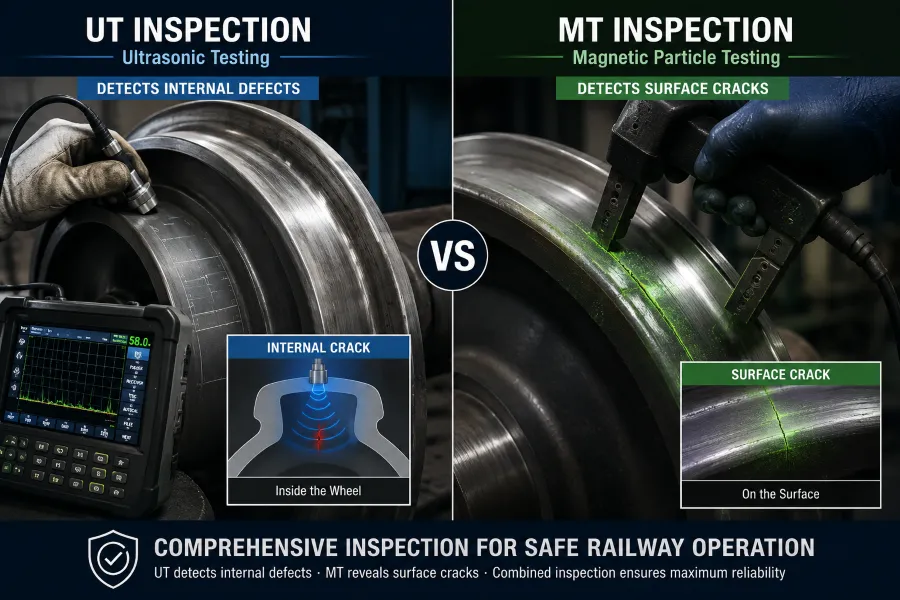
Different inspection methods are designed to detect different types of defects. रेलवे विनिर्माण में, यूटी निरीक्षण का उपयोग आमतौर पर आंतरिक सुदृढ़ता का मूल्यांकन करने के लिए किया जाता है, जबकि एमटी निरीक्षण सतह और निकट-सतह दरार की पहचान करने के लिए अधिक प्रभावी है. दोनों तरीकों के संयोजन से निर्माताओं को महत्वपूर्ण रेलवे घटकों का अधिक व्यापक निरीक्षण करने की अनुमति मिलती है.
केन्द्र शासित प्रदेशों, या अल्ट्रासोनिक परीक्षण, किसी सामग्री की आंतरिक स्थिति का निरीक्षण करने के लिए उच्च-आवृत्ति ध्वनि तरंगों का उपयोग करता है.
निरीक्षण के दौरान, अल्ट्रासोनिक तरंगें घटक के माध्यम से यात्रा करती हैं. यदि कोई आंतरिक असंततता है जैसे दरार, समावेश, सिकुड़न गुहा, या लेमिनेशन, ध्वनि तरंग का हिस्सा उपकरण पर वापस प्रतिबिंबित होता है और दोष के स्थान को इंगित करता है.
रेलवे विनिर्माण में, यूटी का उपयोग मुख्य रूप से आंतरिक खामियों का पता लगाने के लिए किया जाता है जिन्हें सतह से नहीं देखा जा सकता है.
यूटी द्वारा पाए गए विशिष्ट दोषों में शामिल हैं:
UT is widely used for:
For railway wheels in particular, internal soundness is critical because wheels operate under repeated cyclic loading and wheel-rail contact stress throughout their service life.
Even relatively small internal defects may gradually expand under fatigue conditions.
मीट्रिक टन, or Magnetic Particle Testing, is mainly used to detect surface and near-surface cracks in ferromagnetic materials.
निरीक्षण के दौरान, the component is magnetized and magnetic particles are applied to the surface. If a crack exists, magnetic leakage forms around the discontinuity, causing the particles to gather and reveal the defect location.
Compared with UT, MT is much more sensitive to small surface cracks.
Typical defects detected by MT include:
रेलवे अनुप्रयोगों में, MT is commonly used for:
For components exposed to repeated impact and contact stress, surface crack detection is especially important because fatigue failures often begin at the material surface.
Although both methods belong to NDT inspection, their functions are quite different.
| Inspection Method | UT Inspection | MT Inspection |
| Full Name | अल्ट्रासोनिक परीक्षण | चुंबकीय कण परीक्षण |
| Main Purpose | Internal defect detection | Surface crack detection |
| Detects | Internal flaws and discontinuities | Surface and near-surface cracks |
| Suitable Materials | Most solid metal materials | Ferromagnetic materials only |
| विशिष्ट रेलवे अनुप्रयोग | पहियों, एक्सल, फोर्जिंग | पहिया चलना, निकला हुआ, machined surfaces |
| Main Advantage | Detects deep internal defects | Highly sensitive to small cracks |
| Limitation | Less sensitive to very fine surface cracks | Cannot detect deep internal defects |
In practical railway manufacturing, UT and MT are not competing methods. They are complementary inspection techniques.
One common misunderstanding is that a single inspection method is enough.
यथार्थ में, railway components usually require multiple inspection methods because internal defects and surface defects behave differently during service.
उदाहरण के लिए:
A component may pass UT inspection while still containing surface defects detectable only by MT. वैसे ही, a component with a clean surface may still contain internal discontinuities that only UT can identify.
For critical railway components, combining both inspection methods provides a much more reliable evaluation of structural integrity.
Different railway products require different inspection priorities.
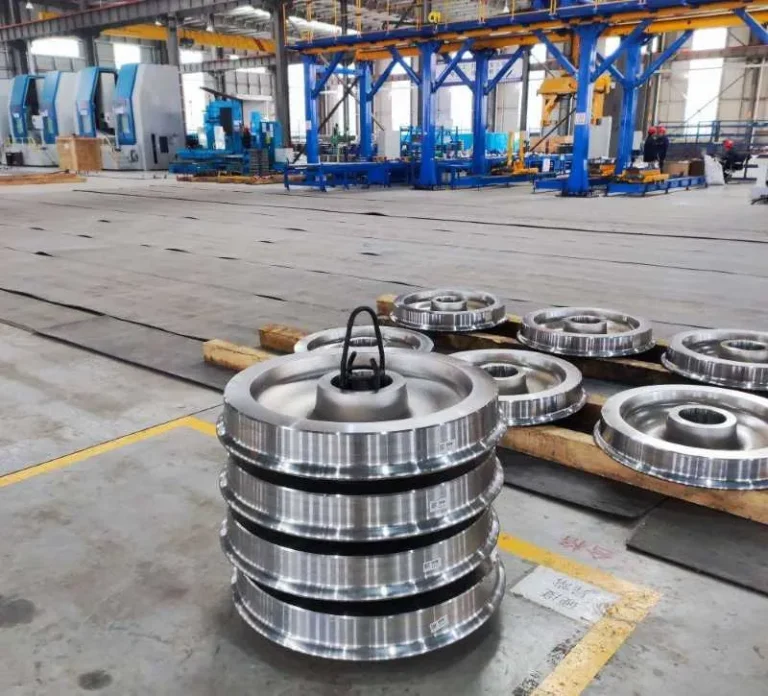
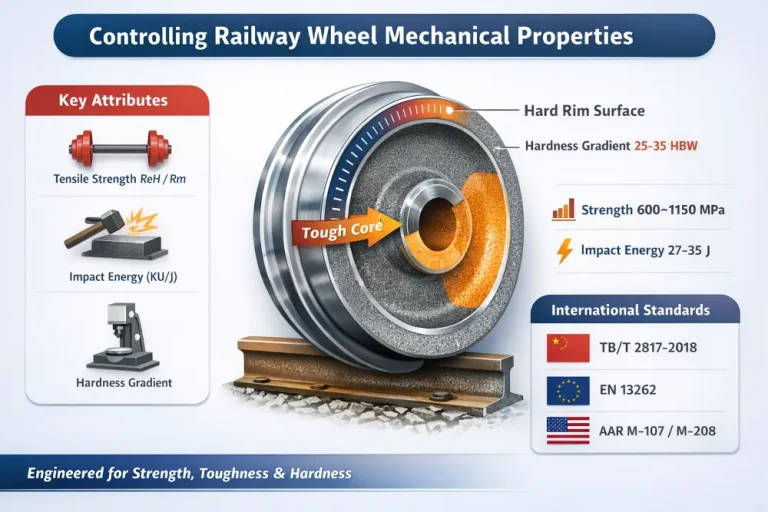
रेलवे के पहिये
Railway wheels are exposed to continuous rolling contact fatigue, ब्रेक लगाना गर्मी, and impact loading.
In wheel manufacturing:
Both inspections are important after heat treatment and machining processes.
Railway Steel Castings
Steel castings may contain shrinkage, सरंध्रता, or internal discontinuities formed during solidification.
For cast components:
Some complex castings may also require RT (Radiographic Testing) depending on customer specifications.
Forged Railway Components
Forged parts generally have better internal density than castings, but they can still develop laps, परतों, or cracking during forging and heat treatment.
For forged railway components:
Quality Control Beyond Inspection
NDT inspection is only one part of railway component quality control.
Reliable manufacturing also depends on:
पर लुओयांग फोन्यो हेवी इंडस्ट्रीज, NDT railway component inspection is integrated into our विनिर्माण प्रक्रिया रेलवे पहियों के लिए, स्टील कास्टिंग, और जाली रेलवे घटक.
हमारी क्षमताएं फोर्जिंग को कवर करती हैं, कास्टिंग, मशीनिंग, उष्मा उपचार, और रेलवे और भारी औद्योगिक अनुप्रयोगों के लिए गैर-विनाशकारी परीक्षण. हम ग्राहक चित्र के आधार पर कस्टम विनिर्माण का समर्थन करते हैं, तकनीकी निर्देश, या नमूने.
मांगलिक सेवा शर्तों के तहत परिचालन करने वाले रेलवे घटकों के लिए, विश्वसनीय निरीक्षण और स्थिर विनिर्माण प्रक्रियाएं दीर्घकालिक परिचालन सुरक्षा और प्रदर्शन के लिए आवश्यक हैं.
यदि आपके पास कस्टम रेलवे घटकों के लिए चित्र या तकनीकी आवश्यकताएं हैं, हमारी इंजीनियरिंग और विनिर्माण टीम परियोजना विनिर्देशों के अनुसार उत्पादन और निरीक्षण का समर्थन कर सकती है.