סרוק את קוד WeChat כדי ליצור איתנו קשר
סרוק את קוד WeChat כדי ליצור איתנו קשר
אתם מוזמנים לשלוח לנו מייל ואנו נענה לכם בהקדם האפשרי.
יצירת העתיד בלב ובנשמה


1.1. הכנה לפני בנייה:
לִבדוֹק “חומר עבודה”: Carefully verify the model of the fish plate, ולבדוק אם יש שריטות, שקעים, או חלודה. Thoroughly clean the steel rail gap area and the inner side of the fish plate with a wire brush to ensure that the contact surface is free of any oil, חֲלוּדָה, or impurities.
לִבדוֹק “Tools”: Confirm that the torque wrench is calibrated and its range covers the tightening torque requirements for the bolts.
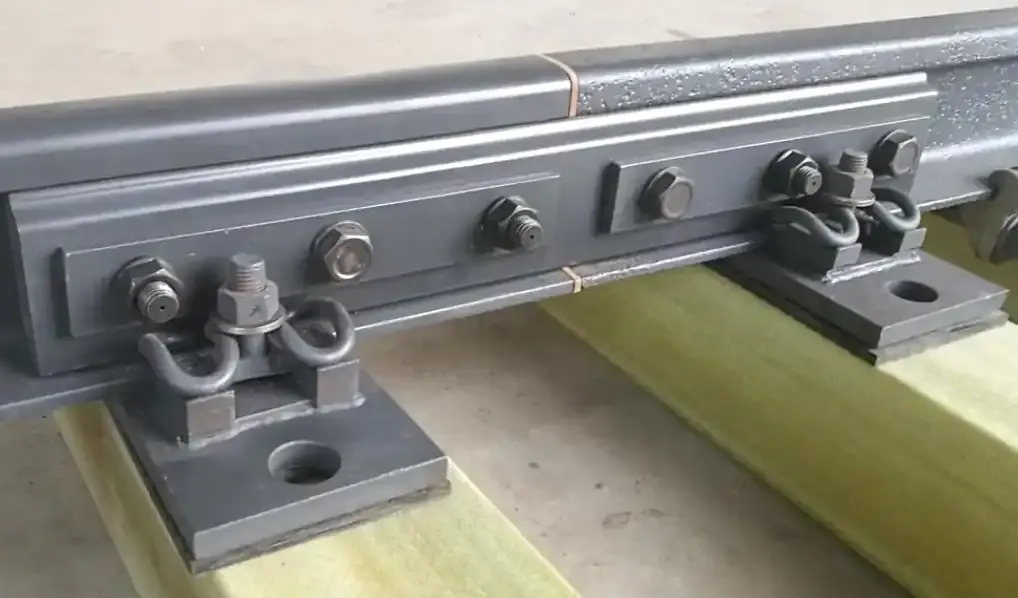
1.2. Standardized Installation Procedure:
Positioning and Centering: Place the fish plate smoothly on the rail joint, ensuring it is fully in contact with the rail waist and bottom, and the center line of the bolt holes is aligned with the center line of the rail.
Apply Lubricant: Apply a small amount of specialized lubricant (such as molybdenum disulfide) to the threads of the bolt and the supporting surface of the nut. This not only prevents seizing but also ensures that the applied torque is ultimately converted into a consistent preload, which is the core for ensuring uniform force on each bolt.
Insert the bolt, attach a flat washer and a spring washer, and manually tighten the nut until it feels snug.
Use a torque wrench and follow a “star-shaped diagonal” רֶצֶף (as shown in the figure below) to tighten the nut in two or three stages until the specified torque value is reached (לְדוּגמָה, for a high-strength bolt of M24, the final torque is typically between 700-900 N·m). Do not tighten in a clockwise or counterclockwise sequence!
1.4 בדיקה סופית: After installation, use a feeler gauge to check if there is a continuous gap of more than 1mm between the fish plate and the rail waist. במקביל, use a track gauge to recheck the track gauge and the smoothness of the track surface at the joint, ensuring it is within the allowable error range.
שאלה 1: Why must the bolts of the high-strength fish plate be tightened using a torque wrench and in a specific sequence?
א: This is to ensure that the “כוח הידוק” generated by all bolts is uniform. If the sequence is random or the torque is inconsistent, it will cause uneven pressure on the contact surface of the fish plate and the rail, resulting in a “see-saw” effect. Under the repeated impact of train loads, the bolts with greater force will fatigue first, leading to a chain reaction and ultimately causing the entire joint to fail.
שאלה 2: After installation, shortly after, there are “rust flow” marks at the contact edge of the fish plate and the rail. Is this normal?
א: This requires vigilance. This is usually the initial manifestation of contact corrosion. It indicates that the anti-corrosion layer on the contact surface may have been damaged, or there are tiny gaps where moisture has infiltrated and formed an electrolytic reaction. Immediately conduct a detailed inspection and clean the area, and reapply the specialized anti-corrosion coating to prevent the corrosion from deepening into the interior.
שאלה 3: When the fish plate makes an abnormal noise (א “clicking” sound) during a train passage, what could be the cause?
א: The abnormal noise is an alarm for “micro movement” at the joint. The main reasons are: 1) The bolt pre-tightening force is insufficient, causing the fish plate and the rail to have a slight relative sliding under the force; 2) There are contaminants, such as fine sand particles, על משטח המגע, which produce friction sounds under pressure; 3) This phenomenon usually disappears quickly during the initial running-in period. It is recommended to first recheck the torque of all bolts, and if the problem persists, disassemble for inspection and thoroughly clean the contact surface.
שאלה 4: How can one determine if a high-strength fish plate has reached the end of its lifespan and needs to be replaced?
א: Any of the following situations should prompt immediate replacement:
Visible cracks: Especially around the bolt holes and at the waist section where the cross-section changes, any minor cracks must be scrapped.
Excessive wear: The contact surface between the fish plate and the rail head base and the rail bottom shoulder has a depth of more than 2mm of crushing or wear.
3. Structural bending or deformation: The fish plate has undergone plastic bending and cannot closely adhere to the rail.
The bolt holes have been worn into an ellipse: The bolt holes have been worn out by long-term impact and lost their precise positioning ability for the bolts. The high-strength tail fin plate, a component that combines the wisdom of materials science and structural mechanics, is worth much more than its own weight. From the meticulous selection of materials to the precise “millimeter-level” installation, and then to the daily meticulous inspections and maintenance, every step is infused with our responsibility for safety.
Luoyang Fonyo Heavy Industries Co., בע"מ,נוסדה בשנת 1998, היא יצרנית בחלקי יציקת רכבת. המפעל שלנו משתרע על שטח של 72,600㎡, עם יותר מ 300 עובדים, 32 טכנאים, לְרַבּוֹת 5 מהנדסים בכירים, 11 עוזרי מהנדסים, ו 16 טכנאים. כושר הייצור שלנו הוא 30,000 טונות בשנה. כַּיוֹם, אנחנו מייצרים בעיקר ליהוק, עיבוד שבבי, והרכבה לקטר, קְרוֹנוֹעַ, רכבות מהירות, ציוד כרייה,כוח רוח,וכו.
אנחנו אספקת חלקי הרכבת ל-CRRC(כולל יותר מ 20 חברות סניפים וחברות בת של CRRC),Gemac מכונות הנדסיות,Sanygroup, סיטי תעשיות כבדות,וכו. המוצרים שלנו יוצאו לרוסיה, ארצות הברית, גֶרמָנִיָה, ארגנטינה, יַפָּן, צָרְפַת, דרום אפריקה,איטליה ומדינות אחרות בכל רחבי העולם.