Scannez le code WeChat pour nous contacter
Scannez le code WeChat pour nous contacter
N'hésitez pas à nous envoyer un email et nous vous répondrons dans les plus brefs délais.
Créer l'avenir avec cœur et âme


1.1. Préparation avant la construction:
Vérifier “Pièce à usiner”: Carefully verify the model of the fish plate, et inspectez s'il y a des rayures, bosses, ou de la rouille. Thoroughly clean the steel rail gap area and the inner side of the fish plate with a wire brush to ensure that the contact surface is free of any oil, rouiller, or impurities.
Vérifier “Tools”: Confirm that the torque wrench is calibrated and its range covers the tightening torque requirements for the bolts.
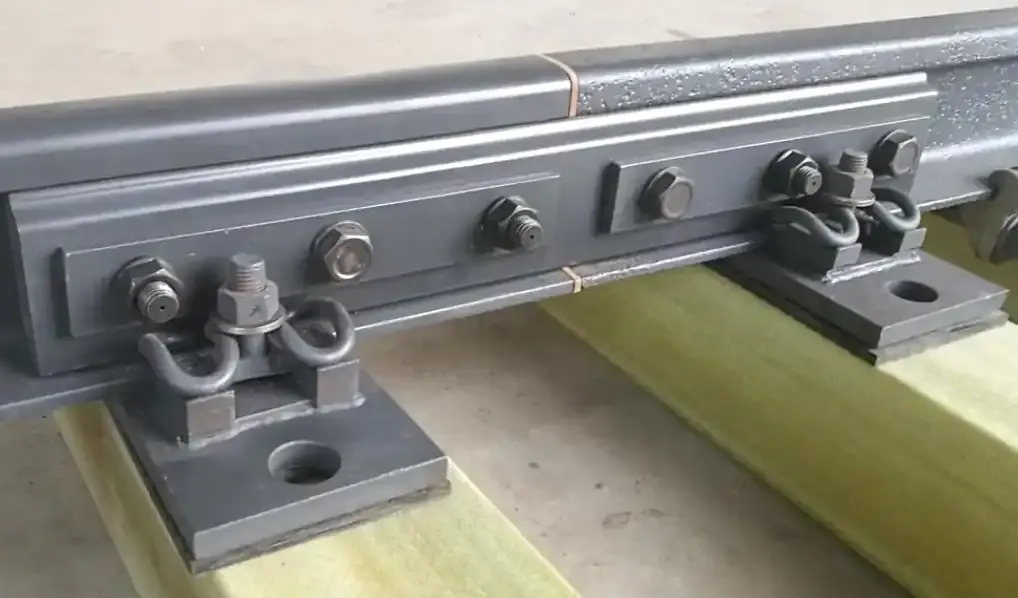
1.2. Standardized Installation Procedure:
Positioning and Centering: Place the fish plate smoothly on the rail joint, ensuring it is fully in contact with the rail waist and bottom, and the center line of the bolt holes is aligned with the center line of the rail.
Apply Lubricant: Apply a small amount of specialized lubricant (such as molybdenum disulfide) to the threads of the bolt and the supporting surface of the nut. This not only prevents seizing but also ensures that the applied torque is ultimately converted into a consistent preload, which is the core for ensuring uniform force on each bolt.
Insert the bolt, attach a flat washer and a spring washer, and manually tighten the nut until it feels snug.
Use a torque wrench and follow a “star-shaped diagonal” sequence (as shown in the figure below) to tighten the nut in two or three stages until the specified torque value is reached (Par exemple, for a high-strength bolt of M24, the final torque is typically between 700-900 N·m). Do not tighten in a clockwise or counterclockwise sequence!
1.4 Inspection finale: After installation, use a feeler gauge to check if there is a continuous gap of more than 1mm between the fish plate and the rail waist. En même temps, use a track gauge to recheck the track gauge and the smoothness of the track surface at the joint, ensuring it is within the allowable error range.
T1: Why must the bolts of the high-strength fish plate be tightened using a torque wrench and in a specific sequence?
UN: This is to ensure that the “force de serrage” generated by all bolts is uniform. If the sequence is random or the torque is inconsistent, it will cause uneven pressure on the contact surface of the fish plate and the rail, résultant en un “see-saw” effet. Under the repeated impact of train loads, the bolts with greater force will fatigue first, leading to a chain reaction and ultimately causing the entire joint to fail.
T2: After installation, shortly after, there are “rust flow” marks at the contact edge of the fish plate and the rail. Is this normal?
UN: This requires vigilance. This is usually the initial manifestation of contact corrosion. It indicates that the anti-corrosion layer on the contact surface may have been damaged, or there are tiny gaps where moisture has infiltrated and formed an electrolytic reaction. Immediately conduct a detailed inspection and clean the area, and reapply the specialized anti-corrosion coating to prevent the corrosion from deepening into the interior.
T3: When the fish plate makes an abnormal noise (un “clicking” sound) during a train passage, what could be the cause?
UN: The abnormal noise is an alarm for “micro movement” at the joint. The main reasons are: 1) The bolt pre-tightening force is insufficient, causing the fish plate and the rail to have a slight relative sliding under the force; 2) There are contaminants, such as fine sand particles, sur la surface de contact, qui produisent des bruits de friction sous pression; 3) Ce phénomène disparaît généralement rapidement lors de la première période de rodage. Il est recommandé de revérifier d'abord le couple de tous les boulons, et si le problème persiste, démonter pour inspection et nettoyer soigneusement la surface de contact.
T4: Comment déterminer si une éclisse à haute résistance a atteint la fin de sa durée de vie et doit être remplacée?
UN: L'une des situations suivantes devrait entraîner un remplacement immédiat:
Fissures visibles: Surtout autour des trous de boulons et au niveau de la taille où la section transversale change, toute fissure mineure doit être éliminée.
Usure excessive: La surface de contact entre l'éclisse et la base du champignon du rail et l'épaulement inférieur du rail présente une profondeur d'écrasement ou d'usure supérieure à 2 mm..
3. Flexion ou déformation structurelle: L'éclisse a subi une flexion plastique et ne peut pas adhérer étroitement au rail.
Les trous de boulons ont été usés dans une ellipse: Les trous de boulons ont été usés par un impact à long terme et ont perdu leur capacité de positionnement précis pour les boulons. La plaque d'aileron de queue à haute résistance, un composant qui combine la sagesse de la science des matériaux et de la mécanique des structures, vaut bien plus que son propre poids. De la sélection minutieuse des matériaux à la précision “niveau millimétrique” installation, puis aux inspections et à l'entretien quotidiens méticuleux, chaque étape est imprégnée de notre responsabilité en matière de sécurité.
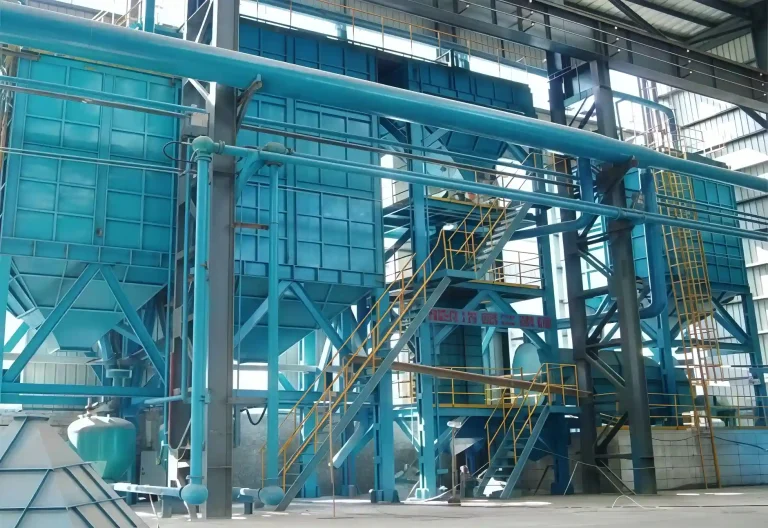
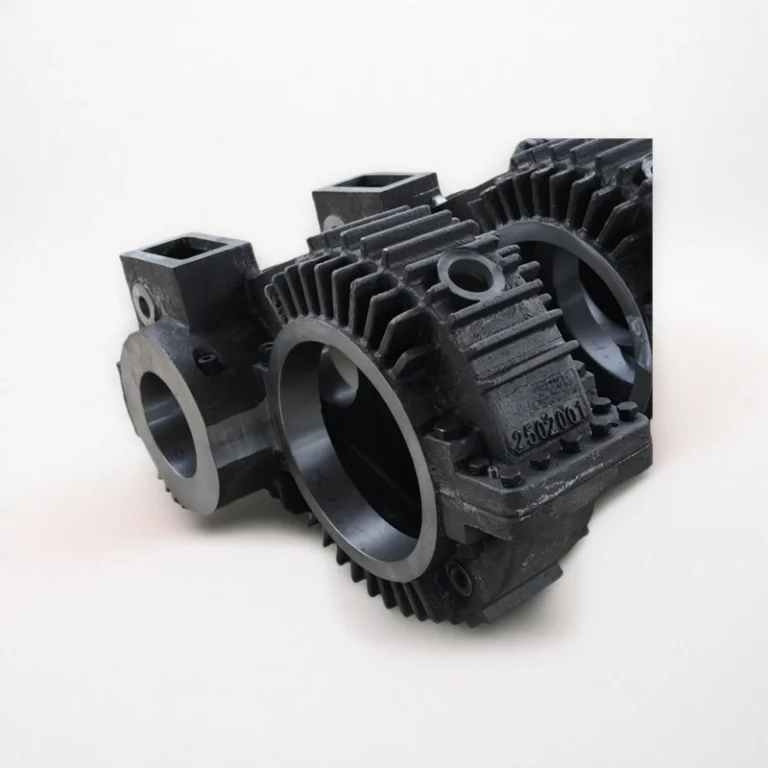
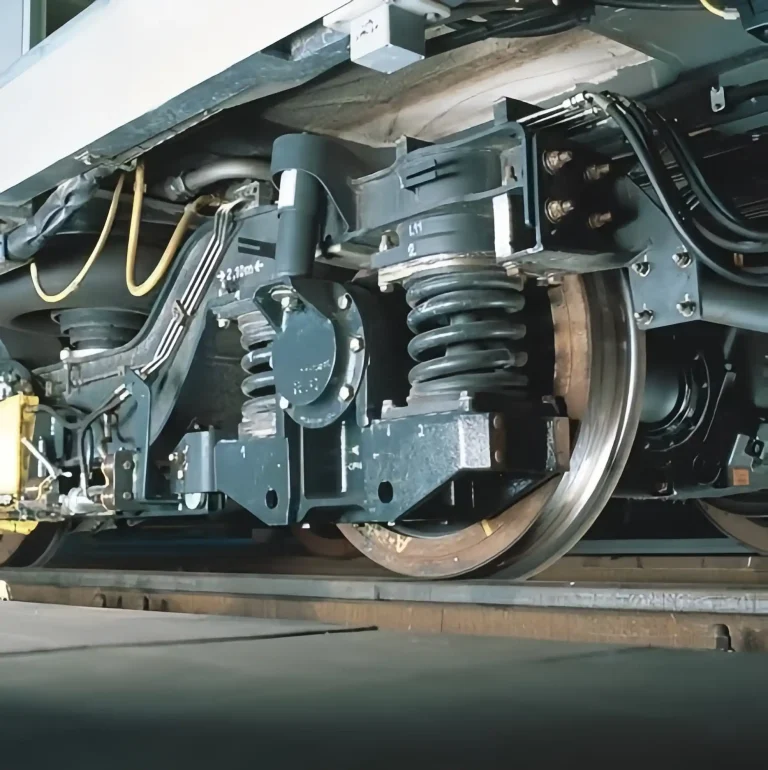
Luoyang Fonyo Heavy Industries Co., Ltée,fondée en 1998, est un fabricant de pièces moulées ferroviaires. Notre usine couvre une superficie de 72 600㎡, avec plus de 300 employés, 32 techniciens, y compris 5 ingénieurs supérieurs, 11 ingénieurs adjoints, et 16 techniciens. Notre capacité de production est 30,000 tonnes par an. Actuellement, nous produisons principalement du moulage, usinage, et montage pour locomotive, wagon, trains à grande vitesse, équipement minier,énergie éolienne,etc..
Nous sommes la fourniture de pièces ferroviaires au CRRC(dont plus de 20 succursales et filiales de CRRC),Machines d'ingénierie Gemac,Groupe Sany, Industries lourdes Citic,etc.. Nos produits ont été exportés vers la Russie, les États-Unis, Allemagne, Argentine, Japon, France, Afrique du Sud,Italie et autres pays du monde.