Scannez le code WeChat pour nous contacter
Scannez le code WeChat pour nous contacter
N'hésitez pas à nous envoyer un email et nous vous répondrons dans les plus brefs délais.
Créer l'avenir avec cœur et âme


Les attelages ferroviaires se déclinent en plusieurs types principaux : tampon et chaîne, Janney (RAA), Scharfenberg, serrure serrée, Tomlinson, et accouplement à vis, chacun étant conçu pour des applications ferroviaires spécifiques, forces de couplage, plages de vitesse, et normes régionales. Choosing the wrong coupler type for a given operation can create interoperability problems, safety risks, or premature wear that shows up in maintenance costs long after the initial purchase.
If you’ve ever stood on a station platform when two rail cars couple together, the connection looks simple enough—a loud clang, a slight jolt, and the train is ready to depart. But the mechanism doing that work varies enormously depending on which continent you’re on, whether the train carries passengers or iron ore, and whether it needs to couple automatically at 160 km/h or be connected by hand in a classification yard.
Railway couplers are one of those railway components that nobody thinks about until something goes wrong. A failed coupling delays trains. An incompatible coupler type stops rolling stock from being moved between networks. And in heavy haul operations, an underspecified coupler doesn’t just wear out—it can fail under drawbar force with serious consequences.
This guide covers the main railway coupler types in use today, how each works, where each is applied, and what procurement teams should look at when specifying or sourcing couplers.
If you want to know more about the railway couplers, you can read Que savez-vous des attelages de train?
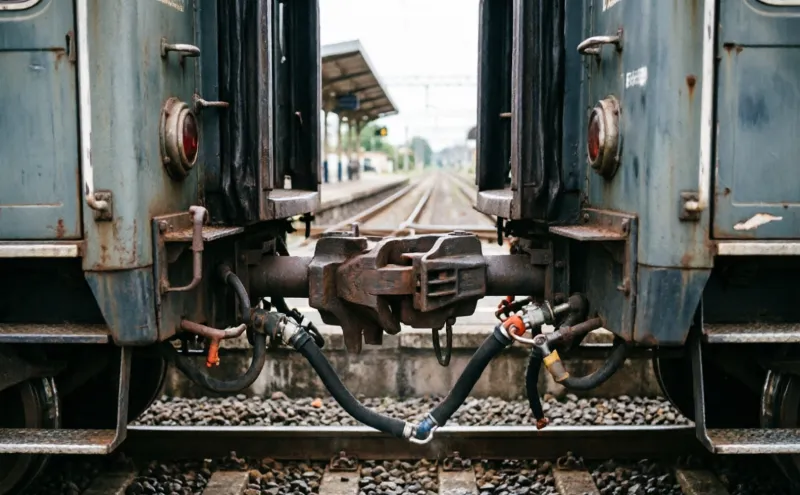
A railway coupler has three jobs: mechanically connect two vehicles, transmit tensile and compressive forces (sometimes hundreds of tons), and—depending on the type—provide electrical continuity, air brake connections, or data communication.
The reason there isn’t one universal coupler design comes down to history, conditions de chargement, and operational philosophy. North American freight railways standardized on the knuckle coupler over a century ago. European passenger networks developed automatic compact couplers for high-speed operation. UK freight still uses buffers and screw chains in many applications because the infrastructure was built around them.
For anyone involved in railway procurement or fleet management, the practical question is usually: which coupler does this application actually need? The answer depends on drawbar force, coupling speed requirements, maintenance environment, and what the neighboring fleets are already using.
Buffer and chain coupling—or buffer-and-screw—is one of the oldest railway coupling methods still in regular operation. Each vehicle has a buffer at each corner (usually two per end) and a screw link with a hook on either side. The operator manually threads the screw link into the hook on the adjacent vehicle and winds the handle until the buffers are compressed against each other.
The system has genuine advantages in certain contexts. It provides substantial buffing capacity through the large-diameter buffer discs, which absorb longitudinal forces during shunting and braking. The screw link allows precise control of the draw force between vehicles—tighten it more for heavy haul, leave some slack for passenger comfort. It’s also relatively simple to manufacture and repair with basic machining capability.
But the drawbacks are equally real. Manual coupling is slow, labor-intensive, and increasingly difficult to justify from a safety standpoint. A worker standing between two rail cars handling a heavy screw chain in rain, neige, or darkness is exposed to pinch points, dropped equipment, and unexpected vehicle movement. Many regulatory bodies have moved away from manual coupling wherever automatic alternatives exist.
Buffer and chain remains common in UK freight operations, some Indian Railways services, and older industrial railway systems. For new projects outside these regions, il est rarement spécifié, sauf en cas de modernisation des flottes existantes.
Le coupleur Janney, également connu sous le nom d'AAR (Association des chemins de fer américains) coupleur ou simplement le “coupleur d'articulation”—est le système d'attelage dominant pour les chemins de fer de marchandises en Amérique du Nord, Australie, certaines parties de l'Amérique du Sud, et un nombre croissant d'opérations de transport lourd dans le monde.
Le principe de fonctionnement est simple mais efficace. Une articulation rotative sur chaque tête de coupleur s'ouvre pour accepter l'articulation du coupleur opposé. Quand les deux têtes se rencontrent, la jointure se ferme et un bloc de verrouillage se met en place, sécuriser la connexion. Le découplage s'effectue depuis le côté du véhicule en tirant un levier qui soulève la goupille de verrouillage : la fusée s'ouvre sous la pression du ressort., et les voitures se séparent.
What made the Janney coupler dominate freight is not just the automatic coupling action. It’s the combination of reliable mechanical lock, high tensile strength (Type E couplers are rated for substantial drawbar forces suitable for heavy haul), relative ease of maintenance, and over a century of standardization that means a coupler from one manufacturer fits another’s draft gear without modification.
Du point de vue de la fabrication, AAR couplers are typically forged or cast from medium-carbon or alloy steel, heat treated to achieve the required toughness and fatigue resistance. The knuckle and lock block are the highest-wear components and are commonly replaced items in any freight car maintenance program. Coupler bodies themselves last longer but are inspected regularly for cracks, wear on the coupling face, and deformation.
One detail worth mentioning: within the AAR system, there are multiple grades and types. Type C is common for general service. Type E handles heavier loads and is standard on unit trains and intermodal cars. Le “serrure serrée” variant adds additional mechanical engagement for passenger and commuter applications where preventing separation during a derailment is critical—which brings us to the next type.
Tightlock couplers evolved from the basic AAR knuckle design but add a secondary mechanical interlock that prevents vertical or lateral separation even if the primary knuckle fails or the coupler rotates during a derailment. This feature matters enormously on passenger trains, where coupled cars must stay connected under accident conditions to prevent telescoping or separation.
En pratique, a tightlock coupler looks similar to a standard AAR coupler from a distance. The difference is in the extended locking surfaces on the top and bottom of the coupler head that engage with matching features on the mating coupler. Even if the knuckle opens unexpectedly, these secondary locks hold the coupling together.
Commuter rail systems in North America widely specify tightlock couplers. Some metro systems use them as well, particularly where trains operate at moderate speeds on shared corridors or where crashworthiness standards require anti-telescoping performance. The trade-off is cost—tightlock couplers are more complex to manufacture and maintain than standard AAR types—and the fact that they’re generally incompatible with plain knuckle couplers without an adapter.
For procurement teams evaluating tightlock vs. standard AAR couplers, the decision usually comes down to the operating environment and applicable safety regulations rather than preference. If the service is passenger-carrying and the regulatory framework or OEM specification calls for tightlock, that tends to settle the question.
The Scharfenberg coupler—named after its German inventor Karl Scharfenberg—is the automatic coupler of choice for European high-speed trains, most metro systems worldwide, and many light rail applications. Unlike the AAR knuckle, which couples mechanically and requires separate connections for brakes and electrics, the Scharfenberg integrates mechanical coupling, electrical pins, and pneumatic/air brake channels into a single compact front-face operation.
When two Scharfenberg-equipped trains approach each other, the coupler extends forward (on most modern installations), the electrical pins extend, and the mechanical jaws close around the mating coupler head—all without human intervention and in a few seconds. This makes it ideal for frequent coupling and uncoupling operations such as metro shuttle services, trainset joining/separation on high-speed lines, and automated passenger transfer systems.
The coupler face has a distinctive appearance: a circular head with electrical pins arranged above and below the central mechanical coupling aperture, and often visible air hose connection ports on the sides. Different configurations exist—some prioritize electrical pin count for passenger trains (power, control, communications), others emphasize pneumatic flow for rapid brake charging.
Manufacturing complexity for Scharfenberg couplers is considerably higher than for AAR types. The precision-machined coupler head, extend-retract mechanism, electrical pin assembly, and integrated valve group all require tight tolerances and rigorous testing. Unit costs reflect this—they are significantly more expensive per coupler than a forged AAR knuckle—but the total cost of ownership in high-frequency automatic coupling applications often favors them because labor savings and operational flexibility offset the initial price.
Screw coupling—also called chain coupling—is the dominant manual coupling system for European freight railways. Similar in concept to buffer and chain but without the large side buffers (European wagons often have a single center buffer or none at all), it uses a screw link with hooks or buck-eye loops on each vehicle end.
The operator attaches the hook of one vehicle to the loop or eye of the next, then uses a screw handle (un “turnbuckle”) to draw the vehicles together and tension the coupling. The screw mechanism allows controlled draw force adjustment, which is useful in freight operations where different wagon types and load combinations require different coupling tensions.
Screw coupling is gradually being replaced by automatic couplers on new European freight rolling stock, particularly intermodal wagons and unit trains. But the installed base of screw-coupled wagons across Europe, the former Soviet Union, and parts of Africa and Asia means this coupler type will remain in service for decades. Procurement of spare screw links, hooks, and turnbuckle handles continues to be a steady demand item for railway component suppliers.
The Tomlinson coupler is a specific type used extensively on UK multiple-unit passenger trains (DMUs and EMUs). It combines a mechanical coupling bar with integral electrical connector pins, allowing both mechanical and electrical connection in one operation—though unlike the Scharfenberg, it is not fully automatic and requires alignment and extension by the operator or system.
Tomlinson couplers sit in a recessed housing at the end of each vehicle. When two units are brought together, the coupler bar extends, engages with the mating socket, and the electrical pins make contact. It’s simpler than a Scharfenberg and lower in cost, which suits the UK’s extensive commuter and regional multiple-unit fleet where high-speed automatic coupling isn’t normally required.
Du point de vue de la maintenance, Tomlinson couplers are moderately complex—the electrical pins and socket contacts wear and require periodic inspection and replacement, and the mechanical coupling bar can suffer from misalignment damage if units are coupled with excessive gap or angle. But compared to maintaining separate mechanical couplers and jumper cables, the integrated design reduces overall connection time and reduces the risk of electrical connections being missed or damaged during coupling.
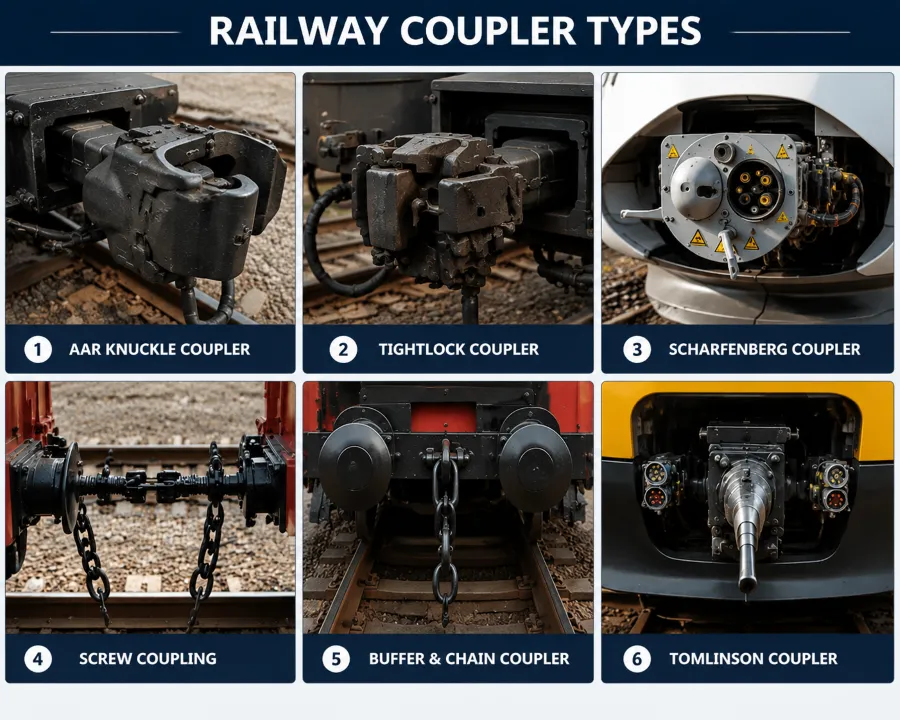
Different applications call for different coupler solutions. Here’s how the main types compare across the factors that matter most in selection:
| Coupler Type | Coupling Method | Application typique | Draw Force Capacity | Automatique | Electrical Integrated |
| Tampon & Chain | Manual | UK freight, industriel | Modéré | Non | Non |
| Janney / RAA | Automatique | North American freight, transport lourd | Haut | Mechanical only | Non (généralement) |
| Tightlock | Automatique | Commuter rail, passager | Haut | Mechanical + secondary lock | Non (généralement) |
| Scharfenberg | Fully automatic | Grande vitesse, métro, métro léger | Moderate-High | Oui | Oui |
| Screw Coupling | Manual | European freight, post-Soviet | Modéré | Non | Non |
| Tomlinton | Semi-automatic | UK multiple units | Modéré | Semi | Oui |
These comparisons are generalized—specific models within each type vary significantly in ratings, options, and compatibility details. But the pattern is clear: automatic couplers dominate new passenger and high-frequency applications, while manual couplers persist in legacy freight fleets where replacement economics don’t yet justify conversion.
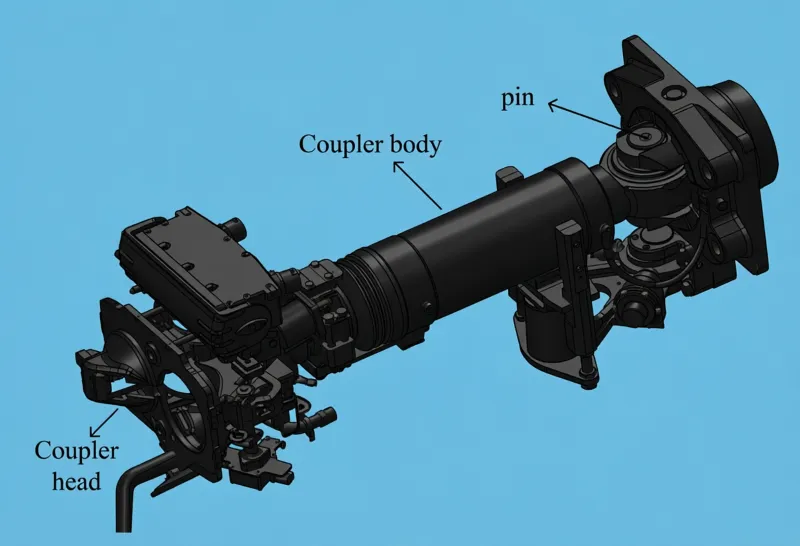
Coupler procurement is one of those areas where the drawing and the purchase order tell only part of the story. Experienced railway engineers and buyers typically evaluate several factors beyond the basic coupler type and part number.
For steel couplers—particularly AAR knuckles, tightlock bodies, and screw coupling components—the material certificate should specify steel grade, processus de traitement thermique, and resulting mechanical properties (limite d'élasticité, résistance à la traction, élongation, résistance aux chocs). For couplers operating in cold climates, low-temperature impact test results (Charpy V-notch at sub-zero temperatures) become critical. Un coupleur qui fonctionne de manière fiable à +20°C peut se comporter différemment à -40°C si la température de transition de l'acier n'a pas été correctement contrôlée pendant la production..
Selon le type de coupleur et le marché cible, les normes pertinentes peuvent inclure l'AAR M-201 pour les coupleurs, Spécifications EN pour les applications européennes, Fiches UIC pour les coupleurs d'échange internationaux, ou exigences spécifiques d'approbation de l'opérateur ferroviaire (comme l'acceptation de Network Rail au Royaume-Uni ou la spécification DB pour les applications allemandes). Un listing fournisseur ISO 9001 la certification est un point de départ, mais la conformité aux normes spécifiques aux produits et les enregistrements d'inspection par des tiers ont plus de poids dans les décisions d'achat réelles..
De nombreux composants de coupleur, en particulier les corps de coupleur AAR, jointures, and tightlock parts—are produced by either forging or casting, depending on the component, volume, and manufacturer’s capability. Forged coupler parts generally offer superior fatigue resistance and are preferred for high-cycle, heavy-haul applications. Cast coupler components can be cost-effective for certain geometries and lower-stress applications but require careful attention to foundry process control, traitement thermique, and non-destructive testing to ensure internal soundness.
Understanding whether a supplier produces coupler components through casting, forger, or a combination—and what inspection and testing backs up each method—tells you more about long-term reliability than the unit price alone.
Couplers have consumable components: jointures, lock blocks, pins, bushings, screws, and electrical contacts for automatic couplers. When selecting a coupler supplier or specifying a coupler type for a new fleet, it’s worth confirming that wear parts will be available throughout the expected service life of the vehicle. A well-designed coupler with unavailable spare parts becomes an expensive problem after a few years of operation.
Du point de vue de la fabrication, coupler quality problems tend to show up in predictable ways: surface defects from casting or forging that initiate fatigue cracks, incorrect heat treatment that leaves the component either too soft (usure excessive) or too brittle (impact fracture), dimensional deviations that cause poor engagement with mating couplers, and inadequate NDT that allows internal defects to reach service.
Reputable coupler manufacturers address these risks through process control—consistent melt practice for steel composition, documented heat treatment cycles with furnace records, dimensional gauging at key stages, et 100% CND (magnetic particle inspection for surface-breaking defects, ultrasonic testing for internal soundness) on safety-critical components.
For procurement teams, asking for sample inspection records, reviewing the supplier’s NDT procedures, and understanding their traceability system (can they identify exactly which melt batch a delivered coupler came from?) reveals substantially more about manufacturing quality than any sales presentation.
A railway coupler may appear to be a single mechanical component, but its design, material quality, and manufacturing process determine whether trains connect reliably every day or whether coupling failures become a recurring maintenance burden. Selecting the correct coupler type for the application, verifying material and manufacturing quality, and ensuring spare parts availability will reduce coupling-related delays, safety incidents, and unplanned maintenance costs across any rail fleet.
ÀLuoyang Fonyo Heavy Industries Co., Ltée., nous fabriquons railway coupler components, pièces moulées ferroviaires, roues de chemin de fer, and related track components for freight railways, passenger rail operators, et systèmes ferroviaires industriels. Our casting, usinage, and inspection capabilities allow us to produce coupler bodies, jointures, and custom coupling components to AAR, DANS, CUI, et exigences spécifiques du client. Our engineering team can support material selection, heat treatment specification, and documentation requirements based on your operating conditions and applicable standards.
En général, no—not without an adapter. AAR knuckle couplers cannot directly couple to Scharfenberg or screw couplings. Adapter couplers exist for some combinations (Par exemple, AAR-to-buffer-chain adapters are used when freight cars need to move between North American and UK/European networks), but adapters introduce mechanical play, reduced strength, and additional maintenance. For permanent fleet operations, matching coupler type to the network standard is the preferred approach.
Inspection intervals depend on the coupler type, service severity, and regulatory requirements. AAR couplers on freight cars in North America are typically inspected during scheduled maintenance cycles and during intermediate yard inspections, with focus areas including knuckle wear, lock mechanism function, coupler face condition, et toute fissure visible. Les coupleurs automatiques comme Scharfenberg nécessitent des contrôles supplémentaires sur les broches électriques, extend-retract mechanism, et joints pneumatiques. Les manuels de l'opérateur et les normes de maintenance applicables doivent définir des intervalles spécifiques pour chaque flotte..
Les types C et E font référence aux qualités de coupleurs AAR avec des indices de résistance différents. Le type C est conçu pour le service de fret général avec des forces de traction modérées et est courant sur le matériel roulant plus ancien et les applications plus légères.. Le type E a un indice de résistance plus élevé et constitue la norme pour les wagons de marchandises modernes., trains-blocs, et les opérations de transport lourd où les forces sur la barre de traction sont nettement plus importantes. L'utilisation d'un coupleur de type C dans une application de type E crée un point de défaillance potentiel sous charge maximale.
It depends on the component and application. Forged coupler parts—knuckles, locks, and certain body sections—generally provide superior fatigue resistance and are preferred for high-load, high-cycle applications such as heavy haul freight. Cast coupler components can perform well when properly produced with adequate process control, traitement thermique, et inspection, and may be the only practical manufacturing method for complex geometries. The key factor is not casting versus forging itself, but whether the chosen manufacturing method is backed by appropriate quality controls and testing for the intended service conditions.
Knuckle failures typically originate from fatigue crack growth, often initiated at stress concentrations near the knuckle pivot hole, the locking lug, ou la zone du nez d'accouplement. Les facteurs contributifs comprennent des impacts répétés de couplage à haute force (en particulier lors d'opérations de manœuvres à vitesse excessive), usure qui modifie la géométrie d'engagement, corrosion réduisant l'épaisseur effective de la section, et défauts de matériaux ou de traitement thermique qui réduisent la résistance à la fatigue. Inspection régulière des limites d'usure et des fissures superficielles, combiné au remplacement rapide des articulations usées avant que les fissures ne se propagent, prévient la plupart des défaillances liées aux articulations.
Certains composants du coupleur sont conçus comme pièces d'usure remplaçables (jointures, lock blocks, pins, bushings, contacts électriques) et sont régulièrement remplacés lors de la maintenance. Le corps du coupleur ou le boîtier principal (dans les types de coupleur AAR et automatique) n'est généralement pas réparé sur le terrain.; s'il atteint les limites d'usure, montre des fissures, or fails inspection, it is replaced as a complete unit. Minor surface wear on a coupler face can sometimes be reconditioned by qualified workshops, but any repair to load-bearing sections requires careful evaluation against the applicable standard, and many operators prefer replacement over repair for safety-critical coupler components.