Scannez le code WeChat pour nous contacter
Scannez le code WeChat pour nous contacter
N'hésitez pas à nous envoyer un email et nous vous répondrons dans les plus brefs délais.
Créer l'avenir avec cœur et âme

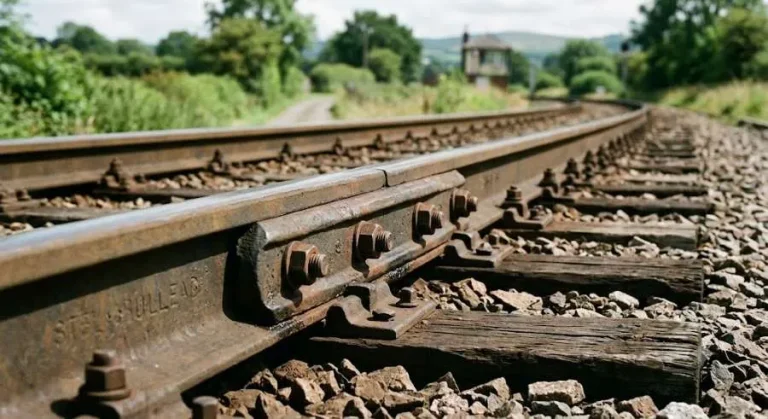
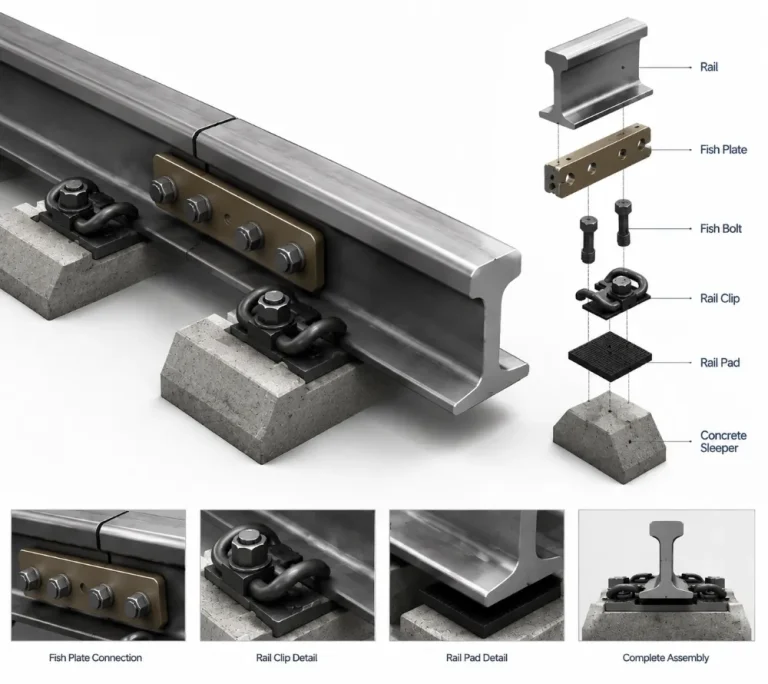
Railway fish plates are one of the simplest components in a railway track, yet they play a critical role in keeping rail joints stable and safe. When installed correctly, they distribute loads across the joint, maintain rail alignment, and reduce the impact generated as trains pass over the connection.
Au fil des années, we’ve seen many rail joint problems blamed on poor-quality fish plates. En réalité, the plate is often not the problem. More often than not, the issue comes down to installation. Bolts tightened unevenly, dirt trapped between the rail and the plate, or the wrong fish plate matched with the rail profile can all shorten the life of a rail joint.
Whether you’re building a new railway, replacing worn fish plates during maintenance, or supervising a track installation project, following the correct installation procedure can save a great deal of time and maintenance costs later.
Dans ce guide, we’ll walk through the complete installation process, explain why each step matters, and share a few practical tips that experienced railway engineers rely on in the field.
A fish plate may only connect two rail ends, but it carries significant forces every time a train passes. Wheel loads, vibration, braking forces, dilatation thermique, and track movement are all transferred through the rail joint.
When a fish plate is installed correctly, it becomes much more than a simple connector between two rails. As trains pass over the joint, the load is shared more evenly between the adjoining rail ends instead of being concentrated at a single point. The fish plate also helps maintain both vertical and horizontal alignment, reducing the impact that wheels experience when crossing the joint. Au fil du temps, this smoother load transfer minimizes bolt loosening, slows rail-end wear, and contributes to a longer service life for the entire fastening system.
D'autre part, a poorly installed joint can quickly develop problems such as loose bolts, uneven rail wear, excessive vibration, joint gaps, or even fatigue cracks around the bolt holes.
Dans notre expérience, taking an extra fifteen minutes during installation is often far less expensive than repairing a failed rail joint a few months later.
Before heading to the track, it’s worth checking that every component matches the rail specification.
One of the most common mistakes is using a fish plate designed for a different rail profile. Although two rail sections may appear similar, even small dimensional differences can prevent the fish plate from fitting tightly against the rail web.
A typical installation requires:
| Article | But |
| Railway fish plates | Connect adjacent rail ends |
| Fish bolts and nuts | Clamp the joint securely |
| Spring washers | Help prevent bolt loosening |
| Torque wrench | Apply the specified tightening torque |
| Wire brush or cleaning tool | Remove rust and debris |
| Lubricant (if specified) | Reduce thread friction during tightening |
| Inspection gauge | Verify rail alignment |
Before installation, lay out all of the components and give them a quick inspection. Experienced maintenance crews rarely rush straight into assembly. They first check whether the fish plates match the rail profile, whether the bolts turn freely on the threads, and whether the spring washers still provide adequate tension.
If a bolt shows heavy corrosion, damaged threads, or signs of stretching, replacing it is usually the better option. Compared with the cost of a rail joint failure, a new set of fasteners is inexpensive insurance.
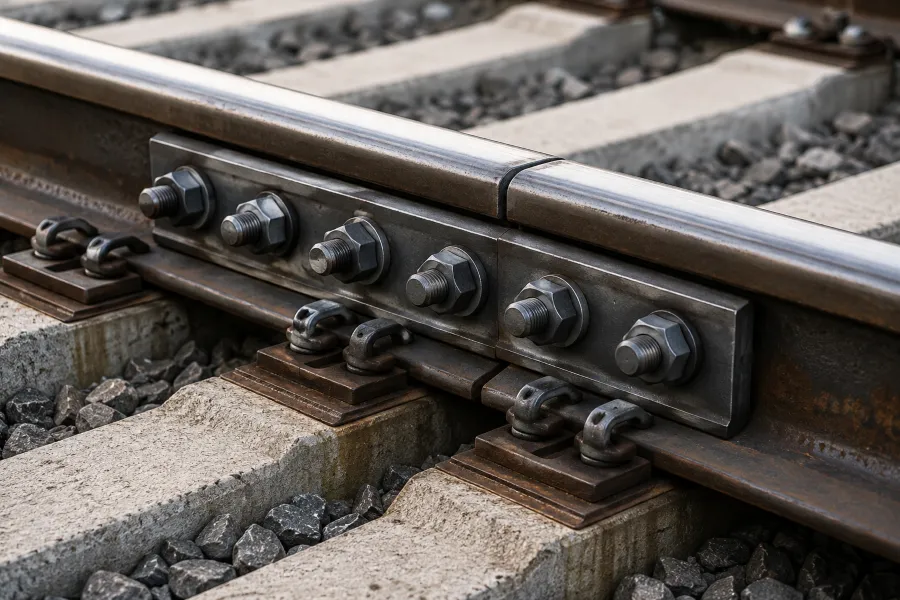
Every successful installation begins with clean contact surfaces.
Before placing the fish plates against the rails, inspect both rail ends carefully. Dirt, rouiller, old grease, paint, or metal burrs can all prevent the fish plate from making full contact with the rail web.
We’ve occasionally seen installers skip this step because the rails “look clean enough.” Unfortunately, even a thin layer of debris can create uneven contact pressure after the bolts are tightened.
Use a wire brush or suitable cleaning tool to remove contaminants, then check for:
As you clean the rail ends, take a close look at their overall condition. Small defects are easy to miss when you’re focused on installation, but they often become the starting point for larger maintenance problems. Pay particular attention to cracks around the bolt holes, chipped edges, excessive wear, or corrosion. If the rail end itself is already damaged, installing a new fish plate will not restore the joint’s strength. In that situation, the rail should be repaired or replaced before the new joint is assembled.
If significant damage is found, replacing the fish plate alone will not solve the problem. The rail itself may also require repair or replacement.
Once the rail ends have been cleaned, place one fish plate on each side of the rail web.
The fish plates should sit flush against the rail without rocking or leaving visible gaps.
Avoid forcing a fish plate into position. If it doesn’t fit naturally, stop and verify that the plate matches the rail profile. Installing the wrong fish plate may temporarily seem acceptable, but it can create uneven stress concentrations that eventually lead to bolt loosening or rail damage.
Take a moment to confirm that:
Before inserting the bolts, pause for a final visual check. Both fish plates should sit firmly against the rail web without rocking, the bolt holes should line up naturally, and there should be no dirt or metal chips trapped between the contact surfaces. If everything fits without forcing any components into place, you’re ready for the next step.
Good alignment at this stage makes the rest of the installation much easier.
With the fish plates in place, insert the fish bolts through the aligned holes.
If a bolt does not slide through easily, avoid driving it in with excessive force. Misalignment usually indicates that the fish plates or rails are not positioned correctly.
Most railway maintenance teams also install all bolts in the same direction. While this doesn’t affect structural performance, it makes future inspections and maintenance much more efficient.
Install the nuts by hand first, tightening them just enough to hold the assembly together before final torque is applied.
A ce stade, don’t fully tighten any single bolt.
This is where installation quality often makes the biggest difference.
A common mistake among inexperienced installers is tightening one bolt to full torque before moving on to the next. Doing so can pull one side of the fish plate tightly against the rail while leaving gaps elsewhere.
Plutôt, tighten the bolts gradually using a cross-pattern sequence.
Par exemple, with a four-bolt fish plate:
This approach allows the clamping force to develop evenly across the entire joint.
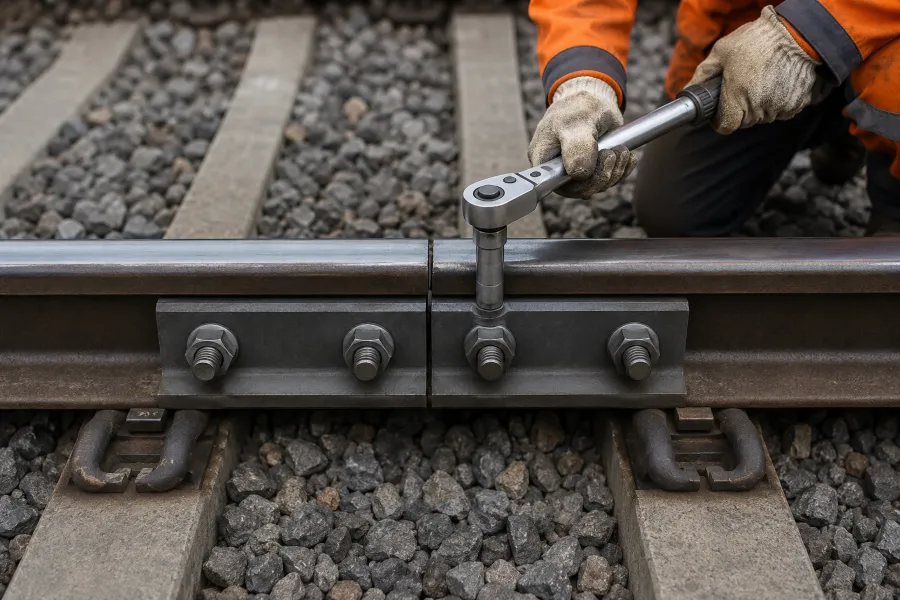
Always use a calibrated torque wrench rather than estimating by feel. Different railway standards specify different torque requirements depending on bolt size and grade, so follow the applicable project specifications.
After all bolts have reached their specified torque, inspect the rail joint carefully.
Look beyond the bolts themselves and examine how the rails meet.
Check that:
Stand a short distance away from the joint and look along the running rail. The rail heads should form a smooth, continuous line without noticeable steps or twists. The fish plates should remain fully seated against the rail, and the joint gap should match the project specification. Even a slight misalignment can create repeated wheel impacts that gradually increase wear on both the rail ends and the joint itself.
Even small alignment errors can produce repeated wheel impacts that gradually damage both the rail ends and the fish plates.
A few minutes spent checking alignment can prevent years of premature wear.
Before the track is returned to service, carry out one final inspection.
Experienced engineers rarely consider installation complete immediately after tightening the last bolt.
Plutôt, they verify:
If the railway is newly commissioned or carries heavy axle loads, many maintenance teams also schedule a follow-up torque inspection after the first period of operation, as minor settling may occur.
A simple recheck can often identify loose fasteners before they become a maintenance issue.
Even experienced crews occasionally make installation errors, especially when working under tight maintenance windows.
Fortunately, most problems are easy to avoid once you know what to watch for.
Different rail profiles require different fish plates.
A UIC60 fish plate will not properly fit a UIC54 rail, just as a 136RE fish plate is unsuitable for other rail sections. Always confirm the rail profile before installation.
Applying full torque to a single bolt before the others creates uneven clamping pressure.
Gradual, cross-pattern tightening produces a much more stable joint.
Bolts that show severe corrosion, stretched threads, or visible wear should be replaced rather than reused.
Fasteners are inexpensive compared with the cost of repairing a failed rail joint.
Dust, rouiller, and old grease reduce the contact area between the fish plate and the rail.
Cleaning takes only a few minutes but greatly improves joint performance.
Guessing bolt tightness is never a good practice.
A calibrated torque wrench provides consistent clamping force and helps prevent both under-tightening and over-tightening.
Installing the fish plate correctly is only the beginning. Regular inspection is what keeps the joint performing reliably over the long term.
Depending on traffic density and axle loads, rail joints should be inspected periodically for loose bolts, cracked fish plates, corrosion, or signs of rail movement.
Heavy-haul freight lines usually require more frequent inspections than lightly used industrial tracks because of the greater dynamic forces acting on the joint.
During routine maintenance, pay particular attention to any signs of bolt loosening or uneven wear around the joint. Catching these issues early is far easier than dealing with a damaged rail or an emergency repair later.
If a fish plate passes inspection and shows no cracks, déformation, or excessive wear, it may be reused according to the maintenance standard being followed. Cependant, damaged fish plates should always be replaced.
The required tightening torque depends on the bolt diameter, strength grade, and railway standard. Always follow the specified torque values provided in the project documentation or applicable standards.
Some railway standards recommend lubricating bolt threads to achieve accurate torque values, while others specify dry installation. Always follow the relevant maintenance procedures.
Inspection intervals vary depending on track class, traffic volume, axle loads, and local maintenance regulations. Heavy-haul and high-traffic lines generally require more frequent inspections than lightly used industrial railways.
Installing a railway fish plate isn’t a complicated job, but doing it well requires attention to detail. Clean contact surfaces, correct alignment, gradual bolt tightening, and careful final inspection all contribute to a stronger, plus sûr, and longer-lasting rail joint.
Dans notre expérience, most premature rail joint failures are not caused by the fish plate itself. They usually result from small installation mistakes that can be prevented by following the correct procedures and using properly matched components.
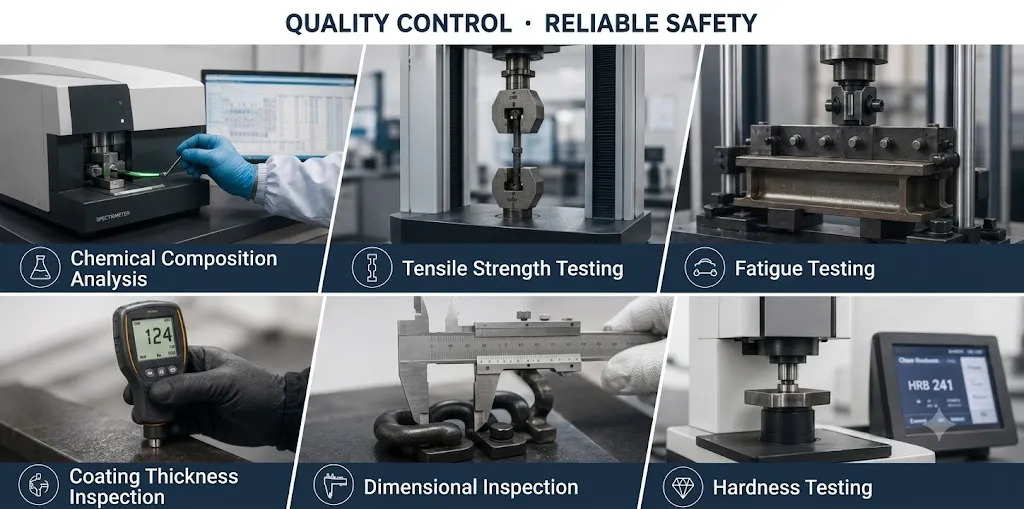
À Luoyang Fonyo Heavy Industries Co., Ltée., we manufacture railway assiettes à poisson, boulons de poisson, roues de chemin de fer, and other railway components for customers worldwide. Every product is produced in accordance with international railway standards and undergoes strict quality inspection before delivery, helping customers build reliable and durable rail systems.
If you’re planning a new railway project or looking for a dependable supplier of railway fish plates and fastening components, visite www.railwaypart.com to learn more about our products, manufacturing capabilities, and technical support. Our engineering team is always ready to help you select the right solution for your application.