WeChat 코드를 스캔하여 문의하세요
WeChat 코드를 스캔하여 문의하세요
이메일을 보내주시면 최대한 빨리 답변해 드리겠습니다..
마음과 영혼을 다해 미래를 창조하다


철도 커플러는 버퍼와 체인 등 여러 가지 주요 유형으로 제공됩니다., 재니 (AAR), 샤펜베르그, 꽉 잠그다, 톰린슨, 및 나사 커플링 - 각각 특정 철도 용도로 설계됨, 결합력, 속도 범위, 및 지역 표준. Choosing the wrong coupler type for a given operation can create interoperability problems, safety risks, or premature wear that shows up in maintenance costs long after the initial purchase.
If you’ve ever stood on a station platform when two rail cars couple together, the connection looks simple enough—a loud clang, a slight jolt, and the train is ready to depart. But the mechanism doing that work varies enormously depending on which continent you’re on, whether the train carries passengers or iron ore, and whether it needs to couple automatically at 160 km/h or be connected by hand in a classification yard.
Railway couplers are one of those railway components that nobody thinks about until something goes wrong. A failed coupling delays trains. An incompatible coupler type stops rolling stock from being moved between networks. And in heavy haul operations, an underspecified coupler doesn’t just wear out—it can fail under drawbar force with serious consequences.
This guide covers the main railway coupler types in use today, how each works, where each is applied, and what procurement teams should look at when specifying or sourcing couplers.
If you want to know more about the railway couplers, you can read 열차 커플러에 대해 얼마나 알고 계십니까??
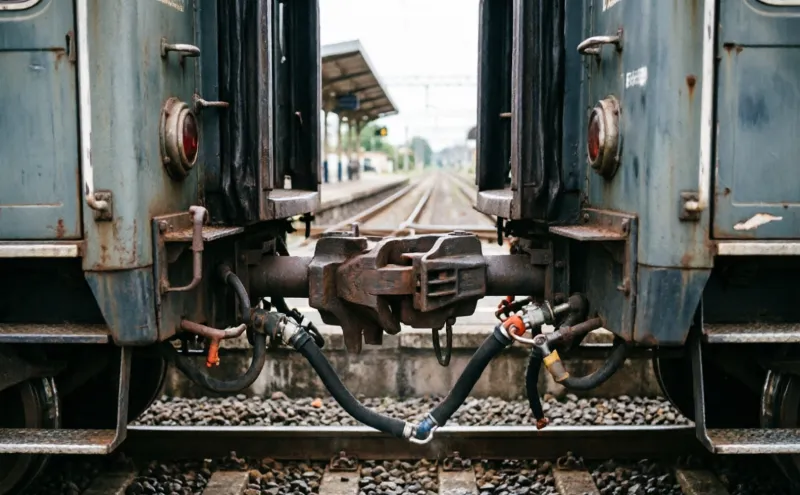
A railway coupler has three jobs: mechanically connect two vehicles, transmit tensile and compressive forces (sometimes hundreds of tons), and—depending on the type—provide electrical continuity, air brake connections, or data communication.
The reason there isn’t one universal coupler design comes down to history, 로딩 조건, and operational philosophy. North American freight railways standardized on the knuckle coupler over a century ago. European passenger networks developed automatic compact couplers for high-speed operation. UK freight still uses buffers and screw chains in many applications because the infrastructure was built around them.
For anyone involved in railway procurement or fleet management, the practical question is usually: which coupler does this application actually need? The answer depends on drawbar force, coupling speed requirements, 유지관리 환경, 그리고 이웃 함대가 이미 사용하고 있는 것.
버퍼 및 체인 커플링(또는 버퍼 및 나사)은 여전히 정규 작동 중인 가장 오래된 철도 커플링 방법 중 하나입니다.. 각 차량에는 각 코너마다 버퍼가 있습니다. (보통 한 끝에 2개씩) 양쪽에 후크가 있는 나사 링크. 작업자는 수동으로 나사 링크를 인접한 차량의 후크에 끼우고 버퍼가 서로 압축될 때까지 핸들을 감습니다..
시스템은 특정 상황에서 진정한 이점을 가지고 있습니다.. 대구경 버퍼 디스크를 통해 상당한 버핑 능력을 제공합니다., 분기 및 제동 중에 종방향 힘을 흡수합니다.. 나사 링크를 사용하면 차량 간의 견인력을 정밀하게 제어할 수 있습니다. 무거운 화물을 운반할 때 더 조여줍니다., 승객의 편의를 위해 약간의 여유를 두십시오. 또한 기본적인 가공능력으로 제작 및 수리가 비교적 간단합니다..
하지만 단점도 똑같이 현실적입니다. 수동 커플링이 느립니다., 노동 집약적, 안전의 관점에서 정당화하기가 점점 더 어려워지고 있습니다.. 빗속에서 무거운 나사 체인을 다루는 두 대의 철도 차량 사이에 서있는 작업자, 눈, 또는 어둠이 핀치 포인트에 노출됩니다., 떨어진 장비, 예상치 못한 차량 움직임. 많은 규제 기관은 자동 대안이 존재하는 경우 수동 결합에서 멀어졌습니다..
영국 화물 운송에서는 버퍼와 체인이 여전히 일반적입니다., 일부 인도 철도 서비스, 오래된 산업 철도 시스템. 해당 지역 외부의 새 프로젝트의 경우, it’s rarely specified unless retrofitting into existing fleets.
The Janney coupler—also known as the AAR (미국 철도 협회) coupler or simply the “knuckle coupler”—is the dominant coupling system for freight railways across North America, 호주, parts of South America, and an increasing number of heavy haul operations worldwide.
The operating principle is straightforward but effective. A rotating knuckle on each coupler head opens to accept the knuckle of the opposing coupler. When the two heads meet, the knuckle closes and a locking block drops into place, securing the connection. Decoupling is done from the side of the vehicle by pulling a lever that lifts the lock pin—the knuckle swings open under spring pressure, and the cars separate.
What made the Janney coupler dominate freight is not just the automatic coupling action. It’s the combination of reliable mechanical lock, high tensile strength (Type E couplers are rated for substantial drawbar forces suitable for heavy haul), relative ease of maintenance, and over a century of standardization that means a coupler from one manufacturer fits another’s draft gear without modification.
제조 관점에서 보면, AAR couplers are typically forged or cast from medium-carbon or alloy steel, heat treated to achieve the required toughness and fatigue resistance. The knuckle and lock block are the highest-wear components and are commonly replaced items in any freight car maintenance program. Coupler bodies themselves last longer but are inspected regularly for cracks, 커플링 표면의 마모, 그리고 변형.
언급할 가치가 있는 한 가지 세부 사항: AAR 시스템 내에서, 여러 등급과 유형이 있습니다. C형은 일반 서비스에 공통적으로 적용됩니다.. E형은 더 무거운 하중을 처리하며 단위열차 및 복합열차의 표준입니다.. 그만큼 “꽉 잠그다” 변형은 탈선 중 분리를 방지하는 것이 중요한 승객 및 통근 응용 분야에 기계적 결합을 추가하여 다음 유형으로 이동합니다..
타이트록 커플러는 기본 AAR 너클 디자인에서 발전했지만 탈선 중에 1차 너클이 파손되거나 커플러가 회전하는 경우에도 수직 또는 측면 분리를 방지하는 2차 기계적 인터록을 추가합니다.. 이 기능은 여객 열차에서 매우 중요합니다., where coupled cars must stay connected under accident conditions to prevent telescoping or separation.
실제로, a tightlock coupler looks similar to a standard AAR coupler from a distance. The difference is in the extended locking surfaces on the top and bottom of the coupler head that engage with matching features on the mating coupler. Even if the knuckle opens unexpectedly, these secondary locks hold the coupling together.
Commuter rail systems in North America widely specify tightlock couplers. Some metro systems use them as well, particularly where trains operate at moderate speeds on shared corridors or where crashworthiness standards require anti-telescoping performance. The trade-off is cost—tightlock couplers are more complex to manufacture and maintain than standard AAR types—and the fact that they’re generally incompatible with plain knuckle couplers without an adapter.
For procurement teams evaluating tightlock vs. standard AAR couplers, the decision usually comes down to the operating environment and applicable safety regulations rather than preference. If the service is passenger-carrying and the regulatory framework or OEM specification calls for tightlock, that tends to settle the question.
The Scharfenberg coupler—named after its German inventor Karl Scharfenberg—is the automatic coupler of choice for European high-speed trains, most metro systems worldwide, and many light rail applications. Unlike the AAR knuckle, which couples mechanically and requires separate connections for brakes and electrics, the Scharfenberg integrates mechanical coupling, electrical pins, and pneumatic/air brake channels into a single compact front-face operation.
When two Scharfenberg-equipped trains approach each other, the coupler extends forward (on most modern installations), the electrical pins extend, and the mechanical jaws close around the mating coupler head—all without human intervention and in a few seconds. This makes it ideal for frequent coupling and uncoupling operations such as metro shuttle services, trainset joining/separation on high-speed lines, and automated passenger transfer systems.
The coupler face has a distinctive appearance: a circular head with electrical pins arranged above and below the central mechanical coupling aperture, and often visible air hose connection ports on the sides. Different configurations exist—some prioritize electrical pin count for passenger trains (힘, control, communications), others emphasize pneumatic flow for rapid brake charging.
Manufacturing complexity for Scharfenberg couplers is considerably higher than for AAR types. The precision-machined coupler head, extend-retract mechanism, electrical pin assembly, and integrated valve group all require tight tolerances and rigorous testing. Unit costs reflect this—they are significantly more expensive per coupler than a forged AAR knuckle—but the total cost of ownership in high-frequency automatic coupling applications often favors them because labor savings and operational flexibility offset the initial price.
Screw coupling—also called chain coupling—is the dominant manual coupling system for European freight railways. Similar in concept to buffer and chain but without the large side buffers (European wagons often have a single center buffer or none at all), it uses a screw link with hooks or buck-eye loops on each vehicle end.
The operator attaches the hook of one vehicle to the loop or eye of the next, then uses a screw handle (에이 “turnbuckle”) to draw the vehicles together and tension the coupling. The screw mechanism allows controlled draw force adjustment, which is useful in freight operations where different wagon types and load combinations require different coupling tensions.
Screw coupling is gradually being replaced by automatic couplers on new European freight rolling stock, particularly intermodal wagons and unit trains. But the installed base of screw-coupled wagons across Europe, the former Soviet Union, and parts of Africa and Asia means this coupler type will remain in service for decades. Procurement of spare screw links, hooks, and turnbuckle handles continues to be a steady demand item for railway component suppliers.
The Tomlinson coupler is a specific type used extensively on UK multiple-unit passenger trains (DMUs and EMUs). It combines a mechanical coupling bar with integral electrical connector pins, allowing both mechanical and electrical connection in one operation—though unlike the Scharfenberg, it is not fully automatic and requires alignment and extension by the operator or system.
Tomlinson couplers sit in a recessed housing at the end of each vehicle. When two units are brought together, the coupler bar extends, engages with the mating socket, and the electrical pins make contact. It’s simpler than a Scharfenberg and lower in cost, which suits the UK’s extensive commuter and regional multiple-unit fleet where high-speed automatic coupling isn’t normally required.
유지관리 관점에서, Tomlinson 커플러는 다소 복잡합니다. 전기 핀과 소켓 접점이 마모되어 주기적인 검사 및 교체가 필요합니다., 장치가 과도한 간격이나 각도로 결합되면 기계적 결합 바가 오정렬로 인해 손상될 수 있습니다.. 하지만 별도의 기계식 커플러와 점퍼 케이블을 유지하는 것에 비해, 통합 설계로 전체 연결 시간이 단축되고 결합 중 전기 연결이 누락되거나 손상될 위험이 줄어듭니다..
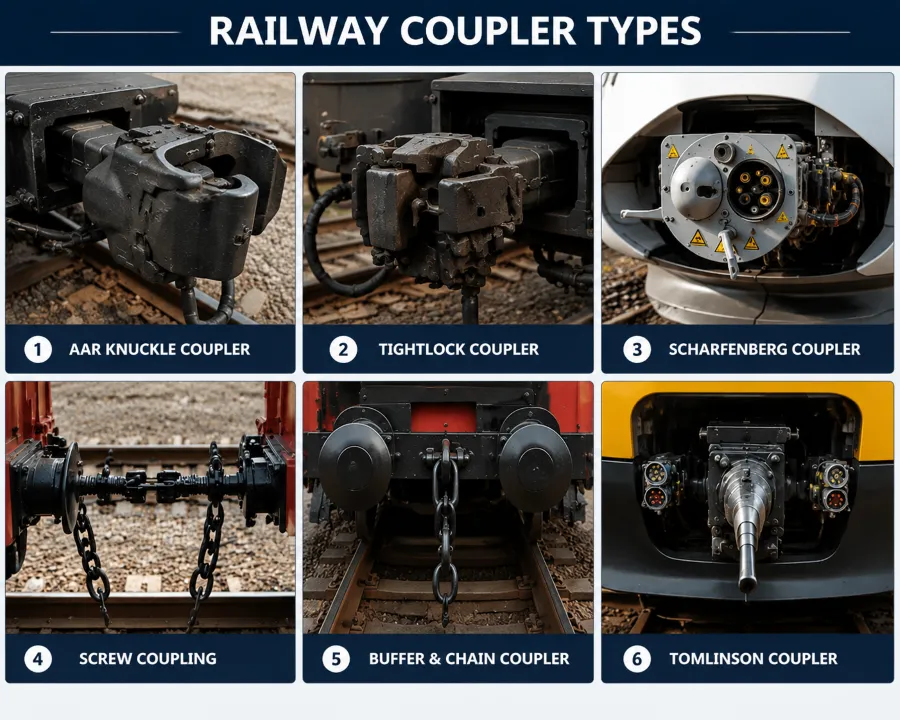
다양한 애플리케이션에는 다양한 커플러 솔루션이 필요합니다.. 선택 시 가장 중요한 요소에 따라 주요 유형을 비교하는 방법은 다음과 같습니다.:
| 커플러 유형 | 결합방식 | 일반적인 응용 | 인발력 용량 | 오토매틱 | 전기 통합 |
| 완충기 & 체인 | 수동 | UK freight, 산업의 | 보통의 | 아니요 | 아니요 |
| 재니 / AAR | 오토매틱 | North American freight, 무거운 짐 | 높은 | Mechanical only | 아니요 (대개) |
| Tightlock | 오토매틱 | Commuter rail, 승객 | 높은 | 기계 + secondary lock | 아니요 (대개) |
| 샤펜베르그 | Fully automatic | 고속, 지하철, 경전철 | Moderate-High | 예 | 예 |
| Screw Coupling | 수동 | European freight, post-Soviet | 보통의 | 아니요 | 아니요 |
| Tomlinton | Semi-automatic | UK multiple units | 보통의 | Semi | 예 |
These comparisons are generalized—specific models within each type vary significantly in ratings, options, and compatibility details. But the pattern is clear: automatic couplers dominate new passenger and high-frequency applications, while manual couplers persist in legacy freight fleets where replacement economics don’t yet justify conversion.
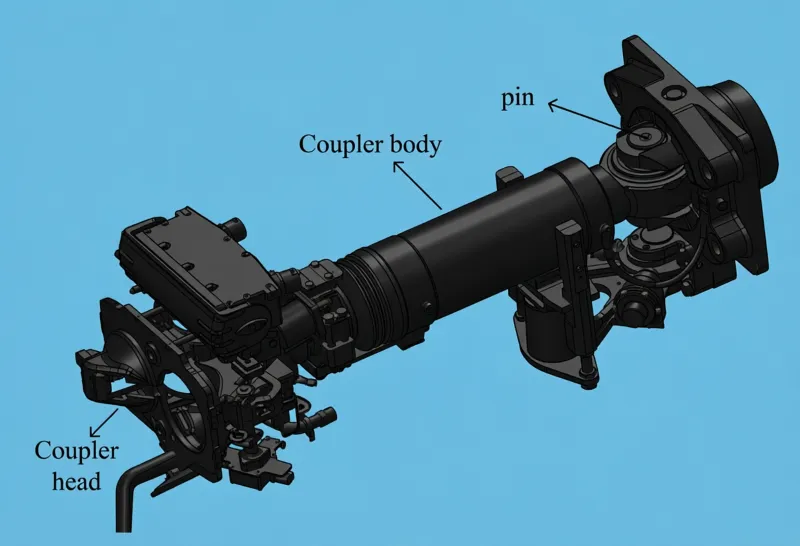
Coupler procurement is one of those areas where the drawing and the purchase order tell only part of the story. Experienced railway engineers and buyers typically evaluate several factors beyond the basic coupler type and part number.
For steel couplers—particularly AAR knuckles, tightlock bodies, and screw coupling components—the material certificate should specify steel grade, 열처리 과정, and resulting mechanical properties (항복강도, 인장강도, 연장, 충격 인성). For couplers operating in cold climates, low-temperature impact test results (Charpy V-notch at sub-zero temperatures) become critical. A coupler that performs reliably at +20°C can behave differently at -40°C if the steel transition temperature wasn’t properly controlled during production.
Depending on the coupler type and target market, relevant standards may include AAR M-201 for couplers, EN specifications for European applications, UIC leaflets for international interchange couplers, or specific railway operator approval requirements (such as Network Rail acceptance in the UK or DB specification for German applications). A supplier listing ISO 9001 certification is a starting point, but product-specific standard compliance and third-party inspection records carry more weight in actual procurement decisions.
Many coupler components—especially AAR coupler bodies, 너클, and tightlock parts—are produced by either forging or casting, depending on the component, volume, and manufacturer’s capability. Forged coupler parts generally offer superior fatigue resistance and are preferred for high-cycle, heavy-haul applications. Cast coupler components can be cost-effective for certain geometries and lower-stress applications but require careful attention to foundry process control, 열처리, and non-destructive testing to ensure internal soundness.
Understanding whether a supplier produces coupler components through casting, 단조, or a combination—and what inspection and testing backs up each method—tells you more about long-term reliability than the unit price alone.
Couplers have consumable components: 너클, lock blocks, pins, bushings, screws, and electrical contacts for automatic couplers. When selecting a coupler supplier or specifying a coupler type for a new fleet, it’s worth confirming that wear parts will be available throughout the expected service life of the vehicle. A well-designed coupler with unavailable spare parts becomes an expensive problem after a few years of operation.
제조 관점에서 보면, coupler quality problems tend to show up in predictable ways: surface defects from casting or forging that initiate fatigue cracks, incorrect heat treatment that leaves the component either too soft (과도한 마모) or too brittle (impact fracture), dimensional deviations that cause poor engagement with mating couplers, and inadequate NDT that allows internal defects to reach service.
Reputable coupler manufacturers address these risks through process control—consistent melt practice for steel composition, documented heat treatment cycles with furnace records, dimensional gauging at key stages, 그리고 100% NDT (magnetic particle inspection for surface-breaking defects, ultrasonic testing for internal soundness) on safety-critical components.
For procurement teams, asking for sample inspection records, reviewing the supplier’s NDT procedures, and understanding their traceability system (can they identify exactly which melt batch a delivered coupler came from?) reveals substantially more about manufacturing quality than any sales presentation.
A railway coupler may appear to be a single mechanical component, but its design, 재료의 품질, and manufacturing process determine whether trains connect reliably every day or whether coupling failures become a recurring maintenance burden. Selecting the correct coupler type for the application, verifying material and manufacturing quality, and ensuring spare parts availability will reduce coupling-related delays, safety incidents, and unplanned maintenance costs across any rail fleet.
~에뤄양포뇨중공업(Luoyang Fonyo Heavy Industries), 주식회사., 우리는 제조 railway coupler components, 철도 주물, 철도 바퀴, and related track components for freight railways, passenger rail operators, 및 산업용 철도 시스템. Our casting, 가공, and inspection capabilities allow us to produce coupler bodies, 너클, and custom coupling components to AAR, 안에, UIC, 고객별 요구사항. Our engineering team can support material selection, heat treatment specification, and documentation requirements based on your operating conditions and applicable standards.
일반적으로, no—not without an adapter. AAR knuckle couplers cannot directly couple to Scharfenberg or screw couplings. Adapter couplers exist for some combinations (예를 들어, AAR-to-buffer-chain adapters are used when freight cars need to move between North American and UK/European networks), but adapters introduce mechanical play, reduced strength, and additional maintenance. For permanent fleet operations, matching coupler type to the network standard is the preferred approach.
Inspection intervals depend on the coupler type, service severity, and regulatory requirements. AAR couplers on freight cars in North America are typically inspected during scheduled maintenance cycles and during intermediate yard inspections, with focus areas including knuckle wear, lock mechanism function, coupler face condition, and any visible cracking. Automatic couplers like Scharfenberg require additional checks on electrical pins, extend-retract mechanism, and pneumatic seals. Operator manuals and applicable maintenance standards should define specific intervals for each fleet.
Type C and Type E refer to AAR coupler grades with different strength ratings. Type C is designed for general freight service with moderate drawbar forces and is common on older rolling stock and lighter-duty applications. Type E has a higher strength rating and is the standard for modern freight cars, unit trains, and heavy haul operations where drawbar forces are significantly greater. Using a Type C coupler in a Type E application creates a potential failure point under maximum load.
It depends on the component and application. Forged coupler parts—knuckles, locks, and certain body sections—generally provide superior fatigue resistance and are preferred for high-load, high-cycle applications such as heavy haul freight. Cast coupler components can perform well when properly produced with adequate process control, 열처리, 및 검사, and may be the only practical manufacturing method for complex geometries. The key factor is not casting versus forging itself, but whether the chosen manufacturing method is backed by appropriate quality controls and testing for the intended service conditions.
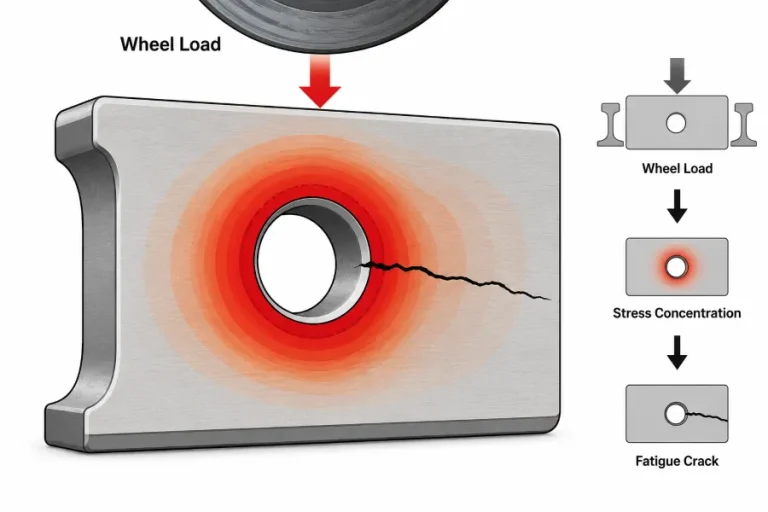
Knuckle failures typically originate from fatigue crack growth, often initiated at stress concentrations near the knuckle pivot hole, the locking lug, or the coupling nose area. Contributing factors include repeated high-force coupling impacts (particularly during shunting operations with excess speed), wear that changes the engagement geometry, corrosion reducing effective section thickness, and material or heat treatment deficiencies that reduce fatigue resistance. Regular inspection for wear limits and surface cracking, combined with timely replacement of worn knuckles before cracks propagate, prevents most knuckle-related failures.
Some coupler components are designed as replaceable wear parts (너클, lock blocks, pins, bushings, electrical contacts) and are routinely replaced during maintenance. The coupler body or main housing—in both AAR and automatic coupler types—is generally not repaired in the field; if it reaches wear limits, shows cracking, or fails inspection, it is replaced as a complete unit. Minor surface wear on a coupler face can sometimes be reconditioned by qualified workshops, but any repair to load-bearing sections requires careful evaluation against the applicable standard, and many operators prefer replacement over repair for safety-critical coupler components.