Scannez le code WeChat pour nous contacter
Scannez le code WeChat pour nous contacter
N'hésitez pas à nous envoyer un email et nous vous répondrons dans les plus brefs délais.
Créer l'avenir avec cœur et âme


Derrière chaque exploitation ferroviaire sûre et fiable, des milliers de composants travaillent ensemble pour assurer un mouvement fluide. Parmi eux, le coupleur de train is one of the most important but often overlooked railway components.
Located between locomotives, wagons, and passenger coaches, a railway coupler is responsible for connecting vehicles, transferring enormous pulling and pushing forces, and reducing the impact generated during train operation. Although its structure may look simple from the outside, a modern train coupler is a highly engineered component that must withstand millions of load cycles throughout its service life.
From heavy-haul freight trains transporting thousands of tons of materials to high-speed passenger trains and urban metro systems, different railway applications require different coupler designs. Understanding how train couplers work and how they are manufactured helps railway operators and engineers better evaluate safety, fiabilité, et les exigences d'entretien.
This article explains the basic functions, common types, key components, processus de fabrication, and applications of modern railway couplers.
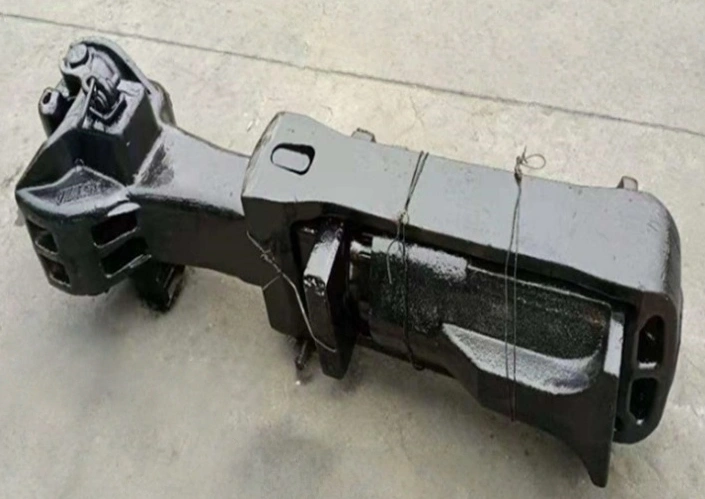
UN coupleur de train, également connu sous le nom de railway coupler, is a mechanical device used to connect two railway vehicles together. It allows locomotives and wagons or passenger coaches to operate as a complete train unit.
À première vue, a coupler appears to be only a steel connection device. Cependant, its actual role is much more complex. Pendant l'exploitation des trains, it must transfer traction forces from the locomotive to every vehicle behind it. Au freinage, it must withstand compression forces created between connected vehicles. En même temps, it needs to absorb shocks caused by starting, arrêt, coupling, and changes in track conditions.
Because of these demanding working conditions, railway couplers require excellent strength, résistance à la fatigue, and impact toughness. A failure of a coupler can affect the safety and efficiency of the entire train operation, which is why railway manufacturers and operators apply strict standards for design, sélection des matériaux, et inspection.
The working principle of a train coupler is based on a secure mechanical connection combined with controlled energy absorption.
When two railway vehicles move close to each other, an automatic coupler can lock the two vehicles together without manual operation. The locking mechanism inside the coupler head ensures that the connection remains secure during operation.
Once connected, the coupler transfers longitudinal forces through the train. During acceleration, the locomotive pulls the following vehicles through the coupler system. During braking or downhill operation, the direction of the force changes, and the coupler must withstand compressive loads from the vehicles behind.
Behind the coupler is usually a draft gear system, which plays an important role in reducing impact. Instead of allowing sudden forces to directly transfer to the vehicle frame, the draft gear absorbs and dissipates part of the energy, improving ride stability and reducing wear on railway vehicles.
This combination of mechanical locking and energy absorption allows trains to operate safely under different conditions, including heavy freight transportation, passenger service, and industrial railway operations.
The primary purpose of a railway coupler is connection, but its responsibilities extend far beyond simply joining two vehicles.
A reliable train coupler must maintain a secure connection under continuous changes in load. Freight trains, especially heavy-haul trains, experience extremely high tensile and compression forces during daily operation. The coupler must transfer these forces while maintaining structural integrity over millions of operating cycles.
Another important function is impact management. When a train starts moving, stops suddenly, or passes through uneven track sections, vehicles may move slightly relative to each other. The coupler and draft gear system work together to control these movements and reduce excessive shocks.
Modern automatic couplers may also integrate additional systems such as brake pipe connections, electrical connections, and communication interfaces. This allows multiple railway vehicles to operate as one coordinated system.
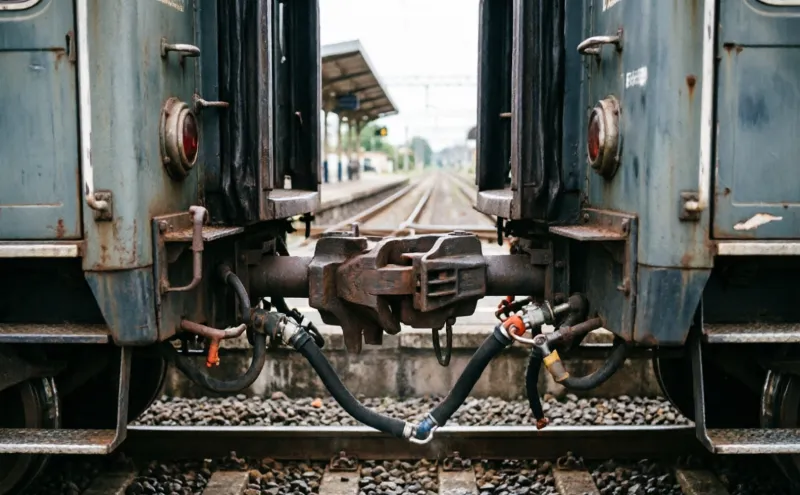
Railway systems around the world use different types of train couplers depending on operating requirements, vehicle design, et normes régionales.
The Janney coupler, also called the AAR knuckle coupler, is one of the most widely used automatic couplers in freight railway systems, especially in North America.
Its design uses a rotating knuckle mechanism that automatically locks when two vehicles come together. This design eliminates the need for workers to manually connect vehicles, améliorant considérablement l’efficacité opérationnelle et la sécurité.
Because of its high load capacity and durability, the Janney coupler is commonly used on freight wagons carrying heavy commodities such as coal, minerals, and bulk materials.
The SA3 automatic coupler is widely used in Russia and other railway networks based on similar standards. It was developed for heavy freight applications where high pulling capacity and reliable operation are essential.
Compared with many conventional couplers, SA3 couplers are designed to handle large longitudinal forces, making them suitable for long freight trains and demanding operating environments.
The Scharfenberg coupler is mainly used in passenger trains, systèmes de métro, and multiple-unit trains.
Unlike traditional freight couplers, it integrates mechanical connection, electrical connection, and pneumatic systems into one compact unit. This allows rapid automatic coupling and improves the efficiency of passenger train operations.
High-speed trains and modern urban rail vehicles often use this type of automatic coupler because of its fast operation and excellent alignment performance.
Tight-lock couplers are designed for applications where reducing movement between vehicles is important.
They are commonly used in passenger coaches because they provide better stability, reduce longitudinal movement, and improve passenger comfort during operation.
Rotary couplers are specially designed for industrial railway applications such as mining and bulk material transportation.
Their unique design allows railway wagons to rotate during unloading while remaining connected to the train. This improves efficiency in operations where large quantities of materials must be transported and unloaded continuously.
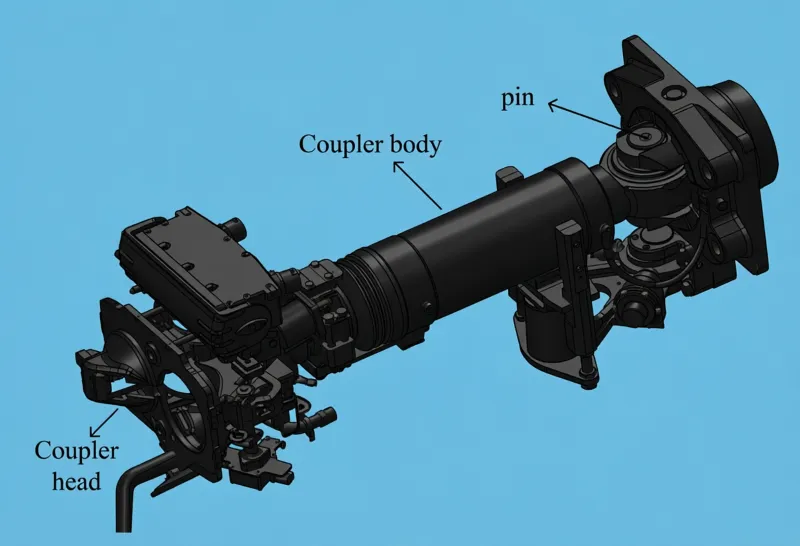
Although train couplers have different designs depending on their applications, most modern railway coupler systems consist of several key components that work together to achieve safe connection and force transmission.
Le coupler head is the front part of the system that directly connects with another vehicle. In automatic couplers, the head contains the locking mechanism that allows two vehicles to connect securely without manual operation. The design of the coupler head directly affects connection reliability and load-bearing performance.
Behind the coupler head is the coupler shank, which transfers forces from the coupler head to the vehicle structure. Pendant l'exploitation des trains, the shank experiences repeated tensile and compressive loads, so it requires excellent mechanical strength and fatigue resistance.
Le locking mechanism is another critical part of the coupler. It ensures that the connection remains secure during acceleration, freinage, et vibrations. A reliable locking system prevents accidental uncoupling and is essential for railway safety.
Le draft gear system is installed behind the coupler and is responsible for absorbing impact energy. When a train starts, stops, or changes speed, the draft gear reduces sudden force transmission and protects both the coupler and the vehicle body from excessive stress.
Le coupler yoke and mounting components connect the coupler system to the railway vehicle frame. These parts must maintain accurate alignment and withstand long-term operational loads.
Bien que chaque composant remplisse une fonction différente, they operate as one complete system. The performance of a train coupler depends not only on individual parts but also on the accuracy of assembly, material quality, and manufacturing control.
Train couplers operate under extremely demanding conditions. They must withstand repeated impact, high tensile loads, compression forces, et exposition environnementale. Donc, material selection plays a major role in determining service life and reliability.
Most heavy-duty railway couplers are manufactured using high-strength steel or alloy steel. These materials provide a good balance between strength, dureté, résistance à l'usure, et performances en fatigue.
Pour les grandes pièces moulées ferroviaires, cast steel is commonly selected because it allows manufacturers to produce complex shapes while maintaining high structural strength. Après le casting, heat treatment processes such as normalizing, trempe, or tempering are often applied to improve mechanical properties and achieve the required toughness.
In some applications where extremely high strength and impact resistance are required, forged steel components may also be used. The choice between casting and forging depends on the coupler design, conditions de chargement, production requirements, et normes ferroviaires applicables.
Regardless of the manufacturing method, the final component must achieve consistent mechanical properties throughout the entire structure. Internal defects, poor heat treatment, or improper material selection can significantly reduce the service life of a railway coupler.
The manufacturing process of a train coupler requires precise control from raw material preparation to final inspection.
For cast steel railway couplers, production usually begins with steel melting and chemical composition control. The molten steel is carefully prepared to achieve the required strength and toughness. Après le casting, the coupler body undergoes cleaning and heat treatment to improve its internal structure and mechanical performance.
Machining is then carried out on critical areas where dimensional accuracy is important, such as connection surfaces, mounting holes, and locking components. Even small dimensional deviations can affect coupling performance, so machining accuracy is carefully controlled.
After machining, each coupler must go through strict inspection procedures. En fonction des exigences du client et des normes ferroviaires, inspections may include ultrasonic testing, test de particules magnétiques, mesure dimensionnelle, essai de dureté, et vérification des propriétés mécaniques.
A typical manufacturing process can be summarized as:
Steel preparation → Casting or forging → Heat treatment → Machining → Non-destructive testing → Final inspection
Cependant, producing a reliable train coupler is not only about completing these steps. The real challenge is maintaining consistent quality throughout every production stage.
Because train couplers are safety-critical components, railway operators require strict quality control before they are put into service.
Visual inspection is normally the first step, where engineers check the surface condition, machining quality, and possible external defects.
Non-destructive testing methods are widely used to identify internal or surface defects that cannot be seen with the naked eye. Ultrasonic testing helps detect internal discontinuities, while magnetic particle testing is commonly used to identify surface cracks in steel components.
Dimensional inspection is also essential because the coupler must accurately match the corresponding vehicle connection system. Incorrect dimensions may lead to poor coupling performance, usure excessive, or operational problems.
In addition to manufacturing inspection, railway operators usually perform regular maintenance inspections during service. Wear of locking areas, fissures, déformation, and abnormal movement are common items checked during maintenance.
A well-designed inspection program helps prevent unexpected failures and extends the service life of railway couplers.
Train couplers are used across almost every type of railway vehicle, but different applications require different designs.
Dans chemins de fer de marchandises, coupleurs must withstand extremely high loads because freight wagons often carry heavy materials over long distances. Heavy-haul railways transporting minerals, charbon, and bulk goods place some of the highest demands on coupler strength and durability.
Dans passenger railway systems, couplers focus more on operational comfort, sécurité, and quick connection. Modern passenger trains often use automatic couplers that integrate mechanical, electrical, and pneumatic connections.
Pour metro and urban rail systems, compact automatic couplers allow rapid train formation and efficient daily operation. These systems are designed for frequent coupling cycles and high passenger service requirements.
Chemins de fer industriels, including mining and factory transportation systems, may require specialized coupler designs such as rotary couplers to meet specific loading and unloading requirements.
How to Choose a Reliable Railway Coupler Manufacturer?
Selecting the right railway coupler supplier requires more than checking product dimensions or price. Because couplers directly affect railway safety, manufacturers must have strong capabilities in material control, manufacturing technology, and quality assurance.
A reliable manufacturer should understand railway operating conditions and be able to provide products that meet different international standards and customer requirements.
Manufacturing experience is especially important for complex railway components. Companies with experience in steel casting, traitement thermique, usinage, and inspection are better positioned to control product quality from the beginning of production.
En outre, advanced testing equipment and complete traceability systems help ensure that every component can be reliably verified throughout its service life.
Luoyang Fonyo Heavy Industries Co., Ltée. is a professional manufacturer specializing in composants ferroviaires, railway bogie parts et roues de chemin de fer. Fondée en 1998, the company has more than two decades of experience in steel casting, usinage, traitement thermique, and assembly for railway applications.
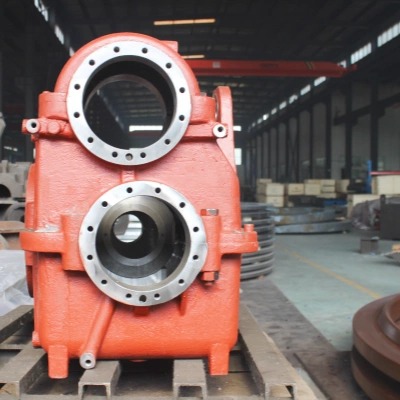
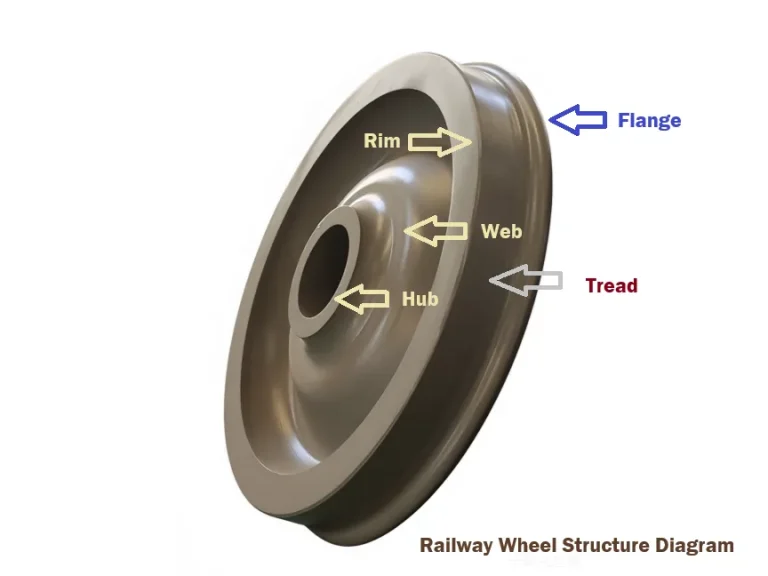
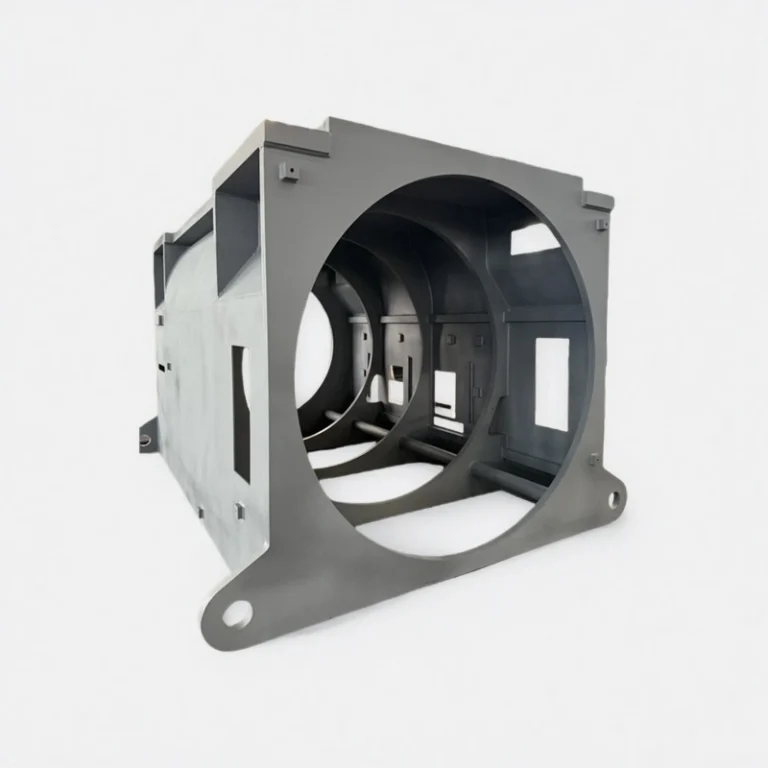
With a factory area of 72,600㎡ and an annual casting production capacity of 30,000 tonnes, FONYO provides reliable railway components for locomotives, wagons de marchandises, trains de voyageurs, et systèmes ferroviaires industriels. The company’s product range covers roues de chemin de fer, composants de bogies ferroviaires, carters de boîte d'essieu, carters de boîte de vitesses, and other critical railway structural parts used in demanding operating environments.
Through advanced manufacturing capabilities and strict quality control, including casting, traitement thermique, usinage de précision, test par ultrasons, test de particules magnétiques, et contrôle dimensionnel, FONYO ensures that every component meets the required standards for strength, durabilité, and long-term service performance.
With extensive experience in railway manufacturing, FONYO continues to provide customized railway component solutions for global customers seeking reliable quality, advanced production capability, and long-term cooperation.