Scan WeChat-koden for at kontakte os
Scan WeChat-koden for at kontakte os
Du er velkommen til at sende os en e-mail, og vi vil svare dig hurtigst muligt.
At skabe fremtiden med hjerte og sjæl


Et fuldt lastet godstog kan veje hundreder eller endda tusinder af tons. Alligevel under hver vogn, en relativt kompakt stålkonstruktion fortsætter med at absorbere vibrationer, fordele effekt, and survive years of continuous operation without collapsing. Ved første øjekast, that seems almost impossible. Many people assume railway bogies survive simply because the steel is “thick enough.” In reality, thickness alone would never solve the problem. A railway vehicle experiences constant dynamic loading — acceleration, opbremsning, spore uregelmæssigheder, wheel impacts, curves, and repeated stress cycles that occur millions of times throughout its service life. So why doesn’t the structure underneath eventually break apart? The answer lies in how railway bogie structures are engineered to manage force, træthed, and load distribution over time.
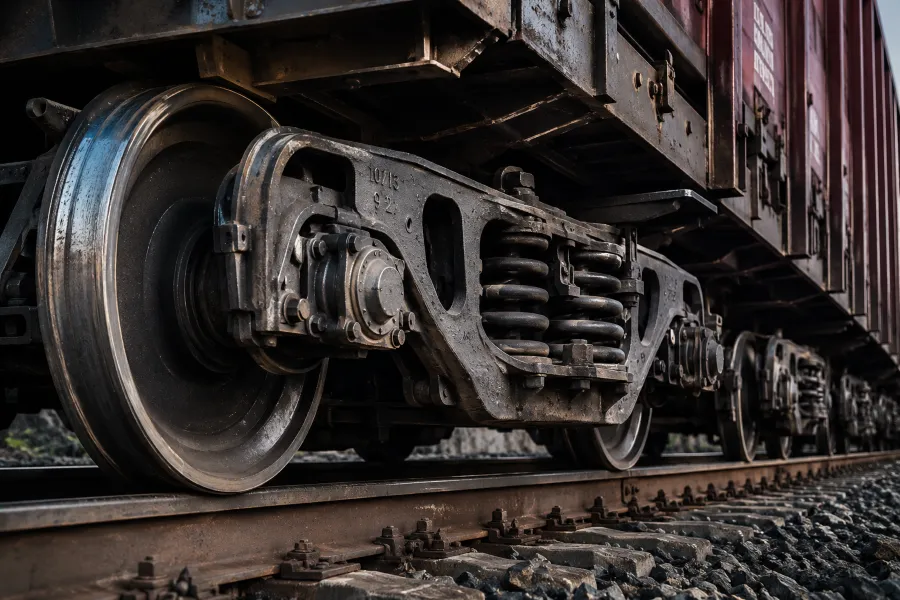
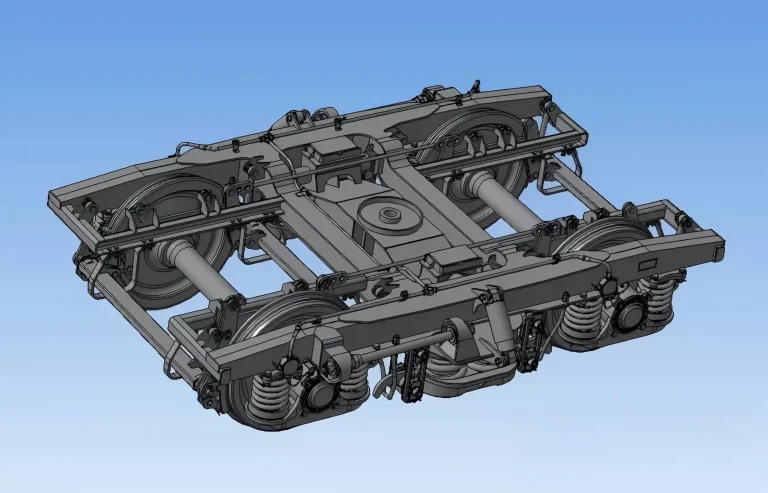
A railway bogie is often described as the “foundation” of a rail vehicle, but from an engineering perspective, it behaves more like a complete mechanical support system.
If we simplify its function, the bogie can almost be compared to the lower body of a human being:
Each component shares stress in a controlled way. That balance is what prevents localized overload and structural failure.
Without this distribution system, even extremely thick steel could eventually crack under repeated dynamic stress.
The most important task of a railway bogie structure is not simply “holding weight.” Its real job is distributing force safely.
When a freight wagon is fully loaded, the vertical force does not travel directly into one point. I stedet, the load moves through multiple engineered paths:
Car body → bolster → side frame → axle box → wheelset → rail.
This gradual transfer reduces stress concentration inside the structure.
På samme tid, the bogie must also handle:
This is why railway bogie design depends heavily on structural geometry rather than simple material thickness.
I mange tilfælde, engineers intentionally shape cast steel side frames to spread stress over wider areas. Rounded transitions, reinforced sections, and balanced load paths all help reduce fatigue damage over time.
One of the biggest misconceptions in heavy industry is the idea that stronger steel automatically creates a stronger structure.
For railway bogies, fatigue resistance is often more important than maximum static strength.
A bogie may survive an extremely heavy load once. The real challenge is surviving millions of repeated loading cycles without microscopic cracks growing into major failures.
This is where engineering precision becomes critical.
Even small defects can become dangerous after years of vibration:
Railway bogie structures are therefore designed not only for load capacity, but also for long-term fatigue life.
That is why railway standards place enormous importance on inspection procedures, inklusive:
I jernbaneteknik, durability is rarely about surviving one extreme moment. It is about surviving ordinary stress repeatedly for decades.
Modern railway bogies combine both cast and forged components because each manufacturing method offers different mechanical advantages.
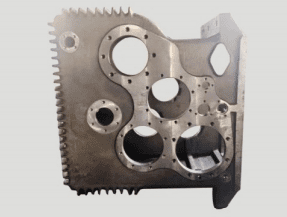
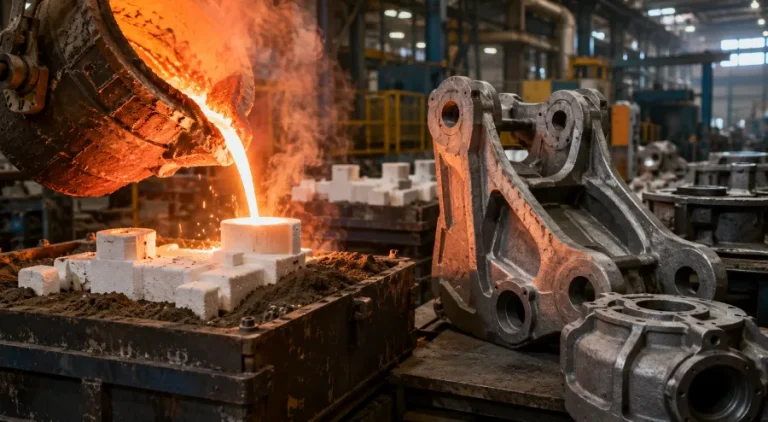
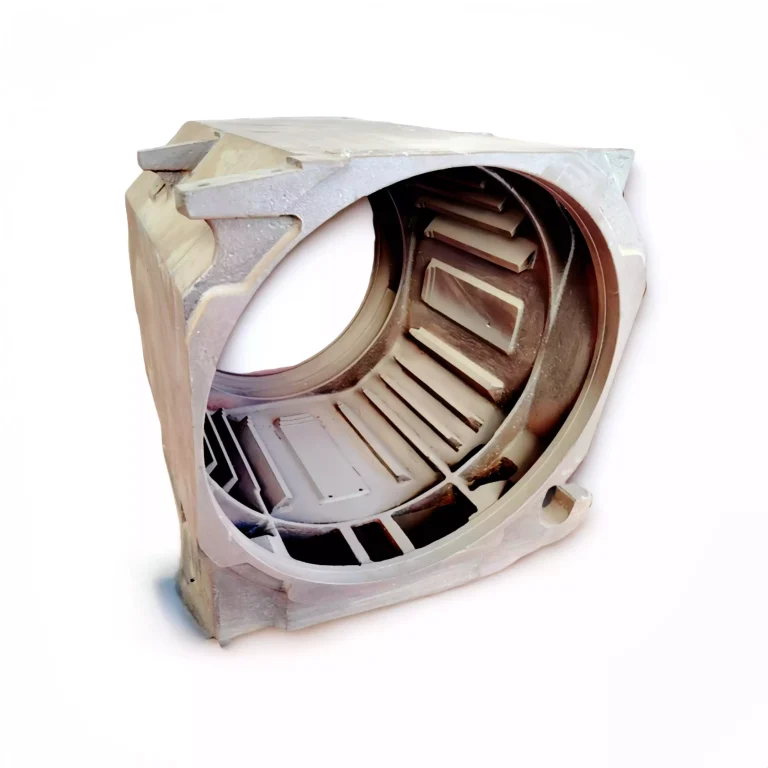
Large structural parts such as side frames and bolsters are commonly produced through cast steel processes. Casting allows engineers to create complex geometries capable of distributing force efficiently across the structure.
I mellemtiden, heavily stressed rotating components — especially railway wheels and axles — are often forged to improve grain flow and mechanical integrity.
The manufacturing process itself plays a major role in final performance.
F.eks, railway bogie components typically require:
Without these processes, even a well-designed bogie structure could suffer premature fatigue failure.
Med andre ord, railway safety begins long before the train reaches the tracks. It starts inside the foundry, forge shop, and machining workshop.
Another reason railway bogie structures survive enormous loads is that the load is never allowed to act as a pure rigid force.
The suspension system continuously absorbs and redistributes energy.
When wheels encounter uneven rail surfaces, springs and damping components reduce the direct transmission of impact into the frame. This helps protect both the bogie structure and the rail infrastructure itself.
Without suspension systems, repeated shock loading would dramatically shorten the service life of:
In heavy-haul railway applications, suspension performance becomes even more important because axle loads can increase significantly.
The goal is not eliminating force — that is impossible.
The goal is controlling how force moves through the system.
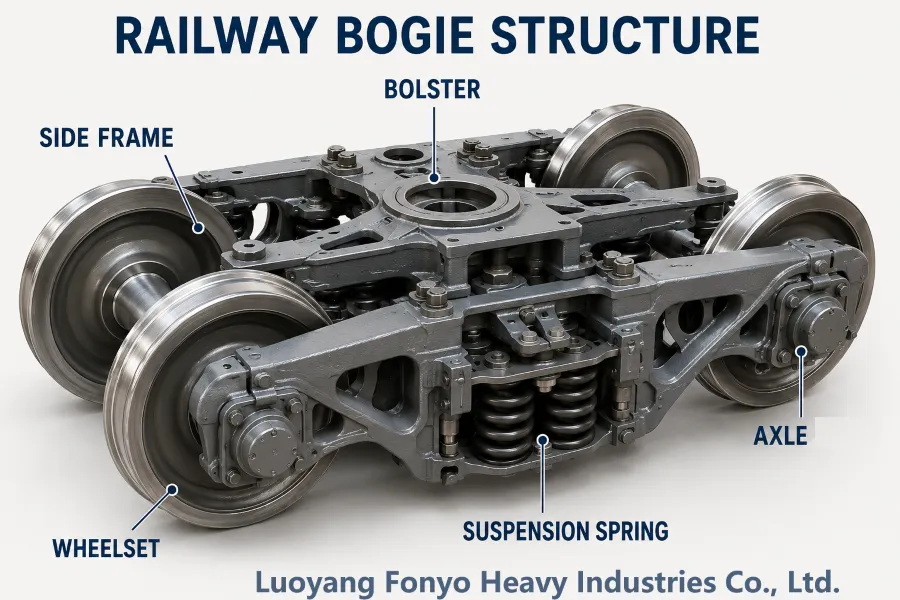
Udefra, a railway bogie may appear to be just a heavy steel assembly underneath a train.
I virkeligheden, it is a carefully engineered load-management system designed to survive constant stress, vibration, and fatigue over decades of service.
The reason railway bogie structures do not collapse under extreme loads is not because the steel is indestructible. It is because engineers carefully control how forces are distributed, absorbed, and repeated throughout the entire structure.
Every radius, every weld transition, every machining tolerance, and every heat treatment process contributes to long-term reliability.
That is what keeps modern freight transportation moving safely every day.
På Luoyang Fonyo Heavy Industries Co., Ltd. we manufacture heavy-duty railway components including forged railway wheels, cast steel structural parts, and precision-machined railway products for demanding industrial and railway applications.
If you are looking for reliable railway bogie components or custom-engineered railway parts, feel free to contact our engineering team for technical support and production solutions.