Scan the WeChat code to contact us
Scan the WeChat code to contact us
Feel free to send us a email and we will reply to you as soon as possible.
Creating the future with heart and soul


he service life of a railway component is not a number you will find on a data sheet. It is the point, measured in service, where one of a handful of competing limits is reached first: the part wears past its limit, accumulates enough fatigue damage to become unsafe, corrodes beyond tolerance, or grows a defect that forces removal.
Which limit wins depends on the load, the material, the environment, and the maintenance. That is why two identical parts on two different lines can retire twenty years apart.
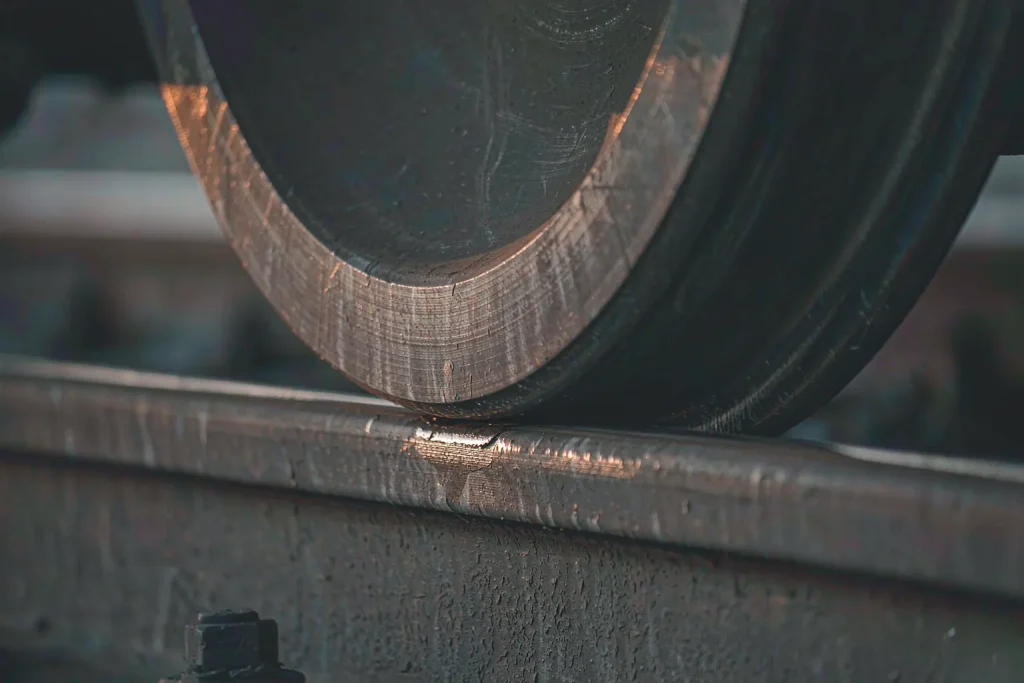
The first thing to unlearn is the calendar. A railway component ages by traffic, not by time.
Take a length of rail. Nobody who operates a railway asks “how many years old is this rail.” They ask how many million gross tonnes have passed over it. MGT, million gross tonnes, is the currency of rail life, because every axle that rolls over the rail applies a load cycle, and it is the accumulated cycles, not the elapsed months, that eat the fatigue life.
A rail on a lightly used branch line might carry a fraction of the tonnage of a heavy-haul corridor in the same year. The calendar says they are the same age. The fatigue life says they are decades apart.
This is why a specification that states “20 year design life” without stating the traffic it assumes is close to meaningless. The year count is a translation of a tonnage assumption, and if the tonnage turns out different, the translation was wrong.
Strip it down and there are really only four ways a railway component reaches the end.
Wear is the most visible. Metal is removed where surfaces slide or roll against each other, and at some point the remaining section cannot carry the load or hold the geometry. A wheel tread wears thin, a rail head wears on the gauge corner, a clip loses its clamping force as the contact faces fret. Wear is progressive and, mostly, predictable.
It is not always even, though. A railway wheel flat spot is a localised, concentrated form of tread wear that can end a wheel’s life far earlier than uniform wear would.
Fatigue is the quieter killer. A railway component can carry a single load easily and still fail after millions of smaller cycles, because each cycle grows a microscopic crack a little further. This is the failure mode that most railway standards are actually written around, and it is why why railway wheels crack is a fatigue question, not a strength question.
Corrosion is the third. It can act on its own, thinning a section until it fails, but more often it works with fatigue: a corrosion pit is a ready-made stress raiser, a place for a fatigue crack to start years earlier than it would on clean metal. The standards know this. For axles, EN 13261 cuts the permissible stress to 60% of the normal value where corrosion is present.
Defects are the fourth, and the most abrupt. A single internal flaw, a rolling contact fatigue crack that grows faster than the maintenance regime expects, ends the life of the part the moment it is found, regardless of how much useful metal is left. This is the sharp edge of railway casting inspection: a part that looks fine can carry a defect that ends its life early.
Of the four, fatigue deserves the most respect, because it is the one that looks like nothing.
The engineering model is not mysterious. A material has a fatigue limit, a stress below which it can, in theory, survive an indefinite number of cycles. Load it above that limit and every cycle does a little damage. Add up the damage with a rule like Palmgren-Miner, compare it against the S-N curve for the material, and you get an estimate of life.
EN 17149-3 lays out a rail-specific version of exactly this for vehicle railway components, welded and unwelded.
The difficulty is not the arithmetic. It is knowing the load spectrum. A railway component does not see one load; it sees a distribution, a histogram of big loads and small loads, and the small ones matter more than people assume.
A load below the fatigue limit can still contribute damage when it sits alongside bigger loads, because the big cycles lower the effective limit for the small ones. This is why two lines with the same axle load can have very different fatigue lives: the mix of loads, not just the peak, is what counts.
What this means for buying is uncomfortable but useful. A supplier can quote you a fatigue limit and an S-N curve. What they cannot quote you is the load spectrum on your line. That is your information, and without it, the fatigue life on their certificate is a number without a context.
Wear is the friendly end of the spectrum, because you can watch it happen.
Every railway administration keeps a wear limit: the rail head can lose so many millimetres, the wheel rim so much, the clip so much clamping force. When the measurement at the worst point hits the limit, the part is scheduled out, not because it failed, but because it is about to stop doing its job.
The useful thing about wear is that it is a management problem as much as a material problem. A wheel on a sharp curve wears its flange faster than one on straight track. A rail in a tight curve loses its gauge corner faster than one on tangent. These are not mysteries; they are predictable, and predictable wear can be bought time.
That is where the lever sits. Lubricate the gauge face, and side wear slows. Grind the rail profile, and the contact patch stays healthy. The material still sets the ceiling, but the maintenance sets how close to that ceiling you actually get.
Here is the clearest demonstration I know that service life is managed, not bought.
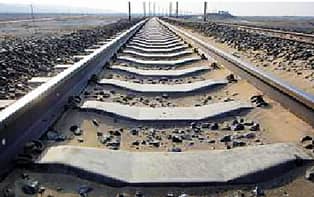
A rail carrying heavy traffic develops rolling contact fatigue cracks in its surface. If you do nothing, the cracks grow and the rail reaches the end of its life at around 140 million gross tonnes. The same rail, if its surface is ground on a schedule that removes the shallow cracks before they deepen, can carry traffic past 800 million gross tonnes, the practical wear limit. The difference is not a better rail. It is the same rail, treated differently.
The economics follow. Grinding costs money, but less than replacing a rail, and the life-cycle cost calculation lands in favour of grinding on almost any busy line. This is the quiet truth about service life: a large part of it is not fixed at the foundry. It is decided later, by the grinding interval, the lubrication plan, the inspection cycle.
So when someone asks how long a railway component lasts, the honest answer is a question back: which limit, on which line, with what maintenance?
The steel grade sets the ceiling. A head-hardened rail will out-wear a standard grade on the same curve, which is the point of choosing it. But the ceiling is only reached if the operating conditions let it be reached. A sharp curve, a heavy axle load, a wet or salty environment, a maintenance budget that skips grinding, any of these can pull the actual life far below what the material is capable of.
This is the thing that trips up procurement. A buyer compares two quotes and asks which railway component lasts longer. The honest answer is that the railway component is only half the story. The other half is the duty cycle it will actually see, and the maintenance it will actually get, and neither of those is on the supplier’s quotation.

If service life is partly a maintenance and duty question, then the buying decision should reflect that.
First, ask what the design life actually assumes. A “30 year” component assumes a certain tonnage, a certain axle load, a certain inspection interval. Ask the supplier to tell you what those assumptions were. If they cannot, the number is marketing.
Second, ask which limit the railway component is designed to reach first. A part designed to wear out gracefully is a different purchase from one designed to be retired by inspection. Both can be correct, but you should know which one you are buying, because it changes how you maintain it.
Third, ask for the material and the traceability behind it. A railway bolt grade only delivers its fatigue life if the material is what the certificate says, and the heat number is what connects the two.
Fourth, ask what the railway component’s environment does to it. Corrosion, temperature, and contamination are not afterthoughts; they are life-shorteners, and a railway component specified for a dry temperate line can behave very differently on a coastal or industrial route.
Whether you are specifying new components or replacing worn track parts, the worthwhile way to think about service life is as a chain. The material sets the ceiling, the design sets the load path, the environment sets the attack, and the maintenance sets how much of the ceiling you actually use.
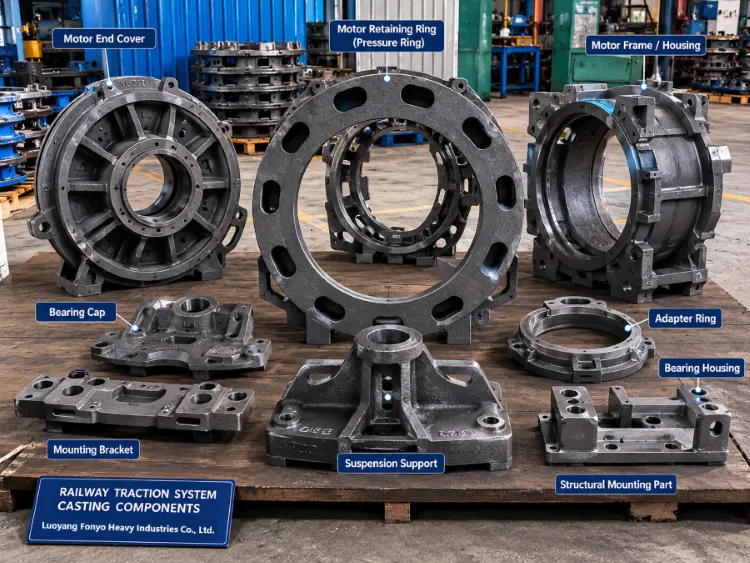
At FONYO, we manufacture railway components including railway wheels, fish plates, fish bolts, elastic rail clips, rail pads, and cast components such as side frames and bolsters. We work to customer drawings and the applicable standards, and we can review the material grade, heat treatment, and inspection requirements for your component before production.
If you send us a drawing, a specification, and the duty cycle the part will actually see, our engineers can tell you which standards apply and where the life-limiting factor in your application is most likely to sit.
How long does a railway component last?
It depends entirely on traffic, load, environment and maintenance. A rail can last from a few years on a sharp heavy-haul curve to fifty years or more on a lightly used line. There is no single answer, which is why the question is better asked in tonnes than in years.
What is MGT and why does it matter?
MGT stands for million gross tonnes, the total weight of traffic that has passed over a rail. It matters because rail fatigue and wear accumulate with load cycles, not with calendar time, so MGT is a far better predictor of remaining life than age.
Does a harder material always last longer?
Not automatically. Hardness resists wear, but it can come with trade-offs in toughness and crack resistance. A material only delivers a long life if it matches the duty, the environment and the maintenance. Hardness is one variable in a longer chain.
Why do two identical components last different lengths of time?
Because the component is only half the story. The duty cycle, the axle loads, the curvature, the climate, and the maintenance all differ between lines, and any one of them can move the retirement point by years.
Can maintenance really extend service life?
Yes, and often dramatically. Rail grinding, gauge-face lubrication and scheduled inspection routinely extend rail life by a large margin on busy lines, because they remove fatigue cracks and slow wear before they become failures.
What ends a component’s life first, wear or fatigue?
It depends on the component and the line. Wear dominates where there is sliding contact and curvature, fatigue dominates where loads cycle at high frequency. A well-designed part usually has a known answer to this question, and you should ask the supplier what it is.
Should I trust a “design life” number on a specification?
Only if you know the assumptions behind it. A stated design life assumes a certain tonnage, axle load and inspection regime. If the supplier cannot tell you what those assumptions were, treat the number as an estimate, not a guarantee.