Scan the WeChat code to contact us
Scan the WeChat code to contact us
Feel free to send us a email and we will reply to you as soon as possible.
Creating the future with heart and soul


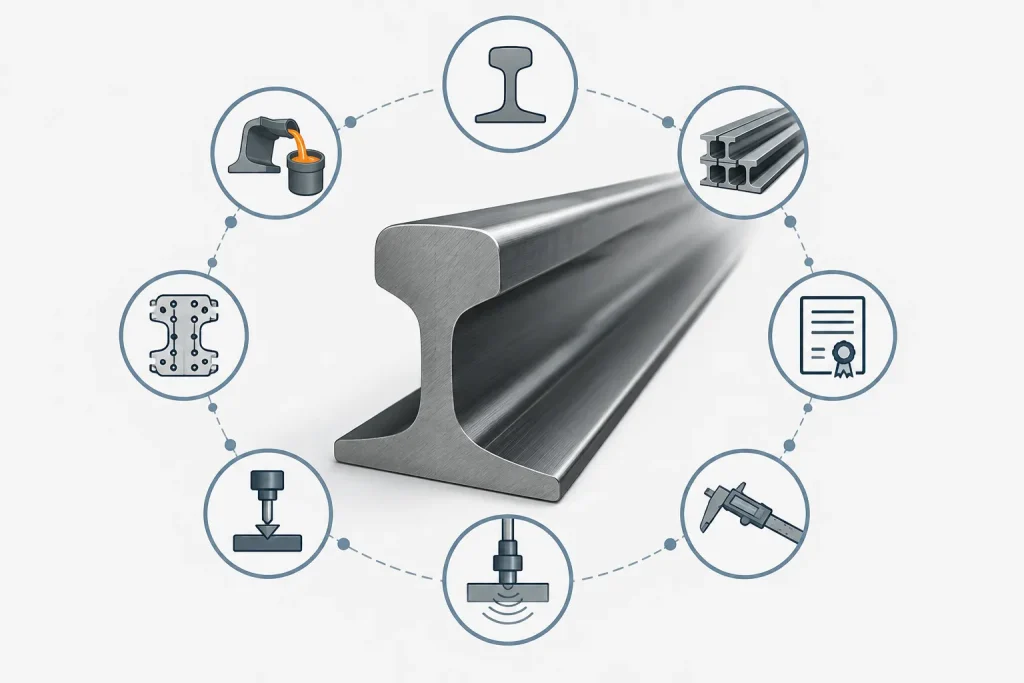
A railway rail specification is more than a weight and a steel grade. Before ordering, a buyer should verify the rail section and grade against the applicable standard, check that the material certificate is traceable to the production heat, confirm the dimensional and straightness tolerances, review the ultrasonic and hardness test reports, and confirm the welding procedure and drilling pattern. A rail that passes a certificate but fails one of these checks can fit the drawing and still cause problems in service.
If you have ever ordered rail and received a quotation that lists a section, a grade and a price, you have seen how easy it is to treat the specification as a finished thing. The supplier sent the numbers. The numbers look right. The order goes in.
At first glance, the check seems done.
In practice, a railway rail specification is not quite that straightforward.
A rail is a long, safety-critical component that will carry cyclic loads for decades. Its specification is not one number. It is a set of requirements that have to hold together: the section, the grade, the material certificate, the dimensions, the internal soundness, the welding procedure and the drilling pattern. A rail can have the right grade on the certificate and still be wrong for the project because one of those other things does not match.
So what should you actually check in a railway rail specification before you place the order?
The first two items on any rail quotation are the section and the steel grade, and they are easy to misread.
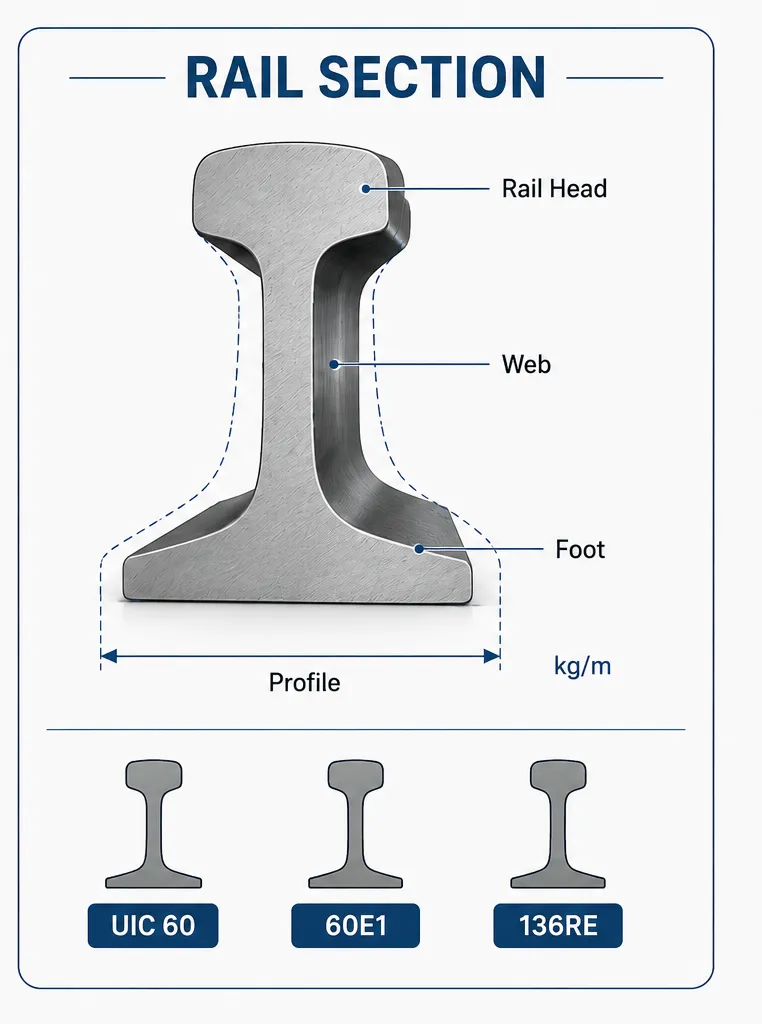
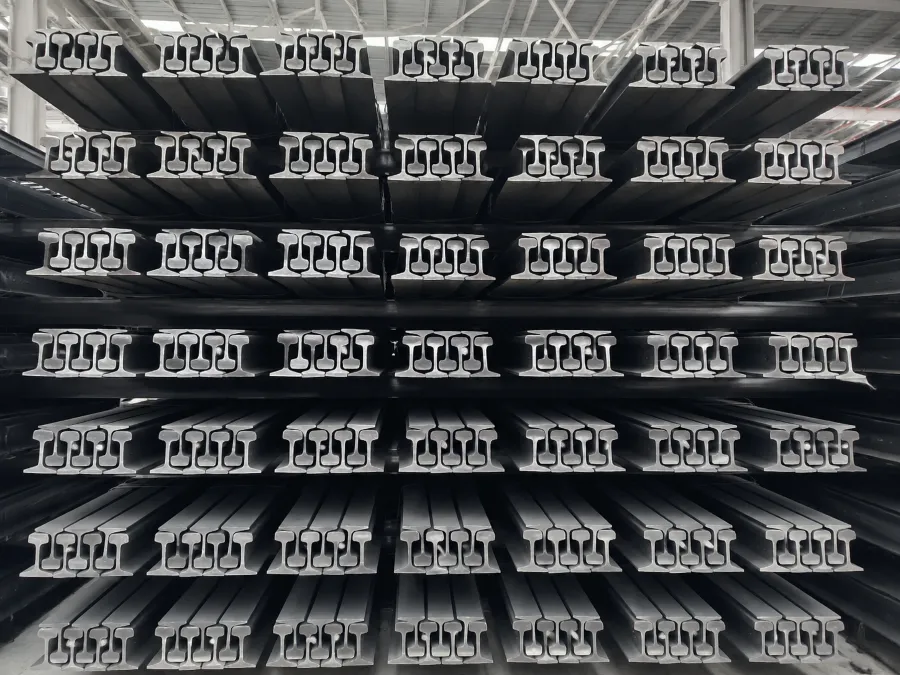
The section is the rail profile, expressed either in kilograms per metre (metric markets) or pounds per yard (North American practice). A UIC 60 or 60E1 rail is a different profile from a 136RE, even if the two are sometimes mentioned together. The section determines what fasteners fit, what the rail head geometry is, and what the rail weighs per length.
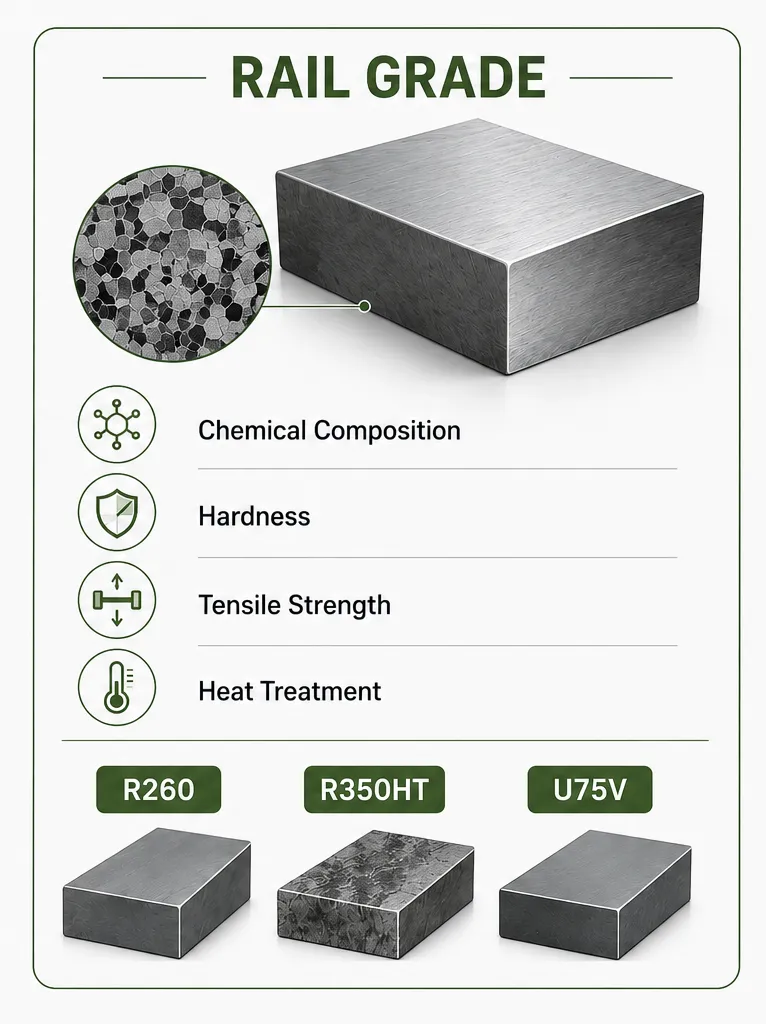
The grade is the steel specification: R260, R350HT, U71Mn, U75V and their equivalents under different standards. The grade determines the tensile strength, the hardness and, together with heat treatment, the wear life.
Two rails can share the same weight and have very different lives. The difference is the grade and the heat treatment. A standard carbon rail and a head-hardened rail are not the same product, even if the section number is identical.
This is also where the standards question comes in. A railway rail specification should be written against a standard: EN 13674, UIC 860, AREMA, ASTM or a national standard. The standard defines the tolerances, the test methods and the acceptance criteria. Without a standard, the numbers on the quotation have no reference to check them against.
Our guide to rail steel grades covers the grade selection in detail, including why a higher hardness number is not automatically the better choice.
The material certificate, or MTC, is the document that connects the rail to its production history. When I review a railway rail specification, this is where I look first.
The certificate should identify the applicable standard, the heat number, the chemical composition and the mechanical properties. If the project requires EN 10204 Type 3.1 or 3.2 certification, the certificate should match that requirement.
The point that matters most is traceability. The heat number on the certificate should match the marking on the delivered rail. The chemical composition and mechanical properties should belong to that specific heat, not to a representative heat from a different production run.
A certificate that looks too clean is worth a second look. If certificates from many different heats show exactly the same values with no normal production variation, that is a reason to ask questions. Real steel varies slightly from heat to heat, and a certificate that does not reflect that variation may not reflect the actual rail either.
A rail can have the correct grade on the certificate and still fail the project, because the dimensions are wrong. A railway rail specification is only as complete as its dimensional checks.
Rail profile, straightness, surface condition and end tolerances should be checked against the specified section. The profile determines whether the fasteners and fish plates will fit. The straightness determines how the rail lays in track and whether welding will be practical. Surface condition matters because cracks, scabs or folds on the running surface are the starting points for later problems.
Internal soundness is checked by ultrasonic testing. For critical rail, the UT report should be traceable to the applicable acceptance criteria, not a simple “UT passed” statement. The standard and the test requirements should be clear.
Hardness is another area where the certificate number is not the whole story. For heat-treated rail, a single surface hardness value does not tell you whether the hardening profile is consistent through the head. A hardness traverse from the surface toward the depth of the section shows whether the heat treatment achieved what the grade claims.
This is also where the process matters as much as the certificate. Our guide to railway rail manufacturing explains how the rolling and heat treatment stages shape the rail that ends up in your track.
Two parts of a railway rail specification are easy to overlook until they cause a problem: welding and drilling.
If the rails will be welded on site, confirm that the selected grade has a qualified welding procedure for the method being used, such as aluminothermic or flash-butt welding. A welding procedure qualified for one grade does not automatically transfer to another grade. The weld is where a rail can fail if the procedure is not matched to the material.
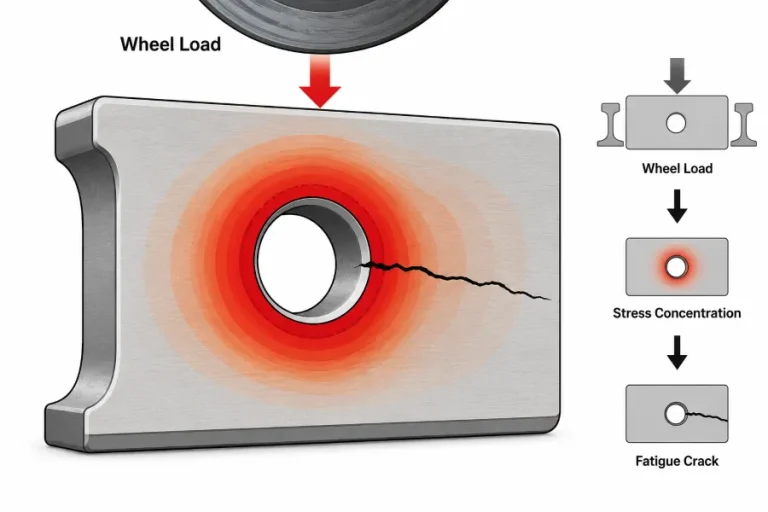
Drilling matters for jointed track. Fishbolt hole sizes and spacing vary by region and standard. An AREMA drilling pattern is different from a Chinese or European pattern. If the rail is drilled to the wrong pattern, the fish plates will not align, and the joint will be wrong from the first bolt.
The practical rule is to supply the drawing of your existing fish plates or joint bars when ordering rail. That single piece of information prevents most drilling mismatches, and it is one of the cheapest checks in the whole railway rail specification. Our guide to railway rail types covers the section families and their regional conventions.
There is no single checklist that fits every project, because every project has its own standard and its own operating conditions. But there is a reliable set of questions, and they apply to every railway rail specification regardless of region.
| Check | Why It Matters |
|---|---|
| Section and grade match the standard? | The standard defines the tolerances and test methods |
| Material certificate traceable to the heat? | Traceability connects the rail to its test records |
| Chemical composition and mechanicals on the MTC? | The grade is only real if the certificate proves it |
| Dimensions and straightness within tolerance? | Fit with fasteners and weldability depend on it |
| Ultrasonic test report with acceptance criteria? | Internal soundness is not visible from the outside |
| Hardness traverse for heat-treated rail? | A surface number does not prove the hardening profile |
| Welding procedure qualified for the grade? | A weld is only as good as its qualified procedure |
| Drilling pattern matches the fish plates? | The joint fails if the holes do not align |
These are starting points, not a universal specification. The final check should be made against the applicable standard and the project’s own requirements.
Imagine two rails with the same section and the same grade on paper. One comes with a certificate traceable to the heat, a UT report with acceptance criteria, and a hardness traverse that matches the grade. The other comes with a single-page certificate and no test reports. The first rail costs more, and it also gives you the information you need if something goes wrong later.
When comparing rail suppliers, I would not stop at asking for the grade and the price. Ask what the specification includes behind those two numbers.
A reliable supplier should be able to provide:
For larger projects, traceability matters most. If a rail develops a problem in service, the ability to trace it back to the heat and the test records is what makes the investigation possible. Our guide to railway track maintenance explains how that traceability supports the maintenance side of the same question.
A railway rail specification is a promise about how the rail will behave in service, and that promise is only as reliable as the checks behind it. The section and grade are the headline, but the material certificate, the dimensions, the internal soundness, the welding procedure and the drilling pattern are where the promise is actually kept or broken.
That is why I would not recommend ordering rail on the section and grade alone. Start with the standard. Check the certificate and the traceability. Confirm the dimensions, the UT report and the hardness data. Then match the welding and drilling to your existing system.
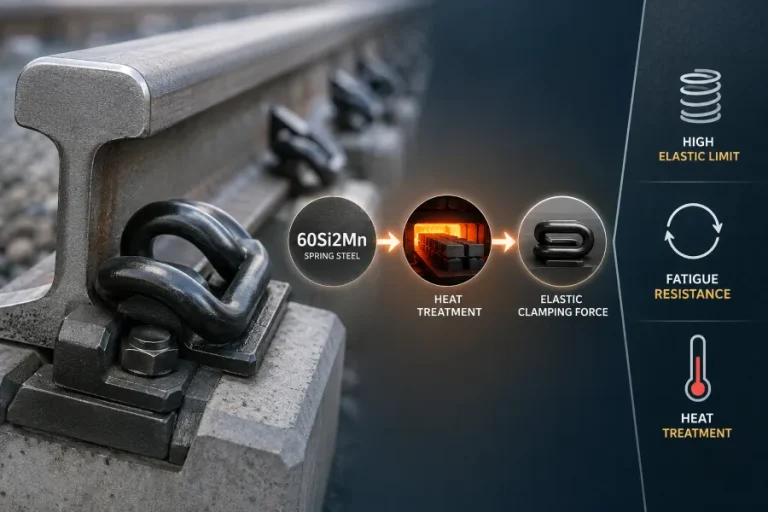
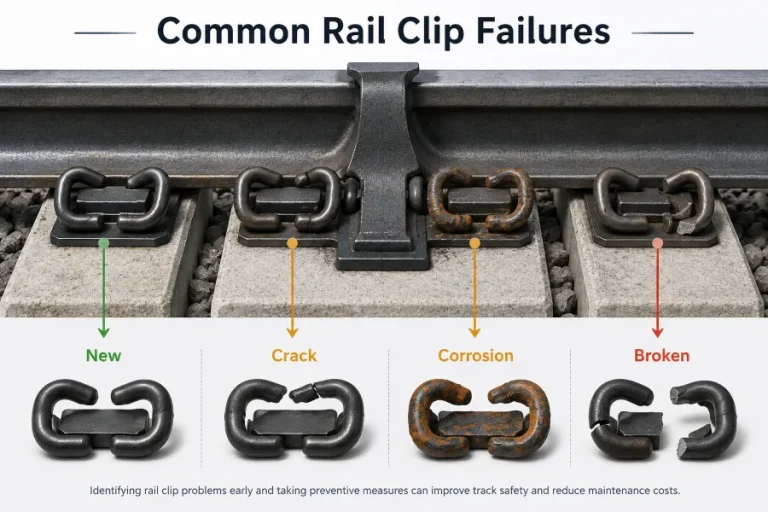
At FONYO, we manufacture fish plates and fish bolts that match specific rail sections and drilling patterns, together with elastic rail clips and rail pads, so the fastening side of your rail specification is consistent with the rail itself. For any rail and fastening requirement, we can review the section, grade, standard and drilling pattern before production.
If you have a rail drawing, a fish plate sample or an existing specification, send us the details. Our engineering team can help check the required rail section, grade and fastening compatibility before quotation.
Check the section and grade against the applicable standard, the material certificate and its traceability to the heat, the dimensional and straightness tolerances, the ultrasonic and hardness test reports, the qualified welding procedure, and the drilling pattern against your fish plates.
The section is the rail profile, expressed in kg/m or lb/yd, and determines the geometry and weight. The grade is the steel specification, such as R260 or R350HT, and determines the strength, hardness and wear life. Two rails can share a section but have different grades and different lives.
The material certificate connects the rail to its production history. The heat number should match the marking on the delivered rail, and the chemical and mechanical values should belong to that heat. Without traceability, a rail cannot be investigated if it fails later.
Rail is specified against standards such as EN 13674, UIC 860, AREMA and ASTM, plus national standards like GB/T 2585. The standard defines the tolerances, test methods and acceptance criteria that the specification is checked against.
No. A harder, heat-treated rail wears more slowly, but the wheel and rail work as a pair, and the contact conditions, the wheel profile and the maintenance regime all matter. Harder is not automatically better for every line.
Fishbolt hole sizes and spacing vary by region and standard. If the rail is drilled to the wrong pattern, the fish plates will not align and the joint will be wrong from the first bolt. Supplying your fish plate drawing prevents most drilling mismatches.
Ask for the section and grade referenced to the standard, the material certificate with heat number, the chemical composition, the ultrasonic test report, dimensional and hardness records, the qualified welding procedure, and the drilling pattern details.