Scan the WeChat code to contact us
Scan the WeChat code to contact us
Feel free to send us a email and we will reply to you as soon as possible.
Creating the future with heart and soul


Choosing a railway parts supplier is one of the most important decisions in any railway project. Whether you are purchasing forged railway wheels, cast steel bogie components, couplers, rail fastening systems, or custom-engineered railway parts, the supplier you select will influence far more than the purchase price.
From my experience in railway manufacturing, procurement problems rarely begin after a component arrives at the job site. They usually start much earlier—during supplier selection. A quotation may look attractive on paper, but if the manufacturer lacks process control, technical expertise, or stable production capacity, the real cost often appears later through delayed deliveries, inconsistent quality, or expensive replacements.
This is especially true for safety-critical railway components. Unlike general industrial products, railway parts are expected to perform reliably under repeated dynamic loads, harsh weather conditions, and years of continuous service. Even a small variation in material quality, heat treatment, or machining accuracy can affect service life.
Many buyers naturally compare prices before making a decision, and that is understandable. However, experienced procurement engineers usually ask a different question first: Can this supplier consistently manufacture components that meet our technical requirements?
The answer is rarely found in a quotation sheet alone.
Over the years, we have worked with customers from freight railways, passenger rolling stock manufacturers, mining operations, and industrial transportation projects. Although every project has different specifications, the evaluation process is surprisingly similar. Before placing an order, experienced buyers tend to focus on seven key areas that reveal whether a supplier can become a reliable long-term manufacturing partner.
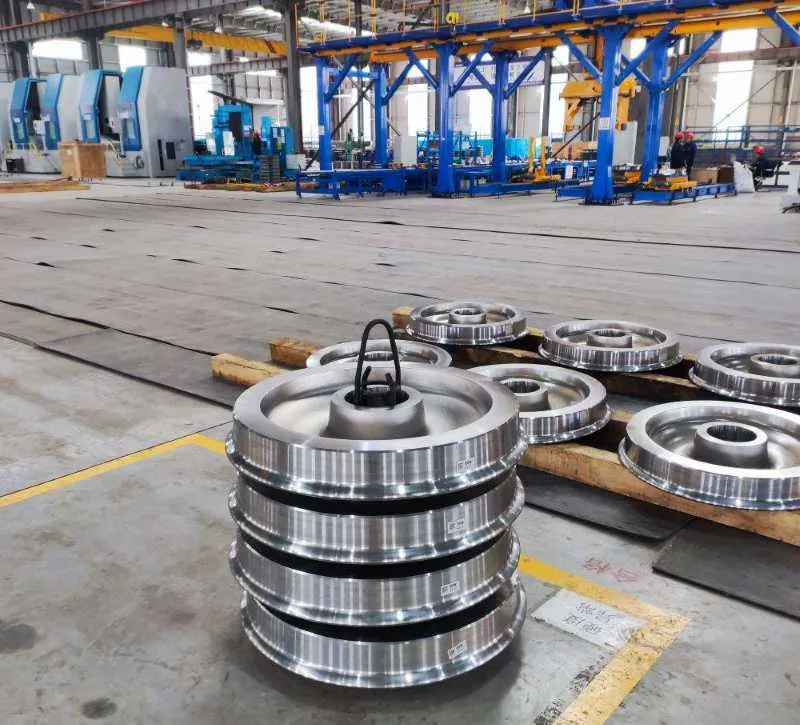
One of the first questions I encourage buyers to ask is not “How large is your factory?” but “Which manufacturing processes do you control yourself?”
These two questions may sound similar, yet they reveal very different things.
Some suppliers own impressive workshops but outsource critical operations such as heat treatment, precision machining, or non-destructive testing. Others may appear smaller yet manage every key production stage internally. From an engineering perspective, the second situation often provides much better quality consistency.
Take a forged railway wheel as an example. Before it is ready for service, it passes through multiple manufacturing stages. Steel is first melted and refined to achieve the required chemical composition. The billet is then forged under controlled temperatures to obtain the desired grain flow and mechanical properties. Heat treatment follows to develop the correct hardness and microstructure. After that come CNC machining, dimensional inspection, ultrasonic testing, magnetic particle inspection, balancing, and final quality verification.
Every one of these processes influences the final performance of the wheel. If several stages are completed by different subcontractors, maintaining consistent quality becomes much more challenging. Small variations in heat treatment parameters or machining tolerances can affect wear resistance, fatigue strength, and ultimately the service life of the component.
For this reason, experienced buyers usually spend less time counting CNC machines and more time understanding how production is organized. They want to know whether raw materials are traceable, whether inspection records follow each component throughout production, and whether technical issues can be resolved directly by the manufacturer instead of being passed between different suppliers.
An integrated manufacturing system also offers practical advantages beyond quality. Production schedules are easier to coordinate, technical changes can be implemented more quickly, and communication becomes much more efficient when engineering, manufacturing, and quality control teams work within the same organization.
When visiting a railway parts manufacturer, I always recommend asking to see the complete production flow rather than a showroom of finished products. Watching how raw steel becomes a finished railway component often tells you far more about a supplier’s capabilities than any company brochure ever will.
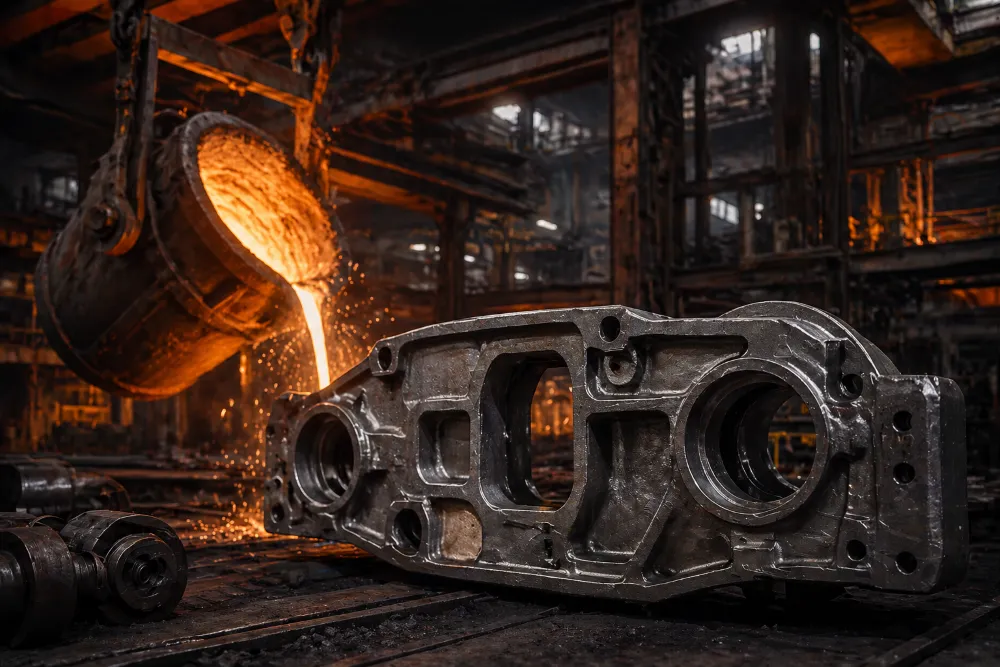
One of the biggest misconceptions in industrial procurement is that quality is determined during the final inspection. In reality, final inspection only confirms the result of everything that happened earlier in production. If the manufacturing process is not properly controlled, no inspection at the end can completely eliminate the risk.
This is particularly important for railway components. Products such as railway wheels, bogie castings, axle boxes and couplers are subjected to millions of loading cycles throughout their service life. Their reliability depends not only on the finished dimensions but also on the internal quality of the material.
A reliable railway parts supplier therefore builds quality into every stage of production instead of relying solely on end-of-line inspection.
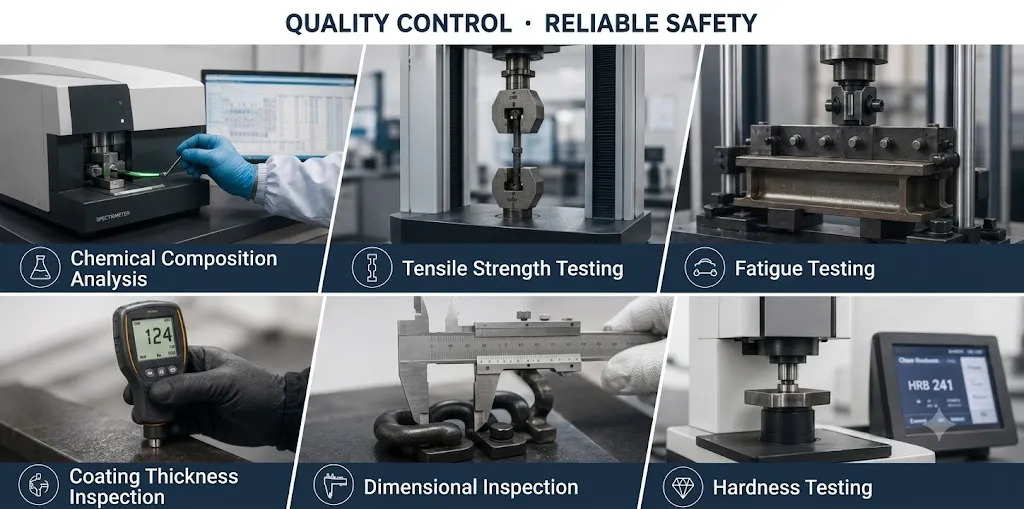
The process begins with raw material verification. Before production starts, the chemical composition of the steel must be checked to ensure it meets the specified grade. Even slight variations in carbon, manganese or alloying elements can influence hardness, toughness and fatigue performance after heat treatment.
During manufacturing, process control becomes equally important. Forging temperature, casting parameters, heat treatment cycles and machining tolerances all have a direct impact on the final properties of the component. These parameters should be monitored, recorded and reviewed rather than adjusted purely by operator experience.
Only after the manufacturing process has been completed should the component move to inspection.
At this stage, non-destructive testing plays a vital role. Ultrasonic Ultrasonic Testing (UT) is widely used to detect internal defects, while Magnetic Particle Testing (MT) helps reveal surface cracks that may not be visible to the naked eye. Although both methods are commonly used in railway manufacturing, they serve different purposes and are often used together to provide a more complete assessment of component quality.
If you would like to understand how these two inspection methods differ, you may also find our article “UT vs. MT: What’s the Difference in Railway Component Inspection?“ helpful.
However, experienced buyers rarely stop at asking whether a supplier owns UT or MT equipment. A more meaningful question is how those inspections are integrated into the quality management system.
For example, are inspection records linked to individual batch numbers? Can every finished component be traced back to its raw material certificate? Are non-conforming products isolated and documented? These procedures often reveal far more about a manufacturer’s quality culture than a simple list of testing equipment.
In my experience, manufacturers with well-established quality systems are usually willing to explain their inspection process in detail and share sample reports with customers. Transparency is often a good indicator that quality management is treated as an everyday discipline rather than a marketing slogan.
For buyers unfamiliar with non-destructive testing, we also explain how these inspection methods help prevent failures in our article How NDT Methods Ensure Excellent Quality of Railway Castings
How NDT and Non-Destructive Quality Inspection Guarantee Railway Wheels
Almost every railway parts supplier claims to manufacture according to international standards. On company websites, it is common to see references to AAR, EN, UIC, ISO, ASTM or other well-known specifications.
While these certifications are certainly important, they do not tell the whole story.
From an engineering perspective, there is a significant difference between being familiar with a standard and having years of practical experience manufacturing products that comply with it.
Take railway wheels as an example. A wheel produced for the North American market may follow AAR requirements, while a similar-looking wheel supplied to Europe may need to comply with EN standards. Although both products perform the same basic function, the detailed requirements can differ considerably. Material grades, heat treatment methods, hardness ranges, dimensional tolerances, testing procedures and documentation requirements may all vary depending on the applicable standard.
Our detailed guide “Complete Guide to Railway Wheel Standards: AAR, EN, UIC, GOST and More“ explains the major standards used around the world.
The same applies to cast steel components, rail fastening systems and other railway parts. Two drawings may appear almost identical, yet the manufacturing route required to satisfy different customer specifications can be quite different.
This is why experienced procurement engineers often move beyond asking, “Which standards can you meet?” Instead, they ask questions such as:
“Which countries have you supplied?”
“Have you manufactured this type of component under this specification before?”
“Can you explain the inspection requirements defined in this standard?”
Suppliers with genuine project experience usually answer these questions confidently because they have encountered similar technical challenges in previous projects. Rather than simply quoting standard numbers, they can discuss practical issues such as material selection, machining allowances, heat treatment parameters and inspection acceptance criteria.
Another point that is often overlooked is documentation.
International railway projects frequently require complete manufacturing records, including material certificates, heat treatment reports, dimensional inspection records, non-destructive testing reports and mechanical property test results. Preparing these documents accurately requires experience with both manufacturing and customer compliance requirements.
For global buyers, selecting a railway parts supplier with proven export experience often reduces project risk considerably. It minimizes the possibility of production delays caused by documentation issues, failed inspections or misunderstandings about technical specifications.
In other words, certificates may open the door to a project, but proven manufacturing experience is what keeps that project moving successfully.
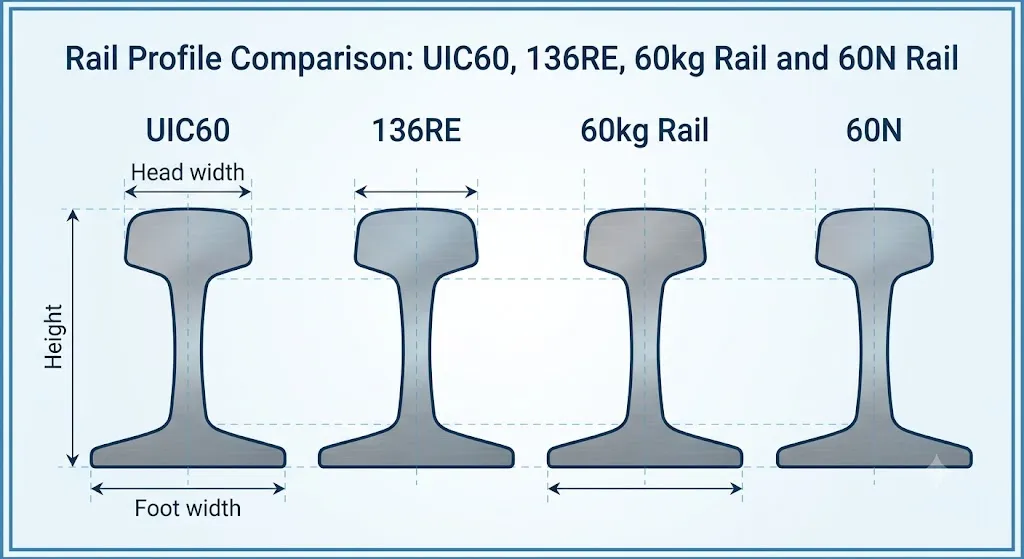
Not every railway project begins with a complete set of manufacturing drawings.
In many cases, buyers are replacing worn components that have been in service for years. Original drawings may no longer be available, standards may have changed, or the new component may need to fit an upgraded vehicle or track system. Under these circumstances, manufacturing capability alone is no longer enough. Engineering support becomes just as important.
I have seen projects where customers initially requested an exact copy of an existing component. After reviewing the drawing together, we found that several dimensions could be adjusted to improve machining efficiency without affecting installation or performance. In another case, a material specified many years ago was difficult to source consistently, but an equivalent grade meeting the same mechanical requirements reduced both lead time and procurement cost.
These are not unusual situations. They are part of everyday engineering work.
A capable railway parts supplier should be able to review drawings critically rather than treating them as fixed instructions. Manufacturing engineers often identify opportunities to improve production efficiency, reduce unnecessary machining, optimise casting design, or recommend alternative materials that better suit the application.
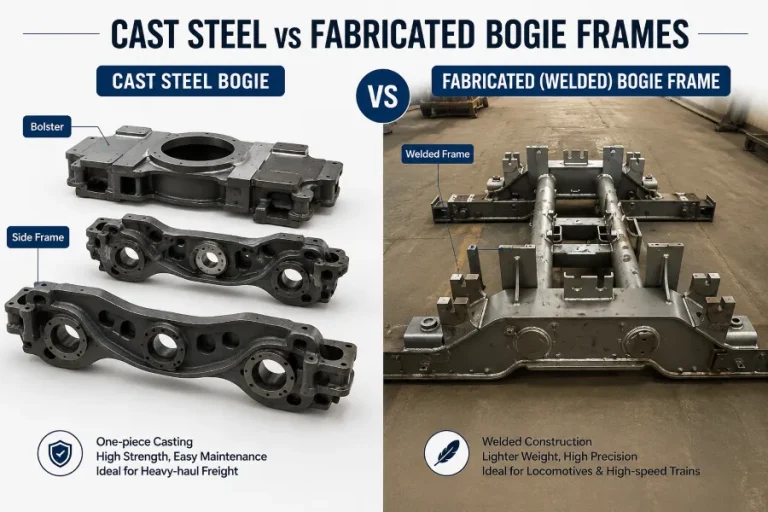
For cast steel components, this may involve modifying draft angles or wall thicknesses to improve casting quality. For forged railway wheels, it could mean adjusting machining allowances or recommending a different heat treatment route based on the required service conditions. Even relatively simple products such as rail clips or fastening components may benefit from small design improvements that extend fatigue life or simplify installation.
Another important capability is reverse engineering.
Railway systems around the world include equipment that has been operating for decades. Spare parts are often unavailable, and original manufacturers may no longer exist. In these situations, an experienced supplier can recreate components from physical samples, worn parts or customer drawings by combining 3D scanning, dimensional measurement and manufacturing expertise.
From a buyer’s perspective, this type of technical support provides value long before production begins. Engineering discussions held during the quotation stage often prevent expensive modifications, delivery delays or installation problems later in the project.
When evaluating a supplier, I usually pay close attention to the questions they ask.
If a supplier only asks, “How many pieces do you need?”, the conversation is likely focused on price.
If they ask about operating conditions, axle loads, service environment, maintenance requirements or applicable standards, they are thinking like engineers. That difference often determines the success of the project.
When engineering support involves railway wheels, manufacturing experience becomes particularly important. The design of the wheel is only one part of the process. Forging, heat treatment, machining and microstructure control all influence the final performance.
Readers interested in the manufacturing process can continue with our guide “How Forged Railway Wheels Are Manufactured.”
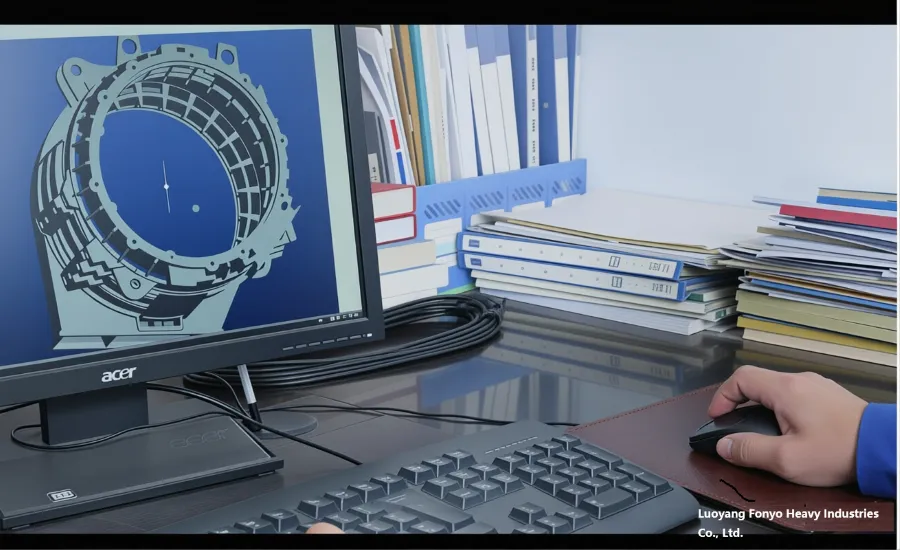
Delivery time is one of the first figures buyers compare when reviewing quotations. Every supplier wants to offer a competitive lead time, but from a manufacturing perspective, the number written on a quotation is only meaningful if it is supported by realistic production planning.
In railway manufacturing, production is rarely a single process. A forged wheel, for example, moves through material preparation, forging, heat treatment, machining, inspection, painting, packaging and export documentation before it is ready to leave the factory. Cast steel components follow a different route but face similar coordination challenges between mould preparation, casting, heat treatment, machining and quality inspection.
Each stage depends on the one before it. If heat treatment is delayed by two days, machining cannot begin. If inspection identifies a dimensional issue, corrective work may be required before packaging. A realistic delivery schedule must account for all of these steps rather than assuming that everything will proceed perfectly.
This is why experienced buyers often ask how production is managed instead of simply asking for the shortest delivery time.
Manufacturers with integrated production planning systems can monitor work in progress, coordinate different workshops and identify potential bottlenecks before they affect the final schedule. Regular communication between production, engineering and quality departments also makes it easier to respond when design changes or urgent orders arise.
Export experience adds another layer of reliability.
For international shipments, manufacturing is only part of the timeline. Export packaging, container loading, customs documentation and shipping arrangements all need to be completed accurately. A supplier that regularly exports railway components is usually familiar with these procedures and can anticipate potential issues before they become delays.
Communication also plays an important role.
During production, buyers appreciate updates that provide meaningful information rather than generic statements such as “everything is on schedule.” Progress photographs, production milestones, inspection reports and estimated completion dates help customers plan installation, transportation and project management with greater confidence.
In my experience, suppliers who communicate openly about production progress are also more likely to communicate honestly when unexpected issues arise. Manufacturing projects do not always go exactly as planned, but transparent communication allows problems to be solved before they become costly surprises.
Ultimately, reliable delivery is not achieved by making ambitious promises. It is achieved through disciplined production management, realistic scheduling and consistent communication throughout the entire manufacturing process.
When procurement teams compare quotations, unit price is naturally one of the first figures they notice. Budget matters in every project, and there is nothing wrong with looking for competitive pricing. However, after working with railway components for many years, I have found that the lowest quotation and the lowest overall cost are rarely the same thing.
A railway component is expected to remain in service for years, sometimes even decades. Its value is measured not only by the purchase price but also by its reliability throughout its operating life.
Imagine two suppliers offering what appears to be the same railway wheel. One quotation is 10% lower than the other. At first glance, the cheaper option seems like an easy decision. But if that wheel experiences premature wear, requires earlier replacement or causes unexpected maintenance downtime, the initial savings disappear very quickly. In many cases, the cost of replacing a failed component is significantly higher than the price difference between the two suppliers.
The same principle applies to cast steel bogie components, couplers, rail fastening systems and other safety-critical railway parts. Material quality, heat treatment consistency, machining accuracy and inspection standards all influence long-term performance. These factors are difficult to evaluate from a quotation sheet, yet they often determine the real cost of ownership.
This is why experienced buyers tend to evaluate suppliers from a broader perspective. They consider manufacturing capability, quality management, technical support, delivery reliability and after-sales communication alongside pricing. A supplier that consistently delivers reliable products can reduce maintenance costs, minimise operational interruptions and simplify future procurement.
In other words, the most economical supplier is not necessarily the one offering the lowest initial price. It is the one that provides the greatest long-term value.
Sometimes a lower quotation is achieved simply by selecting a different material.
However, choosing between ductile iron and cast steel should never be based on price alone. Different materials provide very different mechanical properties and service life depending on the application.
If you are comparing these materials, our article “Casting vs Forging: Differences and Applications in Railway Components“ offers a practical engineering comparison.
Successful railway projects are rarely built on a single purchase order.
Whether the project involves freight wagons, passenger rolling stock, metro systems or industrial railways, requirements often change over time. New drawings are released, production volumes increase, replacement railway parts become necessary and technical standards continue to evolve. A supplier that only fulfils orders may struggle to adapt to these changes, while a true manufacturing partner grows alongside the customer’s business.
Over the years, I have noticed that the strongest customer relationships are based on technical communication rather than transactional purchasing. Buyers who regularly share application requirements, operating conditions and future project plans often receive better engineering support because the manufacturer understands the broader objectives rather than simply producing individual components.
A long-term manufacturing partner also accumulates valuable knowledge about your products. They become familiar with your drawings, inspection requirements, preferred materials and documentation standards. As a result, future projects can move more efficiently, with fewer technical clarifications and shorter development cycles.
Another advantage is continuous improvement.
As manufacturing technologies evolve, experienced suppliers often recommend process improvements that benefit their customers. This could involve optimising a casting design to improve yield, introducing a more efficient machining process, enhancing heat treatment consistency or recommending alternative materials that improve performance without increasing cost. These improvements are difficult to achieve in a purely transactional relationship because they require trust, communication and a shared commitment to long-term success.
When evaluating a railway parts supplier, ask yourself one final question:
Are you selecting a company to manufacture your next order, or are you choosing a partner that can support your railway projects for the next ten years?
The answer often influences far more than the outcome of a single purchase.
At Luoyang FONYO Heavy Industries Co., Ltd., we believe that manufacturing railway components is only part of our responsibility. Equally important is helping customers reduce technical risks before production begins and ensuring that every component is manufactured consistently from raw material to final inspection.
With more than two decades of experience in railway manufacturing, we produce forged railway wheels, cast steel railway bogie parts, rail fastening systems, couplers, and customised OEM railway products for customers in different international markets. Our manufacturing capabilities include casting, forging, heat treatment, CNC machining, non-destructive testing and complete dimensional inspection, allowing every stage of production to remain under controlled quality management.
Whether you are developing a new railway project, replacing existing components or looking for a long-term manufacturing partner, our engineering team is ready to discuss your technical requirements and recommend practical manufacturing solutions.
Look beyond pricing. Review the supplier’s manufacturing capabilities, quality management system, engineering expertise, export experience, production capacity and ability to meet the railway standards required for your project.
The required certifications depend on your market and application. More importantly, verify that the manufacturer has practical experience producing components that comply with standards such as AAR, EN, UIC, ISO or other project-specific specifications.
Non-destructive testing helps identify internal and surface defects without damaging the component. Methods such as Ultrasonic Testing (UT) and Magnetic Particle Testing (MT) improve quality assurance and reduce the risk of defects entering service.
Yes. Many experienced manufacturers provide OEM and custom manufacturing services based on customer drawings, technical specifications or reverse engineering of existing components.
Discuss manufacturing processes, inspection methods, production lead time, material traceability, export experience, technical support and quality documentation. These topics provide a much clearer picture of a supplier’s capabilities than price alone.