Scan the WeChat code to contact us
Scan the WeChat code to contact us
Feel free to send us a email and we will reply to you as soon as possible.
Creating the future with heart and soul


In railway and heavy equipment manufacturing, material selection is always a balance between mechanical performance, manufacturability, and cost. In many structural casting applications, medium carbon cast steel remains one of the most widely used material groups.
Among these materials, ZG270-500 is a commonly selected grade in China for railway and industrial components. It is not a high-alloy steel, nor is it designed for extreme wear resistance. Instead, it is used because it provides a stable and practical combination of strength, toughness, and casting performance.
This article explains how this type of material is used in railway applications and why it continues to be relevant in modern engineering.

Medium carbon cast steel generally refers to cast steel materials with a carbon content in the approximate range of 0.25% to 0.60%.
From an engineering point of view, this category sits between low carbon steels and high carbon steels. Low carbon steels are easier to weld and form but have limited strength. High carbon steels offer higher hardness but tend to become more brittle and difficult to process.
Medium carbon cast steels are used when designers need a balance rather than an extreme property. In real manufacturing environments, this balance is often more important than achieving the highest possible mechanical values.
For this reason, medium carbon cast steel is widely used in structural components that must withstand continuous loading, vibration, and long service life.
Yes. ZG270-500 is generally classified as a medium carbon cast steel.
In practical terms, its mechanical strength level places it above basic structural steel grades, while still remaining within a range that allows stable casting and machining.
The designation itself reflects its basic performance level:
This level of strength is typically sufficient for structural railway components that are not directly part of wheel-rail contact systems but still carry significant mechanical loads.
In many engineering applications, this grade is selected not only for its strength, but also because it behaves predictably during casting, cooling, and machining.
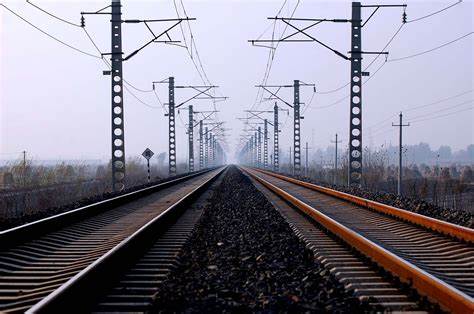
In railway manufacturing, medium carbon cast steel is mainly used for structural and load-bearing components where reliability and manufacturability are both important.
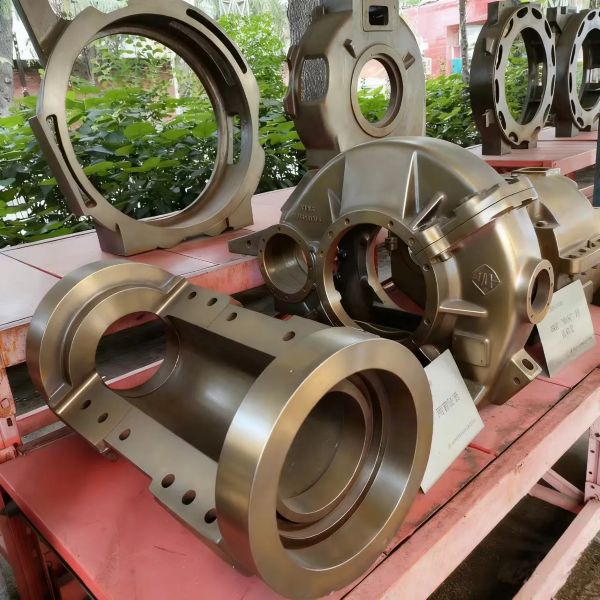
In bogie systems, for example, several non-critical but structurally important parts may use this type of material. These components are exposed to repeated vibration and dynamic loading during operation, but they are not subjected to extreme contact stress like wheels or axles.
Because of this, engineers tend to prioritize stability and production consistency rather than pushing material strength to the highest possible level.
In brake systems and auxiliary structures, similar considerations apply. The material must maintain dimensional stability over time and allow machining adjustments if needed during assembly or maintenance.
Outside of railway vehicles, this material is also commonly found in industrial transport systems, mining equipment, and heavy machinery structures where large castings are required.
Although modern low-alloy cast steels offer higher mechanical performance, medium carbon cast steels like ZG270-500 remain widely used in industry.
The reason is not that higher-grade materials are unavailable, but rather that engineering decisions are rarely based on strength alone.
In many cases, production cost, casting reliability, welding repair capability, and machining efficiency have a direct impact on the overall feasibility of a design.
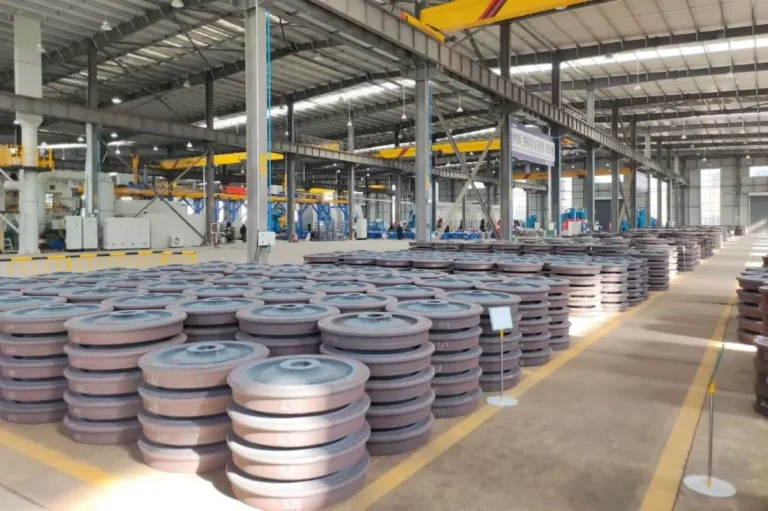
From a manufacturing perspective, ZG270-500 is a mature and stable material. Foundries have long-term experience with its casting behavior, and its processing parameters are well understood. This reduces uncertainty in production, especially for large or complex components.
In maintenance scenarios, its relatively good weldability also allows repair work when necessary, which is an important consideration for heavy-duty equipment used in long service cycles.
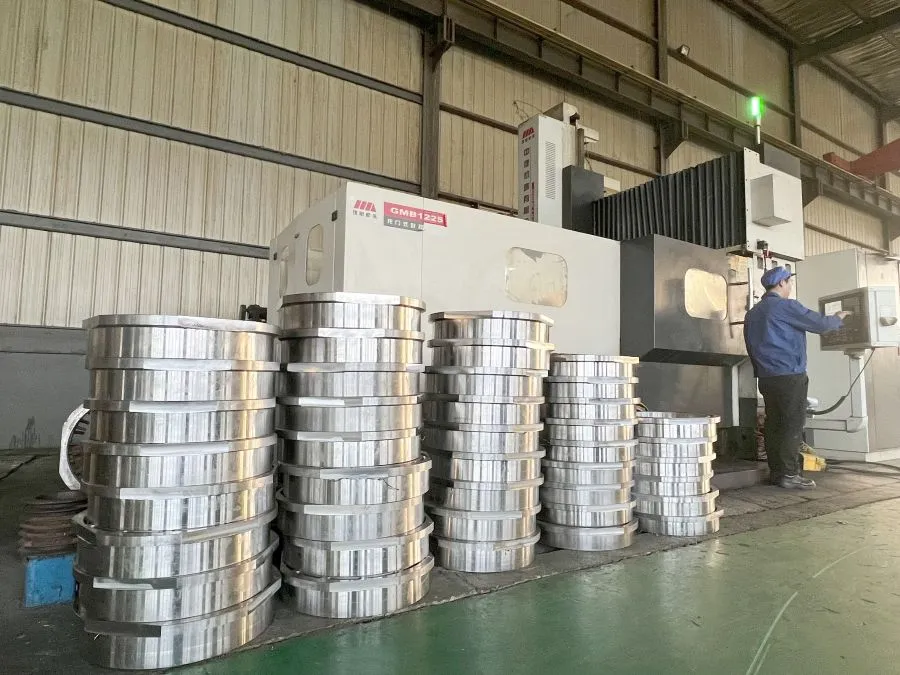
In international engineering communication, ZG270-500 is often compared with similar grades in other standards. These comparisons are useful for reference, but they should not be treated as exact equivalence.
In Japanese standards, it is commonly associated with SC46 or SC480 depending on interpretation and heat treatment condition. In ASTM standards, similar strength levels can be found in grades such as A27 Grade 70-40.
However, it is important to understand that different standards define chemical composition, heat treatment conditions, and testing requirements differently. Therefore, final material selection should always be based on the actual technical specification rather than name equivalence alone.
In practical engineering, medium carbon cast steel and low alloy cast steel often appear in similar applications, but their design logic is different.
Medium carbon cast steel is generally chosen when the focus is on cost efficiency and manufacturing stability. It performs well in structural applications where loads are moderate and design margins are well understood.
Low alloy cast steels, on the other hand, are selected when higher fatigue resistance, improved toughness, or better performance under extreme conditions is required.
In railway manufacturing, both material types are commonly used, but they are not interchangeable without engineering verification.
In real railway production environments, material selection is rarely based on theoretical maximum performance. Instead, it is based on long-term operational experience and manufacturing feasibility.
ZG270-500 continues to be used because it provides predictable performance at scale. For large cast components, predictability during production is often more valuable than marginal improvements in strength.
This is especially true for structural parts where failure risk is low but production volume is high. In such cases, consistency and cost control become key engineering considerations.
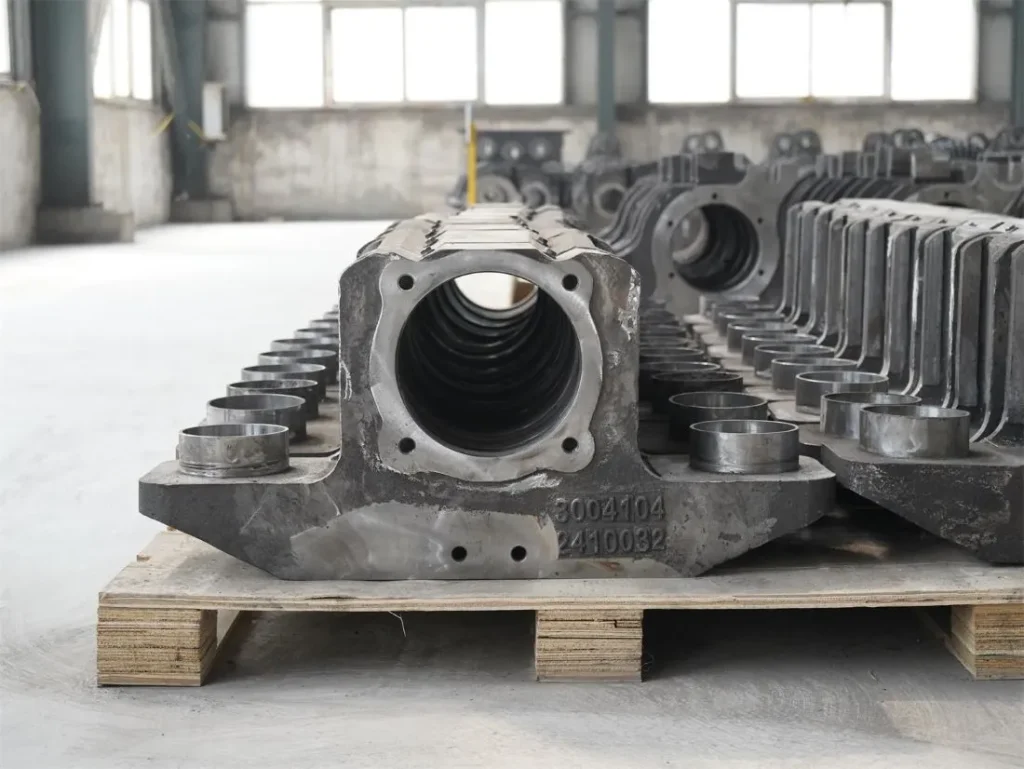
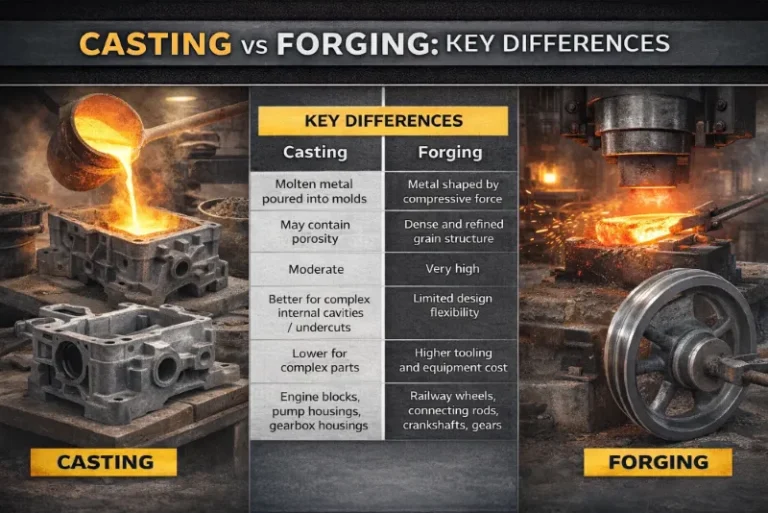
We specialize in railway wheel systems, forged and cast components, and heavy industrial steel parts. If you have any requirement about the railway components such as bogie components, railway wheels, or casting and forging industrial steel parts our engineering team of Luoyang Fonyo Heavy Industries Co., Ltd.can assist with both design review and production feasibility assessment.
You may visit our website www.railwaypart.com to get more information about us. If you are interested in any of our products, please contact us, our engineering team will be here to help you.