Bizimle iletişime geçmek için WeChat kodunu tarayın
Bizimle iletişime geçmek için WeChat kodunu tarayın
Bize e-posta göndermekten çekinmeyin; size en kısa sürede cevap vereceğiz.
Geleceği kalp ve ruhla yaratmak


Demiryolu mühendisliğinde yeterince uzun süre çalışıyorsanız, bir model fark etmeye başlarsın. Küresel lojistik belirsizleştiğinde, demiryolu taşımacılığı aniden yeniden gerekli hale geldi. What might seem like a traditional transportation system often turns out to be one of the most resilient parts of modern infrastructure.
Son yıllarda, geopolitical tensions, shipping disruptions, and rising transportation costs have pushed governments and logistics companies to rethink how goods move across continents. Onlarca yıldır, global trade has depended heavily on maritime shipping. But when key sea routes become unstable, supply chains begin searching for alternatives. Increasingly, rail freight is emerging as one of the most reliable options.
Two strategic maritime regions illustrate this challenge particularly well: the Strait of Hormuz and the Red Sea. These areas connect critical global trade routes, including access to the Suez Canal. When tensions rise in these regions, shipping insurance increases, transit times become unpredictable, and supply chains face delays.
From an engineering and infrastructure perspective, these vulnerabilities highlight an important reality: global logistics systems need redundancy. That is precisely why rail freight corridors across Eurasia are gaining renewed attention.
As rail freight networks expand, reliable rolling stock components become increasingly important. Critical parts such as demiryolu tekerlekleri, axles box, and bogie components must withstand heavy loads and long-distance operations.

Global maritime shipping still carries the majority of international trade. Fakat, dar geçit noktalarına güvenmek yapısal risk yaratıyor. Stratejik bir konumdaki tek bir aksaklık, küresel lojistiği haftalarca etkileyebilir.
Gemiler Süveyş Kanalı'ndan geçmek yerine Afrika'nın etrafından dolaşmak zorunda kaldığında, Asya ve Avrupa arasındaki nakliye süreleri artabilir 10 ile 15 günler. Tam zamanında üretime dayalı endüstriler için, bu tür gecikmeler son derece maliyetli olabilir.
Demiryolu yük ağlarının kritik bir avantaj sağladığı nokta burasıdır. Demiryolu koridorları, korsanlık gibi denizcilik risklerine maruz kalmayan, kontrollü altyapı ağları üzerinde çalışmaktadır., deniz çatışmaları, veya uzun sapmalar. Demiryolu deniz taşımacılığının yerini tamamen alamasa da, deniz yolları istikrarsız hale geldiğinde yükün önemli bir bölümünü absorbe edebilir.
Mühendislik perspektifinden, demiryolları öngörülebilir rotalar sağlar, planlanmış operasyonlar, ve nispeten istikrarlı geçiş süreleri. These characteristics make rail freight particularly attractive for high-value goods, endüstriyel ekipman, and time-sensitive cargo.
One of the most visible examples of expanding rail freight infrastructure is the China–Europe Railway Express. This international rail network connects manufacturing centers in Asia with logistics hubs across Europe.
Typical rail freight transit times between China and Europe range from 12 ile 18 günler. This is significantly faster than maritime shipping, which can take more than a month. Aynı zamanda, rail freight is much more cost-effective than air cargo.
But speed is not the only advantage. Rail freight also offers stability. Once a rail corridor is established, operations can run on consistent schedules regardless of maritime conditions. For manufacturers and supply chain planners, this predictability is extremely valuable.
Fakat, maintaining these long-distance rail freight routes requires robust infrastructure. Tracks must support heavy axle loads over thousands of kilometers. Rolling stock must operate reliably across deserts, mountain ranges, and freezing winters. These engineering challenges place significant demands on railway equipment and components.
In addition to northern Eurasian routes, another corridor has been gaining global attention: the Middle Corridor. This route connects Asia and Europe through the Caspian Sea.
The corridor passes through several countries, including Kazakhstan, Azerbaycan, Georgia, and Turkey, before reaching European markets.
Unlike traditional shipping routes, the Middle Corridor combines multiple transportation systems:
For engineers and infrastructure planners, this corridor represents a major opportunity but also a complex challenge. Rail systems must integrate seamlessly with ports and logistics centers while maintaining high throughput.
Governments along the route are investing heavily in upgrading rail infrastructure, modernizing signaling systems, and expanding freight terminals. As these improvements continue, rail freight along the Middle Corridor is expected to grow significantly in the coming years.

Another region investing heavily in railway infrastructure is the Middle East. Several countries in the Gulf region have launched large-scale railway projects to improve regional logistics and support economic diversification.
One example is the planned GCC Railway. This project aims to connect major economies in the Gulf region, including Saudi Arabia, Birleşik Arap Emirlikleri, Umman, Katar, and Kuwait.
The goal is to create a regional railway network capable of supporting high-capacity rail freight operations. Such a system would significantly improve the movement of industrial goods, construction materials, and energy resources.
Mühendislik perspektifinden, desert environments present unique challenges. Rail infrastructure must withstand high temperatures, sand intrusion, and heavy freight loads. Track design, rolling stock durability, and component reliability become critical factors in maintaining safe rail freight operations.
Although railways may appear simple from the outside—steel wheels running on steel rails—the engineering behind modern rail freight systems is highly complex.
Freight trains operating across Eurasia can travel thousands of kilometers through dramatically different environments. In northern regions, railways must handle extreme cold and ice. In desert regions, heat and sand can affect both tracks and rolling stock.
Heavy freight trains also generate enormous mechanical stress. Axle loads can exceed 25 ton, and components must endure continuous vibration, sürtünme, and dynamic loading.
Several critical components play essential roles in rail freight operations:
Each of these components must meet strict mechanical and metallurgical standards. Engineers must carefully design materials, ısıl işlem prosesleri, and manufacturing tolerances to ensure long-term reliability.
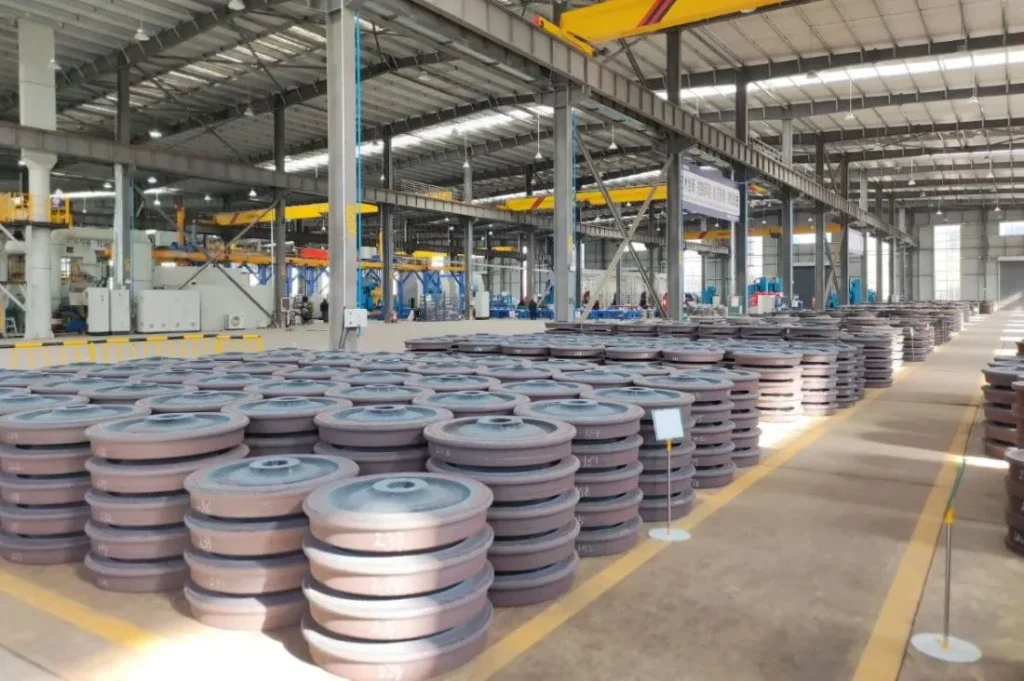
As rail freight corridors expand globally, the importance of reliable railway components becomes even more evident. Infrastructure investments may build tracks and terminals, but it is the rolling stock and mechanical systems that keep trains moving safely.
Demiryolu tekerlekleri, Örneğin, operate under extreme loads and constant contact stress. Mesai, wear and fatigue can affect wheel profiles, requiring maintenance or replacement. Proper material selection and manufacturing quality are essential for ensuring long service life.
Benzer şekilde, forged components used in bogies and suspension systems must withstand repeated dynamic loads. Bağlayıcılarda kullanılan çelik döküm parçalar, fren sistemleri, ve yapısal montajlar zorlu çalışma koşulları altında güç ve dayanıklılığı korumalıdır.
Mühendisler ve demiryolu operatörleri için, bileşen güvenilirliği güvenliği doğrudan etkiler, bakım maliyetleri, ve operasyonel verimlilik. Küresel demiryolu yük ağları genişledikçe, Yüksek kaliteli demiryolu bileşenleri üretebilen üreticiler, tedarik zincirinin önemli ortakları haline geliyor.
Demiryolu taşımacılığına yeniden odaklanılması, yalnızca jeopolitik gerilimlere kısa vadeli bir yanıt değildir.. Yerine, küresel lojistik sistemlerinin nasıl tasarlandığına dair daha geniş bir dönüşümü yansıtıyor.
Modern tedarik zincirleri dayanıklılığa ve esnekliğe giderek daha fazla öncelik veriyor. Tek bir ulaşım moduna bağlı kalmak yerine, şirketler deniz taşımacılığını birleştiren çeşitlendirilmiş lojistik ağları kuruyor, road transport, and rail freight.
Railways offer several advantages in this system:
These characteristics make rail freight an increasingly important part of global logistics between Asia, Avrupa, ve Orta Doğu.
As global rail freight networks continue to expand, reliable engineering and manufacturing capabilities remain essential.
Şu tarihte: Luoyang Fonyo Ağır Sanayi A.Ş., Ltd.., we specialize in manufacturing key railway components used in modern rail freight systems, including railway wheels, dövme bileşenler, and cast railway parts. Our products are designed to withstand heavy loads, long-distance operations, and demanding environmental conditions.
With advanced manufacturing capabilities and extensive industry experience, we support railway components and manufacture railway parts around the world.
To learn more about our railway components and manufacturing capabilities, lütfen ziyaret edin products catalog. Ürünlerimizden herhangi biriyle ilgileniyorsanız, lütfen bizimle iletişime geçmekten çekinmeyin.