قم بمسح رمز WeChat للاتصال بنا
قم بمسح رمز WeChat للاتصال بنا
لا تتردد في مراسلتنا عبر البريد الإلكتروني وسوف نقوم بالرد عليك في أقرب وقت ممكن.
صنع المستقبل بالقلب والروح


إذا كنت تعمل في هندسة السكك الحديدية لفترة كافية, تبدأ في ملاحظة النمط. عندما تصبح الخدمات اللوجستية العالمية غير مؤكدة, أصبح الشحن بالسكك الحديدية فجأة ضروريًا مرة أخرى. What might seem like a traditional transportation system often turns out to be one of the most resilient parts of modern infrastructure.
في السنوات الأخيرة, geopolitical tensions, shipping disruptions, and rising transportation costs have pushed governments and logistics companies to rethink how goods move across continents. For decades, global trade has depended heavily on maritime shipping. But when key sea routes become unstable, supply chains begin searching for alternatives. Increasingly, rail freight is emerging as one of the most reliable options.
Two strategic maritime regions illustrate this challenge particularly well: the Strait of Hormuz and the Red Sea. These areas connect critical global trade routes, including access to the Suez Canal. When tensions rise in these regions, shipping insurance increases, transit times become unpredictable, and supply chains face delays.
From an engineering and infrastructure perspective, these vulnerabilities highlight an important reality: global logistics systems need redundancy. That is precisely why rail freight corridors across Eurasia are gaining renewed attention.
As rail freight networks expand, reliable rolling stock components become increasingly important. Critical parts such as عجلات السكك الحديدية, صندوق المحاور, and bogie components must withstand heavy loads and long-distance operations.

Global maritime shipping still carries the majority of international trade. لكن, the reliance on narrow chokepoints creates structural risk. A single disruption at a strategic location can affect global logistics for weeks.
When ships are forced to reroute around Africa instead of passing through the Suez Canal, transport times between Asia and Europe can increase by 10 ل 15 أيام. For industries that rely on just-in-time manufacturing, such delays can be extremely costly.
This is where rail freight networks provide a critical advantage. Rail corridors operate on controlled infrastructure networks that are not exposed to maritime risks such as piracy, naval conflicts, or long detours. While rail cannot replace sea transport entirely, it can absorb a significant portion of cargo when maritime routes become unstable.
من وجهة نظر هندسية, railways provide predictable routes, scheduled operations, and relatively stable transit times. These characteristics make rail freight particularly attractive for high-value goods, المعدات الصناعية, and time-sensitive cargo.
One of the most visible examples of expanding rail freight infrastructure is the China–Europe Railway Express. This international rail network connects manufacturing centers in Asia with logistics hubs across Europe.
Typical rail freight transit times between China and Europe range from 12 ل 18 أيام. This is significantly faster than maritime shipping, which can take more than a month. في نفس الوقت, rail freight is much more cost-effective than air cargo.
But speed is not the only advantage. Rail freight also offers stability. Once a rail corridor is established, operations can run on consistent schedules regardless of maritime conditions. For manufacturers and supply chain planners, this predictability is extremely valuable.
لكن, maintaining these long-distance rail freight routes requires robust infrastructure. Tracks must support heavy axle loads over thousands of kilometers. Rolling stock must operate reliably across deserts, mountain ranges, and freezing winters. These engineering challenges place significant demands on railway equipment and components.
In addition to northern Eurasian routes, another corridor has been gaining global attention: the Middle Corridor. This route connects Asia and Europe through the Caspian Sea.
The corridor passes through several countries, including Kazakhstan, أذربيجان, جورجيا, and Turkey, before reaching European markets.
Unlike traditional shipping routes, the Middle Corridor combines multiple transportation systems:
For engineers and infrastructure planners, this corridor represents a major opportunity but also a complex challenge. Rail systems must integrate seamlessly with ports and logistics centers while maintaining high throughput.
Governments along the route are investing heavily in upgrading rail infrastructure, modernizing signaling systems, and expanding freight terminals. As these improvements continue, rail freight along the Middle Corridor is expected to grow significantly in the coming years.

Another region investing heavily in railway infrastructure is the Middle East. Several countries in the Gulf region have launched large-scale railway projects to improve regional logistics and support economic diversification.
One example is the planned GCC Railway. This project aims to connect major economies in the Gulf region, including Saudi Arabia, الإمارات العربية المتحدة, عمان, قطر, and Kuwait.
The goal is to create a regional railway network capable of supporting high-capacity rail freight operations. Such a system would significantly improve the movement of industrial goods, construction materials, and energy resources.
من وجهة نظر هندسية, desert environments present unique challenges. Rail infrastructure must withstand high temperatures, sand intrusion, and heavy freight loads. Track design, rolling stock durability, and component reliability become critical factors in maintaining safe rail freight operations.
Although railways may appear simple from the outside—steel wheels running on steel rails—the engineering behind modern rail freight systems is highly complex.
Freight trains operating across Eurasia can travel thousands of kilometers through dramatically different environments. In northern regions, railways must handle extreme cold and ice. In desert regions, heat and sand can affect both tracks and rolling stock.
Heavy freight trains also generate enormous mechanical stress. Axle loads can exceed 25 طن, and components must endure continuous vibration, احتكاك, and dynamic loading.
Several critical components play essential roles in rail freight operations:
Each of these components must meet strict mechanical and metallurgical standards. يجب على المهندسين تصميم المواد بعناية, عمليات المعالجة الحرارية, وتفاوتات التصنيع لضمان الموثوقية على المدى الطويل.
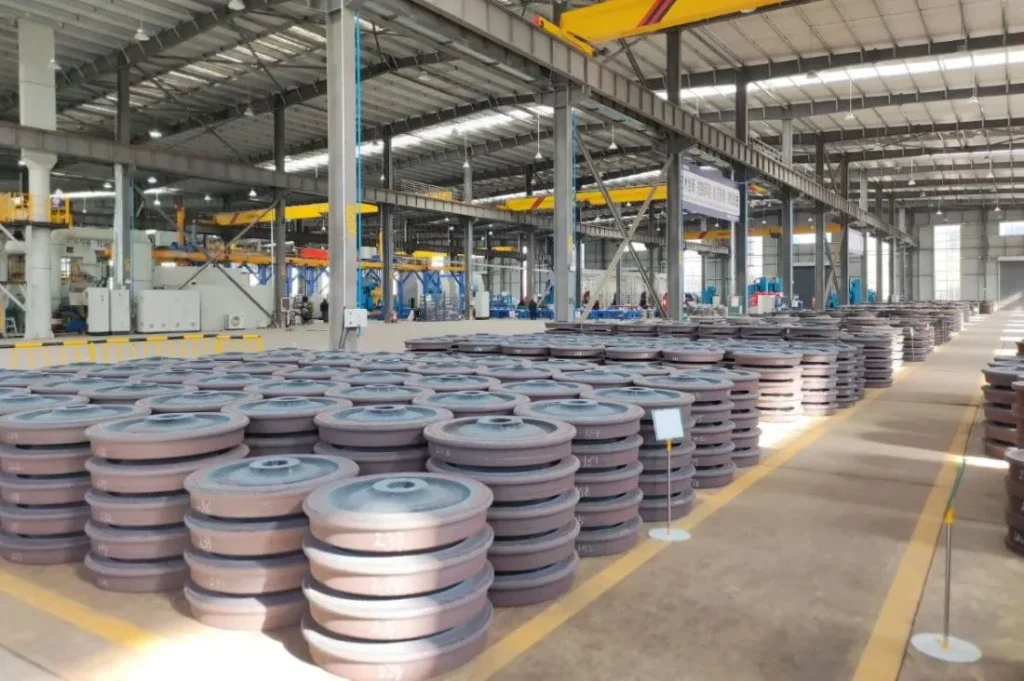
مع توسع ممرات الشحن بالسكك الحديدية على مستوى العالم, أصبحت أهمية مكونات السكك الحديدية الموثوقة أكثر وضوحًا. قد تقوم استثمارات البنية التحتية ببناء المسارات والمحطات الطرفية, لكن المعدات الدارجة والأنظمة الميكانيكية هي التي تحافظ على حركة القطارات بأمان.
عجلات السكك الحديدية, على سبيل المثال, تعمل تحت الأحمال الشديدة وضغط الاتصال المستمر. متأخر , بعد فوات الوقت, يمكن أن يؤثر التآكل والتعب على جوانب العجلات, تتطلب الصيانة أو الاستبدال. يعد الاختيار المناسب للمواد وجودة التصنيع أمرًا ضروريًا لضمان عمر خدمة طويل.
بصورة مماثلة, يجب أن تتحمل المكونات المطروقة المستخدمة في العربات وأنظمة التعليق الأحمال الديناميكية المتكررة. Cast steel parts used in couplers, brake systems, and structural assemblies must maintain strength and durability under demanding operating conditions.
For engineers and railway operators, component reliability directly impacts safety, تكاليف الصيانة, and operational efficiency. As global rail freight networks expand, manufacturers capable of producing high-quality railway components become essential partners in the supply chain.
The renewed focus on rail freight is not simply a short-term response to geopolitical tensions. بدلاً من, it reflects a broader transformation in how global logistics systems are designed.
Modern supply chains increasingly prioritize resilience and flexibility. Rather than relying on a single transportation mode, companies are building diversified logistics networks that combine sea shipping, road transport, and rail freight.
Railways offer several advantages in this system:
These characteristics make rail freight an increasingly important part of global logistics between Asia, أوروبا, والشرق الأوسط.
As global rail freight networks continue to expand, reliable engineering and manufacturing capabilities remain essential.
في شركة لويانغ فونيو للصناعات الثقيلة, المحدودة., we specialize in manufacturing key railway components used in modern rail freight systems, بما في ذلك عجلات السكك الحديدية, مكونات مزورة, and cast railway parts. Our products are designed to withstand heavy loads, long-distance operations, and demanding environmental conditions.
With advanced manufacturing capabilities and extensive industry experience, we support railway components and manufacture railway parts around the world.
To learn more about our railway components and manufacturing capabilities, يرجى زيارة موقعنا products catalog. If you are interested in any of our products, لا تتردد في الاتصال بنا.