Bizimle iletişime geçmek için WeChat kodunu tarayın
Bizimle iletişime geçmek için WeChat kodunu tarayın
Bize e-posta göndermekten çekinmeyin; size en kısa sürede cevap vereceğiz.
Geleceği kalp ve ruhla yaratmak


Bizim demiryolu tekerlekleri Yurtiçi ve yurtdışındaki müşterilerden güçlü güven kazandık. Birçok alıcı, boyutları doğru olduğu için tekerleklerimizi seçiyor, performansta istikrarlı, uzun süreli kullanımda dayanıklı, ve her zaman temiz ve pürüzsüz bir görünüme sahip. Bu avantajlar tesadüfen oluşmuyor. Akıllı üretim hatlarımızdan geliyorlar, sıkı süreç kontrolü, ve her adımda çalışan eksiksiz bir yönetim sistemi. Bu yüzden, bizimkiler nasıl demiryolu tekerlekleri aslında yapılmış? Gelin tüm yolculuğa birlikte net ve basit bir göz atalım.

1.1 Hammadde Kontrolü
Her şey yüksek kaliteli çelikle başlar. Herhangi bir üretime başlamadan önce, Her çelik kütüğü dikkatlice kontrol ediyoruz. Boyutuna bakıyoruz, yüzey durumu, ve kimyasal bileşim. Güçlü ve güvenli hale getirmek için yalnızca temiz ve sağlam malzeme kullanılabilir demiryolu tekerlekleri.
1.2 Kesim ve Ebatlama
Muayeneden sonra, the billets are cut into the correct length by automatic sawing machines. The machine controls the size very precisely, so every piece enters the furnace with the right shape and weight.
2.1 Heating in the Ring Furnace
Sonraki, the steel pieces are moved into a large ring-type furnace. The furnace heats the steel slowly and evenly until it reaches around 1,250°C. This step is important because even heating makes the steel easier to shape and helps the final demiryolu tekerlekleri stay strong during service.
2.2 Pre-Forming the Wheel Shape
When the steel is hot enough, it goes to the pre-forming station. Burada, large presses give the steel its first rough shape. It still does not look like a real wheel yet, but the basic outline begins to appear.
2.3 Final Forming Under High Pressure
The nearly shaped steel is then sent to a high-tonnage press. This press gives the wheel its exact structure—the rim, the web, and the hub. The strong pressure also improves the density of the metal, which is key to making durable demiryolu tekerlekleri.
3.1 Upsetting and Center Hole Punching
Şekil verdikten sonra, the wheel is strengthened again through upsetting. This makes the internal structure more uniform. Daha sonra, a special press punches out the center hole, which will later serve as the machining reference point.
3.2 Hot Measurement and ID Printing
Every hot wheel is checked by a 3D laser system to confirm its shape and size. While the wheel is still hot, a unique ID is printed on it. This helps us trace every step of the production process and maintain full quality control for our demiryolu tekerlekleri.
4.1 Controlled Heating and Quenching
The wheels then enter the heat treatment line. Burada, they are heated again and quickly quenched with water. This gives the rim the hardness it needs to resist wear and heavy loads on the track.
4.2 Tempering for Stability
Söndürmeden sonra, the wheels go through tempering. This step reduces internal stress and ensures the demiryolu tekerlekleri combine strength with toughness, allowing them to work safely for many years.

5.1 CNC Machining of All Surfaces
Heat-treated wheels are sent to our CNC machining centers. These machines finish the tread, flanş, merkez, and web with high accuracy. Good machining helps the wheel run smoothly on the track and meet strict size and tolerance requirements.
5.2 Final Geometry Check
Each wheel is measured again to ensure all dimensions match customer and industry standards. This makes sure every wheel leaving our factory is consistent and reliable.
6.1 Hardness and Surface Testing
We test the hardness of the wheel tread using a Brinell hardness machine. Stable hardness is important because it affects wear resistance and safety.
6.2 Magnetic Testing for Hidden Flaws
Magnetic particle inspection is used to check for tiny cracks in the tread and web. This step helps ensure that all demiryolu tekerlekleri are free from internal problems.
6.3 Static Balance Testing
Each wheel is tested for balance. A well-balanced wheel reduces vibration and improves performance during service.
7.1 Final Marking
After all inspections, the wheel receives its final printed or stamped identification. This creates full traceability for future tracking.
7.2 Paketleme ve Sevkiyat
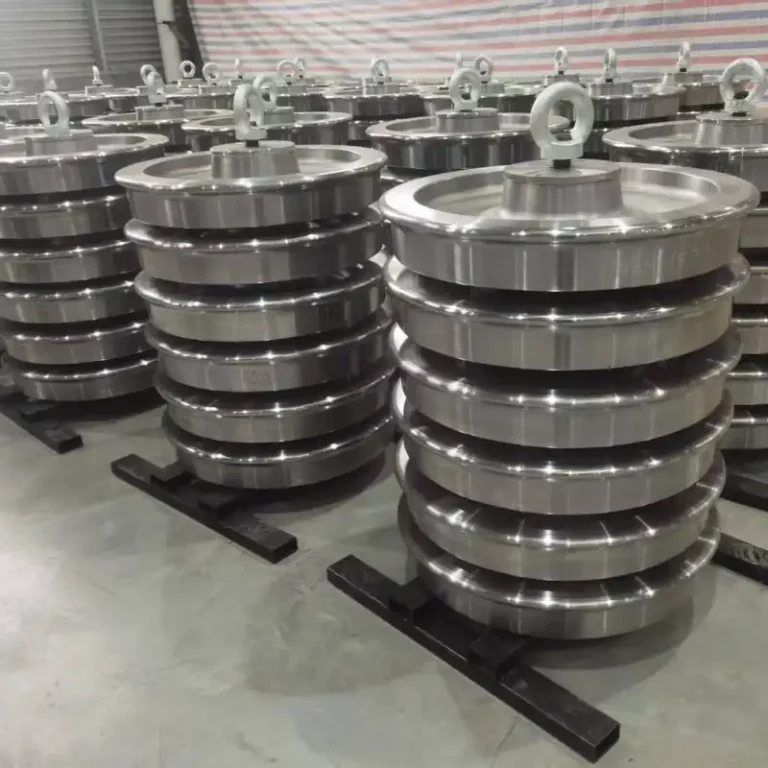
Nihayet, the finished demiryolu tekerlekleri are cleaned, protected, and packed according to customer needs. They are then shipped safely to railway operators, rolling stock factories, and maintenance centers worldwide.
While a railway wheel may appear simple, producing it is a complex process that demands strict control at every stage. Şu tarihte: Luoyang Fonyo Ağır Sanayi A.Ş., Ltd.., our modern equipment, automated systems, and skilled team ensure that every step—from selecting raw steel to final delivery—is executed with precision and care. Our wheels are designed to deliver consistent performance, long-lasting durability, and dependable safety in real-world operations.
Every wheel produced by our factory reflects our commitment to quality, güvenilirlik, and the trust we place in every product we make. Discover more about our company and capabilities at www.railwaypart.com. To discuss how we can meet your specific needs, lütfen çekinmeyin bize Ulaşın — our team is ready to provide a tailored solution