Digitalize o código WeChat para entrar em contato conosco
Digitalize o código WeChat para entrar em contato conosco
Sinta-se à vontade para nos enviar um e-mail e responderemos o mais breve possível.
Criando o futuro com coração e alma


Durante o processo de fabricação, bearing parts have to go through multiple processes such as forging, rolando, socando, girando, moagem, e tratamento térmico, e vários defeitos podem ocorrer. Os defeitos comuns são os seguintes:
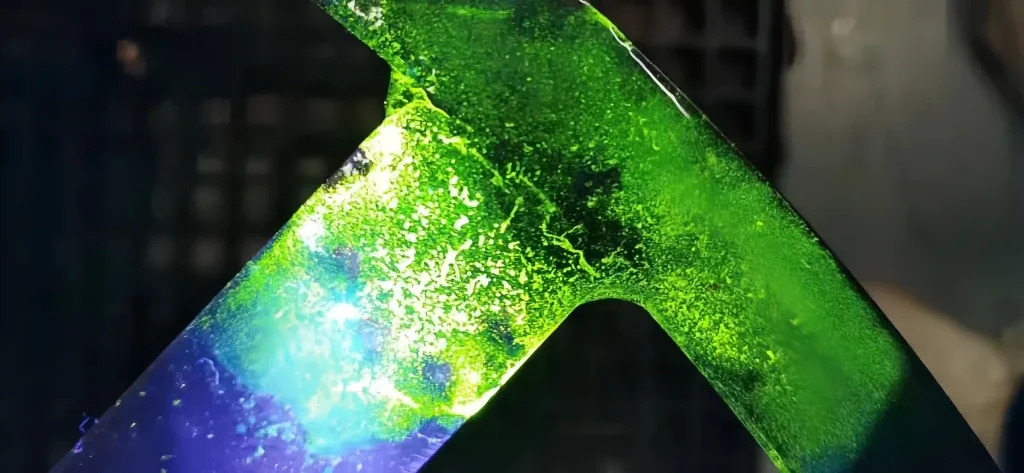
1.Forging defects
Due to uneven cutting, rebarbas, clarão, etc., folds are easily formed on the surface. Its characteristics are that the folds are relatively large and irregular in shape, and they are easy to see on the surface of the parts.
It is best to use fluorescent magnetic powder for flaw detection to make the defect display clearer and more intuitive. The magnetic traces of forging folds are generally linear, groove-shaped, and fish-scale-shaped at a certain angle to the surface.
The defect section is made into a metallographic specimen and observed under a microscope. The tail of the defect is round and blunt, the two sides are smooth, and there is obvious oxidation. No foreign matter, such as material inclusions, is found in the defect. After cold acid corrosion of the metallographic specimen, it is observed that there is severe decarburization and oxidation at the defect site and on both sides; the surface morphology of the defect layer is observed, and the plastic deformation marks are obvious, and there is no tear-like fracture morphology. After microhardness testing and metallographic observation, there are different degrees of carburization and hardening on the surface of the defect layer. The above analysis shows that the defect should have existed before the heat treatment quenching, and it is connected to the outside world, and the defect is determined to be forging folding.
2.Forging overburning
The forging heating temperature is too high, and the insulation time is too long to resulting in overheating. Em casos graves, the grain boundaries are oxidized or even melted. Microscopic observation shows that not only are the surface metal grain boundaries oxidized and cracked to show sharp corners, mas também, in areas where the internal components of the metal are more severely segregated, the grain boundaries begin to melt, e em casos graves, sharp-angled caves are formed. Overburned materials are forged in this defective state, and are forged, punched and rolled by heavy hammers. The defective parts will tear here, forming larger defects. The surface morphology of severely overburned forging is like orange peel, with fine cracks and thick oxide scales distributed on it.
It is advisable to use fluorescent magnetic powder for flaw detection to make the defect display clearer. Pockmark holes are caused by forging overburning defects.
Metallographic specimens were made along the defective cross-section and observed under a microscope. It can be seen that holes are distributed on the surface and sub-surface. Some parts are sharp-angled, of varying sizes, and bottomless. There are fine cracks on the edges. Grain boundary oxidation and holes have appeared in some areas. Além disso, after the fracture surface is observed after the fracture is made along the defective holes, it can be seen that the fracture is a stone-like fracture with a large number of holes and fine cracks distributed on it.
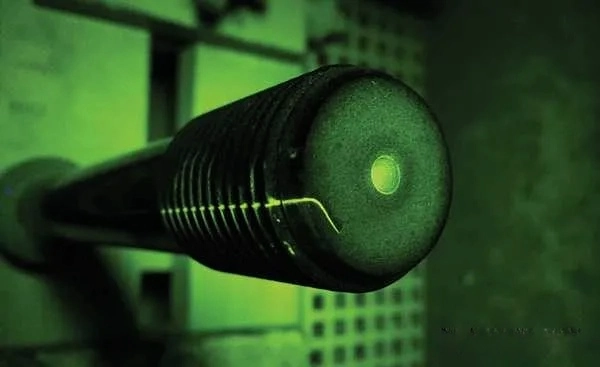
3.Extinguindo rachaduras
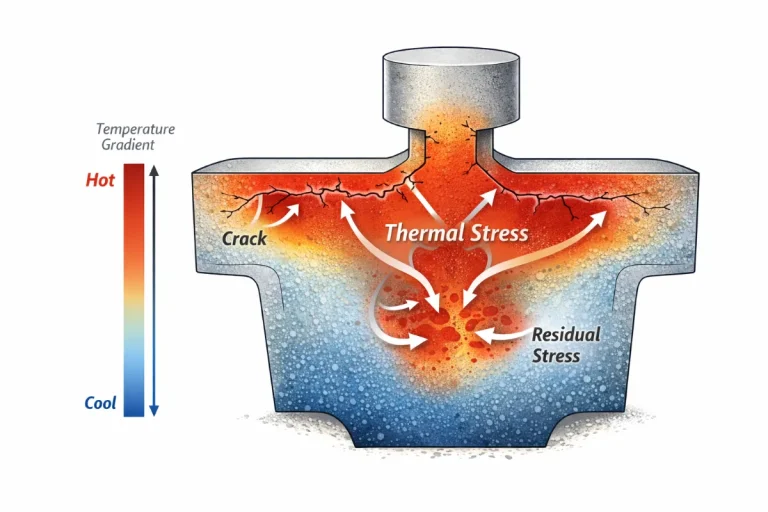
During the quenching process, when the quenching temperature is too high or the cooling speed is too fast, the internal stress is greater than the fracture strength of the material, quenching cracks will appear.
Fluorescent magnetic particle inspection should be used to improve sensitivity and reliability. The magnetic traces of quenching defects are generally oblique, arc-shaped, dendrite-shaped or mesh-shaped. The starting part is wide and gradually becomes thinner along the extension direction.
It is basically distributed along the circumferential direction, and the tail is sharp. After cutting the crack and making a metallographic specimen, it can be seen that the crack is very deep and basically perpendicular to the outer surface. No foreign matter, such as material inclusions, is found in it. After the fracture is observed along the crack, the fracture is brittle, and the fracture surface has an obvious tempering color.
4.Raw material defects
Durante o processo de moagem, bearing parts are prone to grinding cracks due to excessive grinding wheel feed, grinding wheel shaft runout, insufficient cutting fluid supply and blunt grinding wheel grains. Além disso, the quenching temperature is too high during heat treatment, resulting in overheating of the parts, coarse grains, a large amount of residual austenite, and mesh and coarse particles.
The magnetic traces of grinding defects are generally mesh, radial, parallel or cracked. The magnetic traces are thin and sharp, with clear contours, appearing in large numbers, usually perpendicular to the grinding direction. The magnetic traces are mostly concentrated in the middle part, along the circumferential direction, in the form of long lines or branches, with local bifurcations, and the magnetic traces converge.
Fornecedor
Luoyang Fonyo Indústrias Pesadas Co., Ltda,fundada em 1998, é fabricante de peças ferroviárias fundidas. Nossa fábrica cobre uma área de 72.600㎡, com mais de 300 funcionários, 32 técnicos, incluindo 5 engenheiros seniores, 11 engenheiros assistentes, e 16 técnicos.Nossa capacidade de produção é 30,000 toneladas por ano. Atualmente, produzimos principalmente fundição, usinagem, e montagem para locomotiva,vagão,trens de alta velocidade, equipamento de mineração,energia eólica,etc.Nossos produtos foram exportados para a Rússia, os Estados Unidos, Alemanha, Argentina, Japão, França, África do Sul,Itália e outros países.
Contato: Stella Liu
E-mail:[email protected]
Móvel:+8615515351287