WeChat コードをスキャンしてご連絡ください
WeChat コードをスキャンしてご連絡ください
お気軽にメールをお送りください。できるだけ早くご返信させていただきます.
心と魂で未来を創る


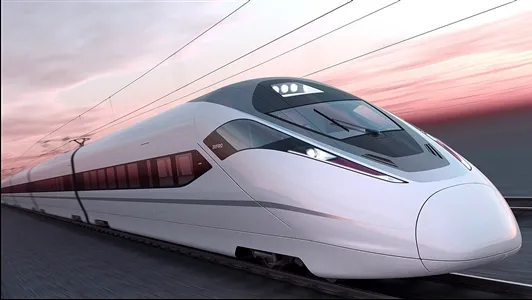
電車が地面を猛スピードで走るとき、 350 時速キロメートル, 乗客は安全かつ安心して、窓の外の束の間の景色に静かに浸ることができます。. Behind this astonishing smoothness and tranquility lies a group of little-known yet crucial “guardians” – the brake discs of 鉄道部品 of high-speed train sets. They bear the heavy responsibility of quietly dissolving the tremendous kinetic energy, serving as an indispensable pause in the speed-paced musical composition, and silently safeguarding the safe arrival of each rapid journey.
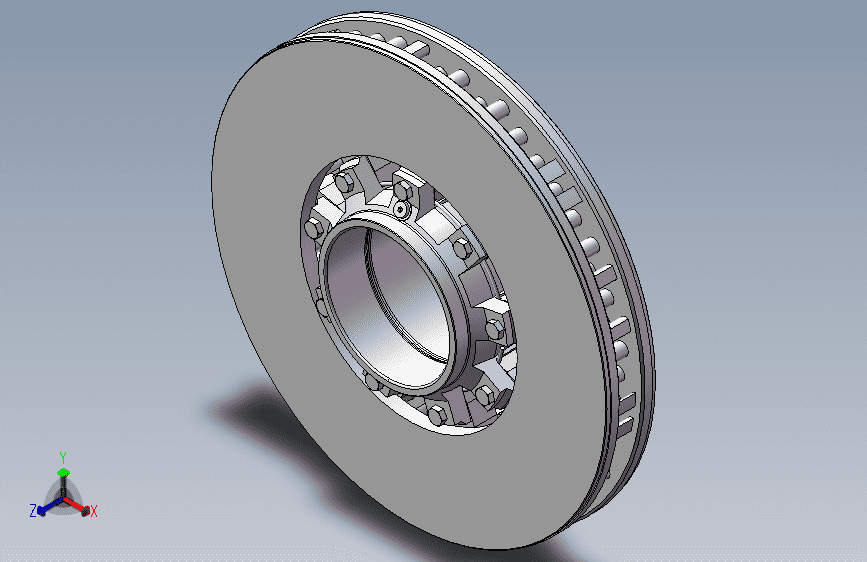
Energy Conversion
The core mission of the brake discs is to convert the huge kinetic energy of the train into dissipable heat energy. This process is essentially the ultimate manifestation of the “friction generates heat” law in physics. When the train needs to decelerate or stop, advanced electronic control instructions drive the brake calipers (clamps) to exert precise and controllable force, tightly clamping the special material brake pads on both sides of the high-speed rotating brake disc. In an instant, the powerful friction force does intense work on the contact surface, and the kinetic energy is efficiently converted into heat energy through the intimate contact and microscopic deformation of the metal. This conversion process may seem simple, but it is a rigorous test of materials science, 熱力学, and precise control – ensuring both strong and stable braking force while avoiding overheating at the friction interface (exceeding the material’s tolerance limit may lead to cracks or even failure) or intense vibrations (which may cause uncomfortable “braking shakes”). Each smooth braking stop is a silent ode to the precise collaborative ability of this system.
Craftsmanship: A Perfect Manifestation of Materials and Processes
Facing the instantaneous high temperatures (up to 700°C or higher) and huge mechanical stress generated during braking, the selection of materials and manufacturing of brake discs can be regarded as a masterpiece of modern industry. 現在, two top materials are mainly used:
High-performance alloy cast iron: Like a battle-hardened warrior, it boasts excellent wear resistance, stable friction properties, and outstanding heat conductivity (able to quickly transfer friction heat from the surface to the disc body and cooling structure), making it a classic choice. Engineers finely adjust its internal graphite morphology (such as ductile iron) and alloy element composition (クロム, molybdenum, ニッケル, 等) to give it stronger thermal fatigue resistance (resistance to cracks caused by repeated cold and hot cycles) and thermal cracking resistance.
Advanced composite materials (such as carbon ceramic): Like a light and tough noble, it possesses low density (significantly reducing the unsprung weight and improving dynamic performance), outstanding high-temperature performance (working temperature up to over 1400°C), excellent thermal stability (constant braking force at high temperatures), and extremely long lifespan. Its manufacturing process is like an artistic creation through advanced techniques such as chemical vapor deposition (CVD) or melt infiltration (MI), perfectly integrating the carbon fiber framework with the ceramic matrix. 費用はかかりますが, its outstanding performance opens up broad application prospects in next-generation higher-speed trainsets.
Structural Wisdom: Planning the Path for Heat Dissipation
The brake disc is by no means a simple metal disc. Its ingenious structural design is the key to heat dissipation efficiency:
Ventilation and heat dissipation structure: The most common “ventilated disc” design features carefully designed radial or curved heat dissipation channels (air ducts) between the friction surfaces on both sides. When the brake disc rotates at high speed with the wheels, it actively sucks in air like a centrifugal fan, and the cold air flows through the air ducts, efficiently removing the accumulated heat inside the disc body. The geometric shape, サイズ, and distribution of the air ducts are optimized through complex fluid dynamics (CFD) simulations to maximize the heat dissipation effect.
Heat dissipation fins: Some are added on the back of the brake disc or the inner wall of the air duct, like installing “heat dissipation fins” on the brake disc, further increasing the contact area with the cooling airflow and enhancing the heat dissipation capacity. Special coating: Apply high-temperature-resistant and wear-resistant protective coatings (such as certain ceramic-based coatings) on the disc surface, giving the brake disc a protective armor. This not only reduces the oxidation and wear of the material under extreme conditions but sometimes can also optimize the friction characteristics.
Safety cornerstone: A commitment of milliseconds in life
In the fast-paced world, the braking system is the last line of defense for safety, and the brake disc is the core fortress under the heaviest pressure on this defense line. Its performance directly determines the following:
Braking distance: A stable and powerful friction coefficient is fundamental for ensuring that the train can stop safely within the prescribed distance. The stability of the material determines that even in adverse conditions, such as rainy and snowy weather or continuous downhill, the braking force will not experience catastrophic attenuation (thermal degradation).
Thermal crack resistance and fatigue life: The brake disc must maintain structural integrity under countless intense cold and hot cycles (extremely hot during braking and cooling after relief) and huge mechanical stress. Any minor crack may expand under high stress, leading to disc fracture with unimaginable consequences. This requires the material to have extremely high thermal mechanical fatigue strength.
Tolerance to extreme conditions: It is necessary to ensure that even in the most stringent emergency braking (EB) conditions, even if the instantaneous temperature surges to the material’s limit, the brake disc can still work reliably until the train comes to a complete stop without catastrophic failure.
したがって, each brake disc must undergo nearly rigorous bench tests and on-track operation evaluations, simulating various extreme scenarios (high-speed emergency braking, continuous braking on long slopes, rainy and snowy environments, 等) to verify its millions of cycles of fatigue life and absolute reliability. They are the nameless heroes silently carrying the “zero failure” safety commitment.
The path of continuous evolution
The wheels of technology never stop. Researchers are exploring new materials that are lighter, stronger, and more resistant to high temperatures (such as new metal-based composite materials optimized carbon-ceramic formulations), developing more intelligent online monitoring systems (using sensors to monitor the temperature, stress, 振動, and even the initiation of micro-cracks of the brake disc in real time to achieve predictive maintenance), and optimizing the design of the disc body (such as biomimetic heat dissipation structures) and thermal management strategies (exploring more efficient active or passive cooling technologies). Each material innovation and design improvement is aimed at giving trains a more powerful and reliable “braking force” on higher-speed platforms.
It is these metal (or ceramic) discs that have endured the most severe tests and flames, with their precise physical structure, top-level material technology, and absolute reliable safety guarantee, silently fulfilling the highest commitment of safeguarding life. They are the ‘silent heroes’ in the speed era, indispensable foundations of the high-speed rail safety myth. When we enjoy the convenience and comfort brought by high-speed railways, please remember to pay tribute to these “kinetic tamer” hidden deep within the wheels, silently enduring the most severe tests. 統計によると, for a standard formation of a high-speed train set to complete braking from 300 km/h to a stop, the energy dissipated by the braking system is equivalent to the potential energy stored when lifting hundreds of tons of heavy objects to a height of several tens of meters. It is the brake disc, with its steel body, in an instant, transforming this force capable of shaking mountains and rivers into a solid guarantee for ensuring the safety of the journey.
サプライヤー
洛陽豊洋重工業株式会社, 株式会社, 1998年に設立された鉄道鋳造部品のメーカーです. 当社の工場面積は72,600㎡です。, 以上の 300 従業員, 32 技術者, 含む 5 シニアエンジニア, 11 アシスタントエンジニア, そして 16 技術者. 弊社の生産能力は 30,000 年間トン. 現在, 私たちは主に鋳物を生産しています, 機械加工, 機関車の組立て, 鉄道車両, 高速鉄道, 鉱山機械, 風力, 等.
当社はCRRCに鉄道部品を供給しています。(以上を含む 20 CRRCの支店および子会社), Gemacエンジニアリングマシナリー, サニーグループ, 中信重工業, 等. 当社の製品はロシアに輸出されています, 米国, ドイツ, アルゼンチン, 日本, フランス, 南アフリカ, イタリアをはじめとする世界中の国.