WeChat コードをスキャンしてご連絡ください
WeChat コードをスキャンしてご連絡ください
お気軽にメールをお送りください。できるだけ早くご返信させていただきます.
心と魂で未来を創る


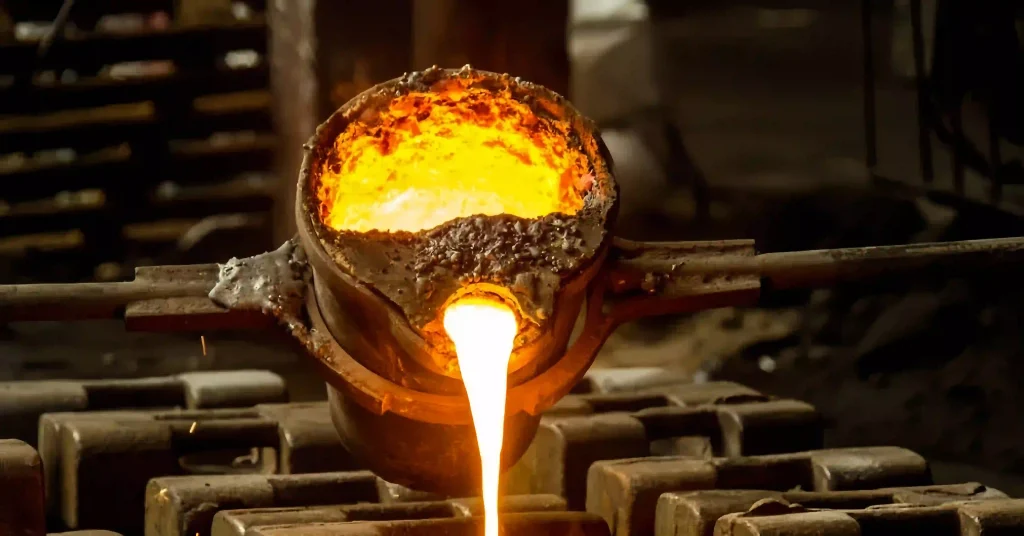
Railway castings, as a key component of railway infrastructure, their quality directly affect the safety and stability of railway operation. Risers play a crucial role in the casting process of railway castings. 簡単に言うと, a riser is an additional part added to the top or side of a casting to prevent defects. Its main function is to store molten metal during casting, compensating for the volume loss caused by shrinkage during the solidification of the casting, thereby preventing defects such as shrinkage cavities and porosity inside the casting, and ensuring that the casting has sufficient strength and density to withstand various loads during railway operation.

When casting railway castings, the molten metal is poured into the mold and gradually cools and solidifies. Due to the different cooling rates in various parts, the solidified sections will impede the subsequent flow and replenishment of the molten metal. At this point, the riser acts like a “reservoir of molten metal”. When other parts of the casting need more molten metal due to contraction, the molten metal in the riser will flow in in time to replenish it. 例えば, when casting large castings like railway wheels, the cooling rate of the center part of the wheel is relatively slow, while that of the edge part is faster. If there is no riser, the edge area cannot be replenished with sufficient molten metal during solidification and contraction, resulting in shrinkage cavities, which seriously affect the quality and service life of the wheel. With risers, this problem can be effectively solved, ensuring uniform contraction and density of all parts of the wheel.
Risers can be classified into various types based on their structure and mode of operation. The common ones include exposed risers and concealed risers. The exposed riser is directly exposed on the outside of the mold, facilitating the observation of the liquid level height and feeding condition of the molten metal. During the casting process, the pouring speed and feeding operation can be adjusted in a timely manner. さらに, the exposed risers are easy to remove after the casting cools down, and the cleaning work is relatively simple. The concealed riser is completely located inside the mold. Its advantage is that it can reduce the oxidation and splashing of the molten metal and improve the surface quality of the casting. しかし, the design and operation of concealed risers have higher requirements. It is necessary to precisely control the amount of molten metal poured and the solidification time to ensure that it can fully exert its feeding effect.
In the casting of large structural castings such as railway Bridges and track supports, the role of risers is particularly crucial. These castings are large in volume, complex in structure, and have significant thickness differences at different parts. The uneven shrinkage during solidification is even more obvious. Take the connecting castings of railway Bridges as an example. The connection parts need to withstand huge tensile and shear forces. If there are defects such as shrinkage cavities, it is very likely to cause cracks or even fractures in the bridge during long-term use. By setting risers reasonably, it can effectively ensure that the molten metal at the connection parts is fully replenished, thereby enhancing the overall strength and reliability of the castings.
Risers are also indispensable for precision functional castings such as railway signal equipment and braking systems. These castings have extremely high requirements for dimensional accuracy and internal quality. Any minor defect may affect their normal functions. 例えば, for the valve body castings of railway braking systems, the internal flow channels and sealing surfaces need to have extremely high precision and smoothness. The design of risers should not only take into account the feeding effect but also avoid adverse effects on the dimensional accuracy and surface quality of the casting. By precisely calculating and optimizing the size and position of the riser, it can be ensured that the valve body casting not only meets the functional requirements but also has good quality stability.
The size of the riser directly affects its feeding effect. If the riser size is too small and the stored molten metal is insufficient to meet the shrinkage requirements of the casting, it will still lead to defects in the casting. しかし, if the riser size is too large, it will cause waste of molten metal, increase production costs, prolong the cooling time of castings, and reduce production efficiency. したがって, it is necessary to determine the appropriate riser size through precise calculation and simulation analysis based on factors such as the volume, 形, and material of the casting.
The location selection of the riser is also of vital importance. 一般的に言えば, risers should be set at the hot spots of the casting, つまり, the places where the cooling rate is the slowest and shrinkage cavities are most likely to occur. 同時に, the flow path of the molten metal should also be considered to ensure that the molten metal in the riser can smoothly flow into the area that needs to be fed. 加えて, the position of the riser should also facilitate subsequent cleaning and processing to avoid adverse effects on other properties of the casting.

With the development of computer technology and artificial intelligence, the intelligent design of risers will become a future trend. By establishing an accurate casting simulation model and integrating big data analysis and machine learning algorithms, the shrinkage of castings and the feeding effect of risers can be predicted quickly and accurately, achieving the automation and intelligence of riser design. This not only enhances design efficiency but also optimizes the performance of risers and reduces production costs.
今日, with increasingly strict environmental protection requirements, riser technology will also develop in a green and environmentally friendly direction. Develop new riser materials and processes to reduce the waste of molten metal and the generation of waste, and lower the impact on the environment. 例えば, the use of degradable riser sleeve materials can naturally decompose after the casting cools down, reducing the workload of cleaning and environmental pollution.
Although the riser of a railway casting is just a small component in the casting process, it plays a crucial role in the quality of the railway casting and the safety of railway operation. With the continuous advancement of technology, riser technology will also keep innovating and developing, providing a more solid guarantee for the development of the railway industry.
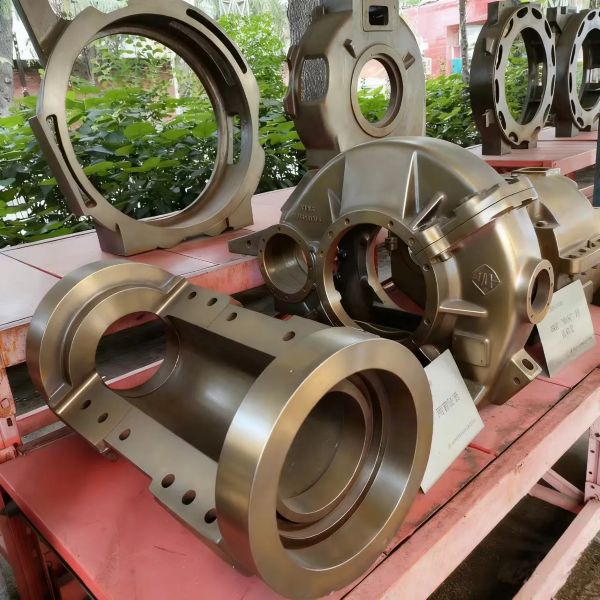
洛陽豊洋重工業株式会社, 株式会社, に設立された 1998, is a manufacturer in cast railway parts. 当社の工場面積は72,600㎡です。, 以上の 300 従業員, 32 技術者, 含む 5 シニアエンジニア, 11 アシスタントエンジニア, そして 16 技術者. 弊社の生産能力は 30,000 年間トン. 現在, 私たちは主に鋳物を生産しています, 機械加工, 機関車の組立て, 鉄道車両, 高速鉄道, 鉱山機械, 風力, 等. 当社の製品はロシアに輸出されています, 米国, ドイツ, アルゼンチン, 日本, フランス, 南アフリカ, イタリアとその他の国.