WeChat コードをスキャンしてご連絡ください
WeChat コードをスキャンしてご連絡ください
お気軽にメールをお送りください。できるだけ早くご返信させていただきます.
心と魂で未来を創る


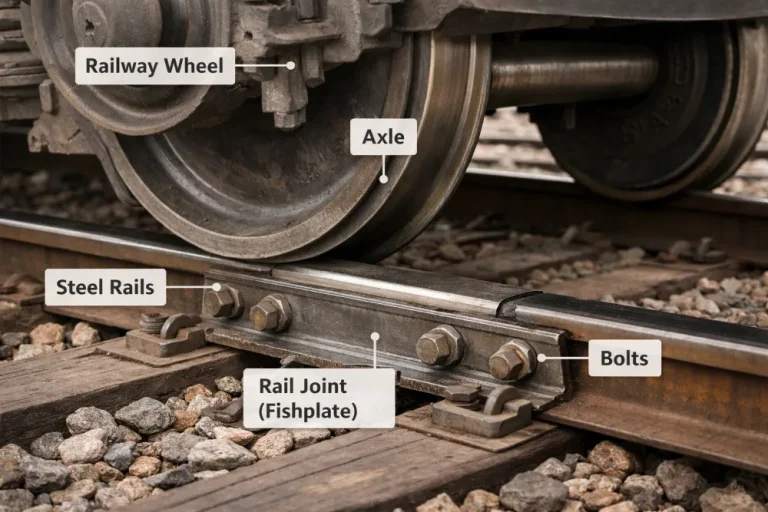
Railway track joint guard plates, トラック構造の重要なコンポーネントとして, may seem simple, but they play an irreplaceable role in ensuring the safety, 滑らかさ, and durability of railway operations. Their main function is to connect the rail joints, transfer longitudinal forces, buffer vibrations, and maintain the stability of the track gauge. With the rapid development of high-speed railways and heavy-load transportation, the performance requirements for joint guard plates have also been increasing. This article will systematically elaborate on their performance characteristics from multiple dimensions, such as material properties, structural design, and functional realization.

Modern railway track joint guard plates are mostly made of high-strength alloy steel or specially heat-treated steel, featuring the following performance advantages:
1.1 高い強度と耐摩耗性
The guard plates need to withstand the huge impact force and shear stress generated when a train passes, so the material must have extremely high tensile strength and fatigue strength. 同時に, due to long-term exposure to vehicle dynamic loading and vibration friction, the surface hardness and wear resistance are also crucial. Common processes include quenching and surface carburizing to extend service life.
1.2 Good toughness and dynamic impact resistance
Under extreme weather conditions or high-load operation, the material must have excellent low-temperature toughness and dynamic impact resistance to avoid brittle fracture and ensure railway operation safety.
1.3 Corrosion resistance
The railway environment is complex and variable, especially in humid, rainy or coastal areas, where the guard plates are often exposed to corrosive media. したがって, high-quality guard plates are usually treated with galvanization, phosphating or using weather-resistant steel materials to effectively resist rust and maintain long-term performance stability.
In addition to the material’s own properties, scientific structural design also enables the joint guard plates to play multiple functions in the railway system:
2.1 Effective force transmission and buffering function
The guard plates work in coordination with joint clamps, bolts and other accessories to effectively transfer the longitudinal force (such as braking force, thermal expansion and contraction stress) generated by the train passing to the adjacent sleepers, reducing the concentrated stress at the rail joint. Their structure is often designed with ribs or curved shapes to enhance stiffness and absorb vibration energy. So it can reduce noise and improving passenger comfort.
2.2 Maintaining track gauge stability
At curves or high-gradient sections, the rail joints are prone to deformation and displacement. The guard plates help maintain the accuracy of the track gauge by restricting the lateral movement of the joint area, preventing the risk of derailment due to widening of the track gauge.
2.3 Adapting to thermal expansion and contraction
In regions with significant temperature fluctuations, steel rails will undergo significant thermal expansion and contraction. The joint guard plates and expansion joints are used in combination to allow the steel rails to freely expand within a certain range, avoiding track deformation or equipment damage due to accumulated temperature stress.
2.4 Installation and maintenance convenience
The excellent design of the guard plates also takes into account the convenience of on-site construction. 例えば, reserved standard holes, symmetrical or universal structures, make it easy to adjust and replace, significantly reducing maintenance time and lowering operation and maintenance costs.
Joint guard plates are not only widely used in ordinary railways but also play a key role in high-speed railways, subways and heavy-load lines. Their performance must undergo strict tests, 含む:
3.1 Fatigue tests: Simulating long-term alternating loads to verify their service life;
Environmental simulation tests: Testing their functional stability in high-temperature, low-temperature, humid and salt fog environments;
3.2 Static and dynamic load tests: Ensuring they do not undergo plastic deformation or failure under the maximum design load.
These tests ensure the reliability of the guard plates in complex conditions and comply with national and industry standards (such as TB/T, で, 等).
Although the railway track joint guard plate is a minor component, it is an indispensable part of the railway safety system. Its high-performance material selection, rigorous structural design and diverse functional integration jointly support the efficient and safe operation of the railway network. With the continuous emergence of new materials and new technologies, such as non-metallic composite materials and embedded sensing technology, the future of joint baffles will continue to evolve towards greater lightweighting, intelligence and longer lifespan, further contributing to the high-quality development of railway transportation.
洛陽豊洋重工業株式会社, 株式会社,1998年に設立された鉄道鋳造部品のメーカーです。当社の工場面積は72,600㎡です。, 以上の 300 従業員, 32 技術者, 含む 5 シニアエンジニア, 11 アシスタントエンジニア, そして 16 当社の生産能力は 30,000 年間トン. 現在, 私たちは主に鋳物を生産しています, 機械加工, 機関車の組立て,鉄道車両,高速鉄道, 鉱山機械,風力,等.
当社はCRRCに鉄道部品を供給しています。(以上を含む 20 CRRCの支店および子会社),Gemacエンジニアリングマシナリー,サニーグループ, 中信重工業,等. 当社の製品はロシアに輸出されています, 米国, ドイツ, アルゼンチン, 日本, フランス, 南アフリカ,イタリアをはじめとする世界中の国.
連絡先:
電子メール:[email protected]
携帯:008615515321683