Scansiona il codice WeChat per contattarci
Scansiona il codice WeChat per contattarci
Sentiti libero di inviarci un'e-mail e ti risponderemo il prima possibile.
Creare il futuro con cuore e anima


Crane rail piatti di pesce are high-strength steel joint bars that connect two rail ends to ensure continuous alignment, distribuire i carichi dinamici sulle ruote, e mantenere la stabilità del binario durante le operazioni pesanti della gru. Selecting the right fish plate means matching the rail profile (QU70–QU120, DIN A55–A120), while proper installation demands precise alignment, correct bolt torque, and scheduled inspection.
Crane rail joints experience some of the highest impact loads in any rail fastening system. Yet many premature failures are not caused by the rail itself—they begin at the fish plate connection.
After working on crane rail projects across steel mills, porti, and heavy fabrication plants, we’ve found that choosing the correct fish plate profile and installing it properly often makes the difference between decades of reliable service and constant maintenance. The fish plate may look like one of the simplest components in a crane rail system, but it carries the full force of every wheel passage at every joint.
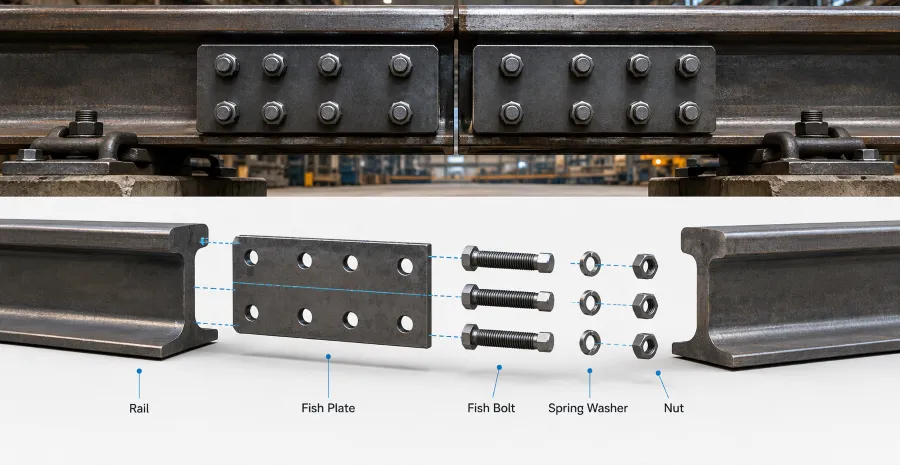
UN piatto di pesce—also called a joint bar or splice bar—is a flat steel bar that clamps onto the web of two adjoining rail ends. You install them in matched pairs, one on each side, and secure the assembly with high-strength fish bolts. The goal is to make two separate rail sections behave as one continuous member.
In a crane rail application, the fish plate does three things. It transfers forces across the joint so the load doesn’t concentrate at the rail ends. It holds the running surface in alignment so crane wheels pass through smoothly. And it absorbs some of the shock each time a wheel crosses the gap, which slows material fatigue and reduces noise.
People often assume that because crane rails run at low speeds, the joints don’t see much stress. The opposite is true. Crane rails handle axle loads that can exceed 30 A 50 tonnellate, and because the crane moves slowly, the wheel sits on the joint longer—transferring the full load through the fish plate for a longer duration than a high-speed train would.
This is where most selection errors begin. Fish plates are profile-specific. Non esiste una misura universale.
Alcuni fornitori pubblicizzano stecche a ganascia universali per gru. Personalmente, Sono scettico. Nella maggior parte dei progetti che abbiamo gestito, “universale” di solito significa “non una misura esatta.” Il piatto funziona, i fori dei bulloni sono allineati, ma l'angolo di pesca non è completamente in contatto con la rete della rotaia. Settimane dopo, i bulloni si allentano e nessuno riesce a capire il motivo.
Su un progetto di un'acciaieria, abbiamo trovato quasi a 2 mm di spazio tra la ganascia e l'anima della rotaia perché era stato fornito il profilo DIN sbagliato. I bulloni hanno raggiunto la coppia specificata, ma l'articolazione si allentava ancora dopo solo poche settimane. Il costo di quell’errore, alcune settimane di inattività e un set completo di lastre sostitutive, superava di gran lunga il costo di una corretta verifica del profilo..
Gli standard comuni delle rotaie per gru includono la serie cinese GB (Da QU70 a QU120), DIN tedesco 536 (Dalla A55 alla A120), GOST russo (KP70–KP120), e AREMA nordamericana (CR104, CR135, CR171). Controllare la marcatura stampata sul nastro. Se è logoro, misurare la larghezza della testa, altezza, e larghezza della base. In caso di dubbio, invia le foto al tuo fornitore.
Una volta che conosci il profilo, seguono le dimensioni. Ecco un riferimento per le stecche a ganascia per gru della serie Q più comuni:
| Tipo di binario | Lunghezza (mm) | Larghezza (mm) | Spessore (mm) | Giorno del buco. (mm) | Spaziatura dei fori (mm) | Dimensione del bullone |
| QU70 | 760 | 70 | 20 | 24 | 90 / 105 | M24 |
| QU80 | 820 | 75 | 20 | 24 | 100 / 120 | M24 |
| QU100 | 950 | 80 | 22 | 26 | 105 / 125 | M27 |
| QU120 | 1050 | 85 | 26 | 26 | 110 / 130 | M27 |
Le rotaie della gru più grandi richiedono piastre più spesse e bulloni più grandi. Non è una scelta di design: è fisica. Verificare sempre il disegno del produttore prima dell'acquisto.
La maggior parte delle ganasce per rotaie delle gru sono in acciaio al carbonio 45# A 55# allineare. Buona resistenza alla trazione, buona resistenza all'usura, good enough for most applications. For foundry cranes and hot metal ladle cranes, alloy steel like Q345B handles the heat and impact better. Extreme loads call for quenched and tempered plates.
Whatever you choose, the supplier needs to provide a mill test certificate. Not a photocopy. Not a “trust us.” The actual certificate with chemical composition and tensile strength. If they can’t provide it, they can’t guarantee what they’re shipping you.
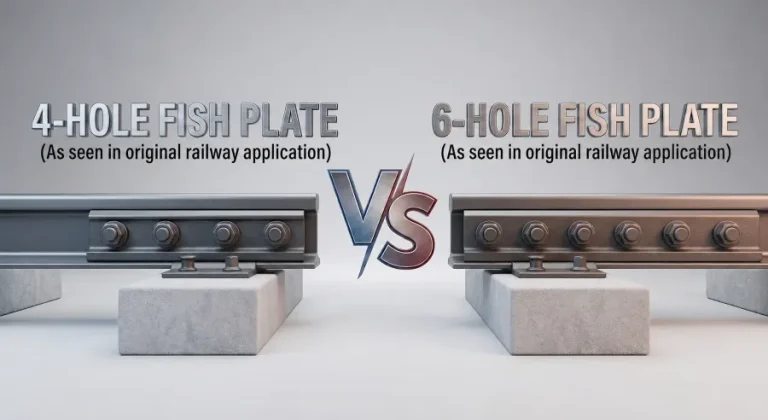
Here’s something that surprises many engineers: the difference between 4-hole and 6-hole fish plates isn’t just bolt count. The 6-hole version spreads clamping force across more of the rail web, which reduces point loading on each bolt. For main runways and anything QU100 or heavier, go with 6-hole. The cost difference is minimal. The reliability difference isn’t.
It sounds obvious, but surface treatment still gets overlooked surprisingly often. Indoor and dry? Oiled is fine. Outdoor? Painted or galvanized. Coastal? Hot-dip galvanized, full stop. Chemical plant? Epoxy or stainless.
On coastal crane rail installations we’ve inspected, standard oiled fish plates corroded through in under three years. Galvanizing would have cost a fraction more. Specifying the right coating for the actual operating environment is cheaper than replacing corroded plates two years in.
One question customers often ask us is whether they can use the same fish plate specification across different rail standards. NO. And this is exactly why procurement teams need to be careful.
When purchasing crane rail fish plates, don’t compare suppliers based on price alone. The cheapest quote often comes with compromises you won’t see until the plates are installed. Ask for:
If your project follows DIN 536 or another specific standard, ask the supplier whether the fish plates are manufactured to that standard or simply machined to similar dimensions. There’s a difference. A plate that looks right but wasn’t produced to the standard’s tolerances will perform differently under load.
Personalmente, I’d rather spend a little more on a correctly machined fish plate than save 10% on a component that will be buried under a crane for the next twenty years. A quotation that looks 15% cheaper can end up costing double once you factor in the labor, downtime, and rail damage from a failed joint.
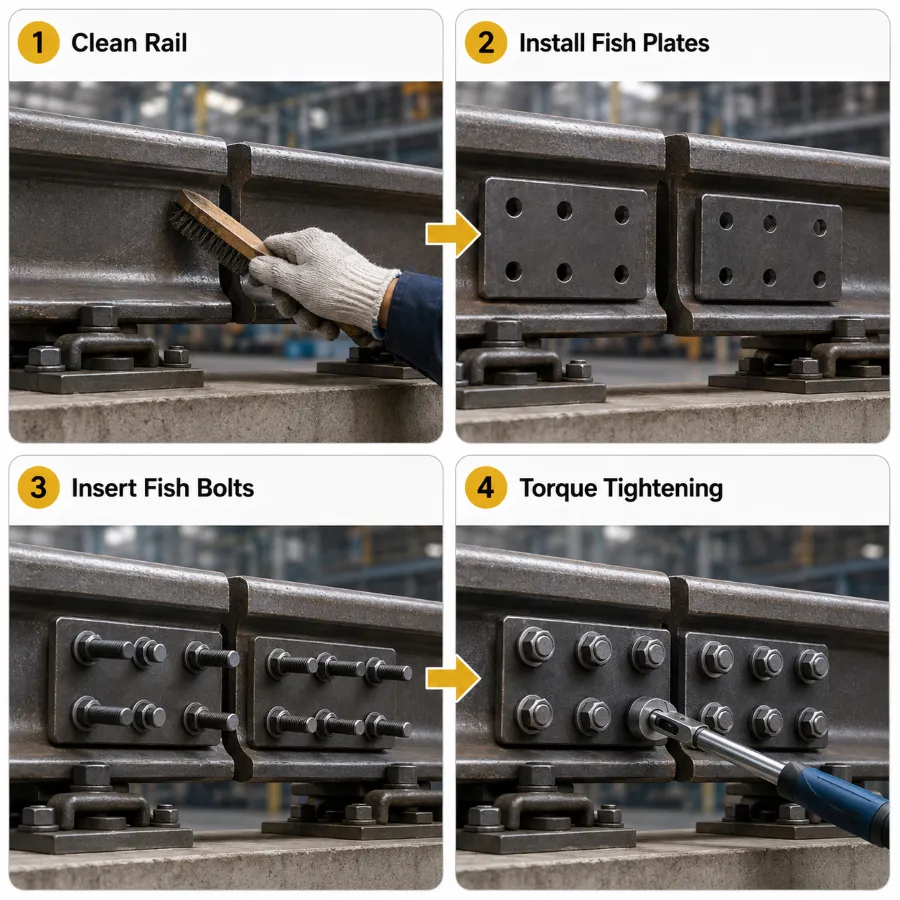
One thing I’ve noticed on many crane rail projects is that crews focus on the bolts and ignore the contact surfaces. Ruggine, grasso, and mill scale trapped between the rail and fish plate prevent full contact. The clamping force drops long before the bolts actually loosen.
Clean the rail ends. Wire brush, a few minutes per joint. Cheapest thing you can do to extend joint life.
While you’re at it, check for burrs, crepe, or deformation. On more than one project, the rail end had a hairline crack hidden under surface rust. The fish plate installation propagated the crack further under load. If you see a crack, cut the rail back or replace it. Don’t clamp over it.
Crane rails expand with temperature. The joint gap accommodates that movement.
People assume a tighter gap is better—less bump when the wheel crosses. Wrong. A gap that’s too tight causes the rail ends to butt against each other as temperatures rise. The rail can buckle. The fish plate can crack.
For general indoor crane rails, a standard gap works. In high-temperature environments like steel mills, you need more room. What matters is that the gap is uniform across the rail width. Uneven gap means uneven load transfer. A gap gauge takes seconds to use and catches problems that would otherwise show up months later as accelerated wear.
Fish plates come as matched pairs. Left and right. The machining tolerances are set for each pair, and mixing plates from different batches throws off the fit. Don’t do it.
Place one plate against each side of the rail web. Check for full contact. If there’s a gap between the plate and the fishing surface, stop. The profile doesn’t match. Forcing it creates problems that show up as loose bolts within weeks.
One issue we frequently encounter: the rail clips and rail pads near the joint sometimes interfere with the fish plate seating. Before you blame the fish plate, make sure the surrounding fastening system isn’t the problem.
Many installers think torque is everything. The wrench clicks at the right value, the joint is secure. Not quite.
Torque is one part of the equation. Contact area is another. Bolt grade is another. Spring washers are another—and those get skipped more often than I’d like to admit.
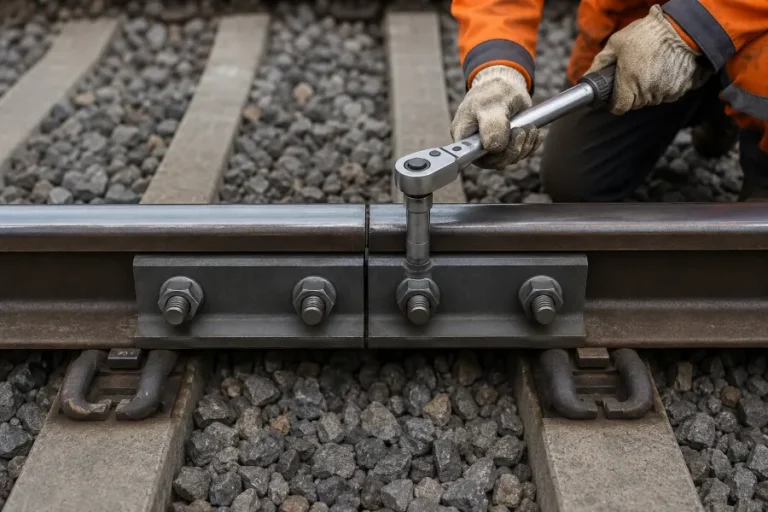
Insert the fish bolts with spring washers. Per prima cosa serrarli tutti a mano in modo che le piastre siano posizionate uniformemente. Quindi utilizzare una chiave dinamometrica calibrata seguendo uno schema incrociato, lavorando fino alla coppia finale in due o tre passaggi.
| Dimensione del bullone | Grado | Coppia (Nm) |
| M24 | 8.8 | 250–350 |
| M27 | 8.8 | 350–500 |
Un errore che vedo ancora sorprendentemente spesso: serrando un bullone alla coppia massima prima degli altri. Il piatto di pesce si attorciglia. L'area di contatto cade. Settimane dopo, i bulloni si allentano, non perché siano difettosi, ma perché il giunto non è mai stato bloccato in modo uniforme.
Ed ecco la cosa che nessuno ti dice. Dopo che la gru è stata in funzione per un giorno, i bulloni si assestano. Tutti quanti. I componenti si incastrano insieme sotto carico reale, e un bullone che era conforme alle specifiche ora è sotto. Questo è normale. Torna il giorno dopo con una chiave dinamometrica. Dieci minuti per canna. Salva più callback di qualsiasi altra cosa nel processo.
Spirit level across the joint. Running surface flush, no step. Re-check the expansion gap. Record the date, torque values, bolt grade, and batch number.
Two minutes. That’s it. But when something goes wrong six months from now, you’ll know exactly what was installed and when.
A port crane project. Three months in, the bolts kept loosening. The maintenance team re-tightened them. Problem came back every few weeks.
When we inspected the joint, the issue was obvious: QU100 rails had been installed with fish plates intended for QU80 rails. The bolt holes aligned. That’s why nobody caught it. But the fishing angles didn’t fully contact the rail web. The bolts held torque on paper, but the clamping force was hitting maybe 60% of the designed contact area.
That’s the problem. Tutto sembrava corretto finché non abbiamo misurato la superficie di contatto.
La sostituzione delle ganasce con il profilo QU100 corretto ha risolto il problema completamente. Non ho toccato i binari. L’allineamento dei fori dei bulloni non significa che il profilo sia corretto.
Gli stessi problemi si presentano ovunque. Piatti misti di lotti diversi. Rondelle elastiche mancanti. Serraggio sequenziale invece che trasversale. Nessun gap di espansione. Grado del bullone sbagliato. Sono tutti errori di installazione di base.
Ma due problemi meritano uno sguardo più attento perché rappresentano la maggior parte dei fallimenti congiunti che incontriamo.
Questa è probabilmente l'omissione più comune. I bulloni vengono serrati correttamente durante l'installazione, tutti firmano, e nessuno torna indietro. Il problema è che i bulloni si stabilizzano. When a crane starts running, vibration and load cause the fish plate, rete ferroviaria, and bolt assembly to seat together more tightly—sometimes enough that a bolt at spec is now significantly below. A joint that isn’t re-torqued after the first day of operation is far more likely to loosen within the first three months. The fix takes ten minutes per joint. I’ve lost count of how many callback visits could have been prevented by this one step.
Spring washers are small and cheap, which is probably why they get overlooked. But they’re the component that maintains bolt tension under vibration. On many projects we’ve inspected, the spring washers were either never installed or were reused from a previous joint. Here’s the thing: una rondella elastica che è già stata compressa oltre il suo punto di snervamento non fornisce quasi nessuna tensione residua. Senza rondelle funzionanti, il bullone si basa interamente sull'attrito e le vibrazioni del binario della gru lo supereranno in poche settimane. Trattare le rondelle elastiche come materiali di consumo. Ogni rimozione di un bullone significa nuove rondelle al rimontaggio. Nessuna eccezione.
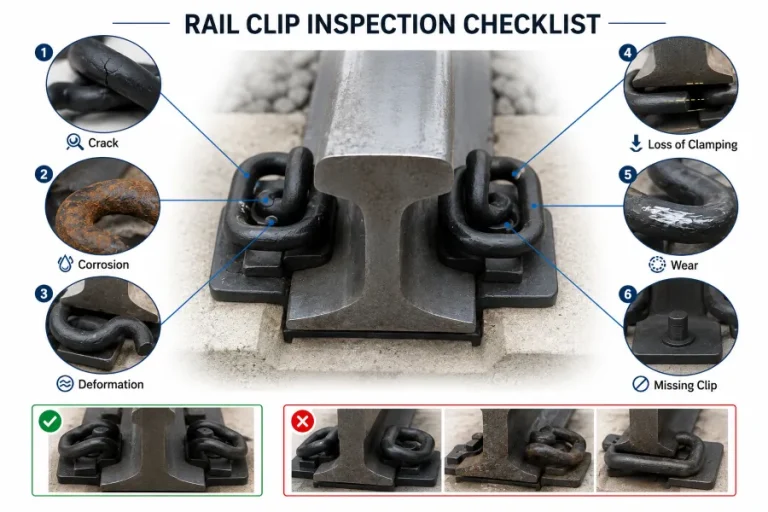
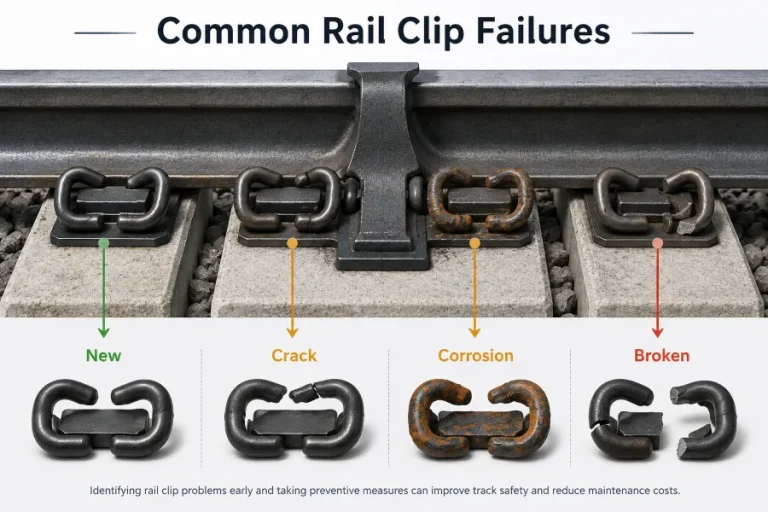
I piatti da pesce necessitano di un programma di ispezione regolare. Controllo visivo settimanale per eventuali crepe, corrosione, bulloni allentati, o movimento dell'estremità del binario. Verifica mensile della coppia con chiave calibrata. Misurazione trimestrale del gap per individuare problemi di scorrimento ferroviario o termici. Ispezione completa annuale: tirare i bulloni, pulire le superfici, verificare la presenza di crepe da fatica, rimontare con nuove rondelle elastiche.
Sostituiscilo immediatamente se noti crepe sottili, fori per bulloni allungati, corrosione significativa, o deformazione dell'estremità della rotaia. These aren’t “watch and see” conditions. Waiting on a cracked fish plate is how a minor replacement turns into a major repair—because a failed joint under a loaded crane can damage the rail ends, the rail pads, and in worst cases, the crane wheel itself.
A fish plate may look like one of the simplest components on a crane rail system, but it often determines whether a joint remains stable after years of heavy service.
Whether you’re designing a new crane runway or replacing worn joints during maintenance, choosing the correct fish plate from the beginning is one of the simplest ways to improve long-term reliability.
A FONYO, we manufacture crane rail piatti di pesce, binario della gru bulloni di pesce, clip elastiche per binari, cuscinetti ferroviari, ruote ferroviarie, e ferroviario casting products for industrial railways and crane systems worldwide. If you’re unsure which specification matches your rail profile, Nostro squadra di ingegneri può aiutare a identificare la soluzione corretta in base ai disegni o alle dimensioni della rotaia.
NO. Le stecche a ganascia sono progettate come giunti meccanici imbullonati per consentire l'espansione termica e una facile sostituzione. La saldatura vanifica questo scopo e crea un giunto rigido che si romperà sotto stress termico. Se hai bisogno di un binario continuo, esaminare la rotaia saldata continua (CWR) Invece.
Con una corretta installazione e una manutenzione regolare, tipicamente 10 A 20 anni. Gli ambienti pesanti come le acciaierie possono ridurlo. I fattori chiave sono la corretta corrispondenza del profilo, corretto mantenimento della coppia di serraggio dei bulloni, e protezione dalla corrosione.
Non lo consigliamo. I bulloni ad alta resistenza subiscono un allungamento permanente durante la coppia. Riutilizzarli rischia di avere una forza di serraggio incoerente e un potenziale cedimento a taglio. Anche le rondelle elastiche dovrebbero essere sempre sostituite: perdono la tensione dopo un ciclo.
Non proprio. Le piastre a ganascia possono tollerare un disallineamento verticale molto lieve, ma non sono strumenti di correzione dell’allineamento. Se le estremità del binario sono visibilmente disallineate, fissa prima le rotaie. L'utilizzo della stecca per forzare l'allineamento accelererà l'usura di tutto.
Rondelle elastiche mancanti o usurate. Serraggio irregolare dei bulloni che deforma la piastra. Valori di coppia errati. Scarso contatto tra la stecca e il nastro della rotaia a causa della mancata corrispondenza del profilo o delle superfici sporche. Vibration from heavy crane loads will loosen any joint that isn’t properly clamped—which is why that post-installation torque check matters so much.