Escanea el código WeChat para contactarnos
Escanea el código WeChat para contactarnos
No dudes en enviarnos un correo electrónico y te responderemos lo antes posible.
Creando el futuro con corazón y alma


Crane rail platos de pescado are high-strength steel joint bars that connect two rail ends to ensure continuous alignment, Distribuir cargas dinámicas en las ruedas., y mantener la estabilidad de la vía bajo operaciones pesadas de grúa. Selecting the right fish plate means matching the rail profile (QU70–QU120, DIN A55–A120), while proper installation demands precise alignment, correct bolt torque, and scheduled inspection.
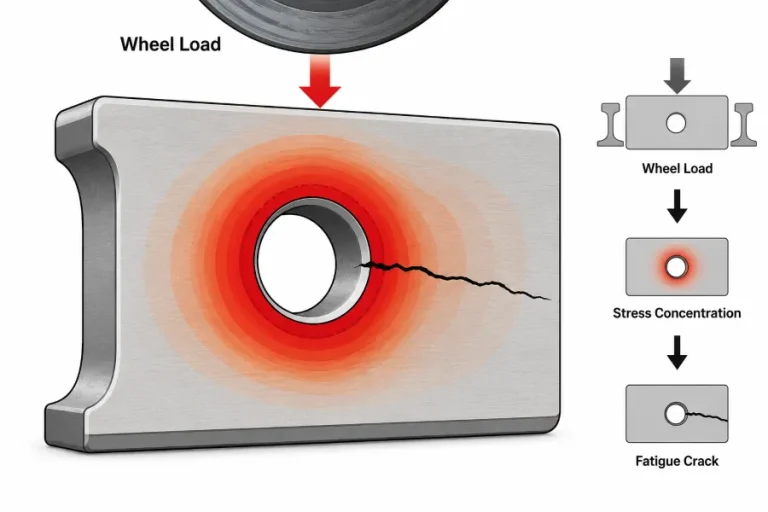
Crane rail joints experience some of the highest impact loads in any rail fastening system. Yet many premature failures are not caused by the rail itself—they begin at the fish plate connection.
After working on crane rail projects across steel mills, puertos, and heavy fabrication plants, we’ve found that choosing the correct fish plate profile and installing it properly often makes the difference between decades of reliable service and constant maintenance. The fish plate may look like one of the simplest components in a crane rail system, but it carries the full force of every wheel passage at every joint.
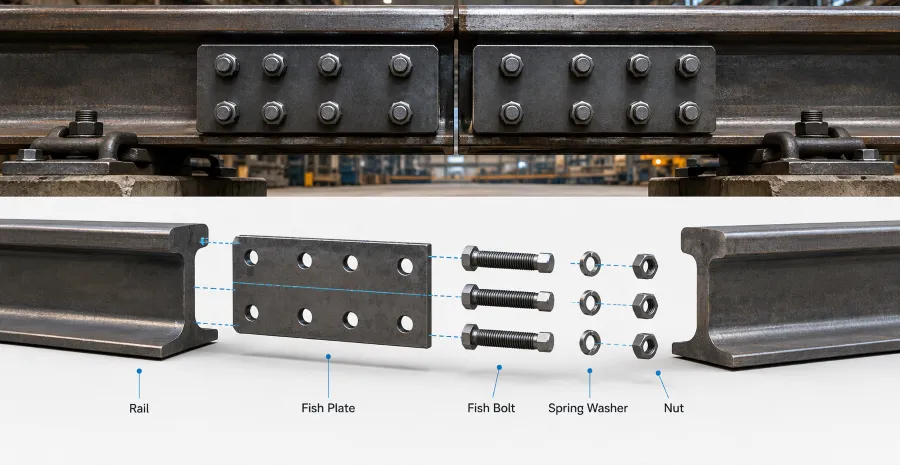
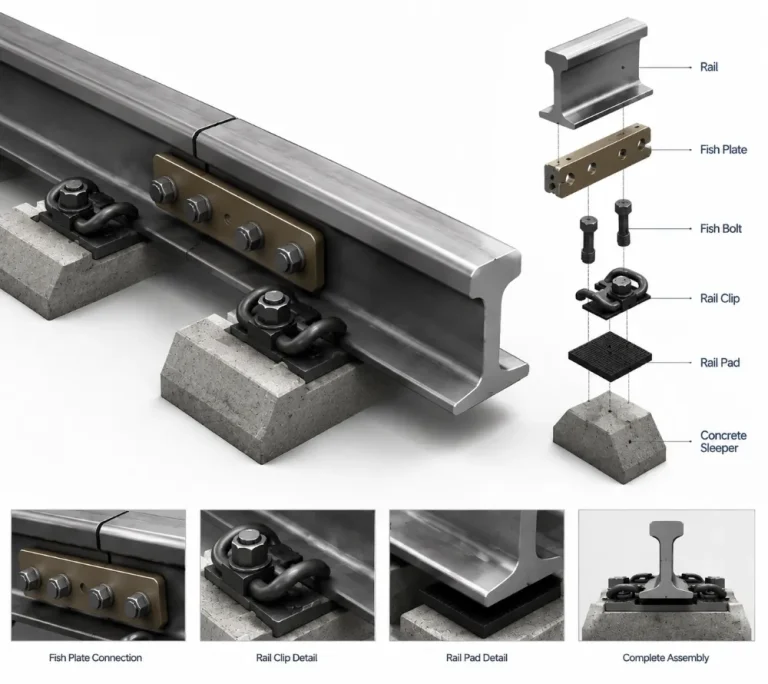
A plato de pescado—also called a joint bar or splice bar—is a flat steel bar that clamps onto the web of two adjoining rail ends. You install them in matched pairs, one on each side, and secure the assembly with high-strength fish bolts. The goal is to make two separate rail sections behave as one continuous member.
In a crane rail application, the fish plate does three things. It transfers forces across the joint so the load doesn’t concentrate at the rail ends. It holds the running surface in alignment so crane wheels pass through smoothly. And it absorbs some of the shock each time a wheel crosses the gap, which slows material fatigue and reduces noise.
People often assume that because crane rails run at low speeds, the joints don’t see much stress. The opposite is true. Crane rails handle axle loads that can exceed 30 a 50 montones, and because the crane moves slowly, the wheel sits on the joint longer—transferring the full load through the fish plate for a longer duration than a high-speed train would.
This is where most selection errors begin. Fish plates are profile-specific. There is no universal fit.
Some suppliers advertise universal crane rail fish plates. Personally, I’m skeptical. In most projects we’ve handled, “universal” usually means “not an exact fit.” The plate sort of works, the bolt holes line up, but the fishing angle doesn’t fully contact the rail web. Weeks later, the bolts loosen and nobody can figure out why.
On one steel plant project, we found nearly a 2 mm gap between the fish plate and the rail web because the wrong DIN profile had been supplied. The bolts reached the specified torque, but the joint still loosened after only a few weeks. The cost of that mistake—a few weeks of downtime and a full set of replacement plates—far exceeded what proper profile verification would have cost.
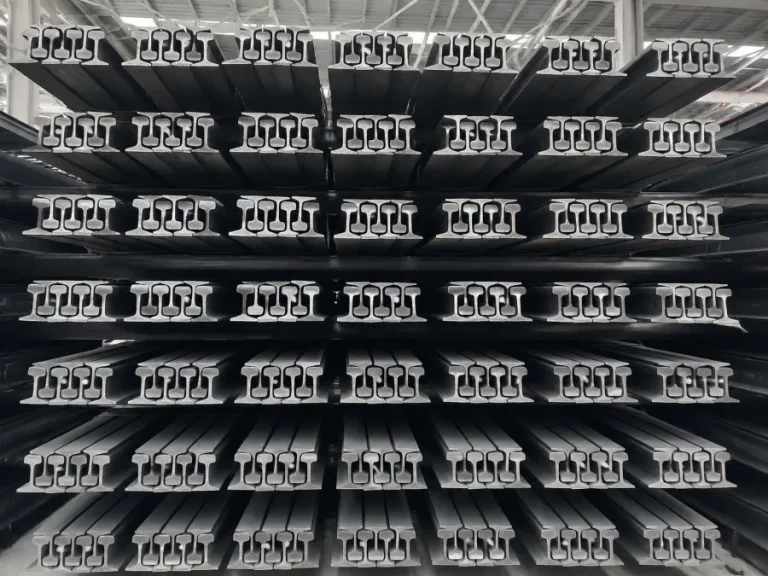
The common crane rail standards include the Chinese GB series (QU70 through QU120), German DIN 536 (A55 through A120), Russian GOST (KP70–KP120), and North American AREMA (CR104, CR135, CR171). Check the marking stamped on the web. If that’s worn off, measure the head width, altura, and base width. When in doubt, send photos to your supplier.
Once you know the profile, the dimensions follow. Here’s a reference for the most common QU-series crane rail fish plates:
| Tipo de carril | Longitud (milímetros) | Ancho (milímetros) | Espesor (milímetros) | Hole Dia. (milímetros) | Hole Spacing (milímetros) | Bolt Size |
| QU70 | 760 | 70 | 20 | 24 | 90 / 105 | M24 |
| QU80 | 820 | 75 | 20 | 24 | 100 / 120 | M24 |
| QU100 | 950 | 80 | 22 | 26 | 105 / 125 | M27 |
| QU120 | 1050 | 85 | 26 | 26 | 110 / 130 | M27 |
Larger crane rails need thicker plates and bigger bolts. That’s not a design choice—it’s physics. Always verify the manufacturer’s drawing before purchasing.
Most crane rail fish plates are carbon steel in the 45# a 55# rango. Good tensile strength, buena resistencia al desgaste, good enough for most applications. For foundry cranes and hot metal ladle cranes, alloy steel like Q345B handles the heat and impact better. Extreme loads call for quenched and tempered plates.
Whatever you choose, the supplier needs to provide a mill test certificate. Not a photocopy. Not a “trust us.” The actual certificate with chemical composition and tensile strength. If they can’t provide it, they can’t guarantee what they’re shipping you.
Here’s something that surprises many engineers: the difference between 4-hole and 6-hole fish plates isn’t just bolt count. The 6-hole version spreads clamping force across more of the rail web, which reduces point loading on each bolt. For main runways and anything QU100 or heavier, go with 6-hole. The cost difference is minimal. The reliability difference isn’t.
It sounds obvious, but surface treatment still gets overlooked surprisingly often. Indoor and dry? Oiled is fine. Outdoor? Painted or galvanized. Coastal? Hot-dip galvanized, full stop. Chemical plant? Epoxy or stainless.
On coastal crane rail installations we’ve inspected, standard oiled fish plates corroded through in under three years. Galvanizing would have cost a fraction more. Specifying the right coating for the actual operating environment is cheaper than replacing corroded plates two years in.
One question customers often ask us is whether they can use the same fish plate specification across different rail standards. No. And this is exactly why procurement teams need to be careful.
Al comprar eclisas para rieles de grúa, No compare proveedores basándose únicamente en el precio.. La cotización más barata a menudo conlleva compromisos que no verá hasta que se instalen las placas.. Pedir:
Si su proyecto sigue DIN 536 u otra norma específica, Pregunte al proveedor si las eclisas se fabrican según ese estándar o simplemente se mecanizan en dimensiones similares.. hay una diferencia. Una placa que se ve bien pero que no se produjo según las tolerancias estándar se comportará de manera diferente bajo carga..
Personally, Prefiero gastar un poco más en un plato de pescado correctamente mecanizado que ahorrar 10% sobre un componente que permanecerá enterrado bajo una grúa durante los próximos veinte años. Una cita que parece 15% Más barato puede terminar costando el doble una vez que se tiene en cuenta la mano de obra., falta del tiempo, y daños en el riel por una junta fallida.
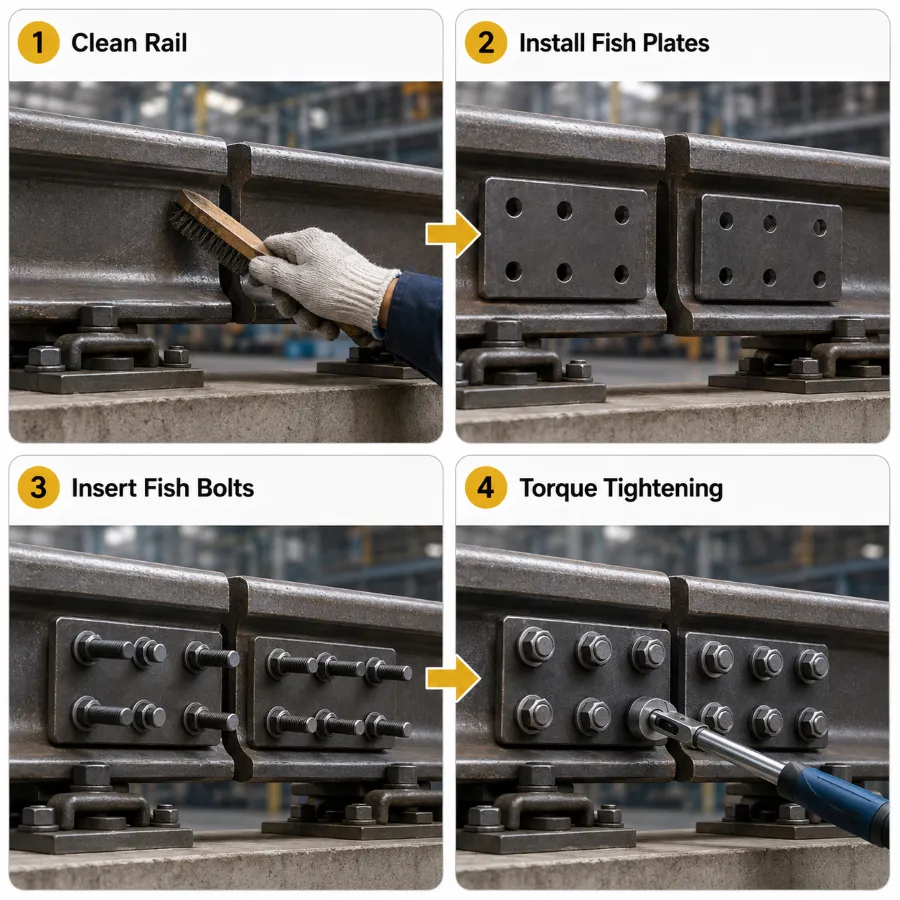
Una cosa que he notado en muchos proyectos de rieles de grúa es que los equipos se concentran en los pernos e ignoran las superficies de contacto.. Óxido, grasa, and mill scale trapped between the rail and fish plate prevent full contact. The clamping force drops long before the bolts actually loosen.
Clean the rail ends. Wire brush, a few minutes per joint. Cheapest thing you can do to extend joint life.
While you’re at it, check for burrs, grietas, or deformation. On more than one project, the rail end had a hairline crack hidden under surface rust. The fish plate installation propagated the crack further under load. If you see a crack, cut the rail back or replace it. Don’t clamp over it.
Crane rails expand with temperature. The joint gap accommodates that movement.
People assume a tighter gap is better—less bump when the wheel crosses. Wrong. A gap that’s too tight causes the rail ends to butt against each other as temperatures rise. The rail can buckle. The fish plate can crack.
For general indoor crane rails, a standard gap works. In high-temperature environments like steel mills, you need more room. What matters is that the gap is uniform across the rail width. Uneven gap means uneven load transfer. A gap gauge takes seconds to use and catches problems that would otherwise show up months later as accelerated wear.
Fish plates come as matched pairs. Left and right. The machining tolerances are set for each pair, and mixing plates from different batches throws off the fit. Don’t do it.
Place one plate against each side of the rail web. Check for full contact. If there’s a gap between the plate and the fishing surface, stop. The profile doesn’t match. Forcing it creates problems that show up as loose bolts within weeks.
One issue we frequently encounter: the rail clips and rail pads near the joint sometimes interfere with the fish plate seating. Before you blame the fish plate, make sure the surrounding fastening system isn’t the problem.
Many installers think torque is everything. The wrench clicks at the right value, the joint is secure. Not quite.
Torque is one part of the equation. Contact area is another. Bolt grade is another. Spring washers are another—and those get skipped more often than I’d like to admit.
Insert the fish bolts with spring washers. Hand-tighten all of them first so the plates seat evenly. Then use a calibrated torque wrench in a cross-wise pattern, working up to final torque in two or three passes.
| Bolt Size | Calificación | Torque (Nuevo Méjico) |
| M24 | 8.8 | 250–350 |
| M27 | 8.8 | 350–500 |
One mistake I still see surprisingly often: tightening one bolt to full torque before the others. The fish plate twists. Contact area drops. Weeks later, the bolts loosen—not because the bolts are bad, but because the joint was never evenly clamped.
And here’s the thing nobody tells you. After the crane has been running for a day, the bolts settle. All of them. The components seat together under real load, and a bolt that was at spec is now below. This is normal. Go back the next day with a torque wrench. Ten minutes per joint. Saves more callbacks than anything else in the process.
Spirit level across the joint. Running surface flush, no step. Re-check the expansion gap. Record the date, torque values, bolt grade, and batch number.
Two minutes. That’s it. But when something goes wrong six months from now, you’ll know exactly what was installed and when.
A port crane project. Three months in, the bolts kept loosening. The maintenance team re-tightened them. Problem came back every few weeks.
When we inspected the joint, the issue was obvious: QU100 rails had been installed with fish plates intended for QU80 rails. The bolt holes aligned. That’s why nobody caught it. But the fishing angles didn’t fully contact the rail web. The bolts held torque on paper, but the clamping force was hitting maybe 60% of the designed contact area.
That’s the problem. Todo parecía correcto hasta que medimos la superficie de contacto..
Reemplazar las eclisas con el perfil QU100 correcto lo solucionó por completo. No toqué los rieles. Que los orificios de los pernos estén alineados no significa que el perfil sea el correcto.
Los mismos problemas aparecen en todas partes.. Platos mixtos de diferentes lotes.. Faltan arandelas de resorte. Apriete secuencial en lugar de transversal. Sin brecha de expansión. Grado de perno incorrecto. Todos son errores básicos de instalación..
Pero dos problemas merecen una mirada más cercana porque explican la mayoría de las fallas conjuntas que encontramos..
Esta es probablemente la omisión más común. Los pernos se aprietan correctamente durante la instalación., todos firman, y nadie regresa. El problema es que los tornillos se asientan.. When a crane starts running, vibration and load cause the fish plate, red ferroviaria, and bolt assembly to seat together more tightly—sometimes enough that a bolt at spec is now significantly below. A joint that isn’t re-torqued after the first day of operation is far more likely to loosen within the first three months. The fix takes ten minutes per joint. I’ve lost count of how many callback visits could have been prevented by this one step.
Spring washers are small and cheap, which is probably why they get overlooked. But they’re the component that maintains bolt tension under vibration. On many projects we’ve inspected, the spring washers were either never installed or were reused from a previous joint. Here’s the thing: una arandela elástica que ya ha sido comprimida más allá de su límite elástico casi no proporciona tensión residual. Sin lavadoras que funcionen, el perno depende completamente de la fricción, y la vibración del riel de la grúa superará eso en unas semanas. Trate las arandelas elásticas como consumibles. Cada extracción de perno significa nuevas arandelas al volver a ensamblar.. Sin excepciones.
Los platos de pescado necesitan un programa de inspección regular. Control visual semanal para detectar grietas., corrosión, pernos sueltos, o movimiento del extremo del carril. Verificación de torque mensual con una llave calibrada. Medición trimestral de espacios para detectar problemas térmicos o de fluencia del riel. Inspección completa anual: extraiga los pernos, limpiar las superficies, comprobar si hay grietas por fatiga, Vuelva a ensamblar con arandelas de resorte nuevas..
Reemplace inmediatamente si detecta grietas finas., agujeros de perno alargados, corrosión significativa, o deformación del extremo del riel. These aren’t “watch and see” conditions. Waiting on a cracked fish plate is how a minor replacement turns into a major repair—because a failed joint under a loaded crane can damage the rail ends, the rail pads, and in worst cases, the crane wheel itself.
A fish plate may look like one of the simplest components on a crane rail system, but it often determines whether a joint remains stable after years of heavy service.
Whether you’re designing a new crane runway or replacing worn joints during maintenance, choosing the correct fish plate from the beginning is one of the simplest ways to improve long-term reliability.
En FONYO, we manufacture crane rail platos de pescado, carril de la grúa pernos de pescado, clips de riel elásticos, almohadillas de riel, ruedas de ferrocarril, and railway casting products for industrial railways and crane systems worldwide. Si no está seguro de qué especificación coincide con su perfil ferroviario, nuestro equipo de ingeniería puede ayudar a identificar la solución correcta según sus dibujos o dimensiones del riel.
No. Las eclisas están diseñadas como juntas mecánicas atornilladas para permitir la expansión térmica y un fácil reemplazo.. La soldadura anula ese propósito y crea una unión rígida que se agrietará bajo tensión térmica.. Si necesitas un carril continuo, mirar en el carril soldado continuo (CWR) en cambio.
Con una instalación adecuada y un mantenimiento regular., típicamente 10 a 20 años. Los entornos de trabajo pesado, como las acerías, pueden acortar ese tiempo.. Los factores clave son la coincidencia correcta del perfil., mantenimiento adecuado del par de apriete de los pernos, y protección contra la corrosión.
No lo recomendamos. Los pernos de alta resistencia sufren un estiramiento permanente durante el torque. Reusing them risks inconsistent clamping force and potential shear failure. Spring washers should always be replaced too—they lose their tension after one cycle.
Not really. Fish plates can tolerate very minor vertical misalignment, but they’re not alignment correction tools. If the rail ends are visibly misaligned, fix the rails first. Using the fish plate to force alignment will accelerate wear on everything.
Missing or worn spring washers. Uneven bolt tightening that warps the plate. Incorrect torque values. Poor contact between the fish plate and rail web due to profile mismatch or dirty surfaces. Vibration from heavy crane loads will loosen any joint that isn’t properly clamped—which is why that post-installation torque check matters so much.