Escanea el código WeChat para contactarnos
Escanea el código WeChat para contactarnos
No dudes en enviarnos un correo electrónico y te responderemos lo antes posible.
Creando el futuro con corazón y alma


Railway track maintenance is the scheduled inspection, repair and replacement of rails, sujetadores, sleepers and ballast to keep track geometry safe and trains running. It runs on defined cycles and wear limits — like UIC 860 for rail profiles and FRA 49 CFR Part 213 for inspection frequencies — and it never really stops.
Most people picture a railway track as a piece of steel laid on stones, good for thirty years, no questions asked. Anyone who has watched a grinding train crawl down a mainline at 3 a.m. knows the picture is wrong.
Railway track maintenance is the quiet industry that keeps the loud one running. It isn’t glamorous: inspecciones, measurements, grinding passes, and the occasional emergency call when a fastener gives up on a cold morning. What it is, is continuous. Every train that passes wears the rail a little more, loosens a bolt a little more, compacts the ballast a little more. Leave small defects alone and they grow into broken rails — and broken rails are not a budget problem, they are a derailment problem.
This guide covers the three activities that actually matter — inspection, repair and replacement — and finishes with what procurement teams should be asking before they buy any of the components that keep the whole system alive.
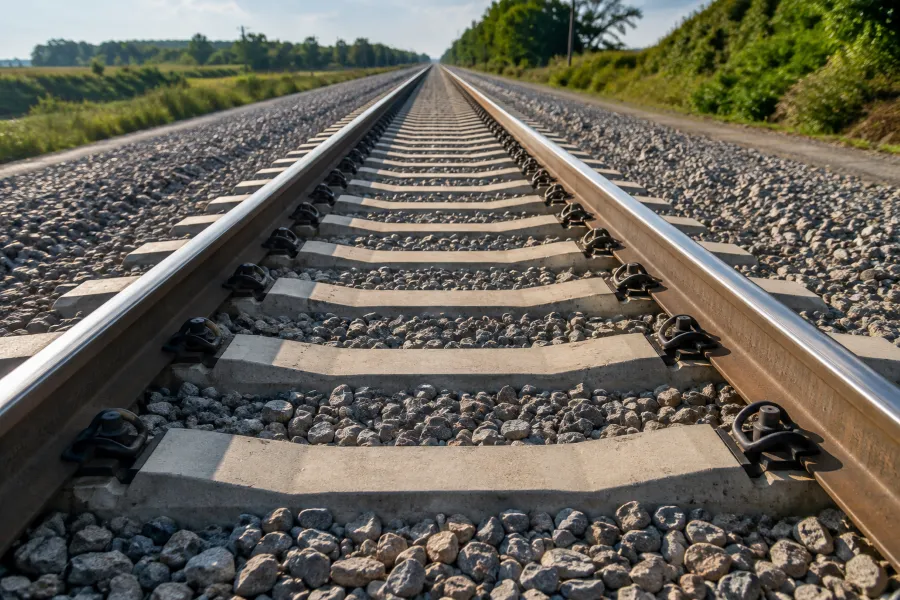
Here’s the thing nobody tells you about railway track: it’s not a product, it’s a process. A railway track maintenance program works the same way — it’s not a checklist you finish once, but a rhythm you keep up for decades. The rail, the fasteners, the sleepers, the ballast — every element is slowly failing from the day it’s installed. That’s by design. Steel rails are allowed to wear; that’s how they carry millions of gross tonnes without failing catastrophically.
The wheel and the rail wear as a pair. The rail profile controls how the wheel sits on it, and a worn rail head quietly changes the wheel-rail contact patch. That’s why track maintenance and traini wheel design have to be discussed together — a perfectly maintained track with a badly profiled wheel is still a bad interface, and vice versa.
Three activities keep the process on track:
None of them can substitute for the others. I’ve seen operators try — inspection-heavy programs that never grind, repair crews that keep welding the same joint for years. It ends the same way, usually with an unplanned possession and a very long night.
Inspection is the backbone of railway track maintenance, and most of it is remarkably low-tech. A walking inspector with a gauge, a hammer, and a trained eye still catches things that no sensor does — subtle things, like the way a bolt head sits slightly off after a hard winter, or the faint rust bloom around a fish plate that says water has been sitting somewhere it shouldn’t.
That said, the walking inspector can’t see inside the rail. Pruebas ultrasónicas (Utah) poder. A rail can look perfect on the outside and carry a transverse defect growing quietly through the head — that’s the failure mode that snaps rails, and it’s invisible to the naked eye until it’s too late. That’s why networks run UT on a regular cycle: monthly on the busiest corridors, quarterly to annually elsewhere. And why FRA’s Track Safety Standards (49 CFR Part 213) require inspection on a fixed schedule rather than “when someone gets around to it.”
Track geometry cars add the other dimension. They measure gauge, cross-level, alignment and surface at speed, and they find the problems that don’t show as visible damage: the track that’s still within tolerance on a quiet day but at the edge of it under a loaded train. Por extraño que parezca, geometry data is usually not the bottleneck. Acting on it is. I’ve lost count of the maintenance departments drowning in inspection data they don’t have the possession windows to act on.
One number worth knowing: on heavy-haul lines, inspection frequency is measured in days, not months.
Repair work is where railway track maintenance gets physical. Rail grinding is the biggest part of it — removing corrugation and surface defects, restoring the head profile, and buying the rail another few years. A well-run grinding program is not glamorous, but it’s the cheapest life-extension tool in the industry. Some networks grind on a fixed cycle, others grind on measurement; the good ones do both.
Then there’s welding. Small surface defects — squats, minor shelling, head checks — can be repaired by weld build-up. It works, and it’s economical, up to a point. But here’s where I’m skeptical of some suppliers: every repair weld is a new defect risk, and a joint that’s been welded two or three times stops being a repair and starts being a liability. Most standards limit how much weld repair a rail can take for exactly this reason. If a contractor tells you their repair welds have unlimited life, alejarse.
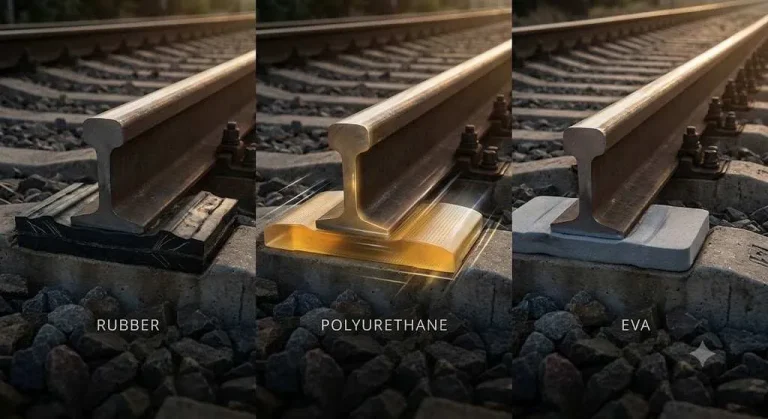
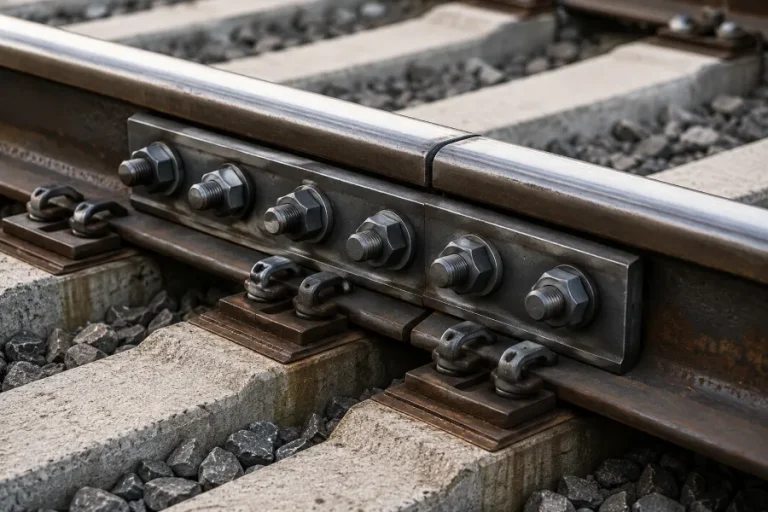
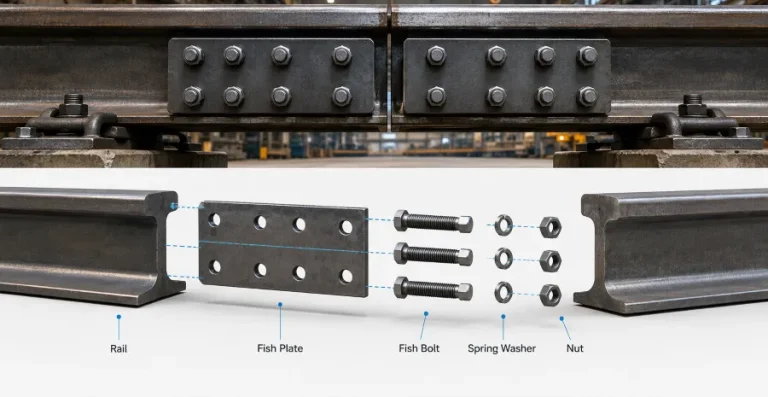
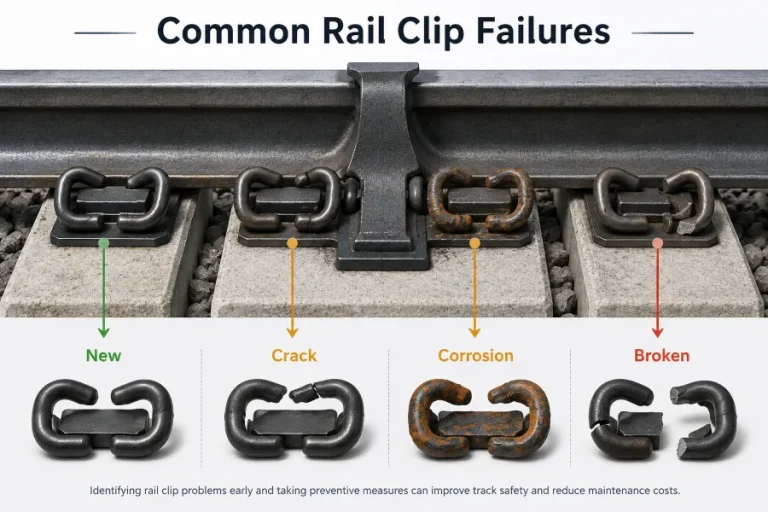
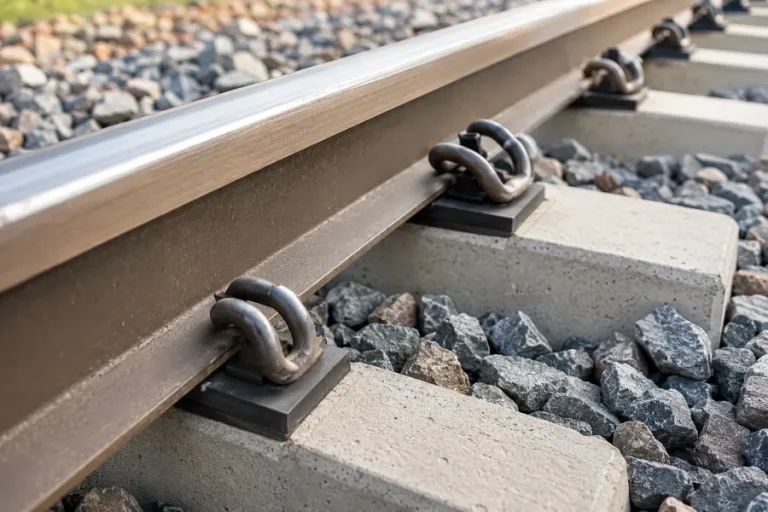
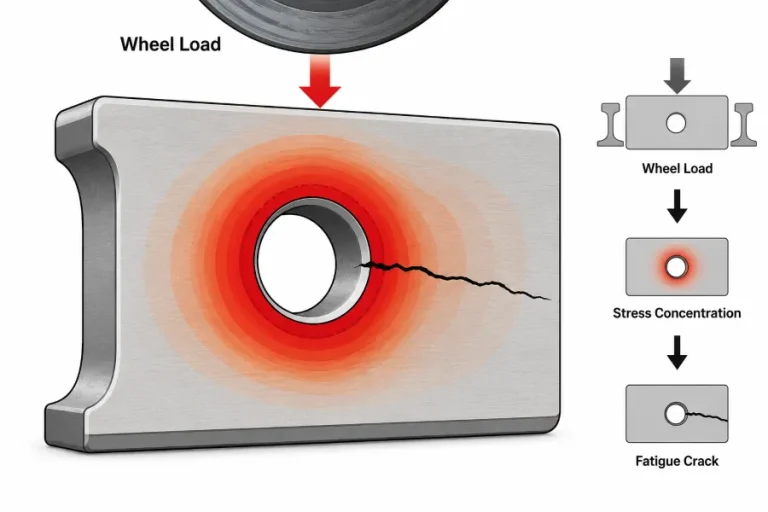
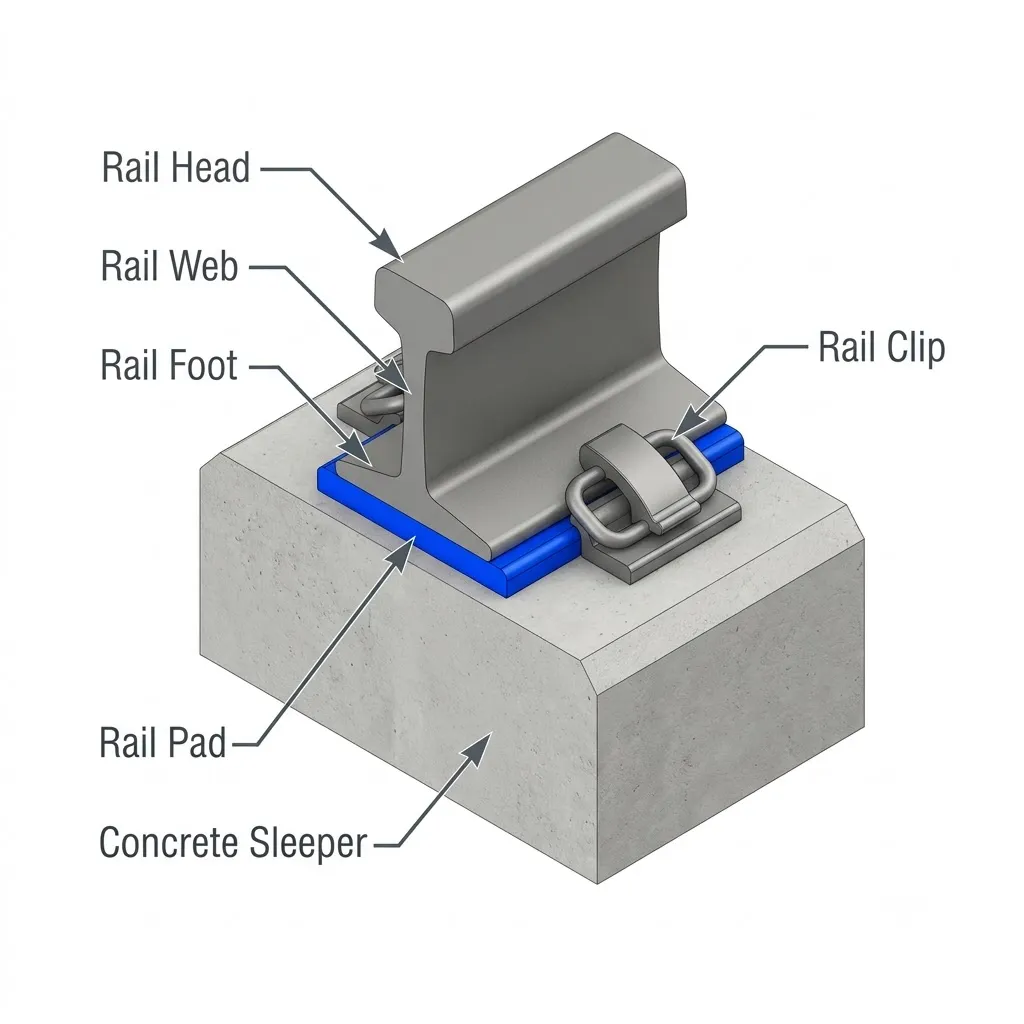
The part of repair that gets the least attention is the one closest to what we do: the fastening system. Platos de pescado, pernos de pescado, clips de riel elásticos, rail pads — these are the small components that hold everything together, and they’re the first to show fatigue. A loose bolt doesn’t look dramatic. It is. It changes the joint stiffness, accelerates hammering on the rail ends, and can open a gap that turns a small defect into a broken joint. Fish bolt loosening is such a persistent problem that it deserves its own explanation — and it has one,
The routine is boring and non-negotiable: check torque with a wrench, not a feel. Replace clips that have lost their preload instead of “monitoring” them. Swap aged rail pad before they harden to the point where they stop cushioning and start transmitting shock. Inspect fish plate for corrosion and fatigue cracking at every joint visit — especially on jointed track, which most of the world is quietly phasing out but still runs millions of kilometres of.
Repair postpones replacement; it can’t prevent it. Every railway track maintenance program has to accept that steel rails have a finite life, and the industry measures it in two ways: wear and fatigue.
Wear is the visible one. The rail head wears down and sideways as trains pass, and every network publishes limits — typically 6 a 10 mm of vertical head wear depending on rail section and line speed, aligned with profiles like UIC 860 and material standards like EN 13674. Exceed the limit and the rail profile no longer matches the wheel; you get gauge widening, poor contact, and a much higher risk of derailment at speed.
Fatigue is the sneaky one. Even a lightly worn rail can reach the end of its fatigue life after enough cumulative load — measured in millions of gross tonnes (mgt), not in years. Light branch lines can carry rails for thirty or forty years. Heavy-haul corridors can exhaust a rail in a decade. The calendar doesn’t matter; the tonnage does.
When a rail comes out, the replacement is a small civil engineering project in itself: cut out the old section, bring in the new, weld it with aluminothermic (thermite) or flash butt welding, grind the weld flush, and re-check the geometry. Done properly, a weld is invisible — and that’s the test. If you can feel the weld with your fingernail, it wasn’t done properly.
Jointed track has its own replacement logic. Fish plates and fish bolts are wear items, and they’re cheap compared to what they protect. Replace them on condition, not on failure. A cracked fish plate found in an inspection costs one night of work; a broken joint found by a train costs a lot more.
Most railway track maintenance failures that make the news are actually procurement failures that happened years earlier. The component that fails wasn’t necessarily the wrong component — it was the one nobody verified. So if you’re buying rail components, ask for more than a price.
A supplier who can’t produce these on request isn’t necessarily bad. But you’ll be the one explaining to the track engineer why the cheap clips stopped holding preload after eighteen months.
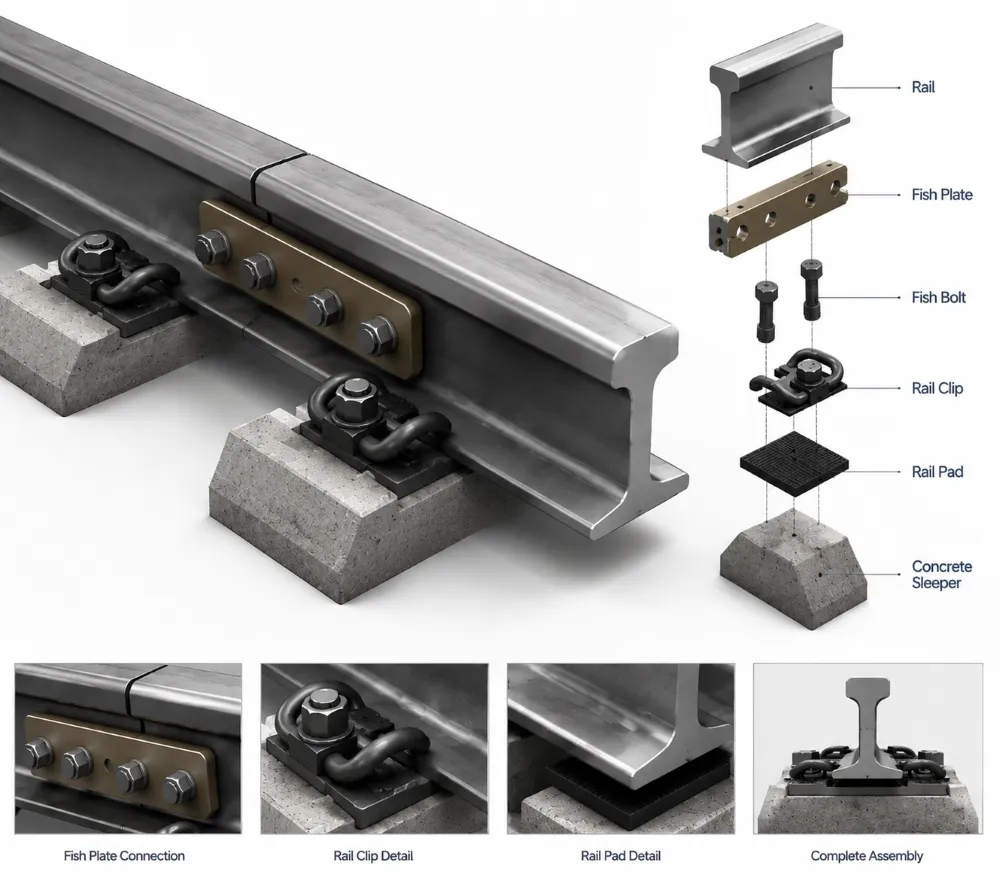
A track component may look like the simplest thing in the railway — a piece of steel, la tienda, a clip. It isn’t. Every one of them is a fatigue problem waiting to happen, and the difference between a well-run railway and a recurring one is whether the maintenance program finds the problem while it’s still cheap.
Whether you’re building a railway track maintenance program from scratch, replacing worn fasteners, or just auditing your supply chain, the same rules apply: inspect on a schedule, repair before replacement becomes urgent, and replace on condition — never on hope. And buy the components like your maintenance budget depends on it, because it does.
EnFONYO, nosotros fabricamos ruedas de ferrocarril, platos de pescado, pernos de pescado, clips de riel elásticos and rail pads for operators and contractors who take the wheel-rail interface seriously. If you’d like the technical data — material certificates, dimensional reports, fatigue test evidence — send us your specification and we’ll send you what a proper procurement review needs.
Mainlines are typically walked and visually inspected one to two times per week, with track geometry cars running monthly to quarterly and ultrasonic testing on cycles from monthly (high-traffic corridors) to annually. FRA’s Track Safety Standards (49 CFR Part 213) set the minimums; most operators run well above them.
Small surface defects like squats and head checks can be repaired by weld build-up, within limits set by standards. Transverse or internal cracks cannot be safely welded — the affected section must be cut out and replaced, and the new joint welded with thermite or flash butt welding.
Steel rails typically last 20 a 40 years on light lines and as little as 10 years on heavy-haul corridors. Rail life is measured in cumulative load (millions of gross tonnes), not calendar time — wear limits and fatigue life decide when a rail must be replaced.
Most networks allow 6 a 10 mm of vertical head wear before replacement, depending on rail section and line speed, aligned with rail profiles like UIC 860. Side wear on curves and total wear are also limited; exceeding them risks gauge widening and poor wheel-rail contact.
Fish bolts loosen because jointed track flexes under every passing wheel, and the cyclic hammering at the joint gradually relaxes bolt tension. Thermal movement of the rail adds to it. It’s a fatigue problem, not an installation problem — which is why regular torque checks are part of every joint maintenance cycle.