Scansiona il codice WeChat per contattarci
Scansiona il codice WeChat per contattarci
Sentiti libero di inviarci un'e-mail e ti risponderemo il prima possibile.
Creare il futuro con cuore e anima


Nel settore della fonderia, la fusione in sabbia è il pilastro assoluto. When it comes to colata in sabbia, “sabbia resinosa” E “sabbia rivestita” sono indispensabili. Tuttavia, nelle applicazioni pratiche, they each have their own characteristics and uses.
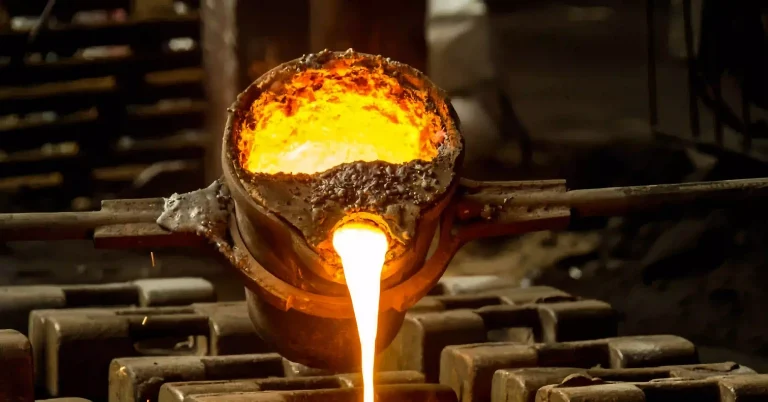
Resin sand, come suggerisce il nome, is a mixture of raw sand (usually quartz sand) and a synthetic resin binder. Its core technology is “autoindurente”, which means that the mixed sand will gradually harden on its own.

1. How does it work?
Workers first quickly mix raw sand with a resin binder (often with a catalyst) in a sand mixer. They then quickly fill the mixture into a mold (also called a sand box) and compact it by tamping or vibrating. Once filled, no additional heating is required. With the help of the catalyst, the resin in the sand undergoes a chemical reaction at room temperature, cross-linking and curing. After about a few hours, it becomes a solid sand block. A questo punto, the mold is disassembled, revealing a sand mold with an interior shape identical to the part.
2. What are its characteristics?
Flexible size, suitable for large parts: Resin sand is self-hardening and very strong, so it can be used to make very large castings. Resin sand is widely used in large machine tool beds, ship engine blocks, large valves and other “giants”.
Precision and finish: Compared with traditional water glass sand or clay sand, resin sand castings are more precise in size and have a smoother surface.
The process is relatively simple: no complex heating equipment is required, and the site adaptability is good. After molding, the sand mold has high hardness, is easy to carry, and is not easily damaged.
A bit of “smell”: The resin will emit some pungent odor during the curing process, and the ventilation requirements for the working environment are relatively high.
Cost considerations: The cost of resin binder itself is not low, but for single-piece, small-batch large castings, its overall cost is still advantageous.
Insomma, resin sand is good at constructing complex and large-scale blank castings from scratch, and is the cornerstone of the heavy machinery manufacturing industry.
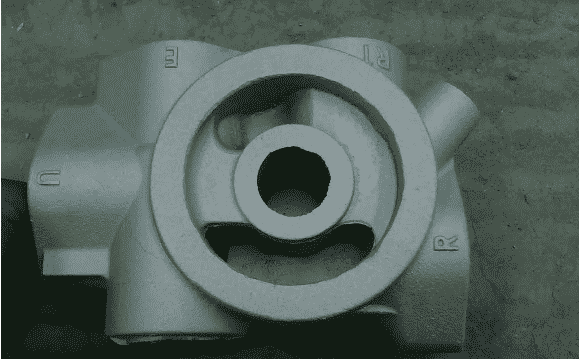
IL “coated” part of coated sand is the essence. It’s a pre-coated sand material that’s coated with a thin layer of solid phenolic resin, creating a grain-like, “pre-coated” sabbia. While this sand is loose at room temperature, its formation depends entirely on heat.
1. How does it work?
Primo, a metal mold (usually iron or copper) with a built-in heating function is created. Dry coated sand is then injected or poured into this metal mold, which is heated to 200-300°C. The coated sand near the mold encounters the high temperature, causing the resin layer on its surface to rapidly melt and flow, then solidify again, forming a hard shell several millimeters thick. After waiting for tens to several minutes for the sand shell to fully harden, the mold is opened, and a hollow, smooth-walled “sand shell” is formed. This is what we often call a “shell mold” O “shell core.”
2. What are its characteristics?
High precision and smooth surface: This is the biggest advantage of coated sand. Because it is thermoformed in a precision metal mold, the resulting sand core dimensions are very precise, and the inner holes or cavities of the cast parts have extremely smooth surfaces, requiring almost no subsequent processing.
Ultra-high efficiency, suitable for batch production: The heating and curing process is very fast, and a sand core can usually be made in one or two minutes, which is particularly suitable for automated and large-scale production.
High strength and high gas generation: The sand shell made of coated sand is very hard. Tuttavia, the disadvantage is that when pouring molten iron, the resin decomposes due to heat and produces a large amount of gas. If the exhaust design is not good, it is easy to cause porosity defects in the casting.
Expertise in creating the “nucleo”: Coated sand isn’t primarily used to create the outer mold for the entire casting; rather, it’s specifically used to create the “sand core” placed inside the mold to form the complex inner cavity of the casting. Per esempio, the winding water and oil channels inside the cylinder block and cylinder head of an automobile engine are all composed of individual coated sand cores.
Perciò, high temperature and metal molds are used to quickly and accurately replicate sand cores with exquisite details.
For a more intuitive understanding, let’s make a table to summarize:
| caratteristica | Resin sand | Coated sand |
| The essence of craftsmanship | Chemical chilling (autoindurente) | Heat curing (thermosetting) |
| Main Applications | Manufacture of entire sand molds for large castings | Precision sand cores for small and medium -sized castings |
| Caratteristiche | Large casting size and good surface quality | Castings are precise in size and have a very smooth surface finish |
| Production efficiency | Slow, takes several hours to cure, suitable for single piece and small batch | Very fast , curing takes only minutes, suitable for large quantities |
| Production costs | Material costs are high, but mold and equipment costs are relatively low | The manufacturing cost of metal molds is high , but the efficiency of each piece is high |
| Applicable castings | Machine tool beds, large gears, valvole, corpi pompa, ecc. | Engine cylinder head, hydraulic valve block, pipe joint, ecc. |
Luoyang Fonyo Heavy Industries Co., Ltd, fondata nel 1998, è un produttore di parti di fusione ferroviaria. La nostra fabbrica copre un'area di 72.600㎡, con più di 300 dipendenti, 32 tecnici, compreso 5 ingegneri senior, 11 ingegneri assistenti, E 16 tecnici. La nostra capacità produttiva è 30,000 tonnellate all'anno. Attualmente, produciamo principalmente fusione, lavorazione, e assemblaggio per locomotiva, vagone ferroviario, treni ad alta velocità, attrezzature minerarie, energia eolica, ecc.
Siamo la fornitura di componenti ferroviari a CRRC(compreso più di 20 filiali e controllate di CRRC), Macchine per l'ingegneria Gemac, Sanygroup, Industrie pesanti Citic, ecc. I nostri prodotti sono stati esportati in Russia, gli Stati Uniti, Germania, Argentina, Giappone, Francia, Sudafrica, Italia e altri paesi in tutto il mondo.