Scannez le code WeChat pour nous contacter
Scannez le code WeChat pour nous contacter
N'hésitez pas à nous envoyer un email et nous vous répondrons dans les plus brefs délais.
Créer l'avenir avec cœur et âme


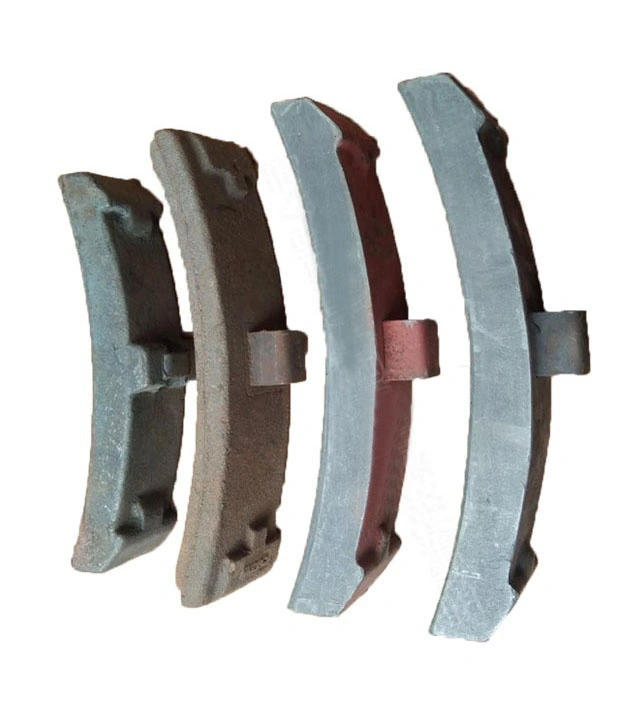
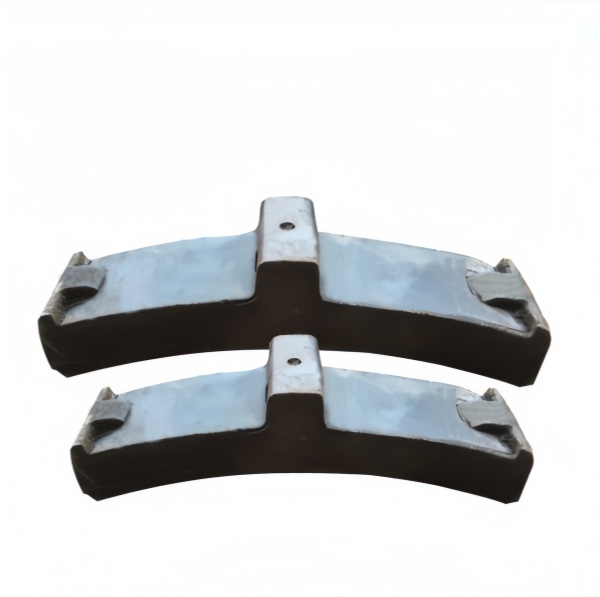
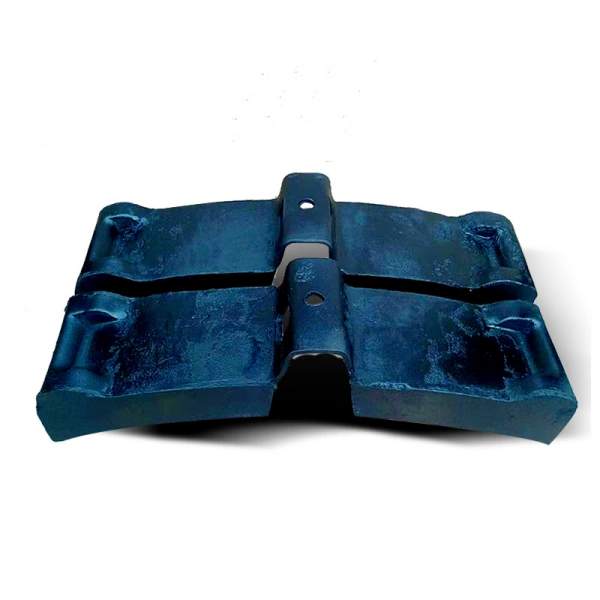
Introduction of Rail Train Brake Shoe
The brake part that directly rubs the wheels to stop the train is called a slipper. A shingle-shaped brake block made of cast iron or other material that holds the wheel tread tightly during braking and stops the wheel by friction. Dans ce processus, the braking device needs to convert the enormous kinetic energy into heat and dissipate into the atmosphere. The braking effect is good or bad, but mainly depends on the dissipation ability of friction heat energy. When using this braking method, the friction area of the brake shoe is small, and most of the heat load is borne by the wheel. The higher the train speed, the greater the heat load on the wheels when braking. If cast iron brake shoe is used, the temperature can melt the brake shoe; Even if the more advanced synthetic brake shoe is used, the temperature will be as high as 400~450 ° C. When the temperature of the wheel tread increases to a certain extent, it will make the tread wear, crack or peel, which will affect the service life and also affect the driving safety. It can be seen that the traditional tread brake shoe can not meet the needs of high-speed trains.
Les caractéristiques de Rail Train Brake Shoe
(1)good thermal stability. The resin decomposition temperature is high; the actual measurement temperature of 377 degrees Celsius
(2) compression elasticity is low, the noise is small, uniform temperature distribution.
(3)Viscosity is strong, both the aging resistance of the resin and rubber toughness, thermal decay rate is low, restorative
(4)friction resistance, and the surface has good reproducibility.
The Material Evolution of Rail Train Brake Shoe
From the cast iron brake shoe for composite materials across the early train with cast iron material, its high hardness and wear resistance can meet the demand of foundation braking, but is easy to produce metal spark, braking noise, the serious defects such as wheel wear. Along with the development of high-speed railway and overloaded freight, shoe materials has experienced three major innovations:
(1)Powder metallurgy composite material by fund of copper, iron, and graphite powder, ceramic particles sintering molding, this kind of materials with both high friction coefficient and high temperature resistance. Par exemple, the copper base brake shoe can still maintain stable friction performance at 500℃ high temperature, and the wear rate of the wheel is reduced by more than 40%, which has become the standard choice for high-speed rail trains.
(2)Carbon fiber reinforced resin base material according to the characteristics of the city railway train frequent start-stop, carbon/aramid fiber hybrid enhanced organic synthetic brake shoe stand out. Its density is only 1/3 of cast iron, but it can maintain excellent braking performance in wet and oil pollution environment, and achieve environmental protection effects of noise reduction of more than 15 décibels.
(3)Functionally gradient materials (FGM) by laser cladding technology in preparation of substrate surface gradient ceramic layer, the brake shoe friction layer and heat dissipation performance orientation optimization. The experimental data show that the thermal decay resistance of this kind of brake shoe is increased by 60% under emergency braking conditions, and the service life is extended to 300,000 kilomètres.
Application scenarios of Rail Train Brake Shoe
Adjust measures to local conditions of customized solution gave rise to different operating environment difference product matrix: cold high iron: adopting adding mos2 enhanced brake shoe at low temperature, the friction coefficient of deviation of 0.02 or less – 50 ℃ environment. Long and large ramp freight: tungsten copper composite brake shoe with forced air cooling system, continuous braking for 20 minutes temperature controllable within 400℃. Urban rail trains: nonmetallic brake shoe and magnetic track brake work together, achieve “sparkless brake”, perfect adaptation of the underground tunnel environment.
| Performance Feature | |
| Friction Stability (μ value 0.25-0.45) | In the temperature range of -40 ° C to 800 ° C, the fluctuation rate should be less than 10% to avoid the risk of sliding caused by brake “thermal recession”. |
| Wear Compatibility | The wear ratio between brake shoe and wheel should be controlled within 1:8, which not only ensures its own durability, but also reduces the frequency of wheel rotation repair. |
| Résistance à la fatigue | It is necessary to pass more than 100,000 high-frequency braking tests, and the surface crack growth rate should be less than 0.1mm/ 10,000 fois. |
| Environmental Compliance | The EU REACH regulation requires that the copper content is less than 5%, and harmful substances such as asbestos and lead are zero detected. |
| Energy Dissipation Efficiency | The brake shoe of a heavy-duty train needs to have the ability to absorb 30MJ/kg of energy instantaneously, which is equivalent to the impact of a 2-ton weight falling from a height of 150 mètres |
| Scénarios d'application | |
| High Cold Environment and High Speed Rail | adopting adding mos2 enhanced brake shoe at low temperature, the friction coefficient of deviation of 0.02 or less – 50 ℃ environment |
| Long and Large Ramp Freight | tungsten copper composite brake shoe with forced air cooling system, continuous braking for 20 minutes temperature controllable within 400℃. |
| Urban Rail Trains | nonmetallic brake shoe and magnetic track brake work together, achieve “sparkless brake”, perfect adaptation of the underground tunnel environment. |
Paquet de Rail Train Brake Shoe
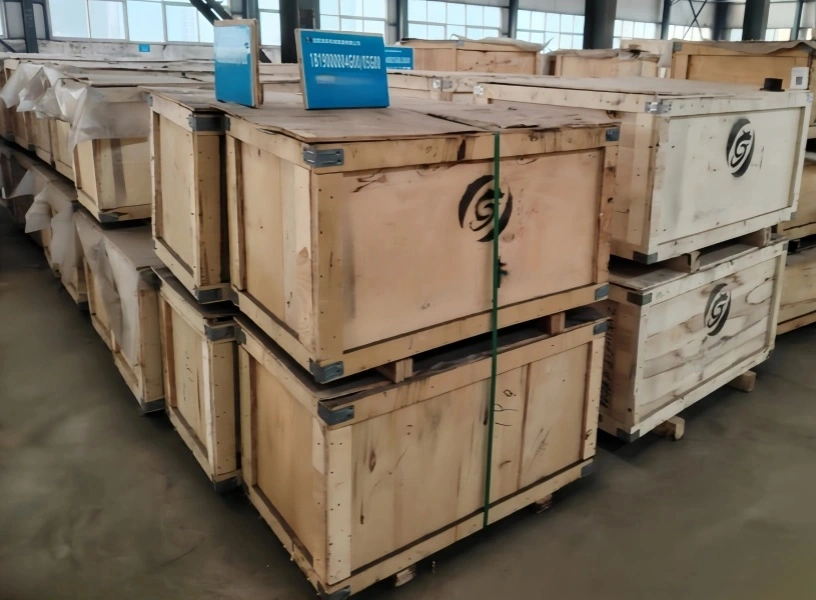
Poly-sac + boîte en carton + caisse en bois/palette, selon la demande du client
Profil de l'entreprise
Luoyang Fonyo Heavy Industries Co., Ltée. a été fondée en 1998, couvre une superficie de 72 600㎡, avec plus de 300 employés, 32 techniciens, y compris 5 ingénieurs supérieurs, 11 ingénieurs adjoints, et 16 techniciens. Il a été classé centre technologique d'ingénierie de Luoyang., Technologie Luoyang R&Centre D, et entreprise nationale de haute technologie à plusieurs reprises.
Notre capacité de production est 30,000 tonnes par an. Actuellement, nous produisons principalement de l'acier moulé, fonte (fonte grise, fonte ductile, etc.), traitement du produit fini et assemblage des composants. Les produits ont été exportés vers la Russie, les États-Unis, Allemagne, Argentine, Japon, France, Afrique du Sud,Italie et autres pays.
FAQ
T1: Êtes-vous un fabricant ou une société commerciale?
UN:Nous sommes un fabricant. Notre entreprise a été fondée en 1998, avec près de 30 ans d'expérience dans l'industrie du moulage, une superficie totale de 72 600㎡, avec une superficie de construction d'usine de 51 000㎡.
T2. Quels sont vos principaux produits?
UN: Nous nous concentrons principalement sur le moulage d'acier, fonte de fer, usinage du produit fini, et production d'assemblages de composants.
T3: Avec quelle précision pouvez-vous produire des pièces moulées?
UN: Nous avons la capacité de produire des pièces moulées avec différents procédés de coulée. La production est strictement conforme à la norme ISO 9001, OIN 14001 et ISO45001, EN15085, IRIS.
T4. Pouvez-vous produire selon les échantillons?
Oui, nous pouvons produire par vos échantillons ou dessins techniques. Nous pouvons également créer des dessins pour vous après avoir reçu vos échantillons.
Q5: Comment effectuez-vous le contrôle qualité avant la livraison?
UN: L'inspection de la qualité est un facteur très important pour garantir la qualité des pièces moulées en acier. Nous suivons 3 temps d'inspection pendant tout le processus de production. Et nous fournirons un rapport de test de matériaux, rapport d'essai dimensionnel, et rapport d'essais de propriétés mécaniques à nos clients avant la livraison.
Si vous êtes intéressé par des produits,n'hésitez pas à nous contacter.
E-mail:[email protected]
Mobile:008615515321683