Scannen Sie den WeChat-Code, um mit uns Kontakt aufzunehmen
Scannen Sie den WeChat-Code, um mit uns Kontakt aufzunehmen
Schicken Sie uns gerne eine E-Mail und wir werden Ihnen so schnell wie möglich antworten.
Mit Herz und Seele die Zukunft gestalten


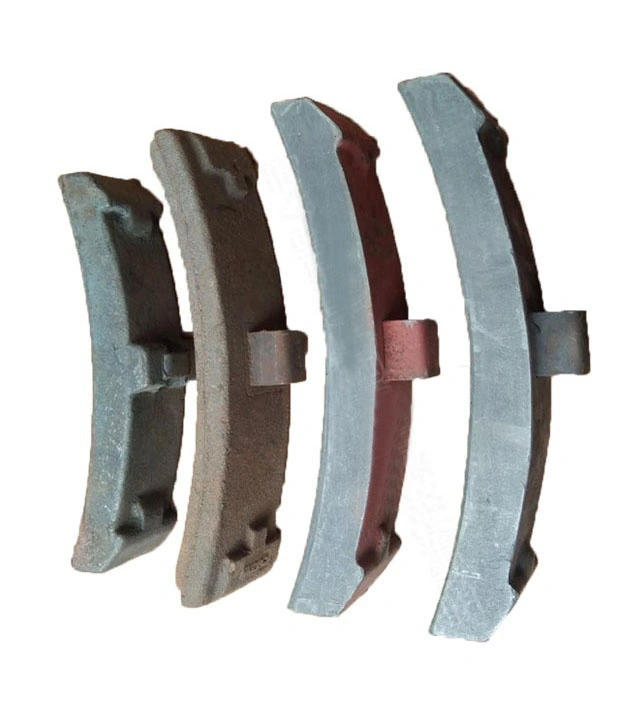
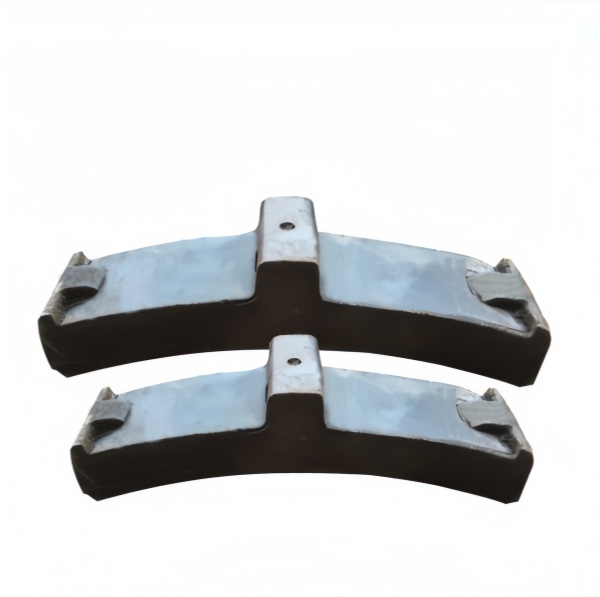
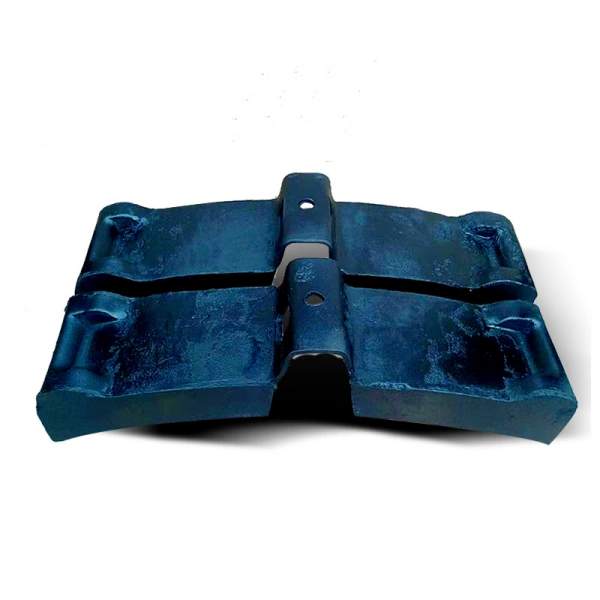
Introduction of Rail Train Brake Shoe
The brake part that directly rubs the wheels to stop the train is called a slipper. A shingle-shaped brake block made of cast iron or other material that holds the wheel tread tightly during braking and stops the wheel by friction. In this process, the braking device needs to convert the enormous kinetic energy into heat and dissipate into the atmosphere. The braking effect is good or bad, but mainly depends on the dissipation ability of friction heat energy. When using this braking method, the friction area of the brake shoe is small, and most of the heat load is borne by the wheel. The higher the train speed, the greater the heat load on the wheels when braking. If cast iron brake shoe is used, the temperature can melt the brake shoe; Even if the more advanced synthetic brake shoe is used, the temperature will be as high as 400~450 ° C. When the temperature of the wheel tread increases to a certain extent, it will make the tread wear, crack or peel, which will affect the service life and also affect the driving safety. It can be seen that the traditional tread brake shoe can not meet the needs of high-speed trains.
The Features of Rail Train Brake Shoe
(1)good thermal stability. The resin decomposition temperature is high; the actual measurement temperature of 377 degrees Celsius
(2) compression elasticity is low, the noise is small, uniform temperature distribution.
(3)Viscosity is strong, both the aging resistance of the resin and rubber toughness, thermal decay rate is low, restorative
(4)friction resistance, and the surface has good reproducibility.
The Material Evolution of Rail Train Brake Shoe
From the cast iron brake shoe for composite materials across the early train with cast iron material, its high hardness and wear resistance can meet the demand of foundation braking, but is easy to produce metal spark, braking noise, the serious defects such as wheel wear. Along with the development of high-speed railway and overloaded freight, shoe materials has experienced three major innovations:
(1)Powder metallurgy composite material by fund of copper, iron, and graphite powder, ceramic particles sintering molding, this kind of materials with both high friction coefficient and high temperature resistance. Zum Beispiel, the copper base brake shoe can still maintain stable friction performance at 500℃ high temperature, and the wear rate of the wheel is reduced by more than 40%, which has become the standard choice for high-speed rail trains.
(2)Carbon fiber reinforced resin base material according to the characteristics of the city railway train frequent start-stop, carbon/aramid fiber hybrid enhanced organic synthetic brake shoe stand out. Its density is only 1/3 of cast iron, but it can maintain excellent braking performance in wet and oil pollution environment, and achieve environmental protection effects of noise reduction of more than 15 Dezibel.
(3)Functionally gradient materials (FGM) by laser cladding technology in preparation of substrate surface gradient ceramic layer, the brake shoe friction layer and heat dissipation performance orientation optimization. The experimental data show that the thermal decay resistance of this kind of brake shoe is increased by 60% under emergency braking conditions, and the service life is extended to 300,000 Kilometer.
Application scenarios of Rail Train Brake Shoe
Adjust measures to local conditions of customized solution gave rise to different operating environment difference product matrix: cold high iron: adopting adding mos2 enhanced brake shoe at low temperature, the friction coefficient of deviation of 0.02 or less – 50 ℃ environment. Long and large ramp freight: tungsten copper composite brake shoe with forced air cooling system, continuous braking for 20 minutes temperature controllable within 400℃. Urban rail trains: nonmetallic brake shoe and magnetic track brake work together, erreichen “sparkless brake”, perfect adaptation of the underground tunnel environment.
| Performance Feature | |
| Friction Stability (μ value 0.25-0.45) | In the temperature range of -40 ° C to 800 ° C, the fluctuation rate should be less than 10% to avoid the risk of sliding caused by brake “thermal recession”. |
| Wear Compatibility | The wear ratio between brake shoe and wheel should be controlled within 1:8, which not only ensures its own durability, but also reduces the frequency of wheel rotation repair. |
| Fatigue Resistance | It is necessary to pass more than 100,000 high-frequency braking tests, and the surface crack growth rate should be less than 0.1mm/ 10,000 mal. |
| Environmental Compliance | The EU REACH regulation requires that the copper content is less than 5%, and harmful substances such as asbestos and lead are zero detected. |
| Energy Dissipation Efficiency | The brake shoe of a heavy-duty train needs to have the ability to absorb 30MJ/kg of energy instantaneously, which is equivalent to the impact of a 2-ton weight falling from a height of 150 Meter |
| Application Scenarios | |
| High Cold Environment and High Speed Rail | adopting adding mos2 enhanced brake shoe at low temperature, the friction coefficient of deviation of 0.02 or less – 50 ℃ environment |
| Long and Large Ramp Freight | tungsten copper composite brake shoe with forced air cooling system, continuous braking for 20 minutes temperature controllable within 400℃. |
| Urban Rail Trains | nonmetallic brake shoe and magnetic track brake work together, erreichen “sparkless brake”, perfect adaptation of the underground tunnel environment. |
Paket von Rail Train Brake Shoe
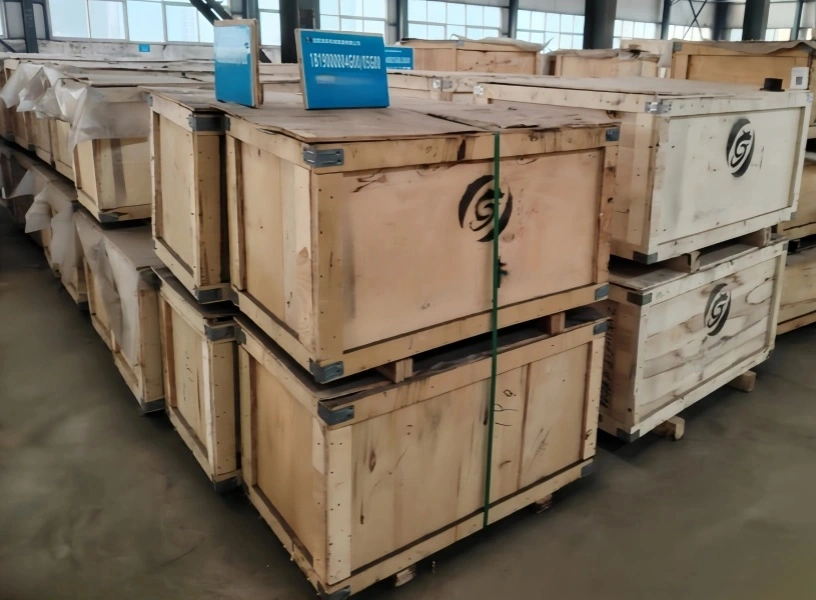
Mehrzwecktasche + Karton + Holzkiste/Palette, nach Kundenwunsch
Unternehmensprofil
Luoyang Fonyo Heavy Industries Co., Ltd. wurde gegründet 1998, umfasst eine Fläche von 72.600㎡, mit mehr als 300 Mitarbeiter, 32 Techniker, einschließlich 5 leitende Ingenieure, 11 Hilfsingenieure, Und 16 Techniker. Es wurde als Luoyang Engineering Technology Center eingestuft, Luoyang Technologie R&D-Zentrum, und nationales High-Tech-Unternehmen für viele Male.
Unsere Produktionskapazität beträgt 30,000 Tonnen pro Jahr. Momentan, Wir produzieren hauptsächlich Stahlguss, Gusseisen (Grauguss, Sphäroguss, usw.), Verarbeitung des fertigen Produkts und Montage der Komponenten. Die Produkte wurden nach Russland exportiert, die Vereinigten Staaten, Deutschland, Argentinien, Japan, Frankreich, Südafrika,Italien und andere Länder.
Häufig gestellte Fragen
Q1: Sie sind Hersteller oder Handelsunternehmen??
A:Wir sind ein Hersteller. Unser Unternehmen wurde gegründet 1998, mit fast 30 Jahren Erfahrung in der Gussindustrie, eine Gesamtfläche von 72.600㎡, mit einer Fabrikgebäudefläche von 51.000㎡.
Q2. Was sind Ihre Hauptprodukte??
A: Unser Hauptaugenmerk liegt auf dem Stahlguss, Eisenguss, Bearbeitung des fertigen Produkts, und Baugruppenfertigung.
Q3: Wie präzise können Sie Gussteile herstellen??
A: Wir sind in der Lage, Gussteile mit unterschiedlichen Gussverfahren herzustellen. Die Produktion erfolgt strikt nach ISO 9001, ISO 14001 und ISO45001, EN15085, IRIS.
Q4. Können Sie nach den Mustern produzieren??
Ja, Wir können nach Ihren Mustern oder technischen Zeichnungen produzieren. Wir können auch Zeichnungen für Sie erstellen, nachdem wir Ihre Muster erhalten haben.
F5: Wie führen Sie eine Qualitätskontrolle vor der Lieferung durch??
A: Die Qualitätsprüfung ist ein sehr wichtiger Faktor zur Gewährleistung der Qualität von Stahlgussteilen. Wir folgen 3 Kontrollzeiten während des gesamten Produktionsprozesses. Und wir stellen einen Materialtestbericht zur Verfügung, Maßprüfbericht, und Bericht über die Prüfung der mechanischen Eigenschaften an unsere Kunden vor der Lieferung.
Wenn Sie an Produkten interessiert sind,Nehmen Sie gerne Kontakt mit uns auf.
E-Mail:[email protected]
Mobile:008615515321683