Scannez le code WeChat pour nous contacter
Scannez le code WeChat pour nous contacter
N'hésitez pas à nous envoyer un email et nous vous répondrons dans les plus brefs délais.
Créer l'avenir avec cœur et âme


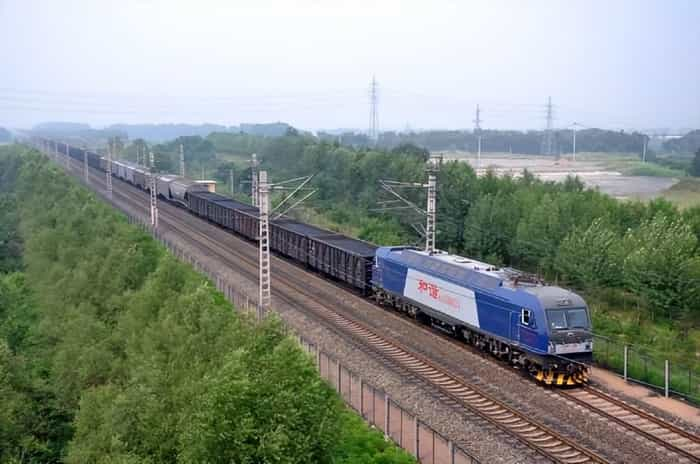
Les moteurs de traction ferroviaire fonctionnent dans des conditions très difficiles. Ils doivent fournir un couple élevé pour que le train puisse fonctionner avec sa puissance. They also face constant vibration and repeated heating and cooling. Dans cet environnement, holding the motor’s core part—the stator stack—firmly and permanently is crucial for long-term durability. A seemingly simple part plays a key role here: leanneau de presse de stator (also called a clamping ring). It is not an electrical part itself, but it is essential for ensuring the motor runs stably.
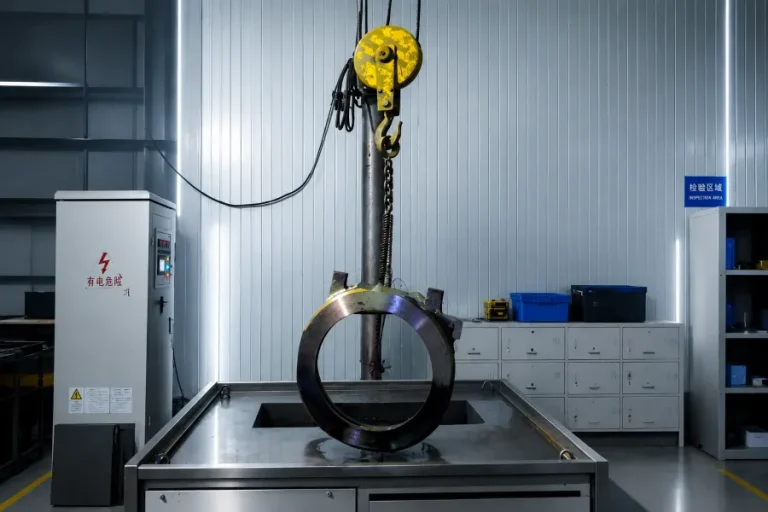
A stator press ring is a thick, precisely machined metal ring. Its main job is to lock the stator stack firmly inside the motor housing. It is usually installed at one or both ends of the stator stack, fitting tightly with the housing. This part is also known as a stator clamping ring. Although it does not conduct electricity, it is vital for keeping the motor’s structure solid.
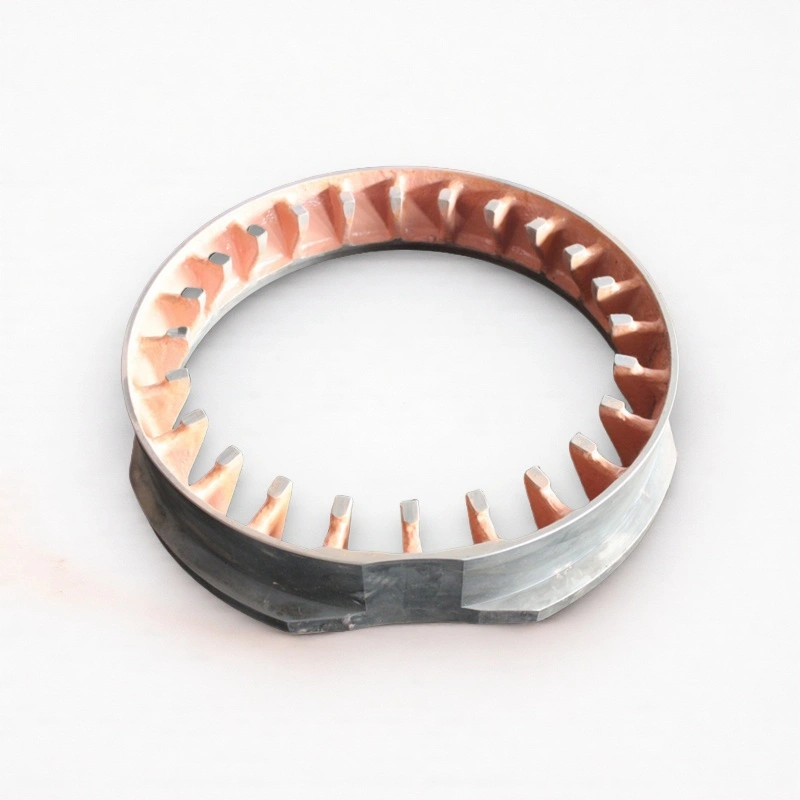
It works on the principle of aninterference fit, or press fit. En termes simples, the ring is made slightly larger than the space where it is installed. During assembly, it is pressed into place with great force. The friction and pressure created hold it firmly. It prevents the stator stack from moving sideways or lengthwise. This keeps the air gap between the rotor and stator stable. A stable air gap is necessary for the motor to run efficiently and smoothly.
Railway motors work extremely hard. They produce high torque during starts and climbs. Vibration and shock from the tracks are constant. The motor itself heats up and cools down repeatedly. If the stator is not held firmly, small movements can cause wear and looseness. Pendant longtemps, this can lead to more noise, worse performance, and in severe cases, contact between the stator and rotor. This contact can cause major motor damage. Donc, reliable fixation is the foundation for the motor’s long-term and safe operation.
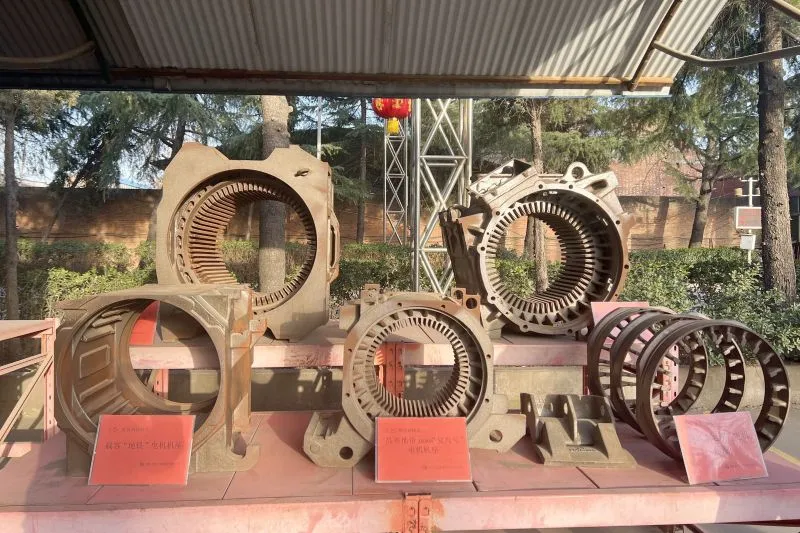
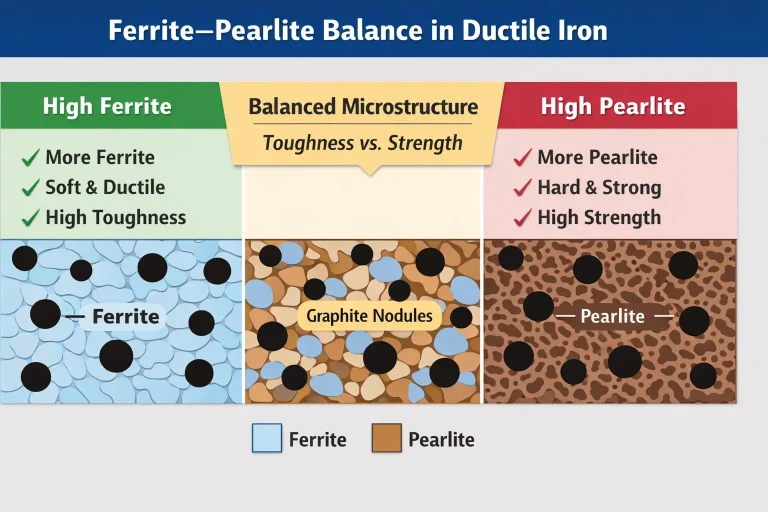
The materials used need a good balance of strength, dureté, and ease of machining.Fonte ductile (Par exemple, QT450-10) is a common choice. It is strong enough and can also absorb some vibration.Carbon steel or low-alloy steel is also often used, providing higher strength. The specific material chosen depends on the motor’s design needs and assembly method. The goal is to ensure stability over the years of use.
Press rings are usually made first as rough shapes by casting or forging. Then they are precision-machined. Machining accuracy is very important, especially for the dimensions that create the interference fit. The ring’s roundness and surface finish must be strictly controlled. Leinterference amount needs precise calculation, that is to say, if it is too little and it may loosen, if it is too much and it could crack the housing or the ring itself. Donc, managingtolérances d'usinage is central to manufacturing.
Each press ring must pass strict checks before use. These mainly include:
Contrôle dimensionnel:
Ensuring all key dimensions match the design drawings.
Material testing:
Checking the material composition and mechanical properties.
Defect inspection
Using methods like non-destructive testing to check for surface or internal flaws like cracks or pores.
Cohérence des lots
Ensuring the quality is the same for every batch of products.
The main problems that can occur during use are:
Press ring loosening
Often due to insufficient interference or long-term vibration. Looseness can cause the stator to move.
Press ring cracking
Can be caused by material defects, poor machining, or stress concentration points.
Assembly damage
Improper installation can scratch or crush the part.
If these problems are not addressed, they can eventually lead to motor failure, requiring a major overhaul.
En résumé, the stator press ring may seem like a simple component, but it plays a critical role in railway traction motors. By providing a precise interference fit, it ensures the stator stack—the core of the motor—remains stable under heavy loads, vibration, and thermal cycling. Its design, matériel, and manufacturing quality directly impact the motor’s reliability and service life. Luoyang Fonyo Heavy Industries Co., Ltée. produces high-quality stator press rings for railway traction motors. To learn more about our products, visite www.railwaypart.com. For further technical insights on traction motor components, explore our blog for related articles.