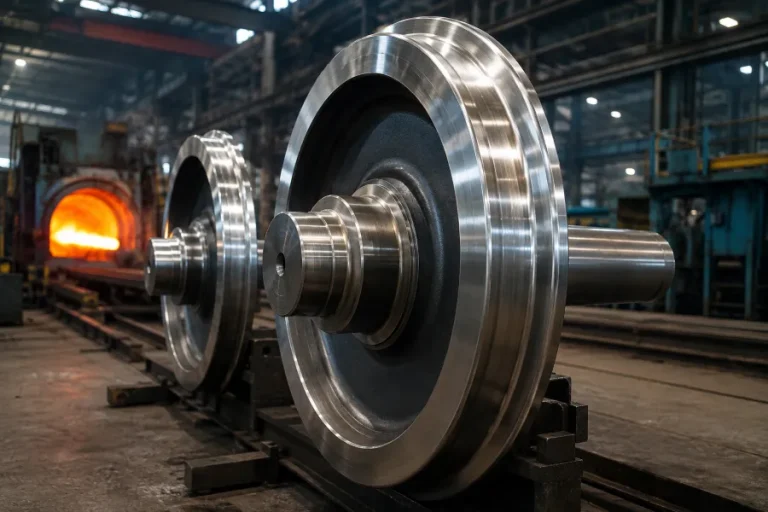
Scan the WeChat code to contact us
Scan the WeChat code to contact us
Feel free to send us a email and we will reply to you as soon as possible.
Creating the future with heart and soul


In modern railway engineering, railway components are all very important, and their quality directly affects safety, longevity, and maintenance costs. Locomotives and wagons rely on structural castings that have to handle high loads, vibrations, and repeated fatigue over years of service. That’s why more and more manufacturers are turning to V process casting for critical parts. Compared to traditional sand casting, it gives you better surface finish, tighter dimensional accuracy, and it’s kinder to the environment.
In this guide, we’ll walk you through how V process casting works and why it’s becoming the go‑to method for railway parts like Motor Retaining Ring, Traction Bracket and Suspension Stiffener Plate
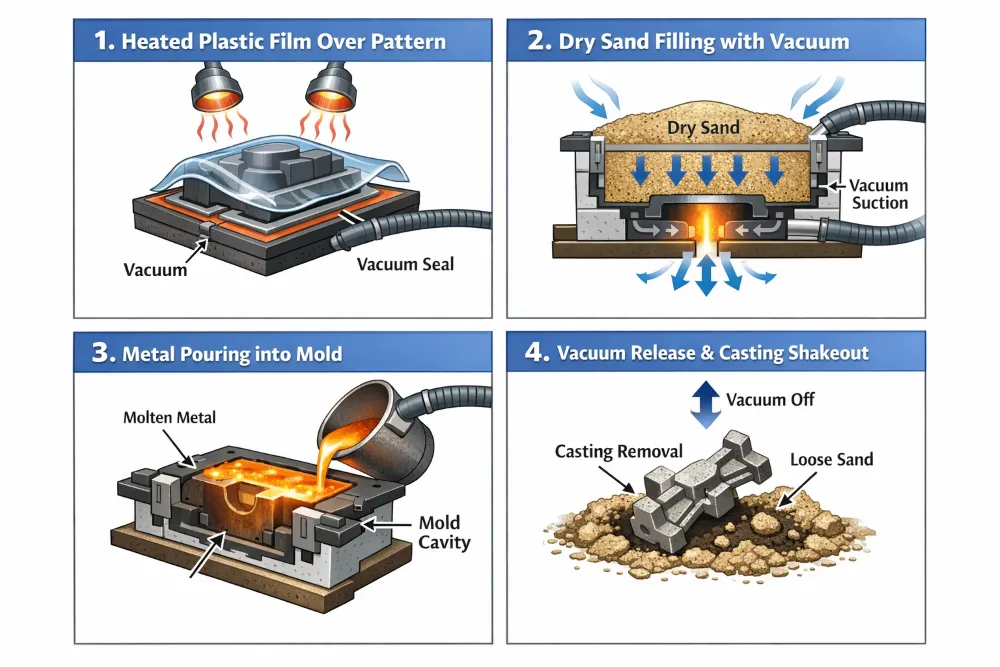
So, what exactly is V-process casting? It’s also known as vacuum process casting, and the basic idea is that instead of using chemical binders to hold the sand together, we use a thin plastic film and vacuum pressure.
Here’s how it goes: first, we heat up a plastic film until it’s soft, then drape it over a pattern. A vacuum pulls the film tight against the pattern, creating a perfect replica of the shape. Next, we put a flask over that, fill it with dry sand, and give it a little shake to pack it in. Then we pull a vacuum on the flask itself—the atmospheric pressure outside presses the sand grains together so firmly that the mold becomes rock‑hard. After that, we remove the pattern, assemble the mould, and pour the molten metal. Once the metal solidifies, we release the vacuum, the sand collapses, and out comes the casting, clean and ready.
Because there’s no binder involved, the mould holds its shape incredibly well, which means that, with this technology, we can cast complex geometries and thin walls that would be tough with other methods. For railway components that need tight tolerances and smooth surfaces, that’s a huge plus.
So why should you care about V process casting for railway parts? Let me break down the main advantages.
First, surface quality. With no resin binders, there’s less gas generated during pouring, so you get fewer defects and a nice, smooth finish. That means less grinding and shot‑blasting later—saving time and money.
Second, dimensional accuracy. For the parts like bogie frames, bolsters, or housings. They have to fit precisely with axles, bearings, and wheels. The vacuum‑formed mould resists heat distortion, so the dimensions can remain consistent, and we can often reduce the machining allowance. That’s a big deal for high‑speed rail where every millimetre counts.
And we should never forget one important issue, which is environmental friendliness. We recycle the dry sand over and over—typically more than 95% recovery. No toxic fumes during casting, no binder waste. It’s a clean process that’s becoming a must‑have for modern foundries.
Now, you might be wondering how V process stacks up against traditional resin sand casting. Resin sand uses chemical binders to hold the mould together, which works, but it limits surface finish, thin‑wall capability, and sand recyclability. V process sidesteps those issues.
Here’s a quick comparison that sums it up:
For railway components, this often translates to less machining time, better consistency, and easier lightweight design.
| Feature | Resin Sand Casting | V Process Casting |
|---|
| Surface Finish | Moderate (Ra 12.5 – 25) | Excellent (Ra 3.2 – 6.3) |
| Wall Thickness | Limited by gas venting | Can achieve thin walls |
| Draft Angle | 1–3° required | Minimal or zero |
| Sand Recyclability | Low | Very high |
| Tooling Cost | Moderate | Higher initial, lower per unit |
V process casting is already widely used for parts that need high precision and fatigue resistance. You’ll see it in bogie frames, bolsters, pivot plates, gearbox housings, brake components—anything that’s subjected to heavy stress.
In rails of heavy‑haul freight and high‑speed, parts really get hammered. V process is very useful, it can give you a uniform internal structure and dense castings, which boost fatigue life and overall durability. Plus, because you can cast thinner walls, you reduce unsprung mass—critical for modern high‑speed trains.
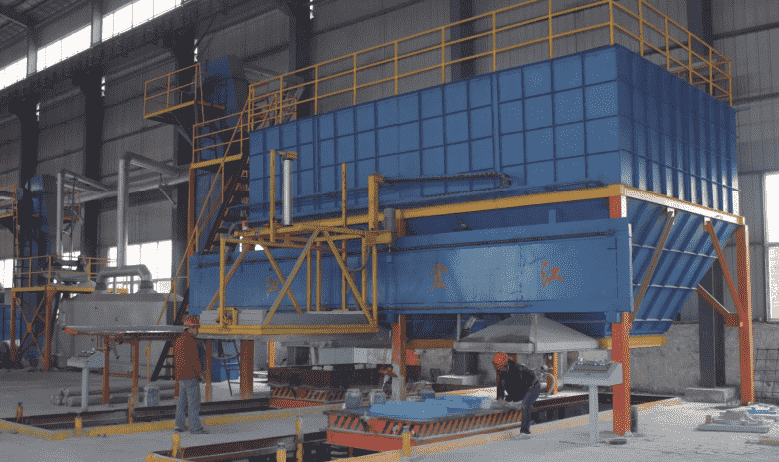
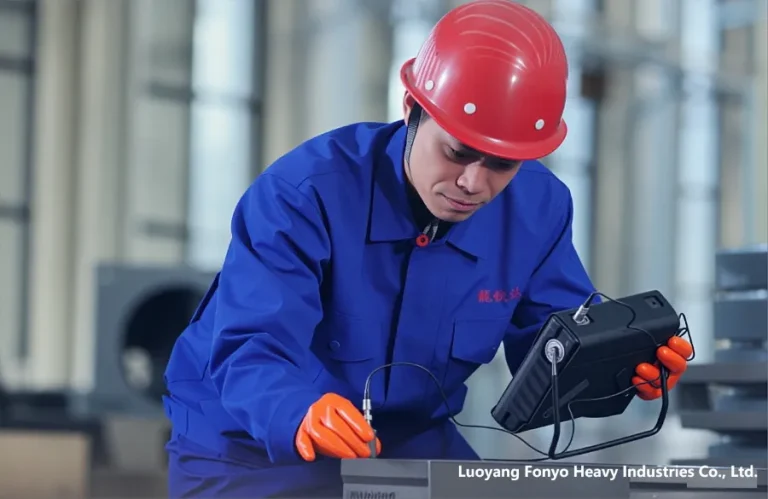
Let me share a real example with you. A leading railway manufacturer used to make pivot plates with traditional sand casting. They switched to V process and saw a 20% weight reduction because of optimized thin‑wall design, as well as a 15% cost saving because the dimension and surface became much better, so they needed far less post‑cast machining. They ran ultrasonic and magnetic particle tests, and the fatigue performance was better than before. It’s a great demonstration that choosing the right process can make a big difference in both cost and reliability.
If you’re looking for a supplier for railway castings, there are a few things you should check: their experience with precision railway parts, whether they follow international standards, and how strong their quality control is. A good partner will work with you from design through final inspection—covering material selection, casting, machining, and non‑destructive testing.
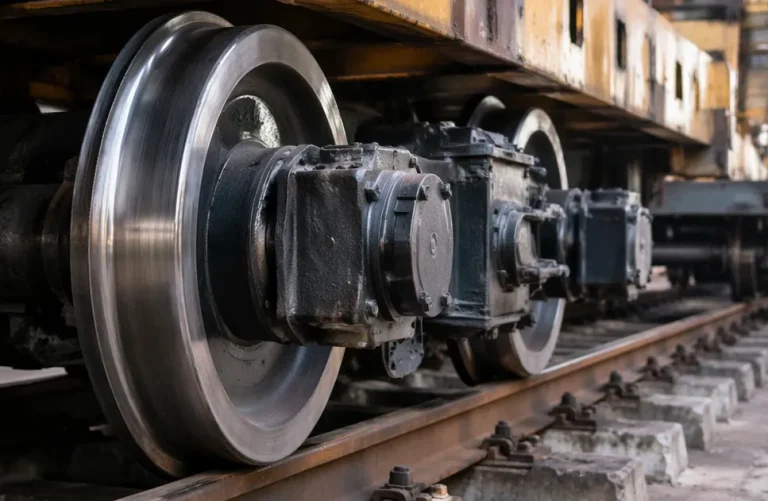
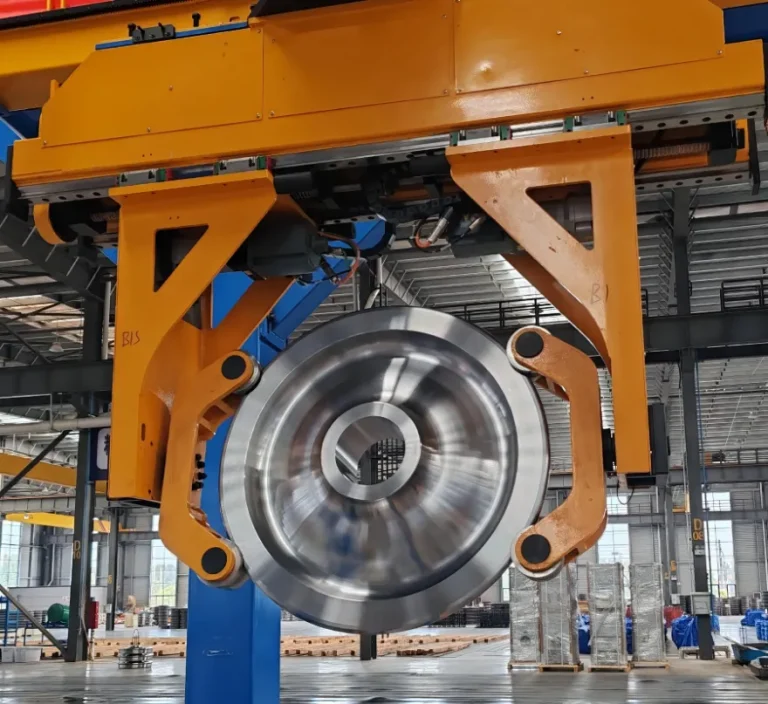
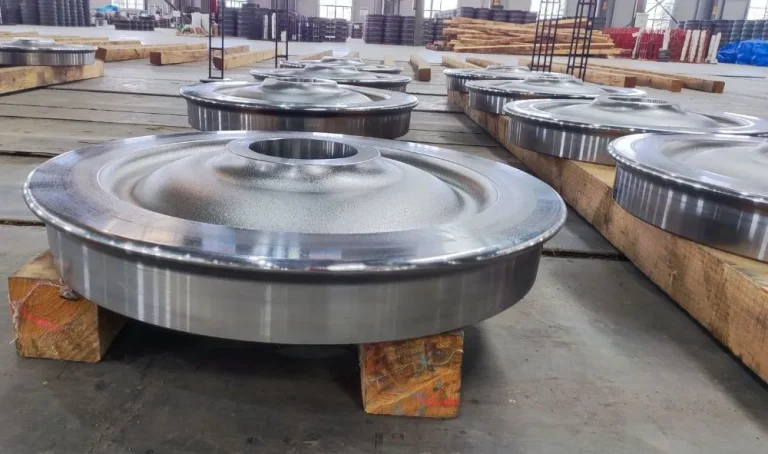
At our facility, we’ve got decades of experience in forged railway wheels and high‑precision V process casting. We offer end‑to‑end solutions with cast steel or ductile iron, making sure every part meets international railway standards.
V process casting is quickly becoming the gold standard for high‑precision railway components. It delivers much advantage such as superior surface quality, excellent dimensional stability, and sustainable production. By teaming up with an experienced supplier, manufacturers can produce reliable, lightweight, and durable castings for today’s locomotives and wagons.
If you are looking for a trusted supplier of V process castings for railway components, Luoyang Fonyo Heavy Industries Co., Ltd. can provide complete support from material selection and design to casting and final inspection. With decades of experience in forged railway wheels and high-precision V process castings, we deliver reliable components that meet international standards. Learn more at www.railwaypart.com