Scan WeChat-koden for at kontakte os
Scan WeChat-koden for at kontakte os
Du er velkommen til at sende os en e-mail, og vi vil svare dig hurtigst muligt.
At skabe fremtiden med hjerte og sjæl


In January, et højhastighedstog kørte af sporet nær Adamuz i det sydlige Spanien. Mange mennesker blev såret eller dræbt, and people around the world started paying more attention to railway safety. Early reports from the investigation show that the problem might have been with the track itself, not because of a mistake by the driver or how the train was running.
People close to the investigation say that technicians found wear at the place where two rail sections join. This joint uses a part called a fishplate. What’s important is that the wear didn’t happen suddenly—it built up over time.
This point is key, because in high-speed rail systems, wear that happens slowly can often be found and fixed before it causes trouble.
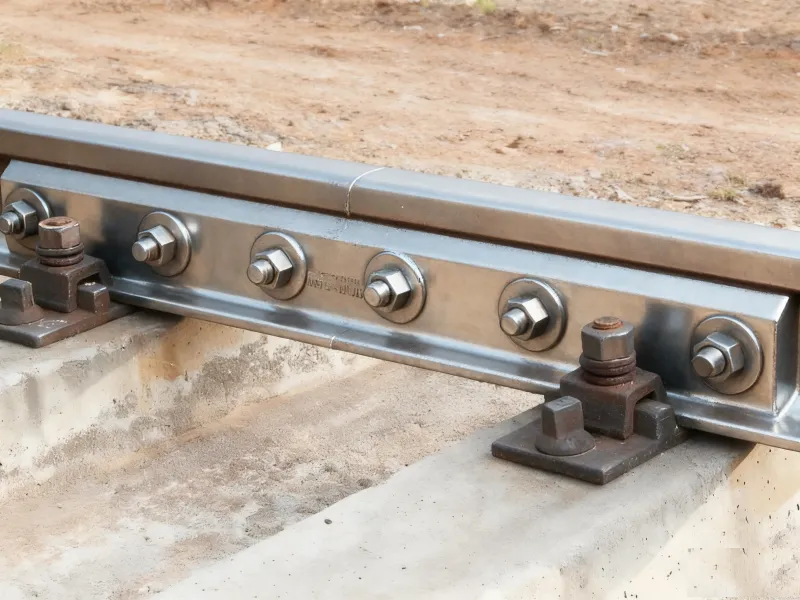
EN fishplate (also called a rail joint bar) joins two rail ends together and keeps them lined up when a train passes over. It may look like just a piece of steel, but it’s very important for keeping the track in the right shape.
Fishplate wear usually happens little by little. Every time a train passes over the joint, the wheels hit it with some force. After thousands of passes, this can cause:
slow wearing of the fishplate material
bolts and fasteners becoming loose
small gaps or uneven height at the rail joint
At low speeds, these small problems might not seem serious. But at high speeds, even a tiny misalignment, even just a few millimeters, can create strong shaking and impact. This puts more stress on the rail, hjul, and fasteners, making the joint weaker over time.
If nobody fixes it, long-term fishplate wear can eventually cause the rail to crack, the joint to fail, or the train to derail.
This kind of issue shows that railway safety doesn’t only depend on good design, it also needs regular checks and maintenance.
Moderne railway maintenance tries to find problems early. Dette inkluderer:
checking fishplates and bolts for wear and looseness
monitoring whether rails are properly aligned
noticing unusual vibration or impact at joints
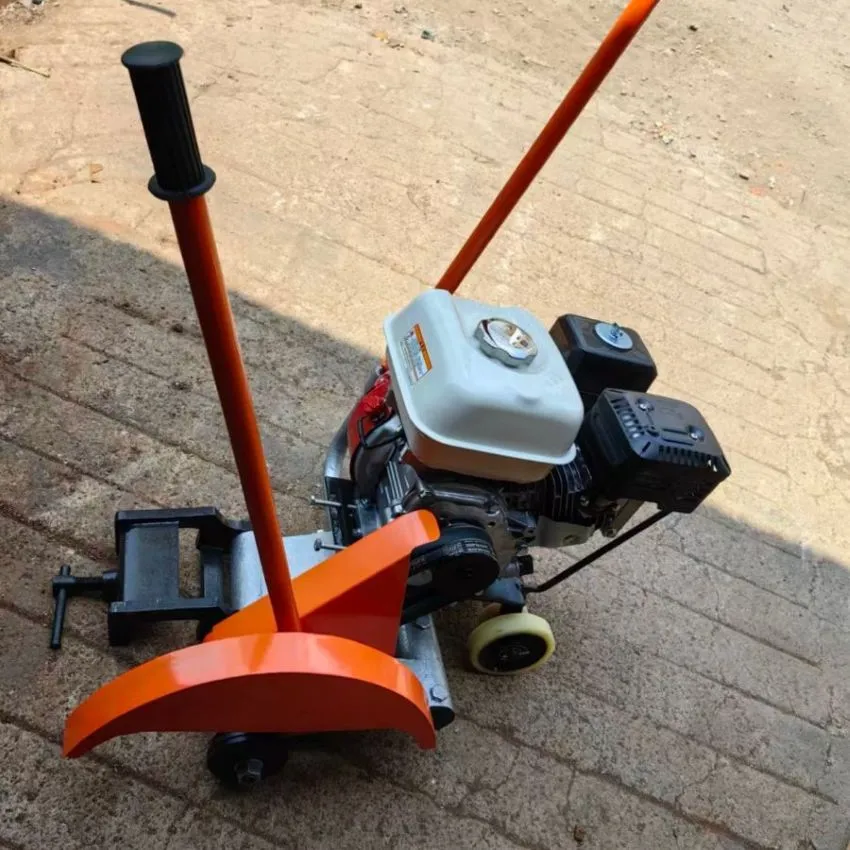
Special maintenance machines are often used for these jobs. They help workers check tracks quickly, tighten or replace parts, and fix alignment issues before they become dangerous.
I mange tilfælde, a worn fishplate can be replaced or repaired long before it becomes a real safety risk, as long as it is found in time.
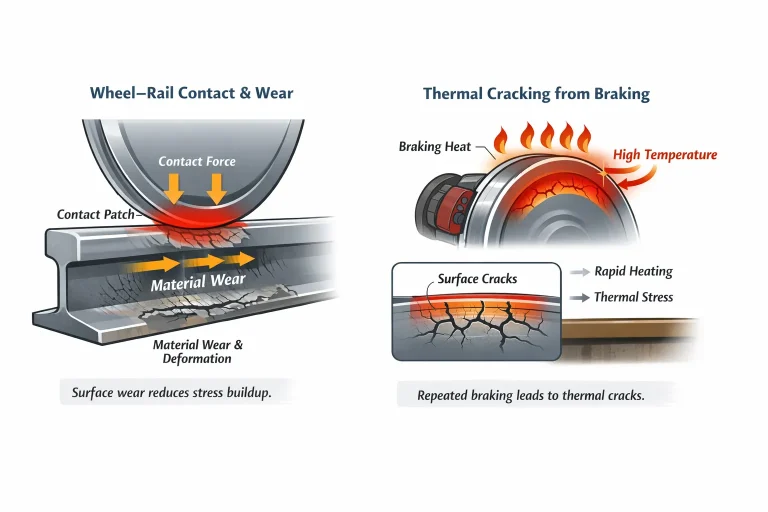
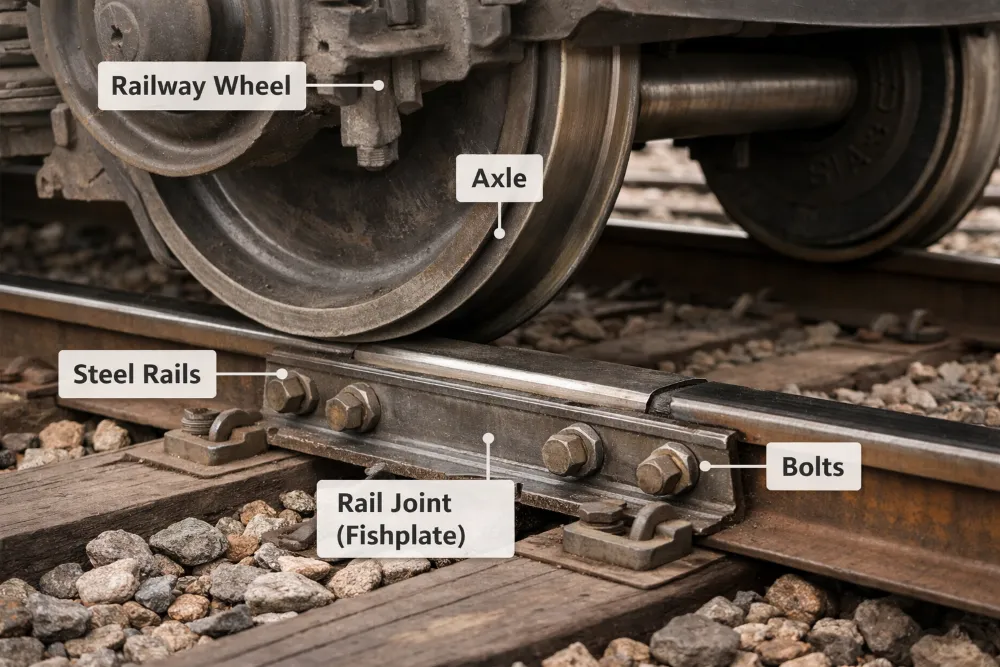
Train wheels also affect what happens at the joint. When wheels go over a worn or uneven joint, the impact forces become much stronger. Over tid, this makes both the wheel surface and the rail joint wear out faster.
That’s why we should think of jernbanehjul, skinnesamlinger, and track maintenance as one connected system, not separate parts. Poor interaction between wheels and joints can make small defects worse and shorten the life of track parts.
På Luoyang Fonyo Heavy Industries Co., Ltd., we help rail operators lower these risks by providing reliable products and practical solutions. Our products include:
Railway fishplates made to handle repeated stress and long-term wear
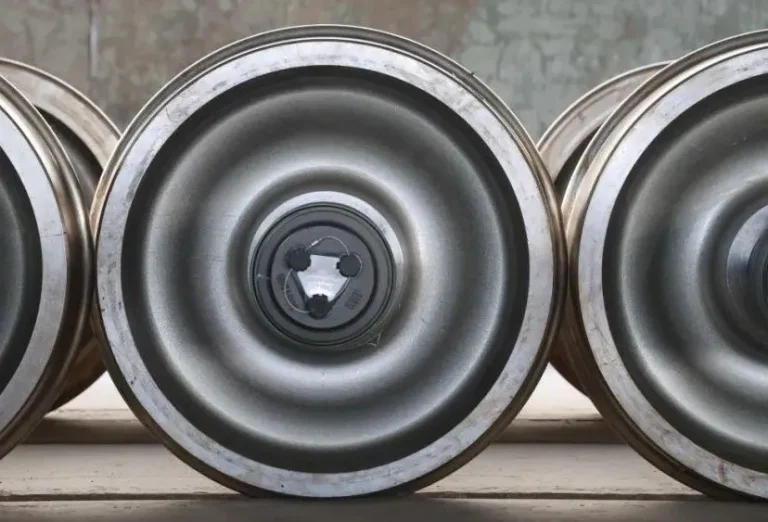
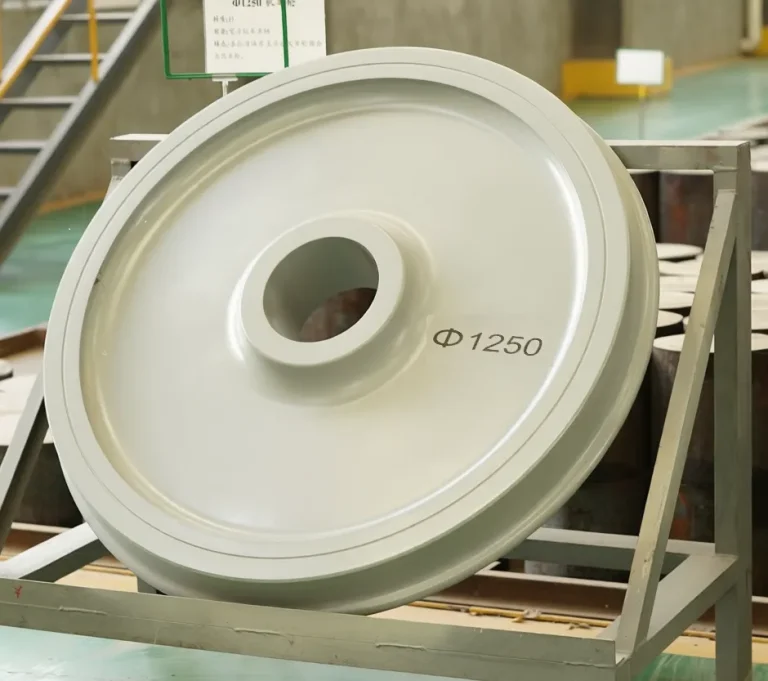
Jernbanehjul built for steady performance under heavy loads
Railway maintenance machines that help with inspection, alignment, and repairs
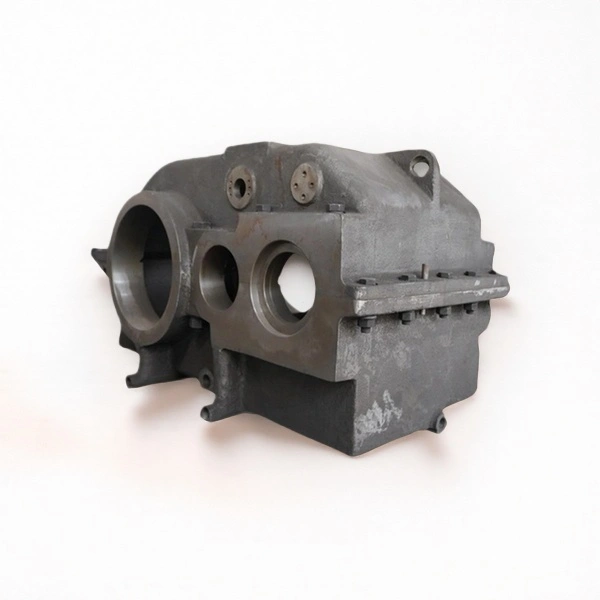
And we also produce railway casting parts such as gearkassehus, axle box housing, hung suspension bearing housing, stator end press ring for traction motor, railway bogies osv.
By using good quality parts and following careful maintenance routines, railway operators can greatly reduce the chance of joint-related failures.
The Spain high-speed train accident sadly reminds us that railway safety depends on small details. Slow wear at a single rail joint can happen quietly, but if nobody notices, the results can be very serious.
Good fishplates, well-kept tracks, well-made wheels, and regular checks, all these work together to keep trains running safely. In high-speed rail, paying attention to these details isn’t just a good idea; it’s absolutely necessary.
If you have any requirement or you are interested in our products, please contact us.
WhatsApp: +86 15515351287
E-mail: [email protected]