Scan WeChat-koden for at kontakte os
Scan WeChat-koden for at kontakte os
Du er velkommen til at sende os en e-mail, og vi vil svare dig hurtigst muligt.
At skabe fremtiden med hjerte og sjæl


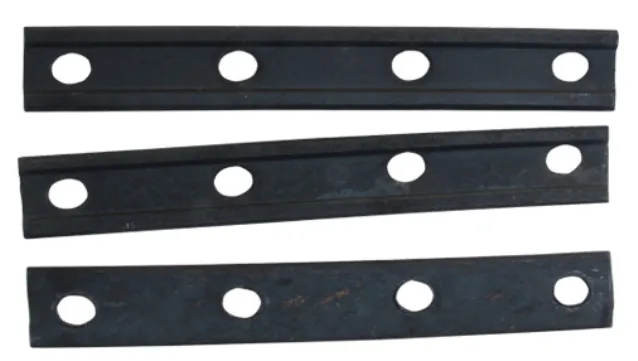
When two steel rails come together, a railway fishplate, also called a rail joint bar or splice bar—locks them firmly in place. This seemingly simple piece of metal plays a crucial role: it ensures the rails stay perfectly aligned, bears the weight and stress of passing trains, and upholds the safety and reliability of the entire track system.
This guide will help you understand key fishplate specifications—including dimensions, materials, hulafstand, and types—so you can choose the right product for your needs.
A railway fishplate is a sturdy metal bar that bolts onto the ends of two rails, holding them together with precision. It reinforces the track, keeps the rails perfectly aligned, and channels the weight and forces from one rail to the next. Since each rail has its own unique profile, choosing this important railway parts that matches the rail section exactly is crucial—this is why careful attention to specifications makes all the difference.
Because every rail type has a unique profile, it’s essential to match the fishplate to the exact rail section. That’s why paying attention to specifications matters.
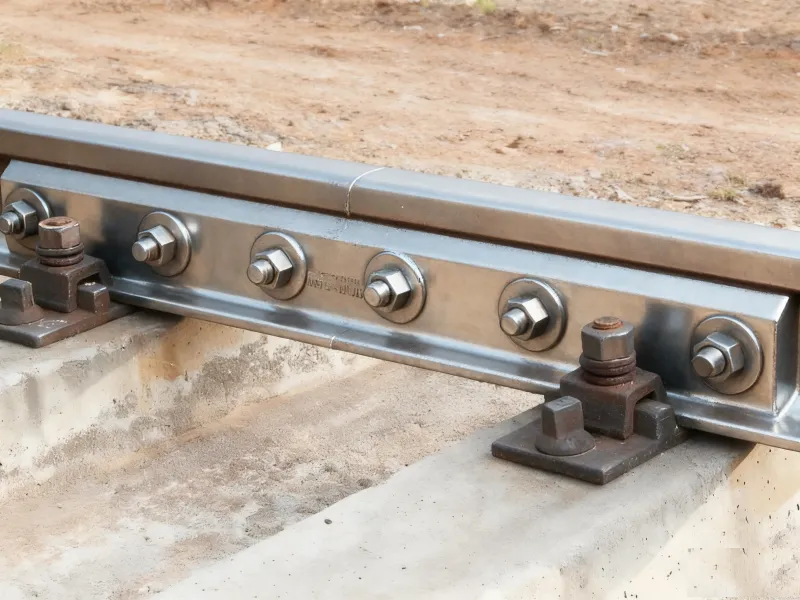
Selecting the correct fishplate ensures:
A stable and continuous rail connection
Proper track gauge and alignment
Smooth load transfer, even under heavy traffic
Reduced vibration and lower risk of rail breakage
Full compatibility with rail bolts and tie plates
Using incorrect specifications can lead to rail movement, loose bolts, or even derailment risks.
Fishplate sizes are designed to match specific rail models. Here’s a practical breakdown covering the most widely used types across Asia, Afrika, the Middle East, Sydamerika, and industrial railways.
Light Rail Fishplate Specifications
| Skinnetype | Length (mm) | Thickness (mm) | Holes |
| 8 kg | 230–250 | 12–14 | 4 |
| 9 kg | As per corresponding standard | 4 | |
| 12 kg | 260–280 | 14–16 | 4 |
| 15 kg | 300–320 | 14–18 | 4 |
| 18 kg | 330–350 | 16–18 | 4 |
| 22 kg | 360–380 | 16–20 | 4 |
| 24 kg | As per corresponding standard | 4 | |
| 30 kg | 400–420 | 18–22 | 4 |
Heavy Rail Fishplate Specifications
| Skinnetype / Standard | Length (mm) | Thickness (mm) | Holes |
| 38 kg | 450–480 | 20–24 | 4 |
| 43 kg | 500–550 | 22–26 | 4 |
| 50 kg / UIC50 | 550–600 | 24–28 | 6 |
| 60 kg (Kina) | 650–700 | 26–30 | 6 |
Crane Rail Fishplate Specifications (QU Series)
| Skinnetype | Also Known As | Common Configurations |
| QU70 | Crane Rail Inclined Joint Bar | 6 holes |
| QU80 | Crane Rail Inclined Joint Bar | 6 holes |
| QU100 | Crane Rail Inclined Joint Bar | 6 holes |
| QU120 | Crane Rail Inclined Joint Bar | 6 holes |
We also supply fishplates conforming to international standards such asBS47 (e.g., BS80A, BS75R) ogUIC series (e.g., UIC54, UIC60).
A complete fishplate specification includes:
Length – depends on rail weight and expected load.
Thickness – influences strength and stiffness.
Bolt Hole Diameter – typically 18–25 mm.
Bolt Hole Spacing – must match the rail’s drilling pattern.
Number of Bolt Holes – commonly4-hole eller6-hole designs.
Surface Contour – ensures a perfect fit with the rail head and foot.
We also support customized specifications for industrial and mining railways.
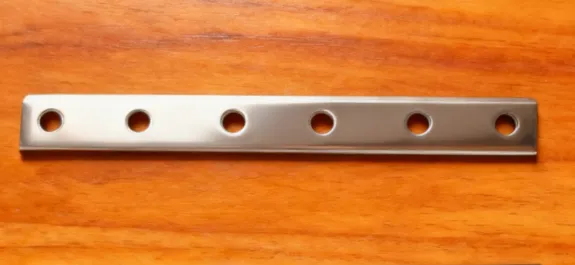
Standard Fishplate
Used in conventional railways and light industrial tracks.
Heavy-Duty Fishplate
Thicker and stronger, ideal for high-speed lines and heavy axle loads.
Insulated Fishplate
Made of composite or fiberglass; used in electrified railways and track circuit sections.
Forged Fishplate
Offers higher strength, suitable for demanding conditions.
Cast Steel Fishplate
A cost-effective solution for light to medium-duty applications.
We offer fishplates in several materials to suit different performance needs:
Q235 Rolled Steel – A reliable choice for general use.
Forged Steel – Provides enhanced strength and durability.
Duktilt jern – Known for its good mechanical properties and impact resistance.
All materials can be produced to meet international standards such as AREMA, BS, UIC, TB/T, or JIS, depending on your region.
Here’s a simple checklist to help you choose:
Identify the exact rail model (e.g., 50 kg, UIC60, QU100).
Confirm bolt size and hole spacing.
Select the material grade based on load and environmental conditions (e.g., korrosion, temperature, indvirkning).
Consider special types like insulated fishplates for track circuits.
Provide your supplier with a rail drawing or profile standard for accurate matching.
Luoyang Fonyo Heavy Industries Co., Ltd. blev grundlagt i 1998 . Gennem årene, Fonyo has been recognized multiple times as the Luoyang Engineering Technology Center, Luoyang Technology R&D Center, og en national højteknologisk virksomhed.
Med en årlig produktionskapacitet på 30,000 tons, we specialize in cast steel and cast iron (herunder gråjern og duktiljern), as well as machining of finished products and component assembly for industries such as locomotive, jernbanevogn, højhastighedstog, mineudstyr, og vindkraft.
Our products are exported to more than ten countries and regions, herunder Rusland, USA, Tyskland, Argentina, Japan, Frankrig, Sydafrika, og Italien.
Ofte stillede spørgsmål
Q1: Er du producent eller handelsvirksomhed?
EN:Vi er en producent. Vores firma blev grundlagt i 1998, med næsten 30 år i støbeindustrien, et samlet areal på 72.600㎡, med et fabriksbygningsareal på 51.000㎡.
Q2. Hvad er dine vigtigste produkter?
EN: Vi fokuserer primært på stålstøbning, jernstøbning, bearbejdning af færdigt produkt, og komponentsamlingsproduktion til lokomotiv, jernbanevogn, højhastighedstog, mineudstyr, vindkraft, osv.
Q3: Hvor præcision kan du producere støbedele?
EN: Vi har evnen til at producere støbedele med forskellige støbeprocesser. Produktionen er strengt i overensstemmelse med ISO 9001, ISO 14001 og ISO45001, EN15085, IRIS.
Q4. Kan du producere i henhold til prøverne?
Ja, vi kan producere efter dine prøver eller tekniske tegninger. Vi kan også bygge tegninger til dig, efter at vi har fået dine prøver.
Q5: Hvordan laver du kvalitetskontrol før levering?
EN: Kvalitetsinspektion er en meget vigtig faktor for at garantere kvaliteten af stålstøbedele. Vi følger efter 3 inspektionstidspunkter under hele produktionsprocessen. Og vi vil levere materialetestrapport, dimensionel prøvningsrapport, og mekaniske egenskaber test rapport til vores kunder før levering.
Hvis du er interesseret i nogle produkter, du er velkommen til at kontakt os.