Escanea el código WeChat para contactarnos
Escanea el código WeChat para contactarnos
No dudes en enviarnos un correo electrónico y te responderemos lo antes posible.
Creando el futuro con corazón y alma


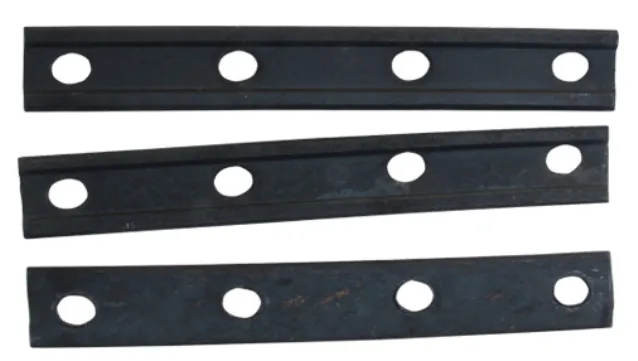
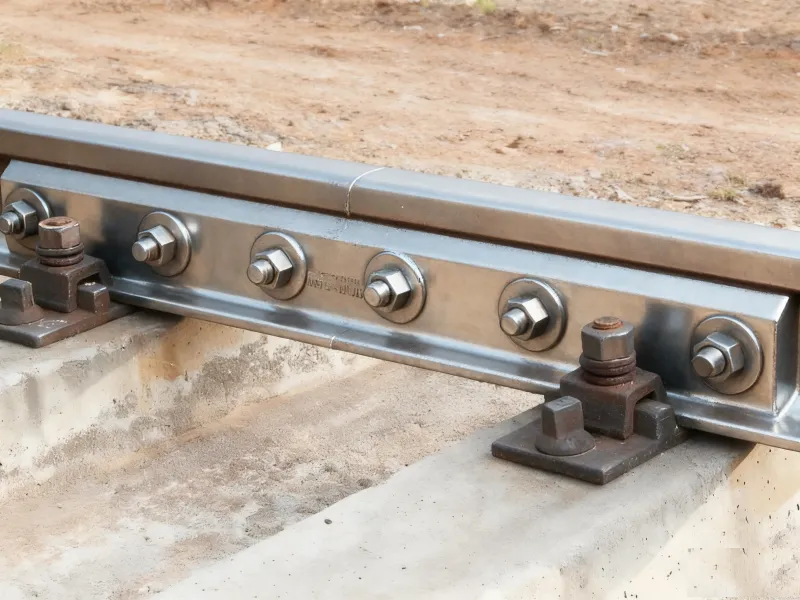
When two steel rails come together, a railway fishplate, also called a rail joint bar or splice bar—locks them firmly in place. This seemingly simple piece of metal plays a crucial role: it ensures the rails stay perfectly aligned, bears the weight and stress of passing trains, and upholds the safety and reliability of the entire track system.
This guide will help you understand key fishplate specifications—including dimensions, materiales, hole spacing, and types—so you can choose the right product for your needs.
A railway fishplate is a sturdy metal bar that bolts onto the ends of two rails, holding them together with precision. It reinforces the track, keeps the rails perfectly aligned, and channels the weight and forces from one rail to the next. Since each rail has its own unique profile, choosing this important railway parts that matches the rail section exactly is crucial—this is why careful attention to specifications makes all the difference.
Because every rail type has a unique profile, it’s essential to match the fishplate to the exact rail section. That’s why paying attention to specifications matters.
Selecting the correct fishplate ensures:
A stable and continuous rail connection
Proper track gauge and alignment
Smooth load transfer, even under heavy traffic
Reduced vibration and lower risk of rail breakage
Full compatibility with rail bolts and tie plates
Using incorrect specifications can lead to rail movement, loose bolts, or even derailment risks.
Fishplate sizes are designed to match specific rail models. Here’s a practical breakdown covering the most widely used types across Asia, África, el Medio Oriente, South America, and industrial railways.
Light Rail Fishplate Specifications
| Rail Type | Longitud (milímetros) | Espesor (milímetros) | Holes |
| 8 kilos | 230–250 | 12–14 | 4 |
| 9 kilos | As per corresponding standard | 4 | |
| 12 kilos | 260–280 | 14–16 | 4 |
| 15 kilos | 300–320 | 14–18 | 4 |
| 18 kilos | 330–350 | 16–18 | 4 |
| 22 kilos | 360–380 | 16–20 | 4 |
| 24 kilos | As per corresponding standard | 4 | |
| 30 kilos | 400–420 | 18–22 | 4 |
Heavy Rail Fishplate Specifications
| Rail Type / Estándar | Longitud (milímetros) | Espesor (milímetros) | Holes |
| 38 kilos | 450–480 | 20–24 | 4 |
| 43 kilos | 500–550 | 22–26 | 4 |
| 50 kilos / UIC50 | 550–600 | 24–28 | 6 |
| 60 kilos (Porcelana) | 650–700 | 26–30 | 6 |
Crane Rail Fishplate Specifications (QU Series)
| Rail Type | Also Known As | Common Configurations |
| QU70 | Crane Rail Inclined Joint Bar | 6 agujeros |
| QU80 | Crane Rail Inclined Joint Bar | 6 agujeros |
| QU100 | Crane Rail Inclined Joint Bar | 6 agujeros |
| QU120 | Crane Rail Inclined Joint Bar | 6 agujeros |
We also supply fishplates conforming to international standards such asBS47 (p.ej., BS80A, BS75R) yUIC series (p.ej., UIC54, UIC60).
A complete fishplate specification includes:
Longitud – depends on rail weight and expected load.
Espesor – influences strength and stiffness.
Bolt Hole Diameter – typically 18–25 mm.
Bolt Hole Spacing – must match the rail’s drilling pattern.
Number of Bolt Holes – commonly4-hole o6-hole designs.
Surface Contour – ensures a perfect fit with the rail head and foot.
We also support customized specifications for industrial and mining railways.
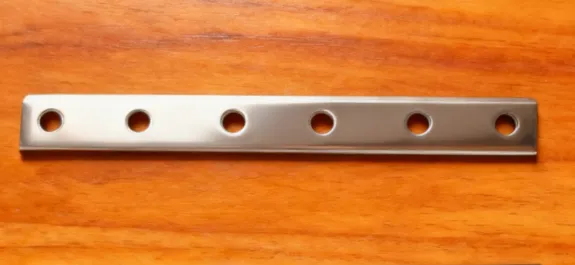
Standard Fishplate
Used in conventional railways and light industrial tracks.
Heavy-Duty Fishplate
Thicker and stronger, ideal for high-speed lines and heavy axle loads.
Insulated Fishplate
Made of composite or fiberglass; used in electrified railways and track circuit sections.
Forged Fishplate
Offers higher strength, suitable for demanding conditions.
Cast Steel Fishplate
A cost-effective solution for light to medium-duty applications.
We offer fishplates in several materials to suit different performance needs:
Q235 Rolled Steel – A reliable choice for general use.
Forged Steel – Provides enhanced strength and durability.
Hierro dúctil – Known for its good mechanical properties and impact resistance.
All materials can be produced to meet international standards such as AREMA, licenciatura, UIC, tuberculosis/t, or JIS, depending on your region.
Here’s a simple checklist to help you choose:
Identify the exact rail model (p.ej., 50 kilos, UIC60, QU100).
Confirm bolt size and hole spacing.
Select the material grade based on load and environmental conditions (p.ej., corrosión, temperatura, impacto).
Consider special types like insulated fishplates for track circuits.
Provide your supplier with a rail drawing or profile standard for accurate matching.
Industrias pesadas Co. de Luoyang Fonyo., Limitado. fue fundada en 1998 . A lo largo de los años, Fonyo ha sido reconocido varias veces como el Centro de Tecnología de Ingeniería de Luoyang, Tecnología Luoyang R&Centro D, y una Empresa Nacional de Alta Tecnología.
Con una capacidad de producción anual de 30,000 montones, we specialize in cast steel and cast iron (incluyendo hierro gris y hierro dúctil), as well as machining of finished products and component assembly for industries such as locomotive, automotor, tren de alta velocidad, equipo de minería, y energía eólica.
Our products are exported to more than ten countries and regions, incluyendo Rusia, los estados unidos, Alemania, Argentina, Japón, Francia, Sudáfrica, e Italia.
Preguntas frecuentes
Q1: ¿Es usted un fabricante o una empresa comercial??
A:somos un fabricante. Nuestra empresa fue fundada en 1998, con casi 30 años en la industria de la fundición, una superficie total de 72.600㎡, con un área de construcción de fábrica de 51,000㎡.
Q2. ¿Cuales son sus principales productos??
A: Nos centramos principalmente en la fundición de acero., fundición de hierro, mecanizado de producto terminado, y producción de ensamblajes de componentes para locomotoras., automotor, trenes de alta velocidad, equipo de minería, energía eólica, etc..
Q3: ¿Con qué precisión se pueden producir piezas de fundición??
A: Tenemos la capacidad de producir piezas de fundición con diferentes procesos de fundición.. La producción cumple estrictamente con ISO. 9001, ISO 14001 e ISO45001,EN15085, IRIS.
Q4. ¿Puedes producir según las muestras??
Sí, Podemos producir según sus muestras o dibujos técnicos.. También podemos crear dibujos para usted después de recibir sus muestras..
Q5: ¿Cómo se realiza el control de calidad antes de la entrega??
A: La inspección de calidad es un factor muy importante para garantizar la calidad de las piezas de fundición de acero.. seguimos 3 tiempos de inspección durante todo el proceso de producción. Y proporcionaremos un informe de prueba de materiales., informe de prueba dimensional, y informe de pruebas de propiedades mecánicas a nuestros clientes antes de la entrega.
If you are interested in any products, por favor siéntete libre de contáctanos.