Scan the WeChat code to contact us
Scan the WeChat code to contact us
Feel free to send us a email and we will reply to you as soon as possible.
Creating the future with heart and soul


Selecting a railway wheel manufacturer starts with four things: the applicable standard the wheels are made to, the forging and heat treatment process behind them, the inspection and traceability the manufacturer can demonstrate, and whether you are buying from a direct manufacturer or a trading company. A reliable manufacturer can show you the process control, the test records and the traceability, not just a certificate and a price.

If you have ever compared railway wheel quotations and found two suppliers offering what looks like the same wheel at very different prices, you have faced the question this article answers. The wheels look identical in the drawing. Same diameter. Same profile. Same grade on the certificate.
At first glance, the choice seems simple: buy from the lower-priced supplier.
In practice, selecting a railway wheel manufacturer is not quite that straightforward.
A railway wheel is a safety-critical component, and its quality is decided in the foundry and the heat treatment furnace, long before it reaches the inspection bench. The certificate is evidence of what was checked, not proof of how the wheel was made. A reliable manufacturer can show you the process behind the certificate. A less reliable one can only show you the certificate.
So how do you tell the difference, and what should you actually check before you choose a railway wheel manufacturer?
The first thing any wheel manufacturer should be able to show is the standard they make wheels to. For North American service, that is usually AAR M-107/M-208, which defines carbon steel wheel classes. For European operators, it is EN 13262. Russian-gauge railways work to GOST standards, and other regions have their own.
The standard is not a formality. It defines the chemical composition, the mechanical properties, the heat treatment requirements and the acceptance criteria. A manufacturer that can demonstrate production to a specific standard is showing you more than a marketing claim.
The certificate matters too, but it has limits. A material test certificate, ideally to EN 10204 Type 3.1 or 3.2, should identify the heat number, the chemical composition and the mechanical properties. The point is traceability: the heat number on the certificate should match the marking on the wheel, and it should connect back to the actual production heat.
A certificate that cannot be traced to the wheel it describes is not worth much. This is one of the first things I check when I review a wheel supplier.
For more on what the standards mean in practice, our guide to railway standards for wheels explains how UIC, EN and AAR relate to each other.
The standard and the certificate tell you what the wheel is supposed to be. The process tells you how it got there.
Railway wheels are forged, and the forging process matters because it determines the grain structure of the steel. A properly forged wheel has a dense, aligned grain structure that resists fatigue. The alternative, a wheel that is simply cast or made without proper forging control, behaves differently under the cyclic loading that wheels endure.
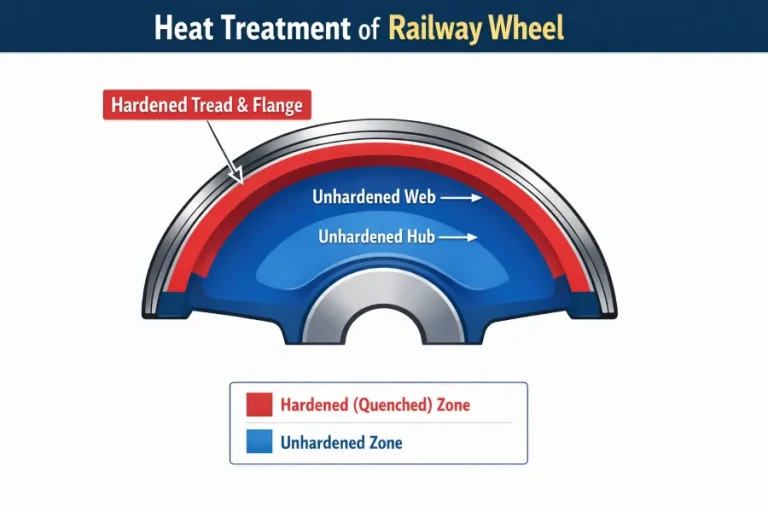
Heat treatment is the other half. Rim quenching and tempering create the hardness profile that resists wear at the tread while keeping toughness through the web. If the heat treatment is inconsistent, the wheel can have the right grade on paper and still fail early in service.
When I evaluate a wheel manufacturer, I want to see that they control both stages. The forging process should be repeatable, and the heat treatment should be specified and recorded, not assumed.
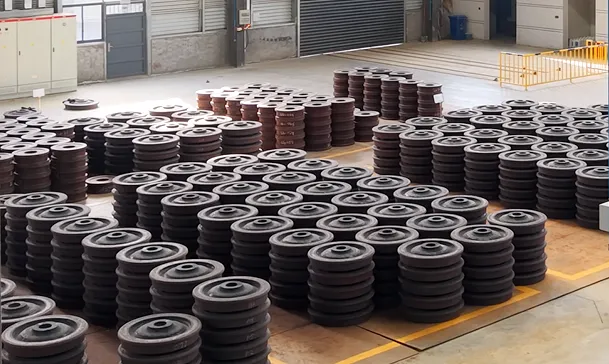
A wheel can be forged and heat-treated correctly and still fail if the internal structure is not sound. That is what inspection is for.
Ultrasonic testing looks for internal discontinuities. Magnetic particle inspection finds surface and near-surface cracks. Hardness testing confirms the heat treatment. Dimensional inspection confirms the wheel matches the drawing. A reliable manufacturer does all of these, and can show you the reports, not just a signed summary.
Traceability ties it together. If a wheel later develops a problem, the ability to trace it from the heat number back through the production batch to the test records is what makes an investigation possible. Without it, a failed wheel is a dead end.
This connects to a point we have covered before: inspection is a checkpoint, not a promise. Our guide to why railway wheels crack explains how even a wheel that passes inspection can fail if the process behind it was not controlled.
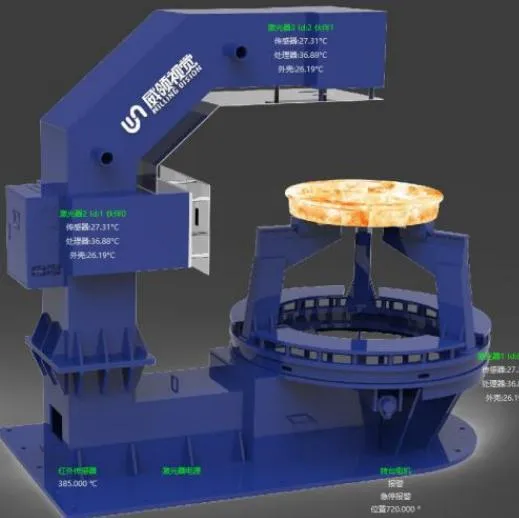
One of the most useful questions to ask a wheel supplier is whether they are a direct manufacturer or a trading company. The answer changes what you can verify.
A direct manufacturer controls the forging, the heat treatment and the inspection in their own facility. You can ask for the process records and, if the project warrants it, visit the plant. A trading company sources wheels from someone else and resells them, which can mean less visibility into where the wheel actually came from and how it was made.
There is nothing wrong with a trading company if they are transparent about their source and can provide the traceability you need. The problem comes when the distinction is not clear. A supplier who cannot tell you which foundry made the wheel, or who cannot provide traceable test records, is not giving you the information a safety-critical purchase deserves.
Beyond the process and the paper, there are practical things that separate a reliable railway wheel manufacturer from an uncertain one.
Production capacity and lead time. Can the manufacturer meet your volume and your schedule? A supplier who cannot confirm a realistic lead time, or who overpromises on delivery, is a risk to your project plan.
Response and communication. When you ask a technical question, do you get a technical answer, or a sales answer? A manufacturer who understands the engineering will answer the engineering question.
Documentation habits. A supplier whose certificates show the same values across many heats, with no normal production variation, may not be showing you the real records. Real steel varies slightly from heat to heat.
After-sales support. What happens if a wheel shows a problem later? The manufacturer’s willingness to investigate, and their traceability, determine whether that investigation can go anywhere.
These are not hard filters. They are signs of how the manufacturer works, and they accumulate into a picture over time.
There is no single checklist that fits every project, but there is a reliable set of questions.
| Question | Why It Matters |
|---|---|
| Which standard do they manufacture to? | The standard defines the material and test requirements |
| Direct manufacturer or trading company? | A manufacturer gives you process visibility |
| What forging process do they use? | Forging controls the grain structure |
| What heat treatment do they apply? | Rim quenching and tempering set the hardness profile |
| What inspection can they demonstrate? | UT, MPI, hardness and dimensional reports |
| Can the certificate be traced to the heat? | Traceability enables later investigation |
| What is the capacity and lead time? | Delivery reliability is part of reliability |
These are starting points, not a universal rule. The final decision should be checked against your project’s standard and your own requirements.
Imagine two suppliers. One is a direct manufacturer who sends you the process records, the test reports and the traceability, and answers your technical questions directly. The other sends a certificate and a price, and cannot tell you which foundry made the wheel. Both may quote the same grade. The first is a supplier you can verify. The second is a supplier you are taking on faith.
A railway wheel manufacturer is not selected by the certificate alone, any more than a wheel is judged by its drawing. The choice comes down to the process, the heat treatment, the inspection and the traceability that sit behind the certificate, and whether the supplier can show you those things honestly.
That is why I would not recommend choosing a railway wheel manufacturer on price or on a certificate alone. Start with the standard. Check whether they are a direct manufacturer. Ask for the process and test records. Confirm the traceability. Then compare suppliers on what you can actually verify.
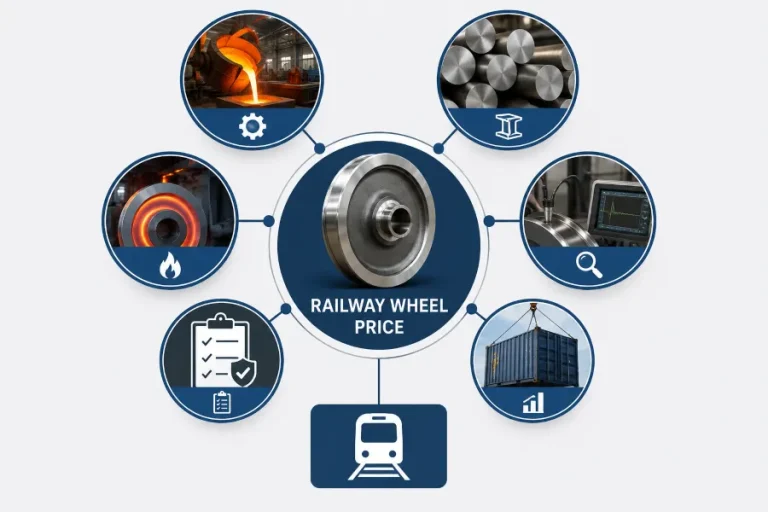
For the cost side of the same question, our guide to railway wheel prices explains how the price difference between suppliers usually reflects a difference in what is being delivered.
At Luoyang Fonyo Heavy Industries Co., Ltd., we manufacture railway wheels and railway bogie parts, railway motor traction parts to AAR, EN, UIC and project-specific standards, with forging, heat treatment, inspection and traceability handled in-house. For any wheel requirement, our engineering team can review the required grade, standard, process and inspection requirements before production.
If you have a drawing, specification or an existing wheel sample, send us the details. Our engineering team can help check the required wheel specification, applicable standard and production requirements before quotation.
Check the standard they manufacture to, whether they are a direct manufacturer or a trading company, the forging and heat treatment process, the inspection they can demonstrate, and whether the certificate can be traced to the production heat.
It depends on your region and service. North American wheels work to AAR M-107/M-208, European wheels to EN 13262, and Russian-gauge wheels to GOST standards. The manufacturer should be able to demonstrate production to the standard your project requires.
A manufacturer controls the forging, heat treatment and inspection in their own facility, giving you process visibility. A trading company sources wheels from someone else, which can mean less visibility into where the wheel came from and how it was made.
Rim quenching and tempering create the hardness profile that resists wear at the tread while keeping toughness through the web. Inconsistent heat treatment can produce a wheel with the right grade on paper that still fails early in service.
Ultrasonic testing for internal discontinuities, magnetic particle inspection for surface cracks, hardness testing to confirm heat treatment, and dimensional inspection against the drawing. The manufacturer should provide the reports, not just a signed summary.
If a wheel later develops a problem, traceability from the heat number through the production batch to the test records is what makes an investigation possible. Without it, a failed wheel is a dead end.
No. The price difference between suppliers usually reflects a difference in process, testing or documentation. A reliable manufacturer can show you what the price includes, not just a lower number.